
In November 2024, Congressman Matt Gaetz (R-FL) was briefly considered by then-President-elect Donald Trump for the position of U.S. Attorney General. However, within days, the nomination evaporated as Gaetz publicly announced he would not accept the role. The abrupt reversal raised questions across political circles and among the public. While no single factor fully explains the decision, a combination of ongoing federal investigations, bipartisan opposition, ethical concerns, and strategic political calculations contributed to Gaetz stepping aside.
The Timeline of Events
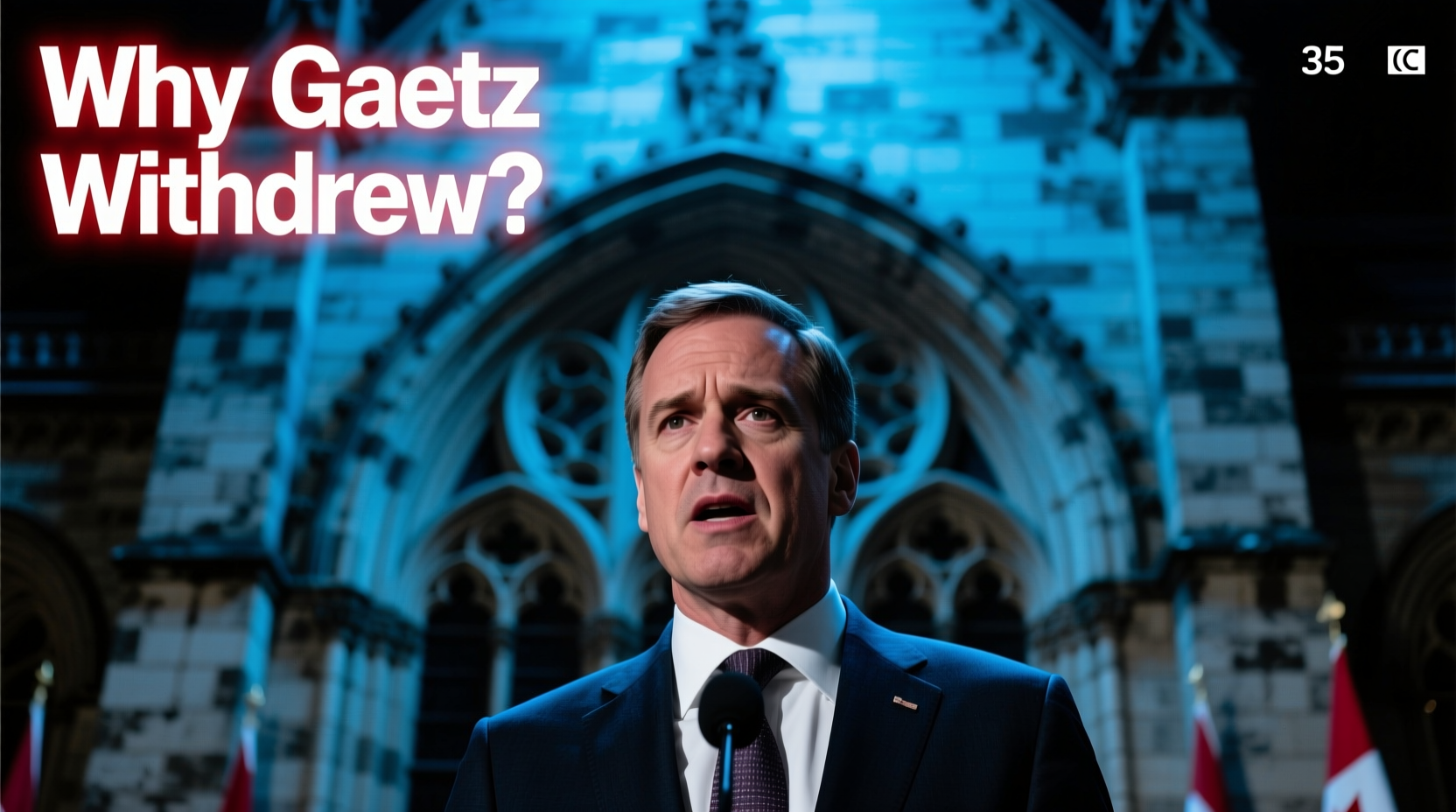
The sequence of events unfolded rapidly during the post-election transition period. On November 13, 2024, multiple news outlets reported that Donald Trump had selected Matt Gaetz as his nominee for Attorney General. This announcement came as a surprise to many, given Gaetz’s controversial record and the fact that he is not a licensed attorney in good standing in any jurisdiction—a traditional prerequisite for the nation’s top law enforcement officer.
Within 48 hours, however, Gaetz issued a statement clarifying that he would “not accept the position” if formally nominated. He cited personal reflection and consultation with family and advisors as reasons for his decision. Notably, Trump did not formally nominate Gaetz before the withdrawal, meaning the Senate never began confirmation hearings. Still, the episode sparked intense scrutiny into Gaetz’s background and fitness for office.
Key Dates in the Attorney General Consideration Process
- November 12, 2024: Trump signals interest in Gaetz during internal discussions with allies.
- November 13, 2024: Media reports confirm Gaetz as the leading contender for Attorney General.
- November 14, 2024: Department of Justice officials express internal concern over Gaetz’s eligibility and past conduct.
- November 15, 2024: Gaetz announces he will not accept the nomination.
- November 16, 2024: Trump confirms Gaetz is no longer under consideration and shifts focus to other candidates.
Ongoing Federal Investigations
One of the most significant barriers to Gaetz’s potential confirmation was the unresolved federal investigation into allegations of sex trafficking and illicit drug use. Although the Justice Department dropped its criminal probe in early 2023 without filing charges, key details remain sealed or redacted. Legal experts note that even the appearance of impropriety can disqualify someone from leading the DOJ.
“The Attorney General must be beyond reproach,” said former DOJ ethics counsel Richard L. Hasen in an interview with POLITICO.
“Even if someone hasn’t been charged, the cloud of investigation undermines their ability to command legitimacy in enforcing the law.”
Additionally, House Ethics Committee findings released in April 2024 concluded there was “substantial evidence” that Gaetz violated multiple House rules related to gifts, travel, and relationships with individuals tied to the investigation. Though the full report remains confidential, excerpts suggest financial improprieties that would have made confirmation highly unlikely.
Bipartisan Opposition and Confirmation Challenges
Senate confirmation of an Attorney General requires at least 51 votes. Given the narrow partisan divide in the Senate, even modest Democratic opposition—combined with potential Republican defections—could sink a nominee. In Gaetz’s case, resistance emerged swiftly from both parties.
- Senator Lindsey Graham (R-SC), a senior member of the Judiciary Committee, stated he could not support a nominee “who has never practiced law and faces unresolved ethics issues.”
- Senator Dick Durbin (D-IL), the ranking Democrat on the committee, called the idea of Gaetz as AG “a mockery of the rule of law.”
- Grassroots advocacy groups like Demand Justice and the Legal Defense Fund launched campaigns urging senators to oppose any such nomination.
A hypothetical confirmation battle would have consumed valuable legislative time and damaged the incoming administration’s momentum. Political strategists advised Trump that pursuing a less polarizing candidate would be more pragmatic.
Do’s and Don’ts for High-Level Political Appointments
| Do | Don't |
|---|---|
| Select nominees with clean legal records and professional credibility | Nominate individuals facing active investigations or ethical clouds |
| Engage in pre-nomination consultations with key senators | Announce picks unilaterally without gauging Senate support |
| Choose leaders who can unify and restore institutional trust | Prioritize loyalty over competence and integrity |
| Ensure nominees meet basic statutory and professional qualifications | Ignore fundamental requirements like bar admission or legal experience |
Legal and Professional Qualifications Concerns
Unlike every prior Attorney General in U.S. history, Matt Gaetz is not a licensed attorney. He earned a law degree from William & Mary Law School in 2007 but has never passed a state bar exam or practiced law. The Department of Justice traditionally expects its leader to have deep legal expertise, courtroom experience, and a commitment to judicial independence.
While federal statute does not explicitly require the Attorney General to be a lawyer, precedent and functional necessity make it essential. As Harvard Law professor Noah Feldman observed:
“You don’t need a law license on paper, but you do need one in practice. The AG interprets complex statutes, oversees prosecutions, and advises the President on constitutional matters. That demands real legal training.”
Experts agree that appointing a non-lawyer would set a dangerous precedent, potentially weakening public confidence in the justice system and inviting legal challenges to DOJ decisions.
Real-World Implications: A Mini Case Study
In 2017, President Trump considered former New York City Mayor Rudy Giuliani for Attorney General. Like Gaetz, Giuliani was a polarizing figure with strong loyalty to Trump. However, Giuliani had decades of prosecutorial experience as a U.S. Attorney and later as mayor overseeing law enforcement agencies. Despite this, ethics concerns—including foreign consulting work—led the White House to abandon the idea before any formal nomination.
The contrast highlights a critical lesson: loyalty alone is insufficient. Even in politically driven appointments, credibility and qualifications matter. In Gaetz’s case, the absence of legal credentials combined with ethical baggage made confirmation nearly impossible, regardless of presidential preference.
Strategic Withdrawal or Forced Exit?
While Gaetz framed his decision as voluntary, sources close to the transition team suggest mounting pressure influenced the outcome. Senior Republican advisors warned Trump that pushing Gaetz could fracture party unity and dominate headlines for weeks. Meanwhile, career DOJ officials signaled they might resign en masse if a non-lawyer with a contested past took leadership.
From Gaetz’s perspective, declining the offer allowed him to preserve political capital. By stepping aside gracefully, he avoided a humiliating Senate defeat and maintained influence within conservative media and congressional ranks. His statement emphasized patriotism and service: “I love my country too much to be a distraction.”
Actionable Checklist: Evaluating Political Nominees
- ✅ Review the nominee’s legal and professional background
- ✅ Assess ongoing investigations or ethics complaints
- ✅ Gauge bipartisan support in the Senate
- ✅ Evaluate media narrative and public perception risks
- ✅ Consult career officials within the relevant agency
- ✅ Consider long-term institutional impact over short-term loyalty
Frequently Asked Questions
Could Matt Gaetz have legally served as Attorney General without being a lawyer?
There is no federal law requiring the Attorney General to be a licensed attorney. However, all 85 previous holders of the office have been lawyers. Functionally, the role involves interpreting laws, supervising federal prosecutors, and advising on constitutional matters—tasks that assume legal training. Appointing a non-lawyer would face intense scrutiny and likely legal challenges.
Was Gaetz formally nominated by President-elect Trump?
No. While Trump indicated Gaetz was his preferred choice, no formal nomination was submitted to the Senate. Gaetz withdrew before the official process began, making the withdrawal a preemptive move rather than a rejected candidacy.
What happens next in the Attorney General selection process?
After Gaetz’s withdrawal, Trump shifted focus to other contenders, including former Florida Attorney General Pam Bondi and Senator Tom Cotton (R-AR). Both have legal backgrounds and stronger bipartisan appeal. The final decision is expected to balance ideological alignment with confirmability.
Conclusion: Leadership Requires More Than Loyalty
The brief consideration—and swift withdrawal—of Matt Gaetz as Attorney General underscores a fundamental truth in governance: leadership roles demand not just allegiance, but legitimacy, competence, and public trust. While political loyalty may open doors, sustained effectiveness requires credibility, especially in institutions like the Department of Justice.
As administrations weigh high-stakes appointments, the Gaetz episode serves as a cautionary tale. Appointing individuals embroiled in controversy or lacking core qualifications risks undermining the very institutions meant to uphold the rule of law. The health of democracy depends on leaders who are not only powerful but principled.




 浙公网安备
33010002000092号
浙公网安备
33010002000092号 浙B2-20120091-4
Comments
No comments yet. Why don't you start the discussion?