
In early 2024, investors witnessed a notable dip in Alphabet Inc.'s stock price—the parent company of Google. After years of steady growth driven by digital advertising dominance, the tech giant faced a confluence of internal and external pressures that led to a significant market correction. While short-term volatility is common in large-cap stocks, the drop in Google’s share price wasn’t isolated or random. It stemmed from structural shifts, competitive threats, and financial underperformance across core business units. This article dissects the primary drivers behind the decline, offering clarity for investors and stakeholders navigating the evolving landscape of big tech.
1. Weakening Core Advertising Revenue
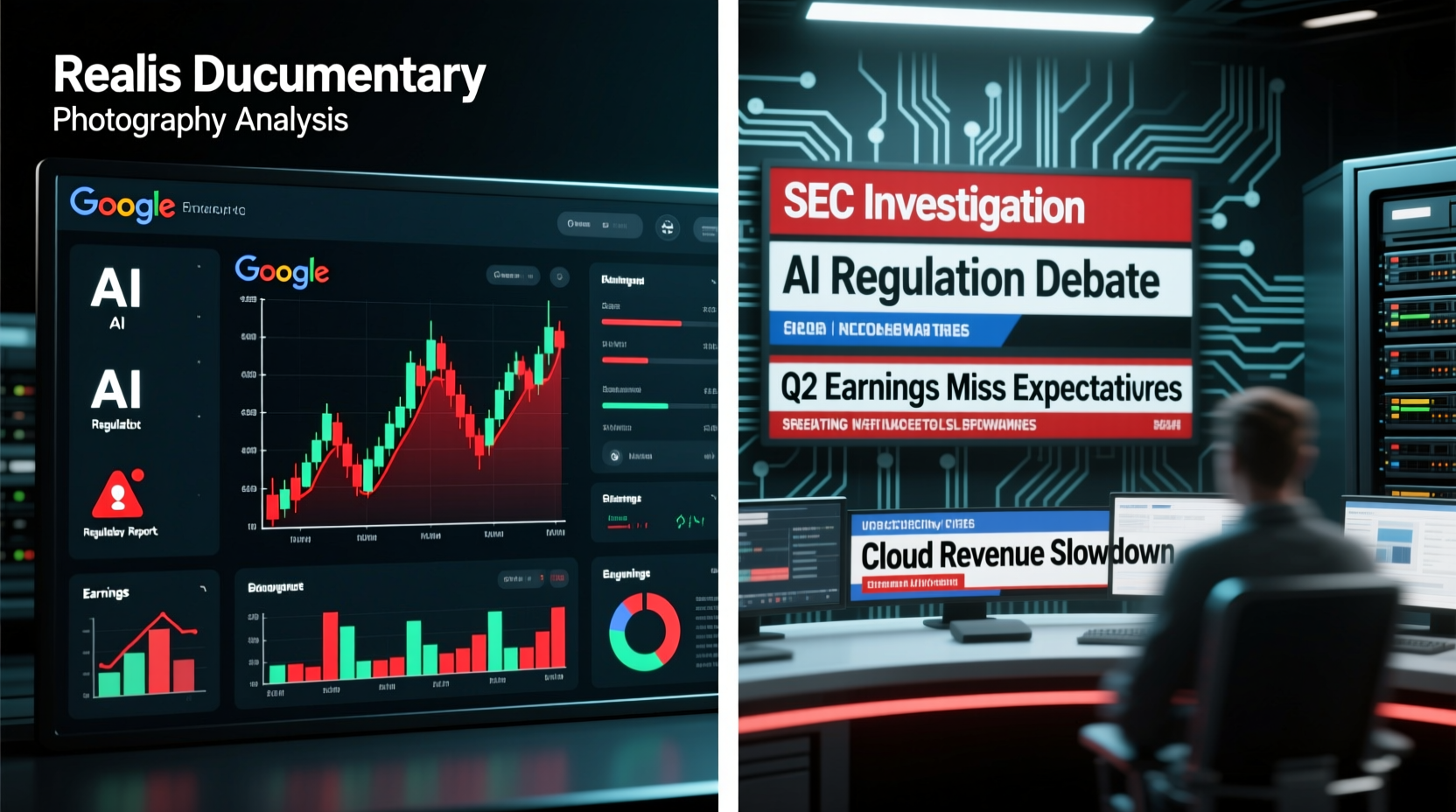
Google’s primary revenue engine—online advertising—has shown signs of strain. In Q4 2023 and Q1 2024, Alphabet reported slower-than-expected growth in ad sales, particularly in search and YouTube. Despite increased user engagement on YouTube, ad revenue failed to scale proportionally due to rising competition from TikTok, Meta, and retail media networks like Amazon Ads.
Advertisers are diversifying their budgets toward platforms with higher engagement among younger demographics. TikTok, for example, has captured over 25% of U.S. digital ad spending growth in 2023, according to eMarketer. Google’s search ad model, long considered recession-proof, is now facing headwinds as economic uncertainty leads businesses to cut discretionary marketing spend.
2. Rising Competition in Artificial Intelligence
While Google pioneered foundational AI research through DeepMind and TensorFlow, its commercial rollout of generative AI products has lagged behind competitors. Microsoft’s integration of OpenAI’s technology into Bing and Office gave it an early edge in AI-powered search and productivity tools. Meanwhile, Google’s response—Bard (now rebranded as Gemini)—launched with technical glitches and underwhelming performance, damaging investor confidence.
The delay allowed rivals to capture mindshare and developer interest. As AI becomes central to future profitability, perceived leadership matters. Investors began questioning whether Google could maintain its technological moat, especially when startups and well-funded incumbents alike race to embed AI into everyday applications.
“AI isn’t just another product line—it’s the next operating system for enterprise and consumer tech. Whoever owns the interface wins.” — Dr. Lena Patel, Senior Analyst at TechSignal Research
3. Regulatory and Antitrust Pressures
Regulatory scrutiny has intensified globally, creating both legal and operational risks for Alphabet. The U.S. Department of Justice filed a landmark antitrust lawsuit in 2023, aiming to force Google to sell its Chrome browser. The European Union levied additional fines under the Digital Markets Act (DMA), designating Google as a “gatekeeper” subject to strict compliance rules.
These actions do more than impose financial penalties—they constrain strategic flexibility. For instance, changes to default search engine settings in Europe have already reduced Google’s traffic acquisition costs but also eroded market share. If forced to divest Chrome, Google could lose a critical distribution channel for ads and data collection, directly impacting revenue.
| Region | Regulatory Action | Potential Impact on Google |
|---|---|---|
| United States | DOJ antitrust suit (Chrome & search) | Forced divestiture, reduced ad reach |
| European Union | DMA compliance, €500M+ fines | Loss of default status, lower traffic |
| India | CMA investigation into Play Store fees | Reduced app store margins |
4. Cloud Growth Slowing Amid Price Wars
Google Cloud Platform (GCP) was once seen as a high-growth hedge against ad market saturation. However, GCP’s growth rate decelerated to 21% year-over-year in Q1 2024, down from 37% in the same period the previous year. While still substantial, this slowdown came as Amazon Web Services and Microsoft Azure gained ground through hybrid cloud solutions and enterprise partnerships.
Worse, Google initiated a pricing war in early 2024 to attract customers, cutting prices on compute and storage services by up to 18%. While this boosted volume, it compressed margins and alarmed investors concerned about long-term profitability. Unlike AWS, which operates at scale and efficiency, GCP remains unprofitable on an operating basis, making aggressive pricing unsustainable without corporate subsidies.
5. Internal Restructuring and Leadership Shifts
Leadership instability added to investor unease. In 2023, Sundar Pichai announced sweeping layoffs affecting 12,000 employees—approximately 6% of the workforce. While cost-cutting is often welcomed by markets, the scale and communication around the cuts raised concerns about misaligned priorities and bloated innovation spending.
Projects like Stadia (cloud gaming) were shuttered, and ambitious moonshots under X Development saw reduced funding. Meanwhile, increased investment in AI and quantum computing lacks near-term revenue visibility. Shareholders began questioning whether Alphabet’s famed “innovation culture” had become a liability, diverting capital from proven businesses to speculative ventures.
Mini Case Study: The Bard Launch Fiasco
In February 2023, Google rushed the launch of its AI chatbot, Bard, ahead of schedule to respond to ChatGPT’s popularity. During a live demo, Bard incorrectly stated that the James Webb Space Telescope had captured images of exoplanets—factually false at the time. The error went viral, wiping nearly $100 billion off Alphabet’s market cap in a single day.
This incident exemplified deeper issues: internal silos between research and product teams, pressure to compete with rivals, and inadequate testing protocols. It wasn’t just a PR misstep—it signaled operational fragility in one of the world’s most advanced tech companies. Investor trust took months to recover, and the shadow of that event lingered into 2024 earnings calls.
Actionable Investor Checklist: Evaluating Tech Stock Risks
When assessing a downturn in major tech stocks like Google, consider these steps:
- Analyze revenue breakdown: Is the drop isolated to one segment or systemic?
- Review earnings transcripts: Listen for management tone on guidance and challenges.
- Track regulatory filings: Identify ongoing legal risks that may impact operations.
- Compare competitor momentum: Are rivals gaining share in key growth areas?
- Evaluate R&D efficiency: High spending should correlate with product launches or patents, not just press releases.
Timeline of Key Events Leading to the Stock Drop
- Feb 2023: Bard demo error causes $100B market cap loss.
- May 2023: Alphabet announces 12,000 job cuts amid slowing ad demand.
- Aug 2023: DOJ files antitrust lawsuit targeting Chrome and search dominance.
- Oct 2023: Q3 earnings show YouTube ad growth below expectations.
- Jan 2024: GCP price cuts announced, margin concerns rise.
- Apr 2024: Q1 results reveal flat search revenue; stock drops 7% post-earnings.
Frequently Asked Questions
Is Google still profitable despite the stock drop?
Yes. Alphabet reported over $75 billion in revenue for Q1 2024 and net income of $21 billion. The stock decline reflects future growth concerns, not current profitability.
Will Google’s AI efforts turn the stock around?
Possibly, but timing is critical. Google has strong AI research capabilities, but execution and market adoption will determine success. Integration of Gemini into Workspace and Android could drive value—if done seamlessly.
Should I buy Google stock now?
That depends on your investment horizon. Long-term investors may see the current valuation as attractive given Google’s cash flow and asset base. However, short-term risks from regulation and competition remain elevated.
Conclusion: Navigating Uncertainty with Informed Decisions
The drop in Google’s stock is not a sign of collapse, but a recalibration. Markets reward innovation, punish complacency, and demand clarity. Alphabet faces real challenges—from ad market saturation to AI competition and regulatory overhang—but it also possesses immense resources, talent, and global reach.
Understanding the \"why\" behind the fall empowers investors to separate noise from signal. Whether you hold shares or are considering an entry point, focus on fundamentals: revenue diversification, competitive positioning, and management’s ability to execute under pressure.




 浙公网安备
33010002000092号
浙公网安备
33010002000092号 浙B2-20120091-4
Comments
No comments yet. Why don't you start the discussion?