
In the narrative of Jesus’ birth, one pivotal moment stands out: Joseph and Mary’s journey from Nazareth to Bethlehem. This seemingly simple trip carries deep theological, historical, and prophetic significance within the Christian tradition. While modern readers may view it as a logistical detail, the journey to Bethlehem was essential for fulfilling ancient prophecies, complying with imperial decrees, and affirming Jesus’ rightful place in Israel’s royal lineage. Understanding the biblical reasons behind this journey reveals how divine purpose intersected with human history.
The Role of the Roman Census
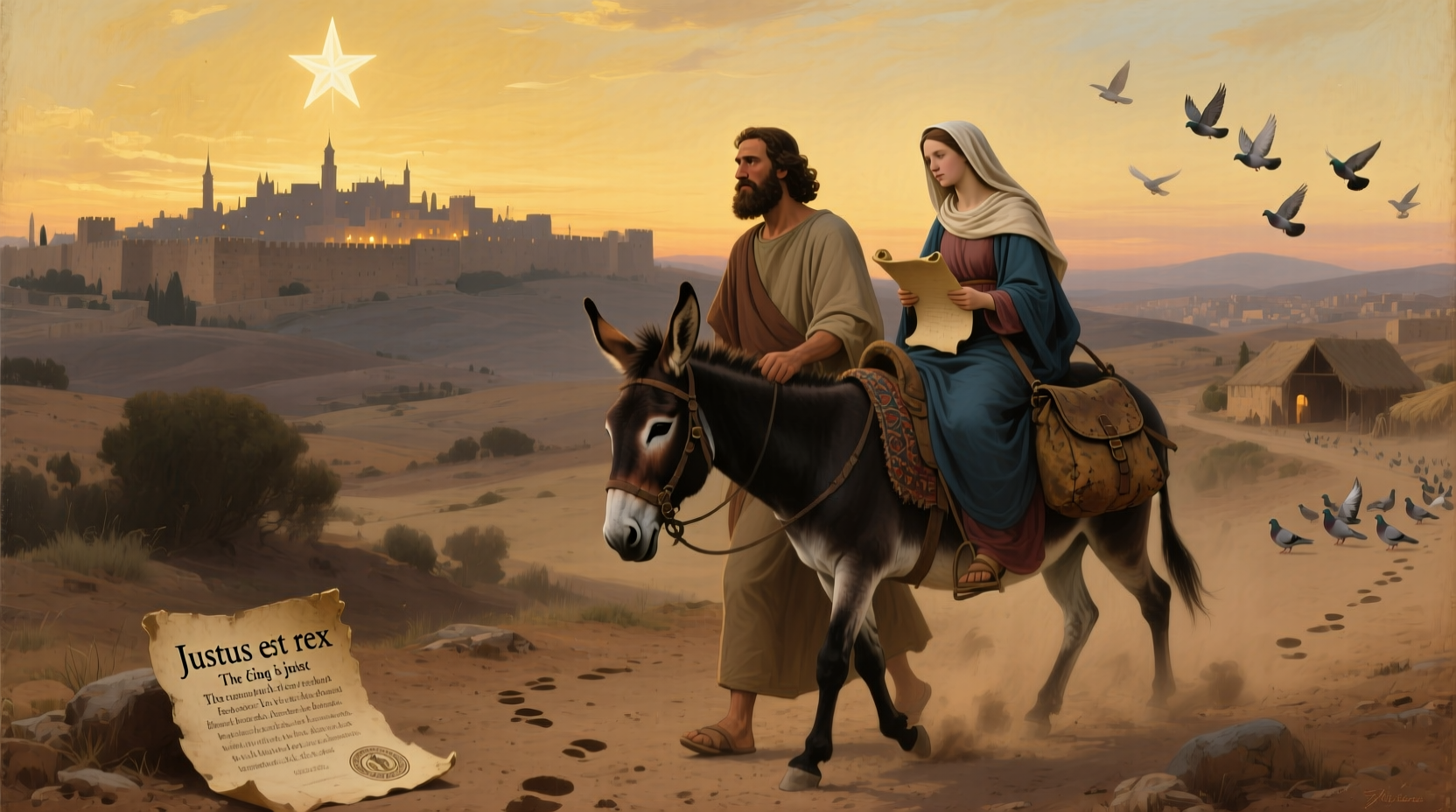
The most immediate reason for Joseph and Mary’s journey is recorded in the Gospel of Luke:
“But Joseph also went up from Galilee, from the town of Nazareth, to Judea, to the city of David, which is called Bethlehem, because he was of the house and lineage of David, to be registered with Mary, his betrothed, who was with child.” — Luke 2:4–5 (ESV)
This passage identifies a decree issued by Caesar Augustus for a census “of all the world.” Historically, Rome conducted censuses to assess population and taxation. While scholars debate the exact timing and administrative details—particularly Quirinius’ governorship—the biblical account emphasizes that Joseph, being of Davidic descent, had to return to his ancestral town, Bethlehem, to register.
Bethlehem, known as “the city of David,” held symbolic weight. It was not merely a geographical location but a dynastic origin point. By requiring registration in ancestral towns, Roman policy inadvertently facilitated the fulfillment of messianic prophecy.
Fulfillment of Messianic Prophecy
Long before Caesar’s edict, centuries earlier, the prophet Micah foretold the Messiah’s birthplace:
“But you, O Bethlehem Ephrathah, who are too little to be among the clans of Judah, from you shall come forth for me one who is to be ruler in Israel, whose coming forth is from of old, from ancient days.” — Micah 5:2 (ESV)
This prophecy, written around 700 years before Christ, specified not only the town but even distinguished between the two Bethlehems in Israel—identifying Bethlehem Ephrathah in Judah, not the lesser-known one in Zebulun. The precision of this prediction underscores its importance in Jewish expectation.
Centuries later, when the Magi inquired about the newborn king, Jerusalem’s religious leaders cited Micah’s prophecy to confirm Bethlehem as the expected birthplace of the Messiah (Matthew 2:5–6). Thus, Joseph and Mary’s journey ensured that Jesus would be born in the divinely designated town, aligning His birth with scriptural promise.
Why Lineage Mattered
Jewish identity and messianic claims were deeply tied to genealogy. The Messiah was expected to descend from King David through the tribe of Judah (2 Samuel 7:12–13; Isaiah 11:1). Joseph, though not Jesus’ biological father, was legally His guardian and part of the Davidic line. By traveling to Bethlehem—the city where David was born and anointed—Joseph affirmed Jesus’ legal right to the throne of David.
Mary, too, was likely of Davidic descent. Some early traditions and textual clues (such as her kinship with Elizabeth, a descendant of Aaron) suggest she shared tribal ties that preserved Davidic lineage through female lines—a recognized practice under Jewish law when no male heirs existed (Numbers 27:8–11).
| Reason | Biblical Basis | Significance |
|---|---|---|
| Roman Census | Luke 2:1–5 | Historical mechanism enabling prophecy fulfillment |
| Messianic Prophecy | Micah 5:2; Matthew 2:6 | Divine foreknowledge and plan |
| Dynastic Lineage | 2 Samuel 7:12–13; Luke 1:27, 2:4 | Jesus' rightful claim to David's throne |
| Divine Guidance | Matthew 1:20–21; Luke 1:35 | God orchestrating events behind the scenes |
| Spiritual Symbolism | John 10:1; Revelation 5:5 | Bethlehem as \"House of Bread,\" foreshadowing Christ as Bread of Life |
Divine Orchestration Behind Human Events
The convergence of Roman politics, Jewish ancestry, and divine prophecy illustrates a central theme in Scripture: God works through human systems to accomplish His purposes. As theologian Dr. Timothy Keller observes:
“God uses even pagan empires and bureaucratic policies to bring about His redemptive plan. The census wasn’t just a historical footnote—it was a divine instrument.” — Dr. Timothy Keller, Pastor and Theologian
There is no indication that Caesar or Quirinius had any awareness of Israelite prophecy. Yet their administrative decisions became the means by which God ensured Jesus’ birth in Bethlehem. This reflects the biblical understanding that “the Most High rules over kingdoms of men and gives them to whom He will” (Daniel 4:17).
Similarly, Joseph’s obedience—though inconvenient, especially given Mary’s advanced pregnancy—demonstrates faithful submission to both civil authority and divine calling. The arduous 90-mile journey over rough terrain highlights the humility and hardship surrounding Christ’s entrance into the world.
Symbolism of Bethlehem: House of Bread
Beyond geography and genealogy, Bethlehem’s name holds profound symbolic meaning. In Hebrew, *Beit Lechem* means “House of Bread.” This becomes a powerful metaphor when Jesus later declares, “I am the bread of life” (John 6:35). Born in the “House of Bread,” Jesus embodies spiritual nourishment for the world.
Additionally, Bethlehem was associated with shepherds—keepers of flocks destined for temple sacrifices. The fact that angels announced Christ’s birth to nearby shepherds (Luke 2:8–14) reinforces the idea that Jesus is the ultimate sacrificial lamb, born in a town linked to sacrificial animals.
FAQ
Was the Roman census historically accurate?
Scholars have debated the exact chronology, particularly because Quirinius’ known census occurred in AD 6, after Herod’s death. However, evidence suggests multiple registrations may have occurred, or that Quirinius held an earlier administrative role. Ancient records are incomplete, but it was common for regional governors to conduct local censuses under imperial authority. Luke’s attention to historical detail elsewhere supports his general reliability.
Could Jesus be considered the “son of David” if Joseph wasn’t His biological father?
Yes. Under Jewish law, legal lineage determined inheritance and royal claims. Joseph’s adoption of Jesus conferred Davidic rights. Additionally, Matthew’s genealogy traces Joseph’s line to establish Jesus’ legal messiahship, while Luke’s may reflect Mary’s lineage, preserving biological descent.
Why didn’t Mary and Joseph stay in an inn?
The Greek word *katalyma* (translated “inn”) can also mean “guest room.” Many homes in Bethlehem had lower areas for animals, especially during crowded times like a census. It’s likely they stayed with relatives, but due to overcrowding, used a space where animals were kept. This humble setting fulfills the theme of Christ’s lowly entry into the world.
Step-by-Step Timeline of the Journey
- Decree Issued: Caesar Augustus orders a census across the Roman Empire.
- Preparation: Joseph prepares for the journey from Nazareth to Bethlehem (approx. 90 miles).
- Travel: Joseph and Mary travel south through Samaria or along the Jordan Valley, a journey taking several days.
- Arrival: They reach Bethlehem, find limited lodging, and take shelter in a dwelling with animal quarters.
- Registration: Joseph registers according to his lineage in the city of David.
- Birth: Jesus is born, wrapped in swaddling cloths, and placed in a manger.
- Announcement: Angels appear to shepherds, declaring the Savior’s birth in Bethlehem.
Conclusion
The journey of Joseph and Mary to Bethlehem was far more than a historical footnote. It was a convergence of prophecy, politics, lineage, and divine orchestration. Every element—the Roman census, Davidic ancestry, Micah’s ancient prediction, and the symbolism of Bethlehem itself—points to a carefully designed plan unfolding across centuries.
Understanding these biblical reasons deepens appreciation for the Christmas story, transforming it from a sentimental tale into a profound act of divine faithfulness. The Son of God entered the world not in splendor, but in obscurity, fulfilling every promise made to Israel.




 浙公网安备
33010002000092号
浙公网安备
33010002000092号 浙B2-20120091-4
Comments
No comments yet. Why don't you start the discussion?