
In the critically acclaimed anime and manga series Your Lie in April, Kaori Miyazono's death is not just a plot twist—it's a narrative cornerstone that redefines the emotional trajectory of every major character. Her passing reverberates through the lives of Kōsei Arima, Tsubaki Sawabe, and even the audience, leaving behind a legacy shaped by music, honesty, and impermanence. To understand why Kaori died—and why it matters—requires more than a summary of her illness. It demands an exploration of storytelling intent, thematic depth, and the cultural context of Japanese narratives about youth, sacrifice, and meaning.
The Narrative Purpose of Kaori’s Death
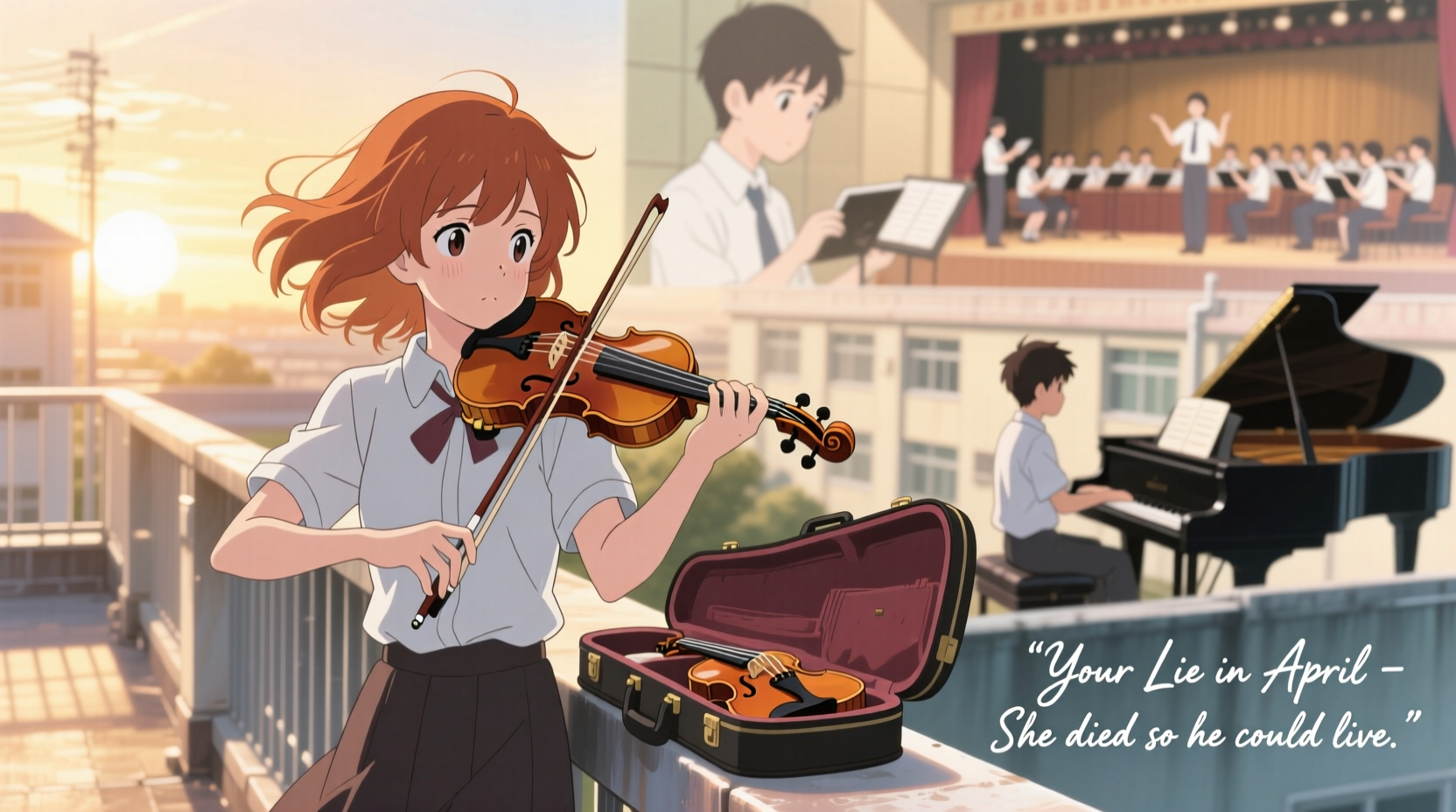
Kaori is introduced as a vibrant, free-spirited violinist who reignites Kōsei’s passion for piano after years of silence following his mother’s strict tutelage and eventual death. From the outset, she embodies spontaneity, emotional authenticity, and a deep connection to music as self-expression. Yet, subtle clues throughout the series foreshadow her fragility: frequent hospital visits, sudden collapses, and moments where her energy seems almost too bright to be sustainable.
Her diagnosis with leukemia is revealed late in the story, reframing earlier scenes with poignant clarity. The revelation isn’t meant merely to shock; it serves a deeper purpose. Kaori’s terminal illness becomes the lens through which the series examines how people confront mortality—not just her own, but those around her. Her decision to hide her condition from Kōsei stems from a desire to give him freedom—to allow him to fall in love with the version of her that exists in the moment, unburdened by pity or sorrow.
“People live on in the hearts of others.” — Kaori Miyazono, Your Lie in April
This quote encapsulates the core philosophy of the series: that impact transcends lifespan. Kaori doesn’t survive, but her influence does. She alters Kōsei’s relationship with music, liberating him from mechanical perfection toward emotional truth. In this way, her death is not a failure, but a culmination of her role as a catalyst for transformation.
Sociocultural Context: Illness and Youth in Japanese Media
Kaori’s fate reflects a recurring motif in Japanese storytelling—the tragic beauty of youthful lives cut short. This theme, known as *mono no aware* (the pathos of things), emphasizes the bittersweet awareness of impermanence. Characters like Kaori are often portrayed not as victims, but as agents who use their limited time to inspire change.
In contrast to Western narratives that may focus on fighting illness or miraculous recoveries, Japanese media frequently embraces acceptance. Healing isn’t always physical; sometimes, it’s emotional or spiritual. Kaori doesn’t seek a cure as much as she seeks connection. Her final letter to Kōsei—confessing her love and explaining her choices—isn’t a lament, but a gift. It allows Kōsei to grieve honestly and grow beyond guilt.
Impact on Kōsei Arima: Grief as Liberation
Kaori’s death forces Kōsei to confront emotions he has long suppressed. After his mother’s death, he dissociated from music, playing only technically perfect performances devoid of soul. Kaori teaches him to feel again—not just joy, but vulnerability, longing, and ultimately, loss.
Her absence doesn’t silence him; it empowers him. In the final concert scene, Kōsei plays a solo piece dedicated to Kaori, no longer relying on sheet music or external validation. He plays from memory, from emotion. This moment signifies his full recovery—not as a pianist, but as a person capable of loving and mourning authentically.
Tsubaki Sawabe, Kōsei’s childhood friend, also undergoes profound growth. Initially jealous of Kaori, she gradually recognizes the purity of Kaori’s intentions. After Kaori’s death, Tsubaki steps back, allowing Kōsei space to process his grief. Her maturity underscores another quiet tragedy: the friends who love from the sidelines, supporting others through pain they cannot fully share.
A Closer Look: Timeline of Kaori’s Journey
Kaori’s arc unfolds over a compressed but emotionally dense timeline. Understanding the progression helps clarify why her death feels inevitable, yet still devastating.
- First Appearance: Kaori enters Kōsei’s life with boldness, challenging his rigid approach to music.
- Musical Partnership: They perform together, with Kaori pushing Kōsei to improvise and express emotion.
- Health Decline: She begins missing rehearsals, citing vague reasons; faints during a performance.
- Hospitalization Revealed: Ritsu, Kaori’s friend, discloses her leukemia diagnosis to Kōsei.
- Final Performance: Kaori plays one last time at a recital, visibly weakened but radiant.
- Death and Letter: She passes away off-screen; her letter reaches Kōsei months later.
- Legacy: Kōsei rediscovers music as personal expression, honoring her memory.
Do’s and Don’ts: Interpreting Tragic Character Arcs
| Do’s | Don’ts |
|---|---|
| Consider the thematic purpose of the character’s death | Dismiss it as mere melodrama or shock value |
| Analyze how other characters evolve because of the loss | Focus only on the deceased character’s suffering |
| Reflect on real-world parallels about love and mortality | Expect closure or redemption arcs for everyone affected |
| Appreciate the artistic choice to leave some questions unanswered | Demand logical consistency over emotional truth |
Mini Case Study: A Fan’s Emotional Response
After watching the final episode, college student Yuki M. reported feeling “emotionally wrecked, but changed.” She had recently lost her grandmother to cancer and avoided talking about it. Watching Kōsei struggle to accept Kaori’s death gave her permission to cry, journal, and eventually speak about her grief. “I realized,” she said, “that loving someone doesn’t end when they do. Kaori taught me that memories can be music too.”
This response illustrates how fictional narratives can serve as emotional conduits. Kaori’s death, while fictional, resonates because it mirrors real experiences of loss, miscommunication, and delayed understanding.
Frequently Asked Questions
Did Kaori have a chance to survive?
Medically, the series implies her leukemia was aggressive and likely in advanced stages when diagnosed. While treatment is shown, there is no indication of remission. Narratively, survival would undermine the story’s focus on living meaningfully in the face of inevitability.
Why didn’t Kaori tell Kōsei the truth earlier?
Kaori wanted Kōsei to experience love without the shadow of her illness. She feared he would treat her differently or hold back emotionally if he knew. Her deception was an act of care, not secrecy for its own sake.
Is Kaori’s death realistic?
While rare, young adults can develop leukemia, and outcomes vary. The portrayal avoids graphic medical detail, focusing instead on emotional realism. Her gradual decline, fatigue, and hospital stays align with common symptoms, making her journey believable within the story’s tone.
Conclusion: Why Kaori Had to Die
Kaori’s death is not arbitrary. It is essential. Without it, Kōsei might have returned to the piano, but he would not have reclaimed his heart. Without it, the series would lack its central metaphor: that music, like life, gains depth through transience. A sustained note means nothing without silence around it.
The brilliance of Your Lie in April lies in its refusal to offer easy answers. There is no resurrection, no posthumous duet. Instead, there is growth—slow, painful, and real. Kaori lives on not in miracles, but in melodies played with feeling, in letters reread on quiet nights, in the courage to say “I love you” before it’s too late.




 浙公网安备
33010002000092号
浙公网安备
33010002000092号 浙B2-20120091-4
Comments
No comments yet. Why don't you start the discussion?