
In 1971, basketball fans were stunned when Lew Alcindor, the dominant center for the Milwaukee Bucks and already a three-time NBA All-Star, announced he was changing his name to Kareem Abdul-Jabbar. The news sparked widespread discussion—some confused, others critical. But for Abdul-Jabbar, the decision was neither impulsive nor performative. It was the culmination of a deep personal journey rooted in identity, faith, and resistance to systemic erasure. His transformation from Lew Alcindor to Kareem Abdul-Jabbar wasn’t just about a new name; it was a declaration of self-reclamation during a pivotal era in American history.
The Early Life of Lew Alcindor
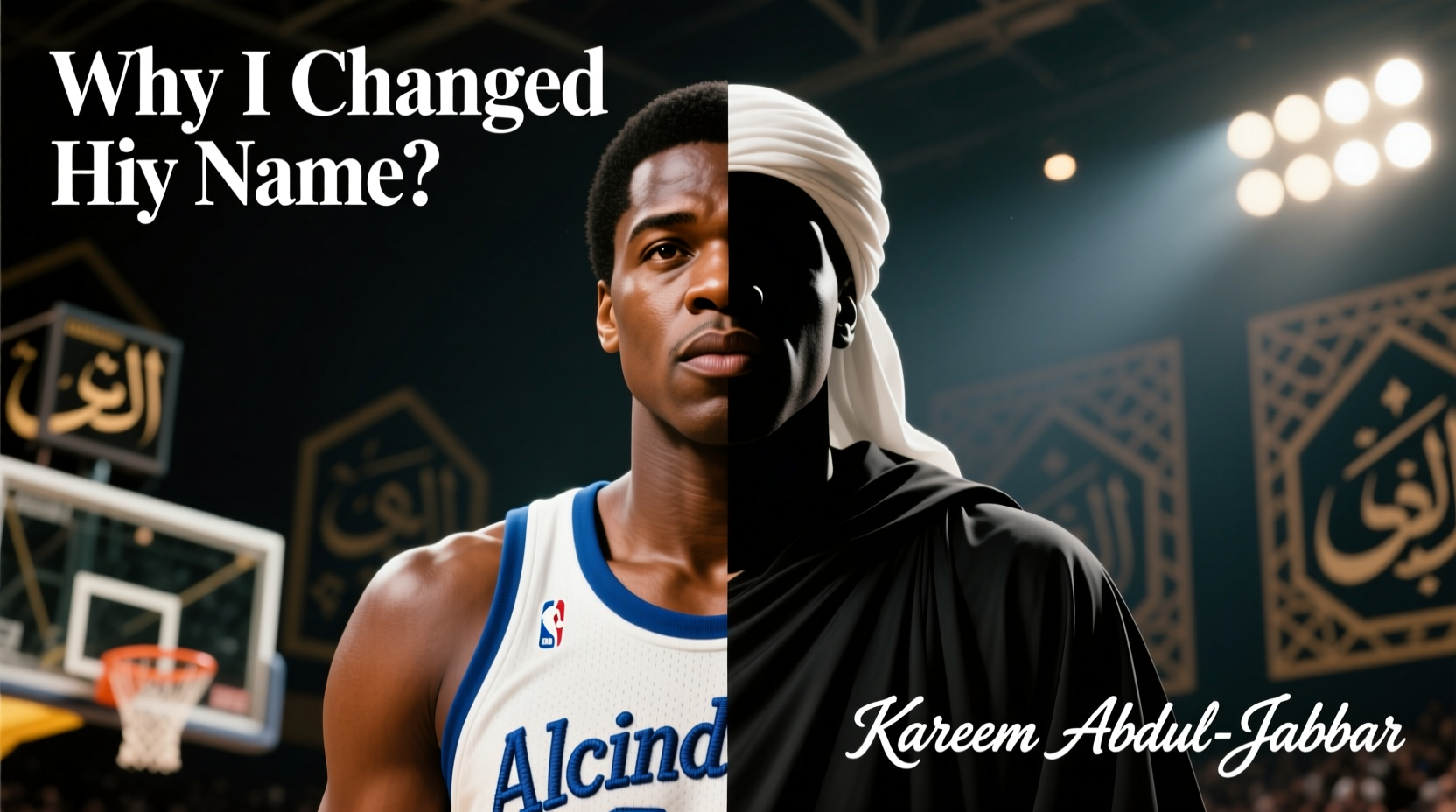
Born Ferdinand Lewis Alcindor Jr. on April 16, 1947, in New York City, he grew up in a Catholic household in Harlem and later moved to the Inwood neighborhood. From an early age, his height and athleticism set him apart. By high school, he was a national sensation, dominating at Power Memorial Academy under coach Jack Donohue. He led his team to a 71-game winning streak and earned accolades as the best high school player in the country.
He continued his ascent at UCLA, where under legendary coach John Wooden, he won three consecutive NCAA championships (1967–1969) and was named Most Outstanding Player in each tournament. Despite his success, Alcindor often felt alienated. As one of the few Black players in a predominantly white institution, he grappled with racial prejudice and a growing awareness of social injustice.
“Basketball was my craft, but my soul was searching for something deeper than fame or points.” — Kareem Abdul-Jabbar
A Spiritual Awakening: Embracing Islam
The late 1960s were a time of upheaval in America. The civil rights movement, the Vietnam War, and the assassinations of Martin Luther King Jr. and Malcolm X deeply affected Alcindor. He began studying various religions and philosophies, seeking answers to questions about identity, justice, and purpose. During this period, he encountered the teachings of Elijah Muhammad and the Nation of Islam.
In 1968, Alcindor converted to Islam, a decision that marked a turning point in his life. He rejected the name \"Lew,\" which he viewed as a slave name—a derivative of names imposed on African ancestors during colonization and enslavement. Adopting a Muslim identity meant shedding a legacy of oppression and embracing a heritage he felt had been erased.
His new name, Kareem Abdul-Jabbar, means “Generous Servant of the Almighty” in Arabic. Each part carried significance:
- Kareem: Generous, noble
- Abdul: Servant of
- Jabbar: The Almighty (one of the 99 names of Allah)
Public Reaction and Personal Resolve
When Abdul-Jabbar publicly announced his name change in 1971, the response was mixed. Some media outlets refused to use his new name, continuing to refer to him as \"Lew.\" Fans were puzzled or even hostile. Teammates and coaches, however, largely respected his decision. Oscar Robertson, his teammate on the Bucks, stated, “It’s his name. If that’s what he wants to be called, that’s what we call him.”
The resistance he faced underscored broader societal tensions. At the time, many Americans—especially in mainstream media—viewed Islam with suspicion, particularly when associated with Black empowerment movements. Yet Abdul-Jabbar remained steadfast. He saw the name change not as rejection of America, but as affirmation of his right to self-definition.
This act of renaming paralleled those of other prominent Black figures: Muhammad Ali (born Cassius Clay), Kwame Ture (formerly Stokely Carmichael), and Haki Madhubuti (formerly Don L. Lee). These transformations were not about erasing the past, but about reclaiming agency in a world that had long denied it.
Timeline of Transformation
- 1968: Converts to Islam after extensive study of religious and philosophical texts.
- 1970: Begins using the name Kareem Abdul-Jabbar privately and in Muslim communities.
- January 1971: Officially announces the name change to the public and media.
- 1971–1972: Faces resistance from some media outlets; gradually gains wider acceptance.
- 1975: Leads the Lakers to an NBA championship as Kareem Abdul-Jabbar, cementing his legacy under his chosen name.
Cultural and Historical Context
Abdul-Jabbar’s decision must be understood within the context of the Black Power movement. This era emphasized pride in African heritage, self-determination, and resistance to assimilation into white-dominated culture. Changing one’s name became a political and spiritual act—a way to break free from colonial constructs.
For Abdul-Jabbar, the name Lew Alcindor represented a version of himself shaped by external expectations. Kareem Abdul-Jabbar symbolized authenticity. As he later wrote in his memoir *Giant Steps*:
“I didn’t want to be a ‘credit to my race.’ I wanted to be proud of my race.” — Kareem Abdul-Jabbar
This sentiment reflects a broader desire among African Americans to define themselves on their own terms—not through the lens of white approval, but through cultural pride and spiritual grounding.
Legacy and Impact
Today, Kareem Abdul-Jabbar is widely recognized not only as one of the greatest basketball players of all time—holding records for most points scored in NBA history until 2023—but also as a thoughtful intellectual and advocate for civil rights. His name change paved the way for future athletes to embrace their identities unapologetically.
Modern figures like Mahmoud Abdul-Rauf, who faced suspension for refusing to stand during the national anthem, and LeBron James, who has spoken openly about racial justice, follow in a tradition Abdul-Jabbar helped shape. He demonstrated that athletes could be more than entertainers—they could be voices of conscience.
| Aspect | Lew Alcindor Era | Kareem Abdul-Jabbar Era |
|---|---|---|
| Identity | Assimilated, Catholic upbringing | Islam, African-centered identity |
| Public Persona | Reserved, sometimes criticized as aloof | Confident, intellectually engaged |
| Social Engagement | Limited public commentary | Active in civil rights, education, and policy |
| Media Reception | Widely praised for talent | Mixed initially, now respected for integrity |
| Spiritual Foundation | Catholicism | Islamic faith and Sufi influences |
Frequently Asked Questions
Why didn’t Kareem Abdul-Jabbar keep his birth name?
He viewed “Lew Alcindor” as a name tied to a history of slavery and cultural erasure. By choosing a name with Arabic and Islamic meaning, he reclaimed his identity and honored his spiritual beliefs.
Was Kareem Abdul-Jabbar forced to change his name?
No. The change was entirely voluntary and deeply personal. It followed years of spiritual exploration and a commitment to living authentically.
Did the NBA accept his new name immediately?
No. Many broadcasters and journalists resisted at first, continuing to use “Lew.” However, over time—and especially as Abdul-Jabbar’s excellence on the court became undeniable—the new name gained universal acceptance.
Tips for Understanding Identity Transformations
- Listen to individuals’ stories without judgment.
- Avoid reducing name changes to mere publicity stunts.
- Recognize that names can be acts of resistance, healing, and rebirth.
- Educate yourself on the historical context of naming practices in marginalized communities.
- Use correct pronunciations and spellings—it matters.
Conclusion: A Name That Changed History
Kareem Abdul-Jabbar’s transformation from Lew Alcindor was far more than a celebrity rebrand. It was a courageous assertion of identity in the face of pressure to conform. His journey reminds us that names are not neutral—they carry weight, memory, and meaning. By choosing his own name, Abdul-Jabbar asserted control over his narrative, setting a precedent for generations of athletes and public figures to live authentically.
Today, as conversations around race, religion, and identity continue to evolve, his story remains profoundly relevant. It challenges us to reflect: How do we honor our roots? How do we resist systems that erase individuality? And how can a single decision—like changing a name—become a powerful statement of truth?




 浙公网安备
33010002000092号
浙公网安备
33010002000092号 浙B2-20120091-4
Comments
No comments yet. Why don't you start the discussion?