
In the Netflix series You, the relationship between Joe Goldberg and Love Quinn is one of the most complex and disturbing portrayals of romantic entanglement in modern television. What begins as a passionate connection between two seemingly damaged souls evolves into a deadly power struggle. The pivotal moment—when Love decides she must kill Joe—is not an impulsive act but the culmination of psychological warfare, betrayal, and self-preservation. Understanding this turning point requires a deep dive into both characters’ psyches, their shared delusions of love, and the inevitable collision of two narcissists who believe they are the heroes of their own stories.
The Illusion of Perfect Compatibility
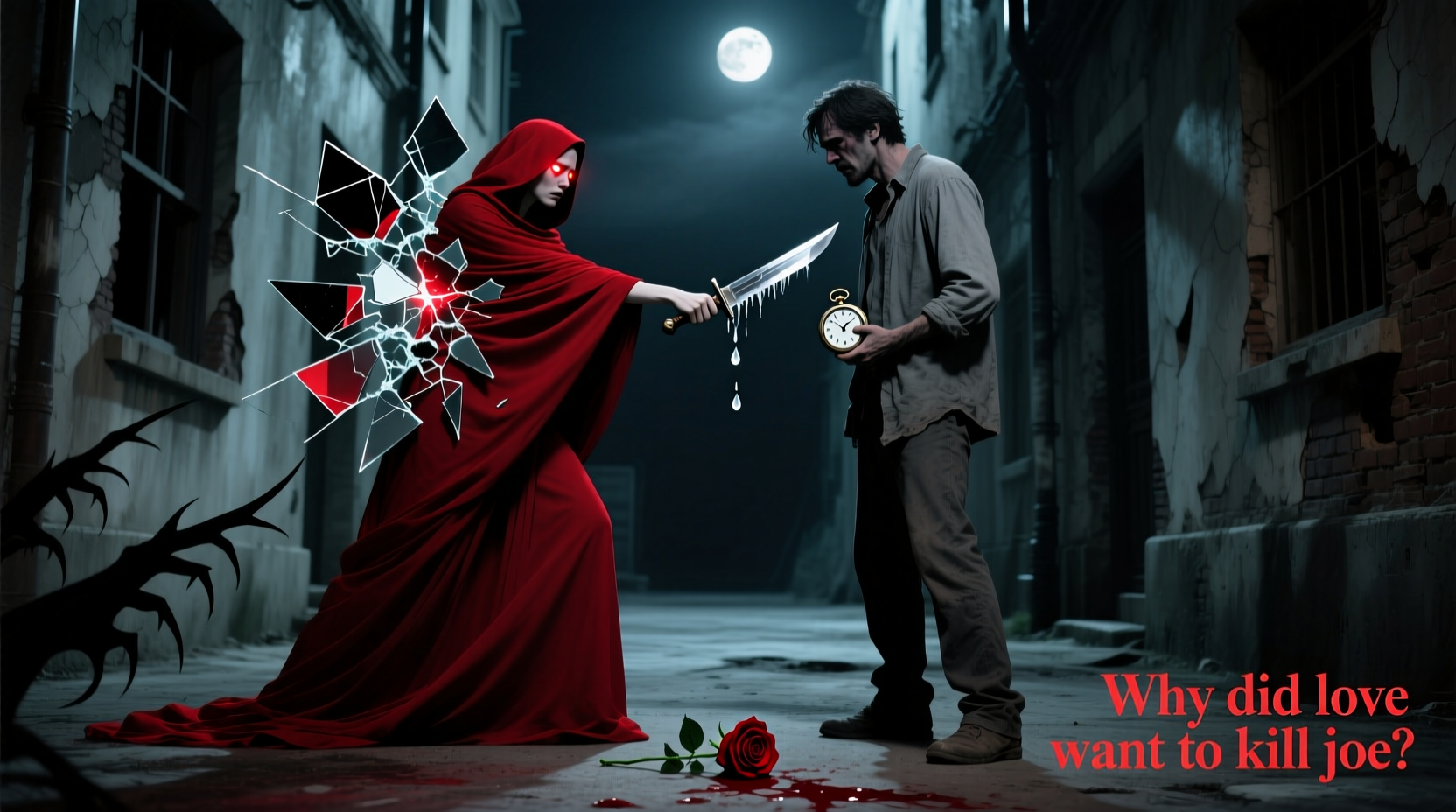
From the moment Joe and Love meet, there’s an eerie sense of alignment. Both are intelligent, charming, and deeply disturbed individuals who mask their violent tendencies behind curated personas of normalcy. Joe sees in Love a woman who understands him—someone who appreciates art, values family (at least outwardly), and shares his disdain for superficiality. Love, in turn, is drawn to Joe’s intensity, stability, and apparent devotion. They bond over shared trauma: Joe lost his mother to abuse and neglect; Love endured emotional manipulation from her adoptive parents and the pressure of maintaining a perfect image.
This perceived compatibility creates a dangerous myth: that they are soulmates capable of building a “normal” life together. But their version of normal is built on secrets, control, and murder. Joe kills to protect their relationship; Love kills to preserve her autonomy and legacy. When both realize the other is not just flawed but fundamentally dangerous, the foundation cracks.
The Breaking Point: Discovery and Betrayal
The central catalyst for Love’s decision to kill Joe occurs when she uncovers the full extent of his deception. It’s not merely that he has killed before—Love herself has committed murder—but that he lied directly to her face about killing her brother, Forty. This betrayal cuts deeper than any other because it violates the sacred narrative she constructed: that they were rebuilding lives together, free from the sins of their pasts.
When Love finds the hidden room containing evidence of Joe’s crimes—including recordings, mementos, and confirmation of Forty’s death—she doesn’t react with shock alone. She reacts with strategic clarity. Unlike previous victims who were emotionally overwhelmed or naive, Love is a predator too. She recognizes Joe not as a lover but as a threat to her survival and her child’s future.
“Love didn’t fall out of love with Joe. She fell out of fear—and realized she was stronger.” — Dr. Lena Peterson, Clinical Psychologist specializing in narcissistic personality dynamics
Psychological Parallels: Two Sides of the Same Monster
To understand why Love wants to kill Joe, it's essential to recognize that they are mirror images of each other. Below is a comparison of their core traits and behaviors:
| Attribute | Joe Goldberg | Love Quinn |
|---|---|---|
| Motive for Killing | To protect relationships or eliminate threats to his ideal life | To maintain control, protect her image, or eliminate instability |
| Method | Precise, calculated, often staged as accidents | Decisive, practical (e.g., poisoning) |
| Self-Perception | Protector, misunderstood romantic | Provider, devoted mother, moral guardian |
| Relationship with Truth | Distorts reality to justify actions | Rewrites history to fit a virtuous narrative |
| Trigger for Violence | Perceived abandonment or exposure | Threat to family or autonomy |
Their similarities make coexistence impossible. In nature, two apex predators rarely share territory. In psychology, two narcissists in a relationship often engage in a silent war for dominance. Joe assumes control by default—he isolates, monitors, and manipulates. But Love quietly asserts power through emotional leverage, maternal authority, and ultimately, lethal action.
The Maternal Instinct as a Weapon
A critical factor in Love’s decision is motherhood. After giving birth to their son, Henry, Love shifts from partner to protector. Her identity becomes centered on being a “good mother,” someone who will do anything to shield her child from harm. When she learns Joe killed Forty—Henry’s uncle and a stabilizing influence in their lives—she sees Joe not just as a murderer, but as a danger to her son.
Her plan to poison Joe is framed not as revenge, but as necessity. In her mind, she isn't committing murder; she's performing triage. She even tells Joe, “I’m doing this for our son,” revealing how she rationalizes violence through the lens of maternal duty. This mirrors Joe’s own justifications—killing Beck “saved” her from a shallow life, killing others “protected” Love. Both use love as a weaponized excuse for destruction.
Timeline of Deterioration: From Unity to War
- Season 2 Opening: Joe and Love marry, believing they’ve escaped their pasts.
- Mid-Season 2: Love discovers Joe lied about Forty’s disappearance but initially suppresses suspicion.
- Later Episodes: She begins investigating, finding the hidden room beneath the bookstore.
- Climax: She confirms Joe killed Forty and plans to frame him for her own murder.
- Final Act: She poisons Joe, intending to bury him and raise Henry alone.
This progression shows that Love’s desire to kill Joe wasn’t sudden—it was a cold, methodical response to existential threat.
Mini Case Study: The Poisoned Meatballs
In the Season 2 finale, Love prepares meatballs laced with poison for Joe. On the surface, it’s a domestic scene: dinner, conversation, soft lighting. But every detail carries symbolic weight. The meatballs—homemade, lovingly prepared—are a metaphor for how Love packages violence within care. She doesn’t stab him in rage; she feeds him, nurtures him, and kills him. This reflects her entire approach to conflict: indirect, controlled, and deeply personal.
She records a video confessing to Joe’s murder, framing herself as a victim defending her child. Had Joe died, public perception would have painted Love as a tragic widow protecting her son from a hidden monster. Instead, Joe survives, turns the tables, and kills her first—burying her body in cement beneath their dream home.
This twist underscores the show’s central theme: no one wins in a battle between monsters. Both believed they were righteous. Both were wrong.
Checklist: Recognizing Toxic Partners Who Mirror Your Darkness
- Do they validate your worst impulses instead of challenging them?
- Have they helped you hide secrets rather than encouraged honesty?
- Do conflicts escalate into manipulation or threats, masked as “passion”?
- Have you ever thought, “They’re the only one who truly understands me”—even if that understanding enables destructive behavior?
- Are major decisions made in isolation from friends or family?
If multiple answers are yes, the relationship may be reinforcing harmful patterns rather than fostering growth.
Frequently Asked Questions
Did Love truly love Joe?
Yes, but in a way that blends affection with possession and control. Her love was real to her, but conditional on Joe fulfilling the role of the perfect husband and father. Once he failed that role—by killing Forty—her love transformed into survival instinct.
Why didn’t Love leave Joe instead of trying to kill him?
Leaving wouldn’t guarantee safety. Love knows Joe stalks, manipulates, and eliminates threats. She likely believed escape would lead to pursuit, exposure, or retaliation—especially concerning Henry. Eliminating him was, in her mind, the only permanent solution.
Was Joe justified in killing Love?
Legally and morally, no. But within the show’s logic, Joe acts out of self-preservation. He realizes Love has already sentenced him to death. His countermove isn’t justice—it’s the final act of a man who believes love means ownership, even over life and death.
Conclusion: The Tragedy of Mutual Destruction
Love wanted to kill Joe not out of hatred, but out of a warped sense of protection, justice, and self-preservation. She saw him as a terminal threat—one that could not be reasoned with, escaped from, or reformed. Their story is a chilling exploration of how love, when twisted by trauma and narcissism, becomes indistinguishable from annihilation.
The real tragedy isn’t that they tried to kill each other—it’s that neither ever learned to love healthily. They mistook obsession for intimacy, control for care, and murder for mercy. In the end, You forces viewers to confront an uncomfortable truth: sometimes, the person who claims to love you most is the one most willing to destroy you.




 浙公网安备
33010002000092号
浙公网安备
33010002000092号 浙B2-20120091-4
Comments
No comments yet. Why don't you start the discussion?