
Mark Cuban’s decision to step back from majority ownership of the Dallas Mavericks sent shockwaves through the NBA and business worlds alike. After two decades of hands-on leadership, passionate fan engagement, and transformative investment in the franchise, Cuban’s partial exit in 2023 marked a pivotal moment in modern sports ownership. While he didn’t fully “sell” the team in the traditional sense, his move to relinquish majority control and bring in new investors—most notably Miriam Adelson and her family—sparked widespread speculation. The real story behind this shift is not one of sudden departure, but of long-term planning, evolving priorities, and strategic recalibration.
The Ownership Shift: What Actually Happened
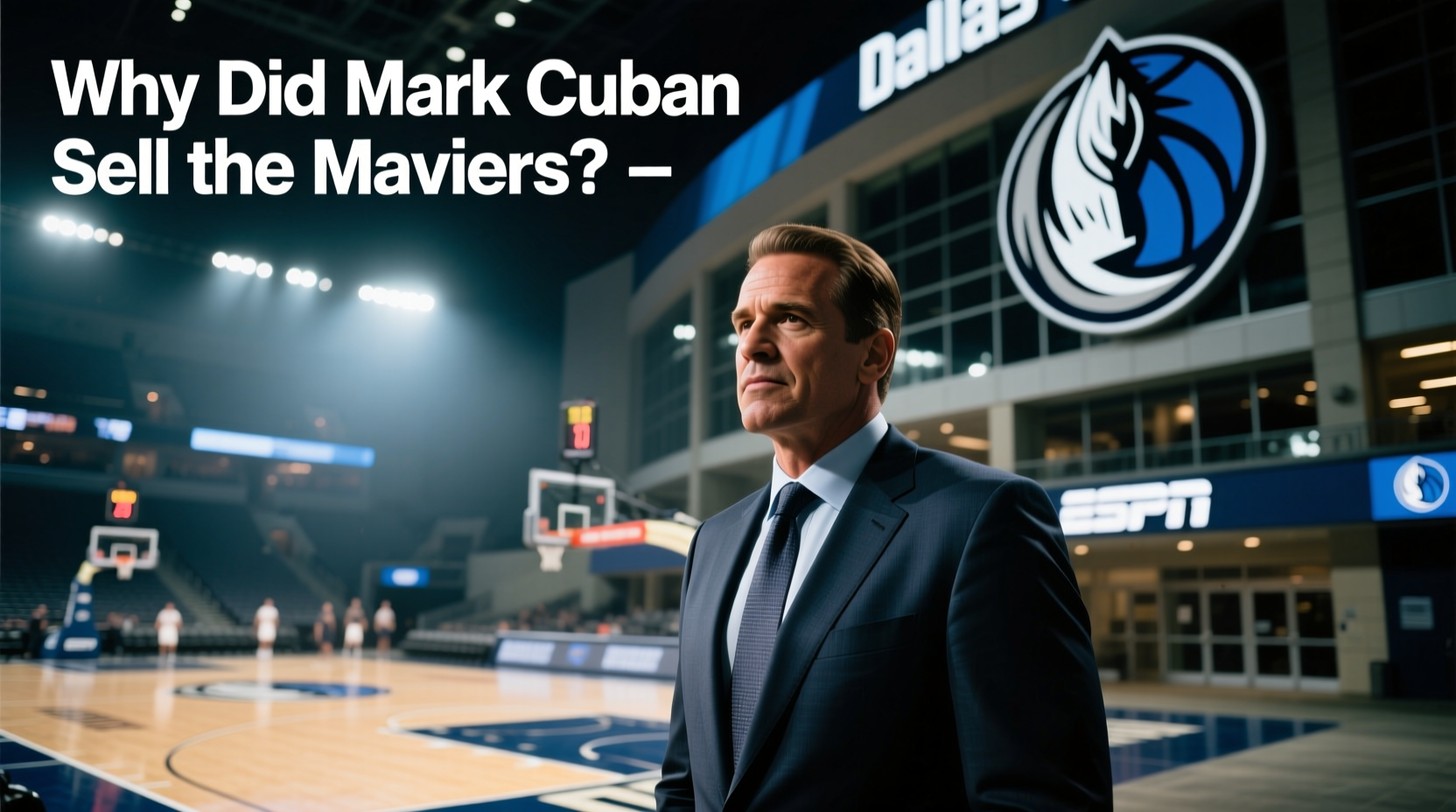
In 2023, Mark Cuban agreed to sell a controlling stake (approximately 60%) of the Dallas Mavericks to the family of billionaire Miriam Adelson, heiress to the Las Vegas Sands fortune. Cuban retained around 27% ownership and stepped down as governor of the team with the NBA, effectively ending his day-to-day control. This wasn’t a full sale but a transition designed to preserve the franchise’s stability while allowing Cuban to reduce his operational burden.
Cuban had been open for years about his desire to avoid being a “lame duck” owner—someone who stays too long past their peak involvement. In interviews, he emphasized that the goal was never to own the team forever, but to build something sustainable and then hand it off responsibly.
“We’re not selling because we want to. We’re selling because it’s the right thing to do for the future of the franchise.” — Mark Cuban, in a 2023 interview with ESPN
Reason 1: Strategic Succession Planning
One of the most compelling reasons behind Cuban’s decision was succession planning. After purchasing the Mavericks in 2000 for $285 million, he transformed them from a struggling franchise into a model NBA organization. Under his leadership, the team won its first-ever championship in 2011 and became known for innovation in analytics, player development, and fan experience.
However, Cuban recognized that sustained success required continuity beyond any single owner. By bringing in the Adelson family—a politically connected, financially robust group with deep ties to large-scale operations—he ensured the team would remain competitive and well-funded even after his eventual full exit.
Reason 2: Evolving Personal Priorities
At 65, Cuban has shifted focus toward ventures outside basketball. His investments span tech startups, healthcare innovation, blockchain, and media. He remains deeply involved in Shark Tank, speaks frequently on AI and regulation, and has expressed interest in public service, including a brief exploration of a presidential run in 2020.
Running an NBA team is a 24/7 commitment. From travel logistics to salary cap decisions and media appearances, Cuban was famously accessible—answering fan emails, attending games religiously, and engaging directly on social media. Over time, that level of involvement became unsustainable alongside his growing portfolio.
Selling a controlling stake allowed him to remain connected to the team he loves without being tethered to its daily grind.
Reason 3: Financial Timing and Valuation Peak
The timing of the deal was no accident. The Mavericks’ valuation soared in the 2020s due to several key factors:
- Strong performance by Luka Dončić, one of the league’s brightest stars
- New revenue streams from digital media rights
- Arena upgrades and increased sponsorship deals
- Overall NBA expansion and rising franchise values
The team was valued at approximately $3.5 billion in the transaction—more than 12 times what Cuban paid in 2000. For any investor, this represents a near-ideal exit point. Even though he didn’t cash out completely, monetizing a significant portion of his equity locked in enormous gains while preserving some upside.
| Year | Event | Valuation |
|---|---|---|
| 2000 | Cuban purchases team | $285 million |
| 2010 | NBA Championship win | $500 million |
| 2020 | Luka Dončić rises; new media deals | $2.5 billion |
| 2023 | Adelson family acquires majority | $3.5 billion |
Reason 4: Reducing Risk Exposure
Owning a professional sports team comes with unique risks—player injuries, league policy changes, labor disputes, and unpredictable revenues. While the NBA has been relatively stable, Cuban has always been a risk-aware investor.
By diversifying his holdings and reducing concentration in a single asset, he aligned with classic wealth preservation principles. Sports franchises are emotionally rewarding but illiquid and highly sensitive to external forces. Taking chips off the table during a high-value window was a prudent financial move.
Real Example: The Steve Ballmer Transition with the Clippers
Cuban’s approach mirrors, in part, what Steve Ballmer executed with the Los Angeles Clippers. After purchasing the team in 2014 for $2 billion, Ballmer invested heavily in facilities, analytics, and fan engagement. But unlike Cuban, Ballmer remained fully committed as majority owner.
The contrast highlights Cuban’s foresight: rather than waiting until energy or interest wanes, he engineered a controlled transition while the team was strong and desirable. This prevented a potential fire sale or chaotic handover later.
What Cuban Still Controls – And What He Doesn’t
Despite stepping back, Cuban hasn’t disappeared. He retains a meaningful minority stake and influence over basketball decisions—at least temporarily. However, ultimate authority now rests with the Adelson family, particularly Miriam Adelson’s son, Patrick, who serves as the team’s new governor.
This arrangement allows Cuban to stay involved in ways that excite him—such as mentoring young executives or advising on tech integration—without bearing the full weight of accountability.
Key Responsibilities Before vs. After the Sale
| Area | Before 2023 | After 2023 |
|---|---|---|
| Ownership Stake | ~85% | ~27% |
| Basketball Decisions | Final say | Advisory role |
| Financial Oversight | Direct control | Limited input |
| NBA Governance | Team Governor | No official role |
| Public Representation | Frequent spokesperson | Occasional commentator |
Expert Insight: The Changing Face of Sports Ownership
Sports ownership is no longer just about passion—it's increasingly institutional. Teams are viewed as legacy assets, media platforms, and tech incubators. Experts note that Cuban’s move reflects a broader trend.
“Private individuals like Cuban paved the way for modern sports professionalism. Now, the next phase involves family offices and conglomerates taking over. It’s not retreat—it’s evolution.” — Dr. Rebecca Liu, Sports Economics Professor at NYU
Frequently Asked Questions
Did Mark Cuban completely sell the Mavericks?
No. Cuban sold a controlling stake (about 60%) to the Adelson family but retained roughly 27% ownership. He remains a minority partner with informal influence, though he no longer holds operational control.
Why did the Adelson family buy into the Mavericks?
The Adelsons, already owners of major casino and resort empires, view sports franchises as valuable branding and entertainment assets. Their investment aligns with broader ambitions in live events, hospitality, and global visibility.
Will Mark Cuban ever return as majority owner?
It’s unlikely. Cuban has stated multiple times that this transition was intentional and final. While he may increase his stake under specific circumstances, a full return to majority ownership contradicts his stated goals of stepping back.
Actionable Checklist: Lessons for Investors and Fans
Whether you're a business owner, aspiring investor, or dedicated fan, Cuban’s journey offers practical takeaways:
- Plan your exit early. Build succession into your strategy from day one.
- Capitalize on peak value. Recognize when an asset is at its height and consider partial liquidity.
- Balance passion with pragmatism. Love for a project shouldn’t override sound financial judgment.
- Diversify ownership wisely. Choose partners who share vision but also bring new strengths.
- Stay involved on your terms. You don’t have to leave completely to reduce responsibility.
Conclusion: A Legacy Secured, Not Surrendered
Mark Cuban didn’t sell the Mavericks out of frustration, failure, or disinterest. He stepped back because he succeeded. His tenure redefined what a modern sports owner could be—engaged, innovative, and accountable. By orchestrating a thoughtful transition at the right time, he protected the team’s future, honored his fans, and preserved his own capacity to innovate elsewhere.
The sale wasn’t an ending. It was a strategic pivot—one that ensures the Mavericks remain competitive, relevant, and well-led for years to come. And for those watching closely, it’s a masterclass in leadership, timing, and intelligent ownership.




 浙公网安备
33010002000092号
浙公网安备
33010002000092号 浙B2-20120091-4
Comments
No comments yet. Why don't you start the discussion?