
Roll, the cheerful and unassuming robotic housekeeper from the original Mega Man series, might seem like an odd fit in a high-octane crossover fighting game like Marvel vs. Capcom. Yet, she made a surprise appearance in Marvel vs. Capcom: Clash of Super Heroes (1998) on the Sega Dreamcast, sparking curiosity and debate among fans. Her inclusion raised questions: Why add a character known more for healing than fighting? Was she actually viable in competitive play? The answers reveal much about the design philosophy, fan service, and evolving identity of one of gaming’s most iconic crossover franchises.
The Origins of Roll’s Inclusion
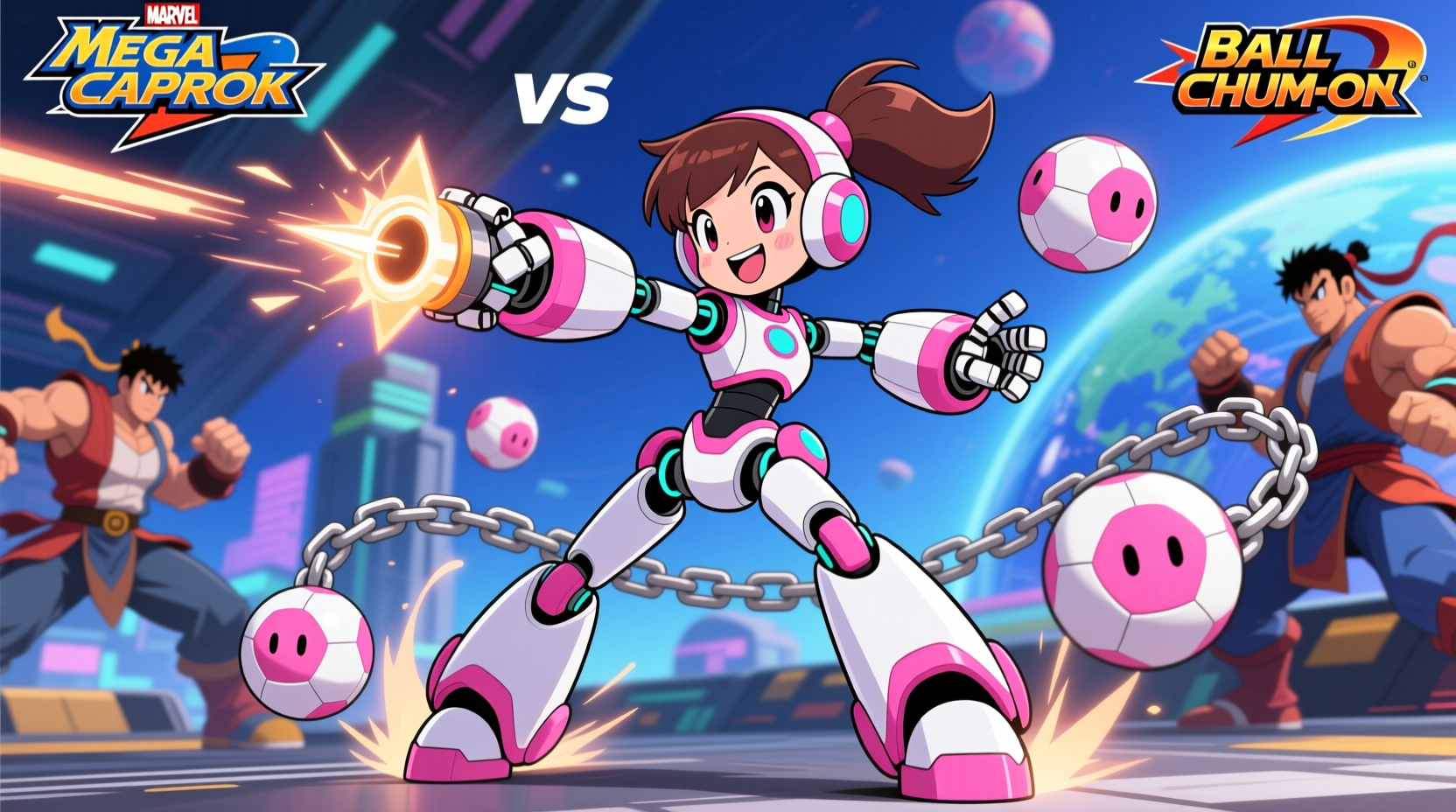
Roll first appeared in 1987 as part of the Mega Man series, created by Capcom. Unlike her brother Mega Man (Rock), who is designed for combat, Roll was programmed for domestic tasks—cleaning, cooking, and maintaining the household. She rarely engaged in direct battle and had no official weapon systems in the mainline games. So why bring her into a tournament-style brawler where characters routinely hurl fireballs, summon dragons, or slice through enemies with energy swords?
The answer lies in both nostalgia and experimental design. By the late '90s, Capcom was deep into its arcade fighting game era. The Marvel vs. Capcom series aimed to deliver over-the-top action and fan excitement through bold character choices. While most fighters were powerhouses like Ryu, Wolverine, or Iron Man, Roll represented a unique contrast—a non-combatant turned playable fighter purely for fun and variety.
Her debut in Clash of Super Heroes was limited to the Dreamcast version as an unlockable character. She wasn’t part of the initial roster, nor did she appear in later entries like MvC2 or Ultimate All-Stars. This exclusivity contributed to her mystique and sparked years of discussion among fans.
Gameplay Mechanics and Viability
Roll plays unlike any other character in the Marvel vs. Capcom series. Instead of focusing on offense, her kit emphasizes healing and utility. Her signature move is the Roll Call, which summons her robotic dog Rush to heal her partner character. This mechanic was unprecedented at the time and remains rare in the series’ history.
She also has access to weak but fast melee attacks and can deploy Auto, a small repair robot, to assist in minor recovery. However, her individual damage output is extremely low. She lacks strong combo potential, special moves with knockback, and hyper combos that define top-tier characters.
In competitive play, Roll is widely regarded as non-viable. Fighting game communities prioritize efficiency, speed, and synergy—areas where Roll falls short. She cannot keep up with the pace of high-level matches and offers little in terms of offensive pressure or defensive options beyond healing.
Yet, her presence introduces a strategic layer absent elsewhere: sustained longevity. In casual or tag-team scenarios where survival matters more than burst damage, Roll can prolong a match by keeping her partner alive longer than expected.
Roll’s Moveset Overview
| Move | Type | Function |
|---|---|---|
| Roll Call (Rush) | Assist Move | Heals partner character over time |
| Auto Repair | Support Skill | Minor self-recovery |
| Punch Combo | Basic Attack | Low-damage melee strikes |
| Hyper Roll | Hyper Combo | Spinning attack with minimal impact |
“Roll wasn’t meant to win tournaments. She was meant to make players smile.” — Takashi Nishiyama, former Capcom designer (paraphrased in retrospective interviews)
Fan Reception and Cultural Impact
Roll’s addition was met with mixed reactions. Competitive players dismissed her as a joke character—fun for a round or two but ultimately impractical. However, casual fans and longtime Mega Man enthusiasts welcomed her inclusion as a nod to Capcom’s roots.
Her presence highlighted a broader trend in crossover games: the celebration of lesser-known characters. Just as DC Comics might include obscure heroes in ensemble titles, Capcom used Marvel vs. Capcom to spotlight figures outside the mainstream spotlight. Roll became a symbol of inclusivity within the roster—proof that even non-combatants have a place in the arena.
A mini case study illustrates this well: during a 2005 community tournament livestream, a player unlocked Roll and used her exclusively throughout a best-of-five set. Though he lost every match, his team survived significantly longer due to consistent healing. Viewers praised the creativity, and the stream gained traction online, reigniting interest in “support” roles in versus fighters.
Design Philosophy Behind Non-Traditional Fighters
Roll’s inclusion reflects a deliberate design choice—to challenge assumptions about what a fighting game character should be. Most fighters are built around aggression, speed, or technical complexity. Roll subverts all three.
This approach aligns with broader industry experimentation in the late '90s. Games like Killer Instinct featured combo-heavy mechanics, while others like Super Smash Bros. embraced accessibility. Marvel vs. Capcom occupied a middle ground, balancing spectacle with depth. Adding Roll was a way to test the boundaries of that balance.
From a development standpoint, including niche characters also served marketing purposes. It gave fans a reason to purchase the Dreamcast version over others. Unlockable content drove replayability, and Roll—being both nostalgic and unusual—became a collectible prize.
Checklist: Evaluating Joke Characters in Serious Games
- Identify their primary function (healing, distraction, novelty)
- Test synergy with common team compositions
- Assess durability and survivability under pressure
- Determine if they offer unique mechanics not replicable by others
- Consider context: Are they meant for competition or fan service?
Why Roll Still Matters Today
While Roll never returned to the main series, her legacy endures. She paved the way for future support-oriented characters in other franchises. For example, Splatoon’s inklings or Overwatch’s Mercy reflect similar design principles—non-damaging roles that enhance team performance through utility.
Moreover, modern fighting games increasingly recognize the value of diverse playstyles. Titles like BlazBlue: Cross Tag Battle and Granblue Fantasy: Versus feature characters whose strength lies in buffs, debuffs, or healing rather than direct damage. Roll was ahead of her time in this regard.
Her absence from later MvC titles speaks less to failure and more to shifting priorities. As the series leaned harder into speed, complexity, and visual flair, there was less room for slow, methodical support units. But in an era where inclusivity and representation matter more than ever, revisiting characters like Roll could offer fresh design opportunities.
Frequently Asked Questions
Was Roll ever balanced for competitive play?
No. Roll was never intended for high-level competition. Her damage output, mobility, and defensive tools are too weak to compete with tier-one characters. She functions best in casual or novelty matches.
Can you still play as Roll today?
Yes, but only in the Dreamcast version of Marvel vs. Capcom: Clash of Super Heroes. She is not available in re-releases, emulated versions, or later sequels. Fans have created mods to include her in other editions, but these are unofficial.
Why didn’t Capcom add more support characters like Roll?
The MvC series prioritizes fast-paced, aggressive gameplay. Support characters slow down the rhythm and complicate balance. While healing exists via items or assists, dedicating a full slot to it disrupts the meta. Roll remains a one-off experiment rather than a blueprint.
Conclusion
Roll may not have been \"good\" in the traditional sense—she didn’t dominate tournaments or redefine gameplay. But her addition to Marvel vs. Capcom was meaningful. It celebrated Capcom’s history, challenged genre norms, and reminded players that video games can be whimsical, inclusive, and experimental. In a franchise defined by explosive action, Roll brought heart.
Whether you see her as a joke, a curiosity, or a pioneer, her presence asks an important question: What does it mean to be a fighter? Not everyone needs to throw lightning punches or wield cosmic power. Sometimes, just being there—offering support when it's needed—is victory enough.




 浙公网安备
33010002000092号
浙公网安备
33010002000092号 浙B2-20120091-4
Comments
No comments yet. Why don't you start the discussion?