
In 2007, one of the most prominent athletes in American sports faced a dramatic fall from grace. Michael Vick, then quarterback for the Atlanta Falcons and one of the highest-paid players in the NFL, was sentenced to federal prison for his role in a brutal dogfighting operation. What began as an investigation into drug activity on a property in rural Virginia uncovered a network of illegal dogfighting that horrified the public and sparked national outrage. This case not only ended careers but also reshaped how law enforcement and society view animal cruelty.
The Bad Newz Kennels Operation
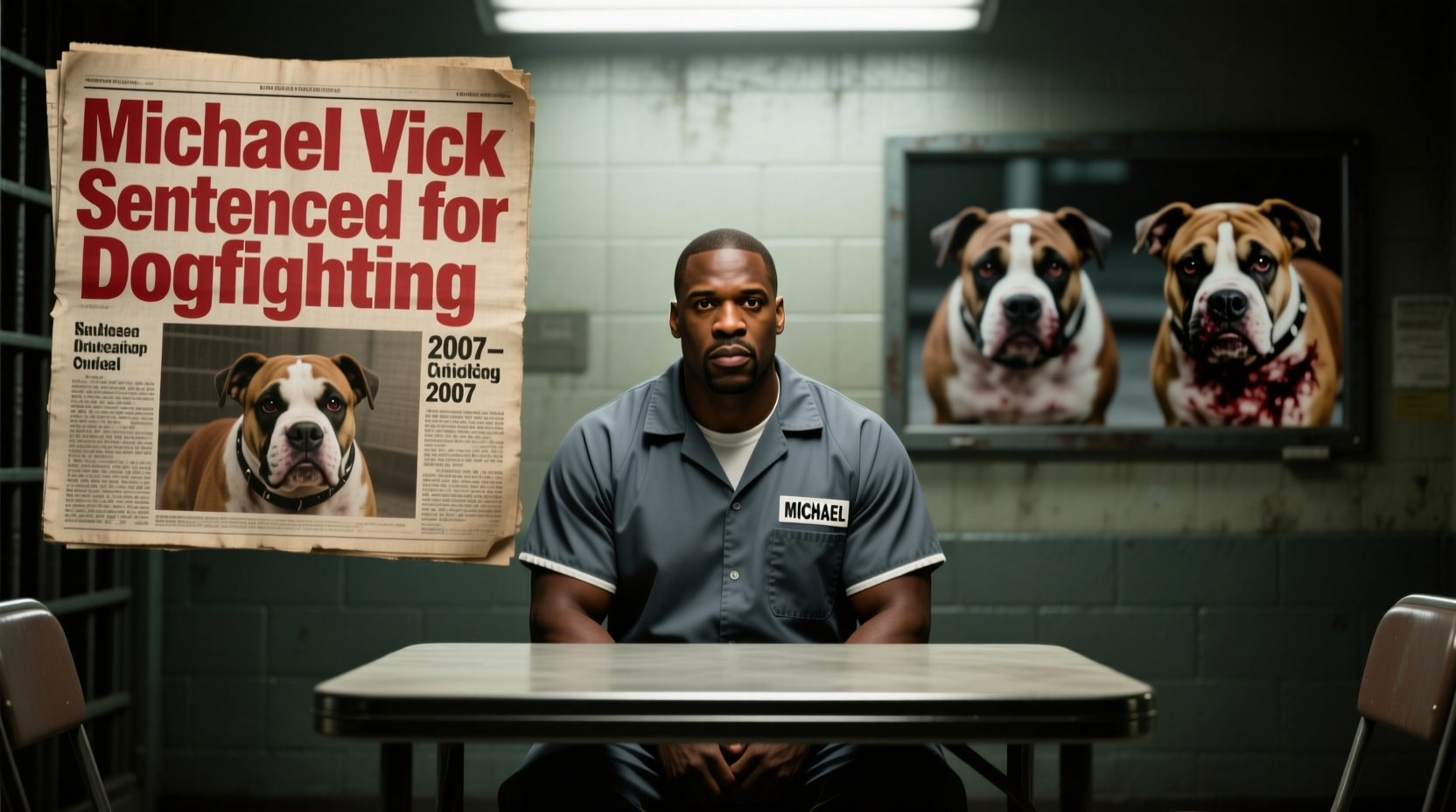
At the heart of the case was \"Bad Newz Kennels,\" a dogfighting venture operated by Michael Vick and three associates—Purnell Peace, Quanis Phillips, and Tony Taylor—on a 15-acre property in Surry County, Virginia. The kennel, established around 2001, was used to train, breed, and stage fights between pit bull terriers. Dogs were evaluated for aggression, and those deemed underperformers were executed through methods including hanging, drowning, electrocution, and slamming them to the ground.
Federal agents raided the property in April 2007 after a search warrant related to drug investigations revealed evidence of animal fighting. They discovered over 50 dogs, many injured or scarred from fights, along with bloodstained carpets, breaking sticks (used to pry open dogs’ jaws), and a makeshift electrocution device. Forensic analysis confirmed that some dogs had been used in multiple fights and suffered repeated trauma.
Michael Vick’s Involvement and Legal Consequences
Vick initially denied involvement, claiming he didn’t know about the dogfighting activities. However, as evidence mounted—including financial records showing Vick funded the operation and testimony from co-defendants—he eventually pleaded guilty to federal charges in August 2007. He admitted to conspiracy in violating the federal Travel Act by sponsoring and operating an interstate dogfighting enterprise.
Key elements of his admission included:
- Financing the Bad Newz Kennels operation
- Participating in decisions about which dogs to fight and kill
- Being present during executions of underperforming dogs
- Hosting gambling events tied to the fights
In December 2007, U.S. District Judge Henry Hudson sentenced Vick to 23 months in federal prison, followed by three years of supervised release. He also ordered Vick to pay nearly $1 million in restitution for the care and rehabilitation of the seized dogs. The judge emphasized the brutality of the crimes, calling them “aggravated acts of cruelty” and noting that Vick had shown initial denial and lack of remorse.
“Mr. Vick, you were instrumental in promoting, funding, and facilitating this cruel and inhumane sporting event.” — Judge Henry Hudson, sentencing statement, December 10, 2007
Timeline of Key Events
The case unfolded over several months, with each development increasing public scrutiny and media attention.
| Date | Event |
|---|---|
| April 2007 | FBI raids Vick’s Surry County property, uncovers evidence of dogfighting. |
| July 17, 2007 | Indictment unsealed; Vick and three others charged with federal dogfighting conspiracy. |
| August 20, 2007 | Vick pleads guilty to federal felony charges. |
| December 10, 2007 | Sentenced to 23 months in prison. |
| July 20, 2009 | Released from federal custody after serving 19 months. |
| September 2009 | NFL conditionally reinstates Vick; signs with Philadelphia Eagles. |
Impact on Animal Welfare and Public Perception
The Michael Vick case became a watershed moment for animal rights advocacy. Prior to this, dogfighting was often treated as a minor offense or overlooked entirely in many jurisdictions. But the graphic details of the case—and the fact that a high-profile celebrity was involved—forced a national reckoning.
Organizations like the Humane Society of the United States and the ASPCA used the case to push for stronger penalties for animal fighting. Several states revised their laws to classify dogfighting as a felony with harsher sentences. The case also led to increased funding for animal cruelty task forces and greater cooperation between federal agencies and local humane societies.
Moreover, the public response was intense. Petitions demanding Vick’s permanent ban from the NFL circulated widely. Sponsors dropped him immediately, and fans expressed outrage across social media and traditional news outlets. Yet, over time, the conversation evolved to include themes of redemption, rehabilitation, and second chances—especially as Vick publicly apologized and later partnered with animal welfare groups.
Rehabilitation and Redemption
After his release from prison, Michael Vick took steps toward rebuilding his life and reputation. He completed community service focused on youth outreach and animal cruelty prevention. He also collaborated with the ASPCA on educational campaigns warning young people about the dangers and illegality of dogfighting.
In interviews, Vick expressed deep regret: “I was immature. I made bad decisions. I put myself in a position where I wasn’t being a good role model.” His efforts contributed to a conditional return to the NFL in 2009, where he played for the Philadelphia Eagles and later other teams before retiring in 2017.
Notably, many of the dogs rescued from Bad Newz Kennels went on to live fulfilling lives. Organizations like Best Friends Animal Society rehabilitated over two dozen of them, with several becoming therapy dogs or family pets. This outcome challenged the long-held belief that fighting dogs are irredeemable, proving that even animals subjected to extreme violence can recover with proper care.
FAQ
Did Michael Vick serve the full length of his sentence?
No. Michael Vick was sentenced to 23 months but served 19 months in federal prison. He was released in July 2009 and completed the remainder of his sentence under home confinement.
Are any of the dogs from Bad Newz Kennels still alive today?
Most of the dogs were placed in sanctuaries or adopted. While none are alive today due to the natural lifespan of pit bulls (typically 12–15 years), their legacy lives on through advocacy programs and success stories in animal rehabilitation.
Can someone convicted of animal cruelty work with animals again?
It depends on the jurisdiction and nature of the crime. In Vick’s case, his post-prison work with animal welfare groups was part of his supervised release conditions and required approval from authorities. His advocacy is closely monitored and has been accepted by some organizations as genuine reform.
Checklist: Recognizing Signs of Dogfighting
If you suspect dogfighting in your community, watch for these red flags:
- Dogs kept in secluded areas with heavy chains or wire pens
- Presence of treadmills, break sticks, or bloodstained towels
- Unexplained injuries on dogs (puncture wounds, swollen faces)
- People hosting gatherings at odd hours with large amounts of cash changing hands
- Tattoos or branding on dogs (used to identify fighters)
- Online ads selling “game-bred” pit bulls
Conclusion: A Legacy of Caution and Change
The story of why Michael Vick went to jail is more than a tale of celebrity downfall—it’s a pivotal chapter in the fight against animal cruelty. It exposed the dark underground of organized dogfighting and demonstrated that even the most powerful figures are accountable for their actions. While the suffering inflicted on those animals can never be undone, the case led to real progress: stronger laws, better enforcement, and a cultural shift in how society views animal abuse.
Today, Michael Vick’s name evokes both condemnation and cautious redemption. Whether one views his comeback as justified or controversial, the case remains a powerful reminder: cruelty has consequences, accountability matters, and change—even for those who’ve caused harm—is possible when paired with genuine effort.




 浙公网安备
33010002000092号
浙公网安备
33010002000092号 浙B2-20120091-4
Comments
No comments yet. Why don't you start the discussion?