
If you’ve recently tried making a purchase with Afterpay only to find your spending limit has dropped unexpectedly, you’re not alone. Many users report sudden decreases in their available credit, which can be frustrating—especially when planning larger purchases. Unlike traditional credit cards, Afterpay doesn’t offer a fixed credit line; instead, your limit is dynamic and recalculated based on various behavioral and financial factors. Understanding why this happens is the first step toward regaining control and potentially increasing your limit again.
Afterpay uses a proprietary algorithm to assess risk and determine how much you can spend at any given time. This system evaluates multiple data points related to your payment history, usage patterns, and external financial indicators. While the company doesn’t disclose every detail of its scoring model, consistent trends among users reveal several common causes for a reduced limit.
1. Missed or Late Payments Impact Your Limit
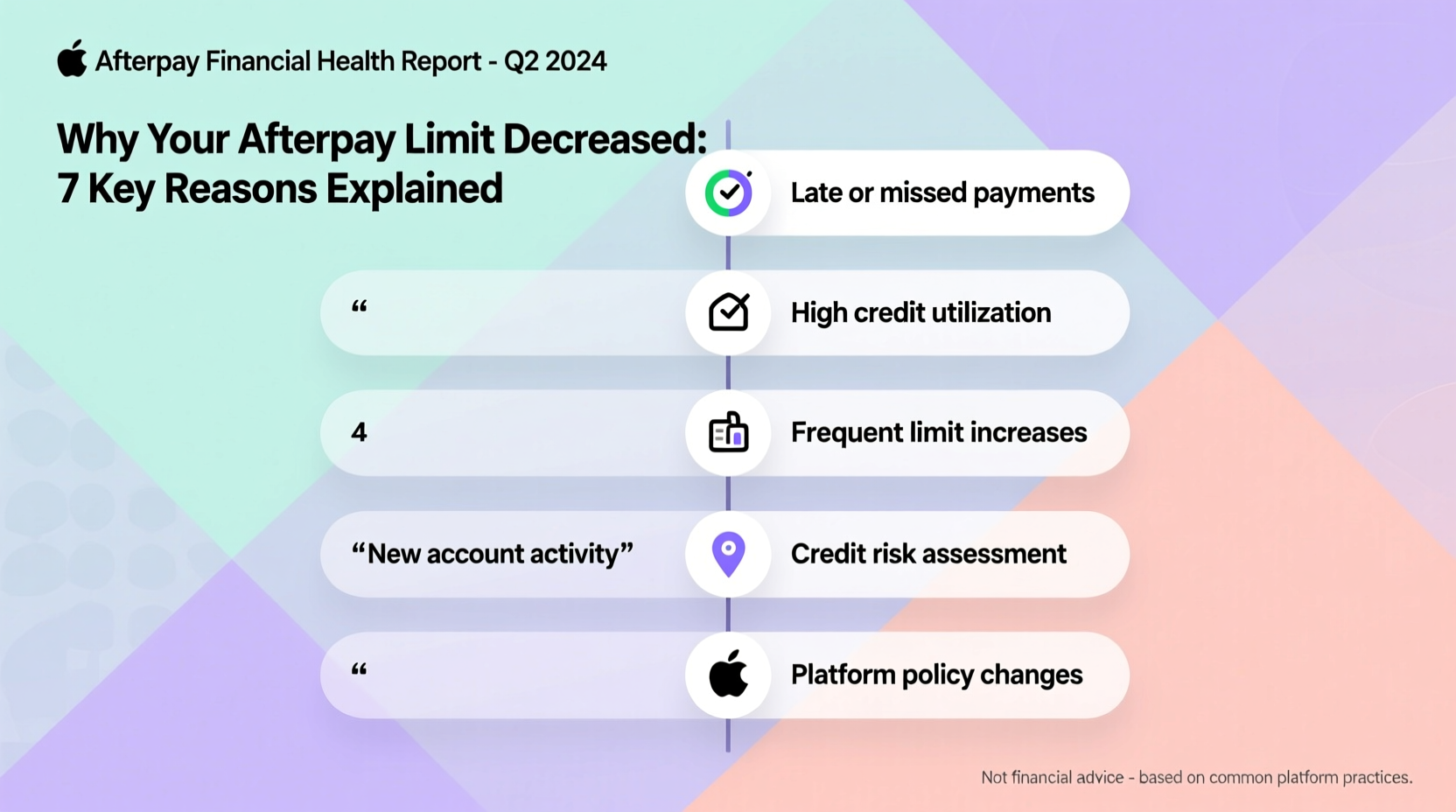
The most significant factor influencing your Afterpay limit is your payment behavior. Afterpay splits your purchase into four equal installments due every two weeks. If you miss even one payment—or worse, consistently pay late—the platform flags you as a higher-risk customer. As a result, your limit may be automatically reduced to minimize potential losses.
Even if you eventually clear the overdue amount, the damage may already be done. A single missed payment can linger in your account history and influence future assessments during periodic reviews. Afterpay conducts these evaluations regularly, sometimes weekly, adjusting limits up or down based on performance.
2. Frequent Returns or Refunds Can Trigger a Review
While returning items is normal, doing so frequently may raise red flags. Afterpay monitors transaction reversals because high return rates can indicate misuse of the service or financial instability. For example, repeatedly buying an item, using it briefly, then returning it could suggest you're relying on short-term financing without intent to keep purchases long-term.
In some cases, merchants also report return patterns back to Afterpay, contributing to internal risk models. If your refund frequency exceeds typical user behavior, your account may undergo a reassessment that results in a lower spending cap.
3. Changes in Creditworthiness or External Data
Although Afterpay performs soft credit checks (which don’t affect your credit score), it may pull data from credit bureaus or alternative financial databases to assess your overall financial health. If there are negative changes in your credit profile—such as new delinquencies, increased debt utilization, or recent bankruptcies—Afterpay might respond by reducing your limit.
This process often occurs silently, meaning you won’t receive a direct notification about the data source or reason. However, third-party services like Equifax or Experian may show inquiries labeled “Buy Now Pay Later” or similar terms around the time your limit changed.
“BNPL providers like Afterpay increasingly use real-time financial behavior signals beyond just credit scores. Payment consistency, income stability, and even mobile phone bill payments can influence eligibility.” — Lena Torres, Fintech Risk Analyst
4. High Utilization or Rapid Spending Increases
Just like with credit cards, maxing out your Afterpay limit—or coming close to it—can lead to a reduction. Consistently using 80–100% of your available spending power suggests financial strain, prompting Afterpay’s system to scale back access temporarily.
Similarly, rapidly increasing your spending over a short period—even with timely repayments—can trigger caution. Sudden spikes may resemble predatory borrowing behavior, especially if paired with new account creation or device changes. The algorithm prioritizes steady, predictable usage over aggressive spending surges.
5. Account Inactivity or Infrequent Use
On the flip side, going too long without using Afterpay can also cause your limit to drop. Like many financial platforms, Afterpay rewards active, responsible engagement. If your account remains dormant for months, the system may assume reduced need or uncertainty about your current financial standing, leading to a conservative adjustment downward.
This isn’t always permanent. Resuming regular, on-time payments after a break can help rebuild trust with the system over time.
Common Reasons for Afterpay Limit Reductions – Summary Table
| Reason | How It Affects You | Can It Be Reversed? |
|---|---|---|
| Missed or late payments | Immediate risk flag; likely limit cut | Yes, with consistent on-time payments |
| Frequent returns/refunds | Suggests unstable purchasing habits | Yes, reduce return rate over time |
| Poor credit bureau data | Indicates broader financial risk | Yes, improve credit hygiene |
| High spending utilization | Resembles overextension | Yes, maintain lower balances |
| Account inactivity | Lack of recent behavioral data | Yes, resume responsible usage |
Mini Case Study: Sarah’s Unexpected Limit Drop
Sarah, a 32-year-old graphic designer, had been using Afterpay for over a year to manage seasonal wardrobe updates. Her initial limit was $600, which she used responsibly—never exceeding $400 and always paying on time. Then, during a busy work phase, she missed a payment by five days due to a bank processing delay. Though she paid immediately upon noticing, her limit dropped to $300 the following week.
She contacted customer support and explained the situation. While they couldn’t reverse the change manually, they confirmed that continued on-time payments would be factored into future evaluations. Over the next three months, Sarah made all payments early and avoided large purchases. By month four, her limit gradually increased back to $500.
Sarah’s experience illustrates how even isolated incidents can trigger automated responses—and how patience and consistency can restore access over time.
Action Plan: How to Improve Your Afterpay Limit
Rebuilding your Afterpay limit requires discipline and awareness. Follow this checklist to strengthen your standing:
- Make all payments on time – Aim to pay before the due date whenever possible.
- Avoid frequent returns – Only use Afterpay for purchases you intend to keep.
- Maintain moderate spending – Stay below 70% of your current limit.
- Use the service regularly – Make small, manageable purchases every few weeks.
- Monitor your credit report – Ensure no errors or negative marks impact your financial profile.
- Update personal information – Keep your income, employment, and contact details current in the app.
FAQ: Common Questions About Afterpay Limits
Can I appeal a limit reduction?
Afterpay does not allow direct appeals for limit changes. Adjustments are fully automated based on risk algorithms. However, improving your payment behavior and account activity increases the likelihood of future increases.
Does checking my limit affect my credit score?
No. Checking your own Afterpay limit involves a soft inquiry, which does not impact your credit score. Only certain verification processes may involve soft pulls reported to credit agencies—but these are non-damaging.
How often does Afterpay review limits?
Reviews occur periodically, typically every few weeks to months. There’s no fixed schedule, but positive activity is usually reflected within 4–8 weeks of consistent behavior.
Conclusion: Take Control of Your Financial Access
Your Afterpay limit isn't set in stone—it's a reflection of your financial behavior and reliability. A decrease doesn’t mean permanent exclusion; it’s feedback from a system designed to balance accessibility with responsibility. By understanding the triggers behind limit reductions and taking proactive steps, you can position yourself for restoration and even growth in your spending capacity.
Treat your Afterpay account like any other financial tool: use it thoughtfully, repay promptly, and monitor your habits. Small, consistent actions today can lead to greater flexibility tomorrow.




 浙公网安备
33010002000092号
浙公网安备
33010002000092号 浙B2-20120091-4
Comments
No comments yet. Why don't you start the discussion?