
There’s nothing more disheartening than setting up a beautiful Christmas tree, only to find it brittle, brown, and shedding needles within days. If your tree dried out in just three days, you're not alone—and more importantly, it's likely preventable. Freshness begins the moment the tree is cut, and every step from harvest to your living room impacts how long it retains moisture. Understanding the science behind tree dehydration and applying practical hydration strategies can extend its life by weeks. This guide breaks down the most common causes of rapid drying and delivers actionable solutions to keep your tree vibrant through the holidays.
Why Trees Dry Out So Quickly
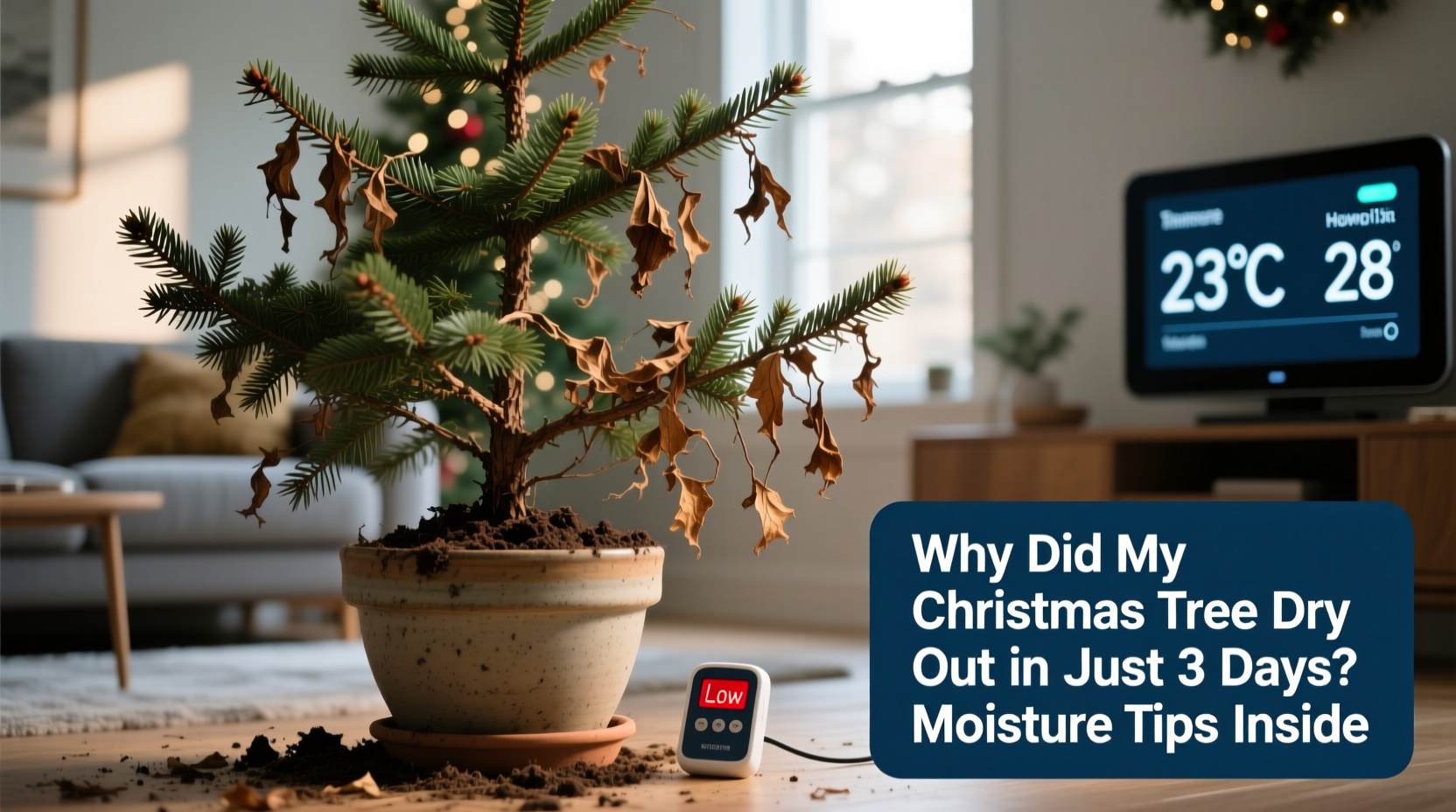
Christmas trees are cut from living evergreens, which means they’re severed from their root system and natural water supply. Once cut, the tree relies entirely on stored moisture and external water sources. The key to longevity lies in maintaining that moisture balance. However, several factors can accelerate water loss and cause premature drying.
The primary culprit is delayed water uptake. When a tree is cut, the exposed stump forms a seal within hours if not placed in water promptly. This seal prevents efficient water absorption, even if the stand is later filled. A study by the National Christmas Tree Association found that a tree cut just 24 hours before setup but left unwatered loses up to 50% of its ability to absorb water within six hours.
Environmental conditions also play a major role. Indoor heating systems reduce humidity dramatically—often dropping indoor relative humidity below 30%, while evergreens thrive at 40–60%. In such dry air, transpiration (the process of water evaporating from needles) accelerates, depleting internal reserves faster than they can be replenished.
“Tree freshness isn’t just about when it was cut—it’s about continuous hydration. The first 24 hours after cutting are critical.” — Dr. Laura Bennett, Horticulturist and Holiday Tree Specialist
Common Mistakes That Speed Up Drying
Even with good intentions, many people unknowingly sabotage their tree’s lifespan. These mistakes are often simple but have outsized consequences.
- Not making a fresh cut before placing in the stand: Sawdust and sap clog the vascular system. Without a fresh ¼- to ½-inch cut at the base, the tree cannot draw water efficiently.
- Waiting too long to water: Transporting the tree home and decorating before filling the stand leaves it vulnerable. Every hour out of water reduces hydration capacity.
- Using undersized or unstable stands: Small reservoirs need refilling multiple times a day. Many standard stands hold less than a gallon, insufficient for larger trees.
- Placing near heat sources: Radiators, fireplaces, and HVAC vents increase ambient temperature and airflow, speeding up moisture loss.
- Skipping water additives: Plain tap water works, but specialized solutions or DIY mixes can improve uptake and inhibit bacterial growth in the stand.
Step-by-Step Guide to Maximizing Moisture Retention
Extending your tree’s freshness starts before it enters your home and continues throughout the season. Follow this timeline for optimal results.
- Choose the right tree species: Some varieties naturally retain moisture longer. Balsam fir, Fraser fir, and noble fir are known for excellent needle retention and strong scent. Avoid Scotch pine if you're concerned about drying, as it dries faster than firs.
- Purchase close to setup date: Buy no more than 7–10 days before display. If purchasing early, store the tree outside in a shaded, upright position with the base submerged in a bucket of water.
- Inspect for freshness: Shake the tree gently. Minimal needle drop and flexible branches indicate good hydration. Press a needle—it should feel plump, not brittle.
- Make a fresh cut at home: Just before placing in the stand, cut ½ inch off the base. Do this yourself if the vendor didn’t do it immediately before loading.
- Fill the stand immediately: Use warm water to start—warmth helps break surface tension and improves initial uptake. Fill to capacity and check water levels twice daily for the first week.
- Relocate away from heat: Position the tree at least 6 feet from radiators, vents, fireplaces, and electronics. Avoid south-facing windows that receive direct sunlight during winter afternoons.
- Add a hydration booster: While plain water is essential, consider adding one of the following to the reservoir:
- 1 capful of light corn syrup per gallon (provides nutrients)
- 1 tablespoon lemon-lime soda (acidifies water, may improve uptake)
- Commercial tree preservatives (tested formulas that reduce microbial growth)
- Mist the tree regularly: Use a spray bottle to mist the branches every other day. This temporarily increases local humidity and slows transpiration.
- Monitor water daily: A mature tree can drink over a quart per day. Never let the stand run dry—even a single day of dehydration can cause irreversible sealing of the trunk base.
Do’s and Don’ts: Hydration Best Practices
| Do | Don't |
|---|---|
| Make a fresh cut before placing in stand | Use a pre-cut tree without re-trimming the base |
| Keep water level above the cut at all times | Let the stand go dry even once |
| Use a large-capacity stand (1.5+ gallons for 7-ft tree) | Rely on small decorative stands with limited capacity |
| Place tree away from heat sources and direct sun | Set up near a fireplace or heating vent |
| Add commercial preservative or mild sugar solution | Mix in bleach, aspirin, or household cleaners |
| Mist branches regularly to boost humidity | Assume indoor air is moist enough |
| Check for pests before bringing indoors | Shake the tree inside your home, spreading debris |
Real Example: How One Family Saved Their Tree
The Reynolds family in Vermont bought a 7-foot Fraser fir on a Friday, planning to decorate Sunday night. They stored the tree vertically in their garage over the weekend but forgot to place the base in water. By Sunday afternoon, the trunk had sealed, and despite filling the stand, the tree showed signs of stress by Monday—needles were dull and dropped easily.
They called a local nursery, where staff advised them to remove the tree, make a fresh ½-inch cut, and submerge the base in warm water for two hours before reinserting into the stand. They followed the steps, added a commercial preservative, and moved the tree away from a nearby radiator.
Within 24 hours, the needles regained sheen. Over the next three weeks, they maintained daily checks and misting. The tree remained fresh through New Year’s Eve—proof that corrective action, when taken quickly, can reverse early dehydration.
Essential Checklist for a Fresh Tree All Season
- ☑ Buy tree no more than 7–10 days before display
- ☑ Inspect for flexibility and minimal needle drop
- ☑ Make a fresh ½-inch cut before placing in stand
- ☑ Fill stand with warm water immediately
- ☑ Use a stand holding at least 1 gallon per inch of trunk diameter
- ☑ Add tree preservative or mild sugar-water mix
- ☑ Place away from heat sources and direct sunlight
- ☑ Check water level twice daily for first week
- ☑ Mist branches every 2–3 days
- ☑ Never let water fall below the base cut
Frequently Asked Questions
Can I revive a dried-out Christmas tree?
If the tree has been out of water for less than 24 hours, a fresh recut and immediate submersion in warm water may restore some uptake. However, prolonged dehydration causes irreversible embolisms in the xylem. Revival is unlikely if needles are already brittle and falling en masse.
Does adding sugar or fertilizer to water help?
Small amounts of sugar or light corn syrup (1–2 teaspoons per gallon) can provide energy to living cells and support water uptake. However, excessive sugar promotes bacterial and fungal growth, which clogs the trunk. Commercial preservatives are safer and more effective.
How much water should my tree drink daily?
A healthy tree typically consumes about 1 quart of water per inch of trunk diameter per day. For example, a tree with a 2-inch diameter trunk may drink up to 2 quarts (half a gallon) daily, especially in the first few days. Monitor closely and refill before the water level drops below the base.
Final Tips for Long-Lasting Holiday Greenery
Keeping a Christmas tree fresh isn’t complicated—but it does require attention to detail and consistency. The foundation of success is uninterrupted water access. Everything else—placement, additives, misting—is secondary to ensuring the tree never runs dry.
Invest in a high-capacity stand. Many affordable models hold only 0.5 to 1 gallon, which is inadequate for most trees. Upgrade to a stand with a 1.5- to 2-gallon reservoir, especially for trees over 6 feet tall. Consider stands with built-in level indicators or refill alerts to simplify maintenance.
Finally, treat the tree like a living centerpiece, not just a decoration. It was once part of a forest ecosystem, dependent on moisture and stable temperatures. Recreating those conditions, even minimally, honors its natural state and maximizes beauty throughout the season.




 浙公网安备
33010002000092号
浙公网安备
33010002000092号 浙B2-20120091-4
Comments
No comments yet. Why don't you start the discussion?