
Your credit score is one of the most important numbers in your financial life. It influences your ability to get loans, secure lower interest rates, rent an apartment, or even land certain jobs. So when you notice a sudden drop, it’s natural to feel alarmed. The good news? Most credit score declines have clear causes—and many are reversible.
Credit scores fluctuate for a variety of reasons, some within your control and others less so. Understanding the root causes is the first step toward recovery. This guide breaks down the most frequent triggers of credit score drops, backed by expert insights and real-world examples, so you can take informed action.
Late or Missed Payments
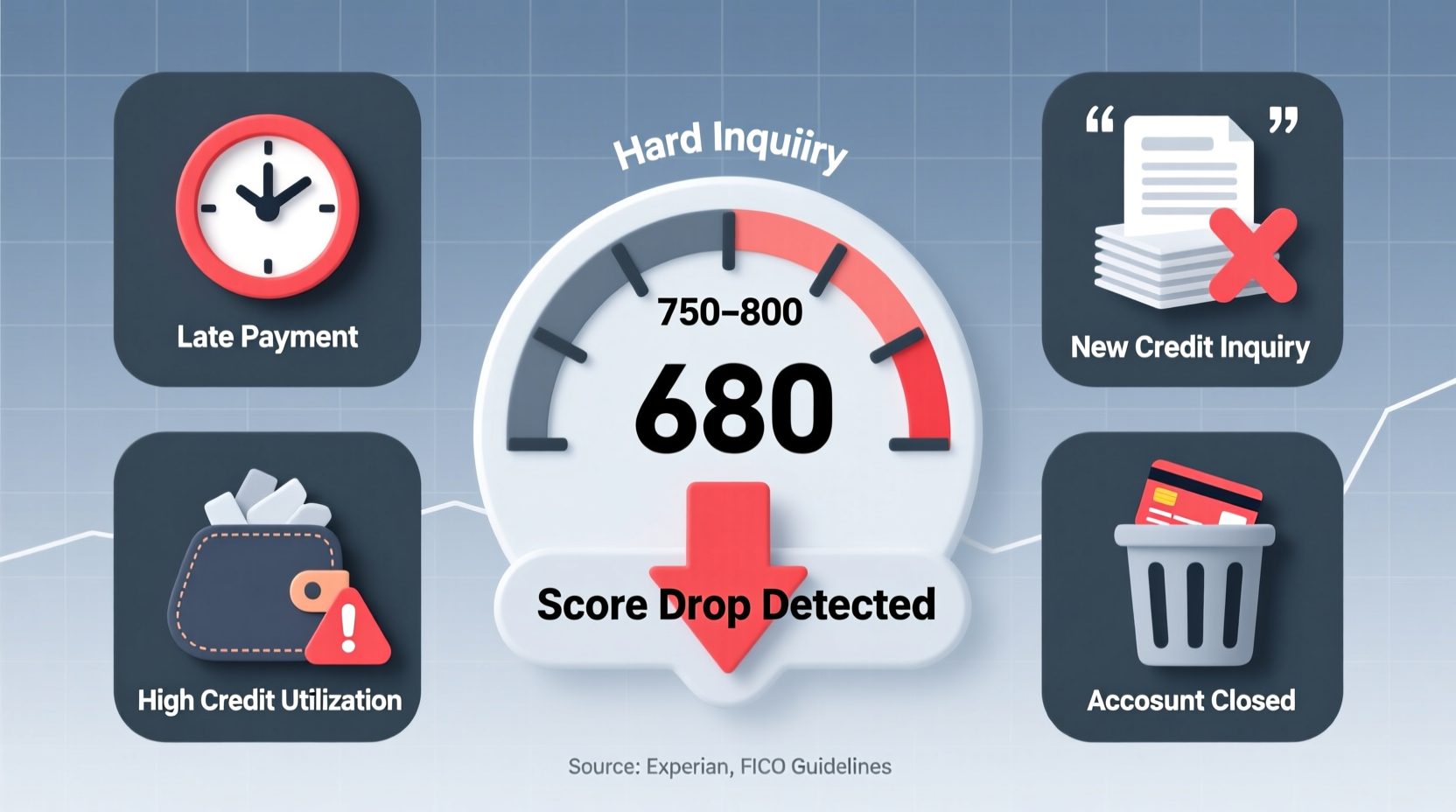
Payment history is the single largest factor in your FICO score, accounting for 35% of the total. Even one late payment can cause a noticeable dip—especially if it's 30 days or more past due. Once reported to the credit bureaus, it remains on your report for up to seven years.
Creditors typically don’t report late payments until they’re at least 30 days overdue. However, interest penalties and fees may apply much sooner. If you’ve recently missed a payment or paid after the grace period, this could be the primary reason for your score decline.
Increased Credit Utilization
Credit utilization—the ratio of your outstanding credit card balances to your total credit limits—is the second most influential factor in your credit score (30%). A spike in utilization, even temporarily, can trigger a drop.
For example, if you charged a large purchase ahead of a vacation or unexpected expense and haven’t paid it down yet, your utilization rate may have jumped from 20% to over 50%. Experts recommend keeping utilization below 30%, with under 10% being ideal for top-tier scores.
It’s not just about how much you owe—it’s also about how much available credit you appear to have. Closing an old credit card reduces your total limit, which can increase utilization even if your spending hasn’t changed.
“High credit utilization signals risk to lenders, even if you pay in full every month. The system sees high balances as potential strain.” — Laura Adams, Personal Finance Author and Credit Expert
New Credit Inquiries and Account Openings
Applying for new credit—whether a credit card, auto loan, or personal loan—triggers a hard inquiry on your credit report. Each hard pull typically lowers your score by a few points, though the impact diminishes over time.
Multiple applications in a short period can compound the effect. While shopping around for a mortgage or auto loan within a 14–45 day window is usually treated as a single inquiry, applying for several credit cards at once sends a red flag that you may be overextending yourself financially.
Additionally, opening a new account lowers the average age of your credit history, which makes up 15% of your FICO score. A shorter credit history is viewed as less reliable, especially if you're new to credit or have few established accounts.
Closed Accounts and Reduced Credit Limits
Closing a credit card—even one you no longer use—can hurt your score in two ways: by reducing your total available credit (increasing utilization) and potentially shortening your credit history.
Similarly, if a creditor lowers your credit limit due to inactivity or perceived risk, your utilization ratio may rise automatically. For instance, if you had a $10,000 limit and carried a $2,000 balance (20% utilization), a reduction to a $5,000 limit would double your utilization to 40%, possibly leading to a score drop.
| Action | Impact on Credit Score | Duration of Effect |
|---|---|---|
| Late payment (30+ days) | Significant negative impact | Up to 7 years |
| Hard credit inquiry | Minor temporary drop (5–10 points) | Up to 1 year |
| Closing old credit card | Moderate impact via utilization & history | Months to years |
| Maxing out a credit card | Strong negative impact | Several months after payoff |
| Collection account added | Severe damage | 7 years from delinquency date |
Errors or Fraudulent Activity
Sometimes, a credit score drop isn’t due to your behavior at all. Errors on your credit report—such as incorrect late payments, duplicate accounts, or fraudulent new accounts opened in your name—can significantly harm your score.
According to the Federal Trade Commission, about 1 in 4 consumers find errors on their credit reports that could affect their scores. Identity theft is another growing concern: criminals may open credit lines using your Social Security number, racking up debt without your knowledge.
If your score dropped suddenly without explanation, review your credit reports from all three major bureaus (Equifax, Experian, and TransUnion) at AnnualCreditReport.com. You’re entitled to one free report from each bureau every 12 months.
Mini Case Study: Sarah’s Sudden 70-Point Drop
Sarah, a 34-year-old marketing professional, noticed her credit score fell from 762 to 692 overnight. Confused, she pulled her credit report and discovered a medical bill she thought was covered by insurance had been sent to collections. The provider had billed her $1,200 for a procedure, and after failing to respond to two mailed notices (which were lost in a move), the account was reported delinquent.
She contacted the provider, resolved the billing error, and requested the collection be removed. After dispute verification, the item was deleted from her report, and her score rebounded within six weeks. Her experience underscores the importance of monitoring bills and acting quickly when discrepancies arise.
Step-by-Step Guide to Diagnose and Recover Your Credit Score
- Check your credit reports. Visit AnnualCreditReport.com and download reports from all three bureaus.
- Review for inaccuracies. Look for unfamiliar accounts, incorrect balances, late payments you don’t recognize, or outdated information.
- Dispute errors immediately. File disputes online with each bureau reporting the error. Include documentation like payment receipts or ID theft reports.
- Reduce credit card balances. Pay down high-utilization cards first—even small reductions can help.
- Avoid new credit applications. Pause new loans or cards until your score stabilizes.
- Set up payment reminders or autopay. Prevent future late payments with automated systems.
- Monitor progress monthly. Use free tools from banks or credit services to track changes over time.
FAQ
Can my credit score drop without me doing anything wrong?
Yes. Factors like creditor-reported errors, identity theft, changes in credit scoring models, or even statistical recalibrations by bureaus can cause unexplained drops. Always verify your credit report if you see a decline.
How long does it take to rebuild a dropped credit score?
Recovery time depends on the cause. A single late payment may knock off 50–100 points but can be offset within 6–12 months with responsible behavior. More severe issues like collections or bankruptcies take years to fade, though improvement begins as soon as you correct the behavior.
Will checking my own credit score lower it?
No. When you check your own score, it’s considered a soft inquiry and has no impact. Only hard inquiries from lenders during applications affect your score.
Action Plan Checklist
- ✅ Obtain free credit reports from all three bureaus
- ✅ Identify any late payments, collections, or inquiries
- ✅ Dispute inaccuracies with supporting documents
- ✅ Pay down balances to reduce credit utilization
- ✅ Set up automatic payments for recurring bills
- ✅ Avoid closing old credit accounts unnecessarily
- ✅ Monitor your score monthly for improvements
Conclusion
A drop in your credit score doesn’t have to be permanent—or even long-lasting. Most declines stem from identifiable, fixable issues like missed payments, high balances, or reporting errors. By understanding the underlying causes and taking proactive steps, you can stabilize and rebuild your credit faster than you think.




 浙公网安备
33010002000092号
浙公网安备
33010002000092号 浙B2-20120091-4
Comments
No comments yet. Why don't you start the discussion?