
Every holiday season, families look forward to the familiar glow of their prelit Christmas tree lighting up the room. But nothing disrupts the festive mood faster than plugging in your beloved tree only to find that half—or all—of the lights are dead. If your prelit tree stopped working after being stored away for months, you're not alone. Thousands of households face this issue each year. The good news? Most problems have simple fixes. Understanding the root causes and knowing how to methodically diagnose the issue can save time, money, and frustration.
Prelit trees offer convenience and consistent design, but they also come with vulnerabilities—especially when packed away under less-than-ideal conditions. From broken bulbs and loose connections to voltage issues and damaged wires, a range of factors can cause failure after storage. This guide breaks down the most common reasons behind post-storage malfunctions and provides practical, tested solutions to get your tree shining again.
Common Reasons Your Prelit Tree Stopped Working After Storage
Storage is often the silent culprit behind prelit tree failures. Even if the tree was carefully taken down and boxed at the end of the previous season, environmental and mechanical stressors during storage can degrade performance over time.
- Loose or Disconnected Wiring: During disassembly or packing, internal wires can become partially unplugged. Many prelit trees use segmented wiring that connects between sections. If one connection fails, it can cut power to entire branches.
- Broken or Burnt-Out Bulbs: Incandescent bulbs are fragile. Vibration or pressure in storage can crack filaments. One dead bulb in a series circuit may cause an entire string to go dark.
- Mold or Moisture Damage: Storing a tree in a damp basement or garage can lead to corrosion on sockets or wire contacts, interrupting electrical flow.
- Frayed or Pinched Wires: Over-tightened zip ties, sharp edges inside the storage box, or compression from stacked items can damage insulation and break internal conductors.
- Tripped Fuse in Plug: Many prelit trees have built-in fuses located in the male plug. A power surge during storage (if left plugged in) or wear over time can blow the fuse.
- Damaged Light Controller or Timer: Trees with multicolor or programmable features rely on electronic controllers. These can fail due to moisture, overheating, or age.
Step-by-Step Troubleshooting Guide
Before assuming your tree is beyond repair, follow this logical sequence to isolate and resolve the issue. Most problems can be identified—and fixed—in under an hour.
- Unpack and Inspect Visually
Lay out all tree sections on a flat surface. Check for obvious damage: crushed branches, pinched wires, cracked bulbs, or bent connectors. Pay special attention to where sections join—this is a frequent point of failure. - Check the Power Source
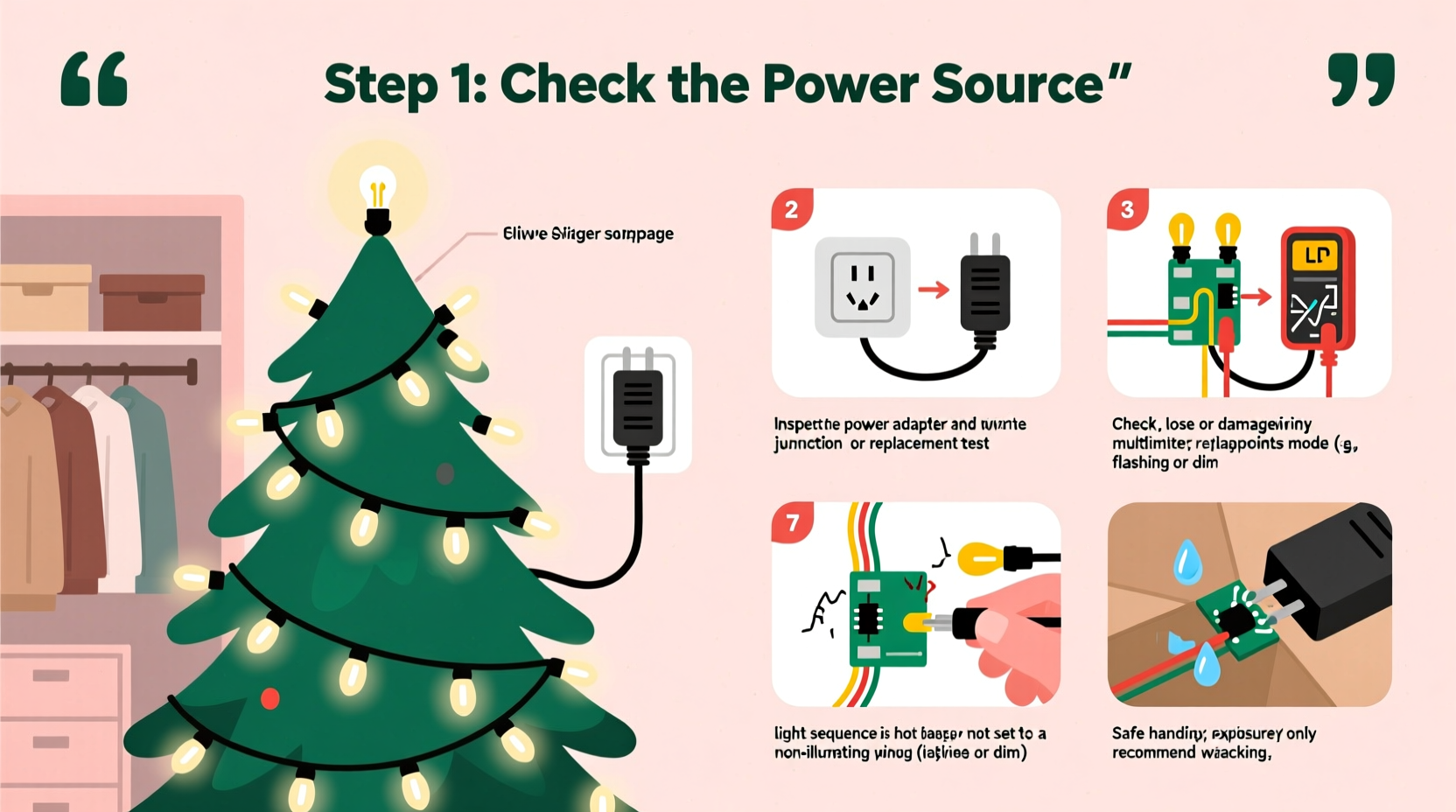
Plug the tree into a different outlet known to work. Use a lamp or phone charger to verify the outlet supplies power. Avoid extension cords during testing—they can reduce voltage and mask real issues. - Inspect the Plug for Fuses
Examine the male plug at the end of the main power cord. Some models have a small sliding door on the plug housing. Open it and check the tiny glass or ceramic fuses inside. If they appear blackened or the filament is broken, replace them with identical-rated fuses (usually 3A or 5A). - Test Each Section Separately
Many prelit trees are modular. Connect one section at a time to the power source. If the bottom section lights up but the middle doesn’t, the issue lies in the upper segment or its connection point. Wiggle the connector gently while plugged in—if lights flicker, the joint is faulty. - Look for Shunted vs. Non-Shunted Bulbs
Modern prelit trees use shunted sockets, meaning electricity flows through the socket even if the bulb is removed. Older or cheaper models may use non-shunted designs. If one bulb burns out in a non-shunted series, the whole string fails. Use a light tester or multimeter to check continuity across sockets. - Walk the String for Dead Bulbs
Starting from the first unlit bulb, remove each one and test it in a known-working socket. Replace any that don’t light. Also, check for “tombstone” bulbs—where the base remains stuck in the socket. These block new bulbs from making contact. - Examine Wire Runs Along Trunk and Branches
Run your fingers along the main wire path. Feel for lumps (indicating spliced repairs), soft spots (melted insulation), or areas where the wire disappears into the branch stem. Damaged wires here often require professional repair or replacement.
Do’s and Don’ts When Handling Prelit Tree Repairs
Improper handling can turn a minor issue into a fire hazard or complete system failure. Follow these guidelines to stay safe and effective.
| Do | Don't |
|---|---|
| Use replacement bulbs from the same manufacturer or exact specifications (voltage, size, color) | Use standard household bulbs—they draw more current and can overload the circuit |
| Label each section’s power cord before storing to avoid misconnections | Force connectors together if they don’t align easily—this damages pins |
| Store the tree in a dedicated, ventilated container away from rodents and moisture | Compress the tree tightly in a small bag—this stresses wires and branches |
| Replace blown fuses with the correct amperage rating | Bypass fuses with foil or metal—this removes critical safety protection |
| Clean dust from sockets with a dry cotton swab before inserting bulbs | Use water or cleaning sprays near electrical components |
Real-World Example: Sarah’s Silent Tree
Sarah had used her 7.5-foot prelit fir tree for five consecutive holidays. Last year, she stored it in a plastic bin in her garage, which occasionally flooded during heavy rains. This December, she assembled the tree, plugged it in—and nothing happened. Not even a faint glow.
She started by checking the outlet with a desk lamp—power was fine. Next, she opened the plug and found both fuses intact. Testing each section individually, she discovered the bottom tier lit up perfectly. The second section sparked briefly when connected, then died. Upon inspection, she noticed greenish corrosion around the female connector port. Moisture had seeped in during storage, corroding the contacts.
Sarah cleaned the terminals with isopropyl alcohol and a toothbrush, let them dry overnight, and reassembled. The tree lit up fully. She now stores her tree indoors in a climate-controlled closet and wraps connectors in plastic wrap before boxing.
“Over 60% of prelit tree failures we see are due to improper storage or connector corrosion. A few minutes of protection before packing can prevent hours of troubleshooting later.” — Mark Reynolds, Holiday Lighting Technician with 18 years of experience
Prevention Checklist for Future Seasons
Once you’ve restored your tree, protect your investment with proactive care. Use this checklist every year before storing:
- ✅ Remove all ornaments and tinsel to avoid wire strain
- ✅ Inspect every bulb and replace any that look darkened or loose
- ✅ Clean dust from sockets and wire runs with a dry microfiber cloth
- ✅ Wrap connectors in bubble wrap or plastic bags to block moisture
- ✅ Store in a rigid, ventilated container—not a compressed duffel bag
- ✅ Keep in a cool, dry place above ground level (avoid basements and garages if possible)
- ✅ Label each section’s power cord and store spare bulbs in a sealed bag taped to the trunk
- ✅ Unplug the tree immediately after use—don’t leave it plugged in “just in case”
Frequently Asked Questions
Can I replace the entire light string on my prelit tree?
Yes, but it's labor-intensive. Some manufacturers sell full replacement light kits compatible with specific models. Retrofitting third-party strings is possible but requires careful routing and securing. For older trees, consider whether repair costs justify replacement.
Why do only some branches light up?
This usually indicates a failed connection between sections or a localized wiring break. It can also happen if a single bulb is missing or improperly seated in a non-shunted circuit. Test each segment independently to locate the gap.
Is it safe to repair a prelit tree myself?
Basic repairs like replacing bulbs, fuses, or cleaning contacts are safe if the tree is unplugged. Avoid cutting and splicing wires unless you have electrical experience. Damaged main cords or internal transformers should be evaluated by a professional or replaced entirely.
Conclusion: Restore the Glow with Confidence
A prelit tree that won’t light after storage isn’t necessarily a lost cause. In most cases, the problem stems from simple, fixable issues like loose connections, blown fuses, or a single faulty bulb. By approaching the diagnosis systematically—starting with power sources and moving through each component—you can restore your tree’s brilliance without buying a new one.
More importantly, adopting smart storage habits dramatically reduces the risk of future failures. A few minutes of care at the end of each season pays off in reliable performance for years to come. Whether you’re troubleshooting this week or planning ahead for next year, the steps outlined here empower you to keep your holiday centerpiece glowing safely and beautifully.




 浙公网安备
33010002000092号
浙公网安备
33010002000092号 浙B2-20120091-4
Comments
No comments yet. Why don't you start the discussion?