
In an era dominated by high-definition graphics, ray tracing, and photorealistic rendering, a surprising aesthetic trend has re-emerged with quiet force: pixel art. Once considered obsolete—a relic of 8-bit consoles and early PC gaming—pixel art is now thriving, particularly within the indie mobile game scene. From minimalist platformers to atmospheric roguelikes, developers are increasingly turning to this retro visual style not just for its charm, but for its strategic advantages. The resurgence isn’t accidental; it’s driven by a powerful combination of emotional appeal and economic practicality.
Pixel art’s comeback reflects more than just a fondness for the past. It represents a thoughtful response to the realities of modern game development—especially for small teams and solo creators operating on tight budgets and timelines. By embracing limitations, developers are finding creative freedom. This article explores the multifaceted reasons behind pixel art’s revival, examining how nostalgia, affordability, artistic clarity, and cultural shifts have converged to make pixels relevant again.
The Nostalgia Factor: Emotional Resonance in Game Design
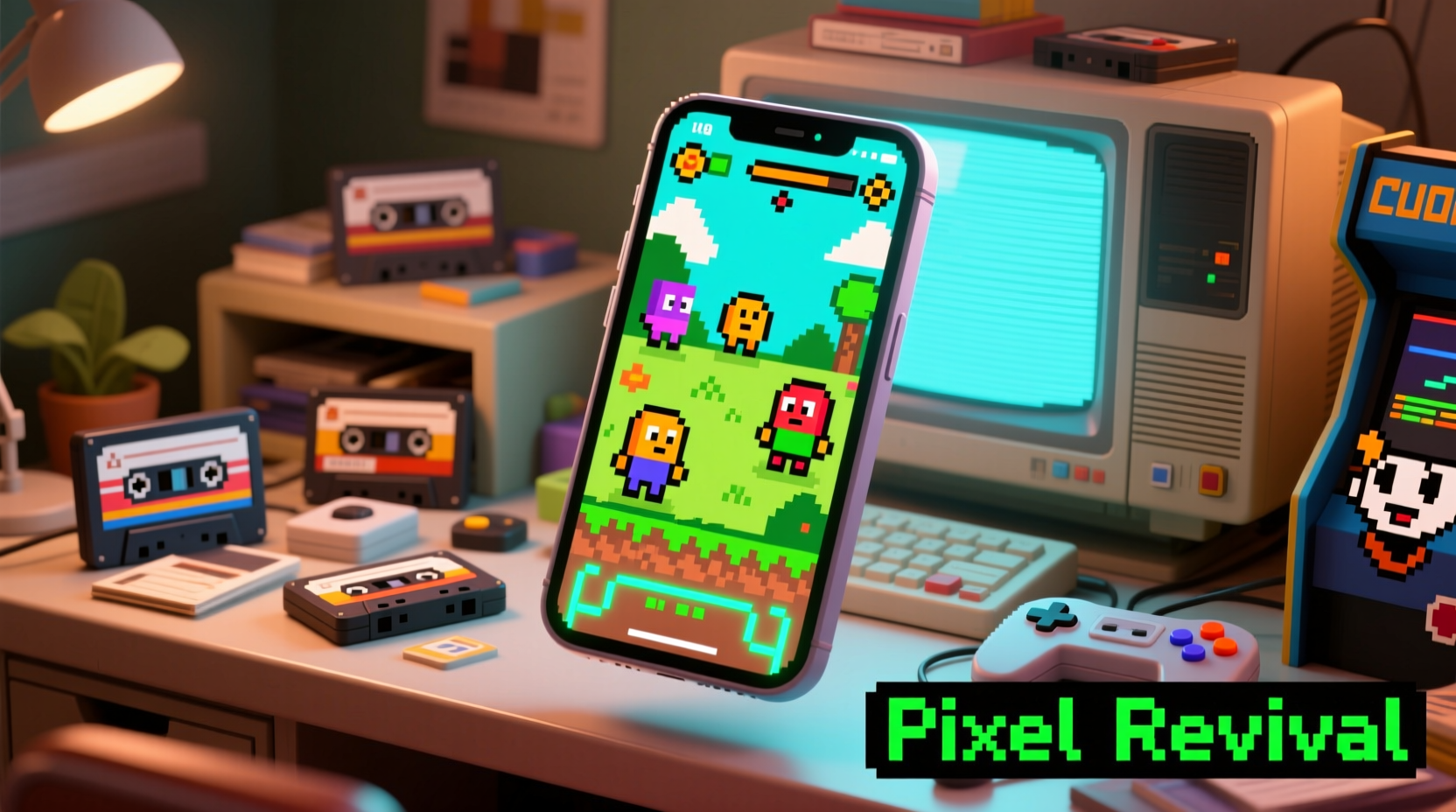
One of the most compelling forces behind the return of pixel art is nostalgia. For many players who grew up in the 1980s and 1990s, pixelated visuals evoke strong emotional memories associated with childhood gaming experiences. Titles like *Super Mario Bros.*, *The Legend of Zelda*, and *Sonic the Hedgehog* weren’t just games—they were formative entertainment milestones. Today’s adult gamers often seek out experiences that recapture that sense of wonder and simplicity.
Indie developers have tapped into this sentiment with precision. Games like *Celeste*, *Stardew Valley*, and *Shovel Knight* use pixel art not as a limitation, but as a deliberate stylistic choice to invoke familiarity and warmth. These titles don’t merely imitate old aesthetics—they reinterpret them with modern gameplay mechanics and narrative depth, creating a bridge between generations.
“Players don’t just see pixels—they see feelings. There’s an intimacy in pixel art that hyper-realism often lacks.” — Lena Torres, Indie Game Designer and Visual Artist
This emotional resonance extends beyond mere recognition. Pixel art encourages imagination. With fewer visual details, players mentally fill in gaps, creating a deeper personal connection to the world. In mobile gaming, where attention spans are short and competition fierce, that emotional hook can be the difference between a one-time download and lasting player engagement.
Economic Efficiency: Why Pixel Art Makes Financial Sense
Beyond emotion, there’s a hard economic rationale for choosing pixel art in indie mobile development. High-fidelity 3D assets require significant investment in tools, talent, and time. Creating realistic models, animations, textures, and lighting systems demands specialized skills and expensive software—resources many indie studios simply don’t have.
In contrast, pixel art is remarkably accessible. A single artist can design entire worlds using affordable or even free tools like Aseprite, Piskel, or GraphicsGale. Assets are small in file size, reducing storage requirements and improving load times—critical factors for mobile performance and user retention. Moreover, pixel art scales well across different screen resolutions, making cross-device compatibility easier to manage.
Consider the cost comparison: hiring a team of 3D modelers, animators, and VFX artists can run tens of thousands of dollars. A pixel artist, working independently, might produce a full game’s worth of assets for a fraction of that cost. For bootstrapped developers relying on crowdfunding or personal savings, this efficiency is not just beneficial—it’s essential.
Artistic Clarity and Gameplay Focus
Pixel art imposes constraints—but constraints can be creatively liberating. Without the ability to rely on detailed textures or complex shaders, developers must focus on clarity, readability, and intentional design. Every pixel matters. This discipline leads to cleaner UIs, more intuitive character silhouettes, and better visual feedback—all crucial elements in mobile gaming, where screens are small and distractions are abundant.
Take platformers like *VVVVVV* or *Luna’s Quest*. Their success lies not in graphical fidelity, but in precise movement, responsive controls, and clear visual cues—all enhanced by the minimalist nature of pixel art. When every jump needs to feel accurate, visual noise becomes a liability. Pixel art strips away clutter, allowing gameplay mechanics to shine.
Additionally, pixel art supports strong thematic identity. Whether evoking a post-apocalyptic wasteland (*Cave Story*) or a whimsical farm life (*Stardew Valley*), the hand-crafted quality of pixel sprites conveys personality in ways that procedural or generic 3D models often cannot. Players recognize and appreciate the human touch behind each frame of animation.
Case Study: How ‘Alto’s Odyssey’ Blends Pixel Style with Modern Aesthetics
While not strictly pixel art, *Alto’s Odyssey* offers insight into how retro-inspired minimalism resonates in mobile gaming. Developed by Snowman, the game uses simplified shapes, limited palettes, and stylized environments reminiscent of pixel art principles—even though it’s rendered in vector-based 2D. Its visual language prioritizes mood over detail, using gradients and silhouettes to create a serene, dreamlike atmosphere.
The game’s success—over 50 million downloads and multiple Apple Design Awards—demonstrates that players value aesthetic intentionality. Though technically advanced, *Alto’s Odyssey* shares DNA with pixel art through its emphasis on restraint and emotional tone. It proves that the philosophy behind pixel art—clarity, expressiveness, and focused design—is transferable and commercially viable.
For indie developers, this case underscores a key lesson: it’s not about replicating 1980s graphics, but adopting the mindset of doing more with less. Whether using actual pixels or abstracted forms, the goal is to create a cohesive, memorable experience without bloated production costs.
Comparison Table: Pixel Art vs. 3D Graphics in Mobile Game Development
| Factor | Pixel Art | 3D Graphics |
|---|---|---|
| Development Cost | Low – Can be done by 1–2 artists | High – Requires modeling, texturing, rigging, animation teams |
| File Size | Small – Optimized for mobile | Large – Can exceed 1GB |
| Performance Impact | Minimal – Runs smoothly on older devices | Significant – May require high-end hardware |
| Artistic Flexibility | High – Encourages creativity within limits | Moderate – Often constrained by realism expectations |
| Nostalgia Appeal | Strong – Immediate emotional connection | Limited – Less tied to retro gaming culture |
| Time to Market | Faster – Simpler asset pipeline | Slower – Complex rendering and optimization |
This table highlights why pixel art remains a pragmatic choice for mobile-first development. While 3D offers immersion, it comes at a steep cost that many indies cannot afford. Pixel art levels the playing field, enabling small teams to compete with polished, engaging products.
Actionable Checklist: Launching a Pixel Art Mobile Game
- Define your core aesthetic: Choose a consistent color palette (e.g., 16-color limit) and resolution (e.g., 16x16 or 32x32 tiles).
- Invest in animation: Even simple frame-by-frame movement brings characters to life.
- Optimize for mobile: Ensure UI elements are legible on small screens and touch-friendly.
- Leverage open-source tools: Use Aseprite for sprite creation, Tiled for level design, and Godot or Unity for engine support.
- Test on real devices: Verify performance across budget and flagship phones.
- Market the art style: Highlight the nostalgic and artistic value in trailers and app store descriptions.
Common Pitfalls to Avoid
Despite its advantages, pixel art isn’t immune to poor execution. Some indie games fall into the trap of assuming “retro” means “low effort.” Sloppy alignment, inconsistent palettes, or lack of animation can break immersion and deter players. Authentic pixel art requires discipline, not just imitation.
Another issue is misjudging audience expectations. While nostalgia draws players in, it doesn’t excuse outdated mechanics. Pairing retro visuals with modern quality-of-life features—such as save systems, accessibility options, and responsive controls—is essential for long-term success.
FAQ: Understanding the Pixel Art Revival
Is pixel art only popular because of nostalgia?
No. While nostalgia plays a major role, pixel art also offers tangible benefits in development speed, cost, and visual clarity. Many younger players who never experienced 8-bit consoles still appreciate the style for its artistic charm and gameplay focus.
Can pixel art be profitable on mobile?
Absolutely. Games like *Terraria*, *Dead Cells*, and *Crossy Road* have achieved massive commercial success using pixel art. On mobile, where discoverability and performance matter, a well-executed pixel art title can stand out in crowded marketplaces.
Do I need to be an artist to make pixel art games?
Not necessarily. Many developers learn pixel art alongside coding. Online communities, tutorials, and asset stores (like itch.io or OpenGameArt) provide resources for beginners. However, investing in skilled art direction—even through collaboration—will significantly improve your game’s quality.
Conclusion: Pixels with Purpose
The resurgence of pixel art in indie mobile games is neither a fleeting trend nor a lazy shortcut. It is a deliberate fusion of emotional intelligence and economic pragmatism. Developers are rediscovering that constraints breed innovation, and that authenticity often resonates louder than spectacle.
As mobile platforms continue to evolve, the demand for meaningful, well-crafted experiences will only grow. Pixel art, with its blend of nostalgia, clarity, and accessibility, is uniquely positioned to meet that demand. For aspiring creators, the message is clear: you don’t need a big budget to make a lasting impact. You need vision, discipline, and a willingness to embrace the beauty of simplicity.




 浙公网安备
33010002000092号
浙公网安备
33010002000092号 浙B2-20120091-4
Comments
No comments yet. Why don't you start the discussion?