
Robert F. Kennedy Jr.’s 2024 presidential campaign captured national attention not only for its unconventional messaging but also for the intense scrutiny it attracted. Initially launched as an independent bid, the campaign positioned itself as a populist alternative to both major parties—challenging entrenched political interests, questioning public health policies, and advocating for environmental reform. Yet by mid-2024, after months of momentum and controversy, Kennedy announced he was suspending his campaign. The decision surprised many, especially supporters who saw him gaining traction in key battleground states. Understanding why RFK Jr. dropped out requires examining a complex mix of legal hurdles, polling stagnation, internal dynamics, and a last-minute strategic pivot that culminated in an unexpected endorsement.
The Rise and Challenges of an Independent Campaign
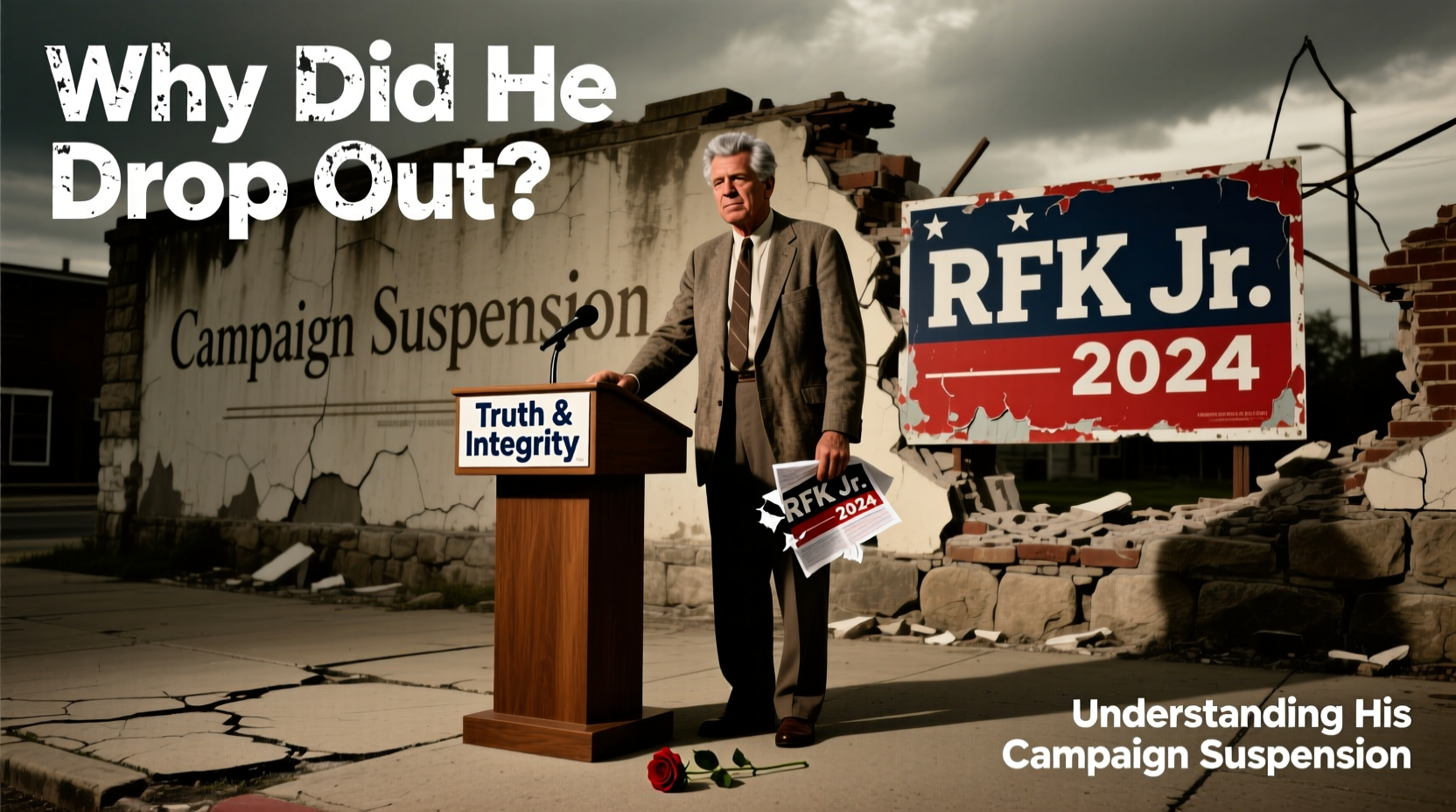
Kennedy entered the race as a long-shot candidate with a distinctive platform focused on government transparency, vaccine safety concerns, and corporate accountability. Unlike traditional third-party candidates, he leveraged his family name, media presence, and grassroots organizing to build a coalition that crossed ideological lines. At one point, polls showed him drawing up to 15% nationally, raising alarms among Democratic strategists who feared he would siphon votes from President Joe Biden in close races.
However, running outside the two-party system posed structural obstacles. Ballot access laws vary significantly across states, requiring thousands of verified signatures and substantial legal resources. By summer 2024, Kennedy’s team had secured placement on only about half the state ballots, limiting his electoral viability. In critical swing states like Georgia and Texas, court rulings blocked or delayed his inclusion, undermining the campaign’s ability to present itself as a truly national option.
Shifting Poll Numbers and Voter Consolidation
While early enthusiasm placed Kennedy in triple digits in some national surveys, sustained polling revealed a troubling trend: his support plateaued just as the general election neared. By August 2024, most reputable trackers showed him averaging between 8% and 10%—significant enough to influence outcomes, but insufficient to win outright. More critically, data indicated that the majority of his supporters identified as Democrats or independents leaning left, amplifying fears of a spoiler effect.
A pivotal moment came during a series of late-summer focus groups commissioned by Kennedy’s inner circle. Participants expressed growing concern that a vote for Kennedy might inadvertently help re-elect Donald Trump. One Ohio voter stated, “I agree with RFK on vaccines and corruption, but if my vote helps Trump win Ohio, I’ve done more harm than good.” These sentiments echoed across multiple swing states, signaling a potential collapse in support unless a new strategy emerged.
“Third-party candidates often face a moral dilemma: stay true to principle or act strategically to prevent a worse outcome.” — Dr. Lena Pruitt, Political Science Professor at Georgetown University
Behind the Scenes: The Decision Timeline
The final weeks before Kennedy’s withdrawal were marked by intense deliberations involving family members, senior advisors, and external political operatives. What followed was a quiet but decisive shift in strategy—one that prioritized impact over office.
Step-by-Step: The Final Decision Process
- Early August: Internal polling shows decline in Wisconsin and Nevada; legal teams report low chances of securing full ballot access.
- Mid-August: Kennedy meets privately with Robert F. Kennedy Sr.’s former aides to discuss legacy implications.
- Late August: Negotiations begin with the Biden campaign through backchannel intermediaries; no formal deal is made, but policy concessions are discussed.
- September 1: Family summit held in Hyannis Port—key relatives urge suspension to avoid enabling Trump.
- September 3: Kennedy announces campaign suspension and endorses Biden, citing “the greater threat to democracy.”
This timeline underscores that the decision was neither impulsive nor purely transactional. It reflected a calculated reassessment of what influence could be wielded without holding office.
Campaign Suspension vs. Dropping Out: Clarifying the Move
Kennedy did not formally “drop out” in the conventional sense. Instead, he suspended his campaign and removed himself from several upcoming ballots, allowing his delegates to remain active in certain states. This technical distinction preserved some leverage and kept pressure on the Democratic Party to address issues like vaccine safety oversight and pharmaceutical regulation.
In his farewell speech, Kennedy emphasized that while he was stepping aside, the movement would continue. “This campaign was never about me,” he said. “It was about awakening the American people to the corruption that has taken hold of both parties.” His exit included a list of policy demands presented to the Biden-Harris administration, including calls for independent review boards on CDC protocols and limits on corporate lobbying in health agencies.
| Action | Meaning | Strategic Purpose |
|---|---|---|
| Suspended Campaign | Operations paused, staff furloughed | Maintains organizational structure for potential revival |
| Withdrew from Ballots | Removed name in select states | Reduces risk of splitting anti-Trump vote |
| Endorsed Biden | Publicly backed Democratic nominee | Strengthens moral authority and policy bargaining power |
| Retained Delegates | Keeps representation in party processes | Ensures voice in platform discussions post-election |
Real Impact: A Case Study from Michigan
In Michigan, where auto industry ties and union politics shape electoral outcomes, Kennedy’s presence initially worried Democrats. A local United Auto Workers chapter conducted a member survey in July showing that 17% of Biden-leaning voters were considering switching to Kennedy due to distrust in federal health mandates imposed during the pandemic.
After the suspension, union leaders worked with community organizers to host town halls addressing vaccine policy concerns. Within three weeks, follow-up data showed that 12% of those wavering voters returned to supporting Biden. One organizer noted, “Kennedy gave voice to real anxieties. But once he stepped aside, we could redirect that energy into constructive dialogue instead of division.”
This example illustrates how a candidate’s exit—even when ideologically controversial—can create space for reconciliation and coalition-building in tight electoral environments.
Frequently Asked Questions
Did RFK Jr. officially endorse Joe Biden?
Yes. On September 3, 2024, Kennedy publicly endorsed Biden during a press conference in Washington, D.C., stating that preventing a second Trump term was “the urgent priority facing our nation.” He urged all his supporters to vote for Biden while maintaining criticism of Democratic Party policies.
Could RFK Jr. restart his campaign after suspending it?
Technically, yes. Suspension differs from a full withdrawal. While he withdrew from key ballots, the campaign infrastructure remains intact, and delegates are still registered in several states. A resurgence would depend on post-election developments, such as perceived betrayal of promised reforms or a constitutional crisis.
Was there a deal between the Biden campaign and RFK Jr.?
No formal quid pro quo has been confirmed. However, sources close to the negotiations indicate that Biden advisors engaged in informal talks about creating a commission to review vaccine injury compensation programs. These discussions likely influenced Kennedy’s decision, though no binding agreement was signed.
Lessons for Future Candidates
Kennedy’s campaign suspension offers valuable insights for future independent and third-party aspirants:
- Ballot access is not just logistical—it’s existential.
- Naming alone does not guarantee sustained support.
- Political movements can exert influence even without winning office.
- Timing matters: exiting too late risks irrelevance; too early, loss of leverage.
Conclusion: A Withdrawal That Reshaped the Race
Robert F. Kennedy Jr.’s decision to suspend his campaign was not a defeat, but a recalibration. It acknowledged the harsh realities of America’s winner-take-all electoral system while preserving the integrity of his message. By stepping aside, he altered the trajectory of the 2024 election—consolidating opposition to Trump while forcing both parties to confront issues they had long ignored.
His move reminds us that leadership isn’t always measured by reaching office, but by shifting the conversation. For activists, reformers, and future candidates watching closely, the lesson is clear: sometimes the most powerful thing you can do is know when to pause.




 浙公网安备
33010002000092号
浙公网安备
33010002000092号 浙B2-20120091-4
Comments
No comments yet. Why don't you start the discussion?