
The rise of one of humanity’s first civilizations did not happen by accident. The Sumerians, who established city-states like Ur, Uruk, and Eridu around 4500 BCE, chose to settle in southern Mesopotamia—a region between the Tigris and Euphrates rivers—for a combination of environmental, economic, and cultural factors. Their decision laid the foundation for urban life, writing, and complex governance. Understanding why the Sumerians selected this particular region reveals how geography and human ingenuity intersected to shape history.
Fertile Soil and Agricultural Potential
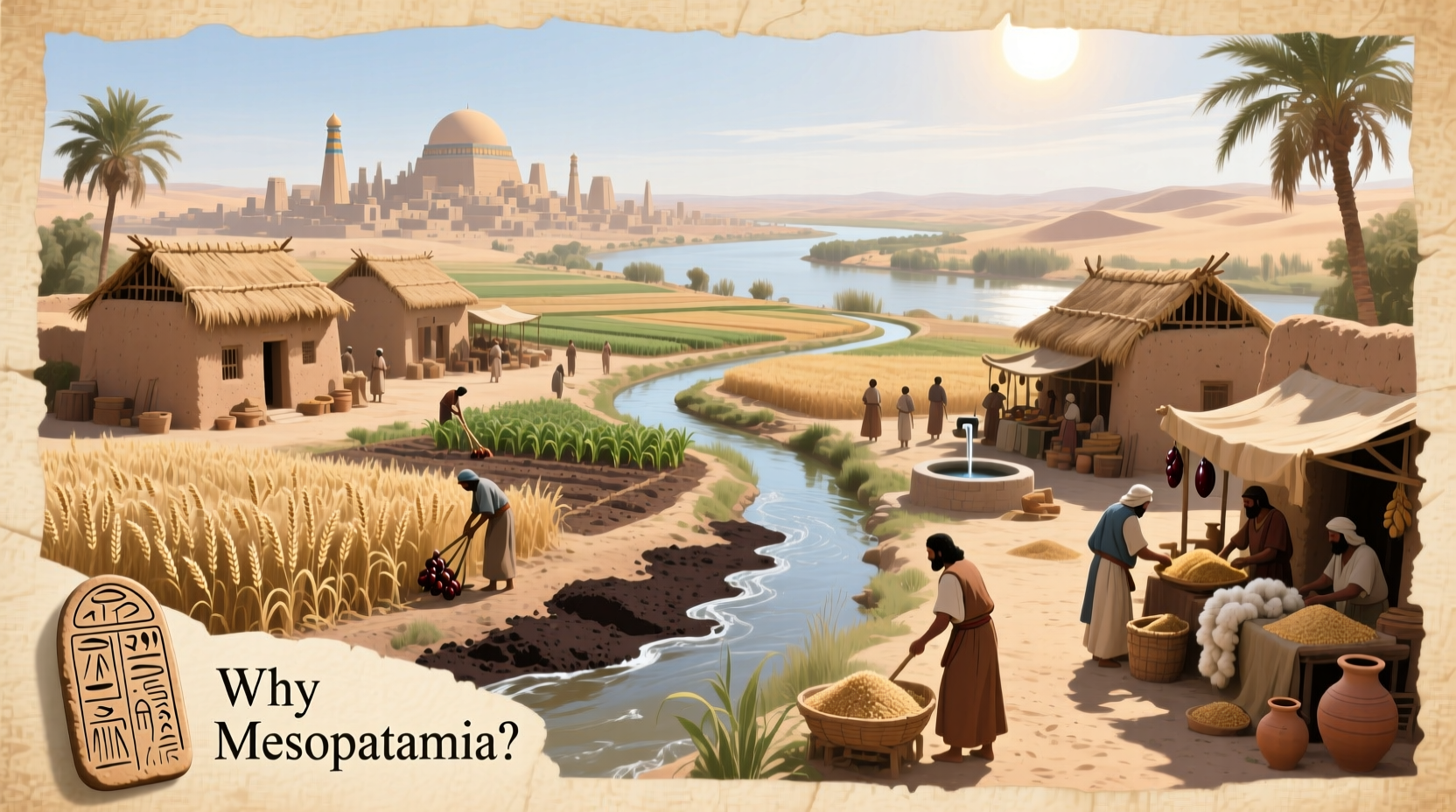
The most compelling reason the Sumerians settled in Mesopotamia was its agricultural promise. The land between the Tigris and Euphrates rivers—known as the Fertile Crescent—offered rich alluvial soil deposited by seasonal flooding. Unlike the arid regions surrounding it, southern Mesopotamia provided ideal conditions for growing staple crops such as barley, dates, and flax.
Annual floods replenished nutrients in the soil, making agriculture highly productive even without modern fertilizers. With irrigation techniques developed early on, the Sumerians transformed marshy lowlands into farmland capable of supporting large populations. This surplus food production enabled population growth, specialization of labor, and the emergence of cities.
Access to Water and Irrigation Systems
Water was central to Sumerian settlement. The Tigris and Euphrates rivers provided not only drinking water but also transportation routes and a means to irrigate fields. While northern Mesopotamia had more rainfall, southern Mesopotamia—which the Sumerians inhabited—was drier and required engineered solutions.
To overcome low rainfall, the Sumerians constructed an extensive network of canals, dikes, and reservoirs. These irrigation systems allowed them to control water distribution, turning unpredictable floods into a reliable resource. This innovation marked one of the earliest examples of large-scale water management in human history.
Irrigation also fostered cooperation among communities. Maintaining shared canal systems required coordination, which contributed to the development of centralized authority and early forms of government.
Economic Advantages and Trade Networks
Mesopotamia’s location made it a natural hub for trade. Positioned between Anatolia, the Iranian plateau, the Arabian Peninsula, and the Mediterranean coast, the region connected diverse cultures and economies. The Sumerians lacked many raw materials—such as timber, stone, and metals—but their surplus grain and textiles became valuable trade commodities.
River transport allowed goods to be moved efficiently. Boats carried barley, wool, and pottery upstream in exchange for copper from Oman, timber from Lebanon, and precious stones from Afghanistan. Over time, Sumerian city-states grew wealthy through commerce, enabling investment in monumental architecture, temples, and scribal education.
This economic interdependence encouraged diplomatic relations, record-keeping (which led to writing), and the standardization of weights and measures—all hallmarks of advanced civilization.
“Sumerian cities thrived not because they were self-sufficient, but because they were deeply integrated into regional exchange networks.” — Dr. Amanda Podany, Historian of Ancient Near East
Defensible Geography and Strategic Settlement Patterns
While Mesopotamia lacked natural barriers like mountains or dense forests, the Sumerians adapted strategically. They often built their cities on elevated mounds or surrounded them with walls made of sun-dried brick. Marshy terrain near river deltas also served as a natural deterrent to invaders.
Settlements were typically spaced apart, reducing vulnerability to large-scale attacks. Additionally, controlling key points along rivers allowed city-states to monitor and tax trade, enhancing both security and revenue. Though warfare was common between rival city-states like Lagash and Umma, the overall environment supported long-term habitation due to its productivity and adaptability.
The flat landscape also facilitated communication and movement, allowing messengers, traders, and armies to travel relatively quickly across the region—an advantage that would later benefit empires like Babylon and Assyria.
Religious and Cultural Motivations
For the Sumerians, religion was inseparable from daily life and settlement decisions. Cities were often founded around a central temple complex called a ziggurat, believed to be the earthly home of a patron deity. For example, Uruk was dedicated to Inanna (goddess of love and war), while Nippur was sacred to Enlil, the chief god of the Sumerian pantheon.
Building temples was not merely an act of faith—it was a civic project that united communities, employed laborers, and legitimized leadership. Priests held significant power, and rulers often claimed divine favor to justify their authority. This fusion of religion and governance reinforced social cohesion and motivated collective efforts like irrigation works and city fortifications.
Moreover, the belief that gods controlled natural forces—like floods and harvests—encouraged careful stewardship of the environment. Rituals and offerings were conducted to maintain cosmic order, reflecting a worldview deeply tied to the rhythms of the land.
Timeline of Sumerian Settlement Development
- c. 5000 BCE: Early farming villages appear in southern Mesopotamia.
- c. 4000 BCE: Uruk emerges as a major urban center with monumental architecture.
- c. 3500 BCE: Invention of cuneiform writing for administrative purposes.
- c. 3000 BCE: Formation of independent city-states with kings and temples.
- c. 2350 BCE: Sargon of Akkad conquers Sumerian cities, ending political independence but preserving cultural legacy.
Key Factors at a Glance
| Factor | Description | Impact on Settlement |
|---|---|---|
| Fertile Land | Alluvial soil from river floods enriched agriculture | Supported large populations and food surplus |
| Water Access | Tigris and Euphrates rivers provided irrigation and transport | Enabled farming and trade expansion |
| Trade Routes | Strategic position between major ancient regions | Facilitated wealth accumulation and cultural exchange |
| Religious Centers | Cities built around ziggurats and temples | Strengthened community identity and governance |
| Innovation | Development of irrigation, writing, and urban planning | Allowed sustainable growth and complexity |
Frequently Asked Questions
Why didn’t the Sumerians settle further north?
Northern Mesopotamia had more rainfall and less need for irrigation, but it was already occupied by other groups and lacked the vast floodplains ideal for large-scale grain production. The south offered untapped potential that the Sumerians could engineer and dominate.
How did flooding affect Sumerian settlements?
Flooding was both a blessing and a challenge. It deposited nutrient-rich silt, boosting crop yields, but uncontrolled floods could destroy homes and fields. The Sumerians responded by building levees and canal systems to regulate water flow.
Did the Sumerians face any disadvantages in Mesopotamia?
Yes. The region lacked stone, wood, and metal resources, forcing reliance on trade. It was also vulnerable to invasions due to its flat terrain. However, these challenges spurred innovation in diplomacy, engineering, and administration.
Actionable Checklist: What Modern Planners Can Learn from Sumerian Settlements
- ✅ Prioritize access to fresh water and arable land when evaluating settlement sites.
- ✅ Invest in infrastructure (like irrigation or drainage) to manage environmental risks.
- ✅ Design communities around shared cultural or civic spaces to strengthen social bonds.
- ✅ Leverage geographic position to build trade and economic resilience.
- ✅ Encourage innovation through decentralized yet cooperative governance models.
Conclusion
The Sumerians settled in Mesopotamia not because it was the easiest place to live, but because it offered the right mix of opportunity and challenge. Fertile soil, river access, trade connectivity, and cultural vision combined to create a cradle of civilization. Their ability to adapt to the environment—through irrigation, urban planning, and institutional development—demonstrates a profound understanding of sustainability and human organization.
Today, as we face climate change, resource scarcity, and rapid urbanization, revisiting the choices of the Sumerians offers timeless insights. Their legacy reminds us that thriving societies are not built on abundance alone, but on wisdom, cooperation, and foresight.




 浙公网安备
33010002000092号
浙公网安备
33010002000092号 浙B2-20120091-4
Comments
No comments yet. Why don't you start the discussion?