
In the early 19th century, the United States was engaged in a quiet but determined campaign of territorial expansion. Among the most strategically significant additions to the young nation was Florida. Though seemingly remote at the time, the acquisition of Florida in 1819 through the Adams-Onís Treaty was not a random act of diplomacy—it was the culmination of decades of geopolitical pressure, military conflict, economic ambition, and national security concerns. Understanding why the U.S. wanted Florida requires examining the interplay of border instability, foreign influence, indigenous resistance, and long-term vision for continental dominance.
Strategic Geography: A Gateway to Expansion
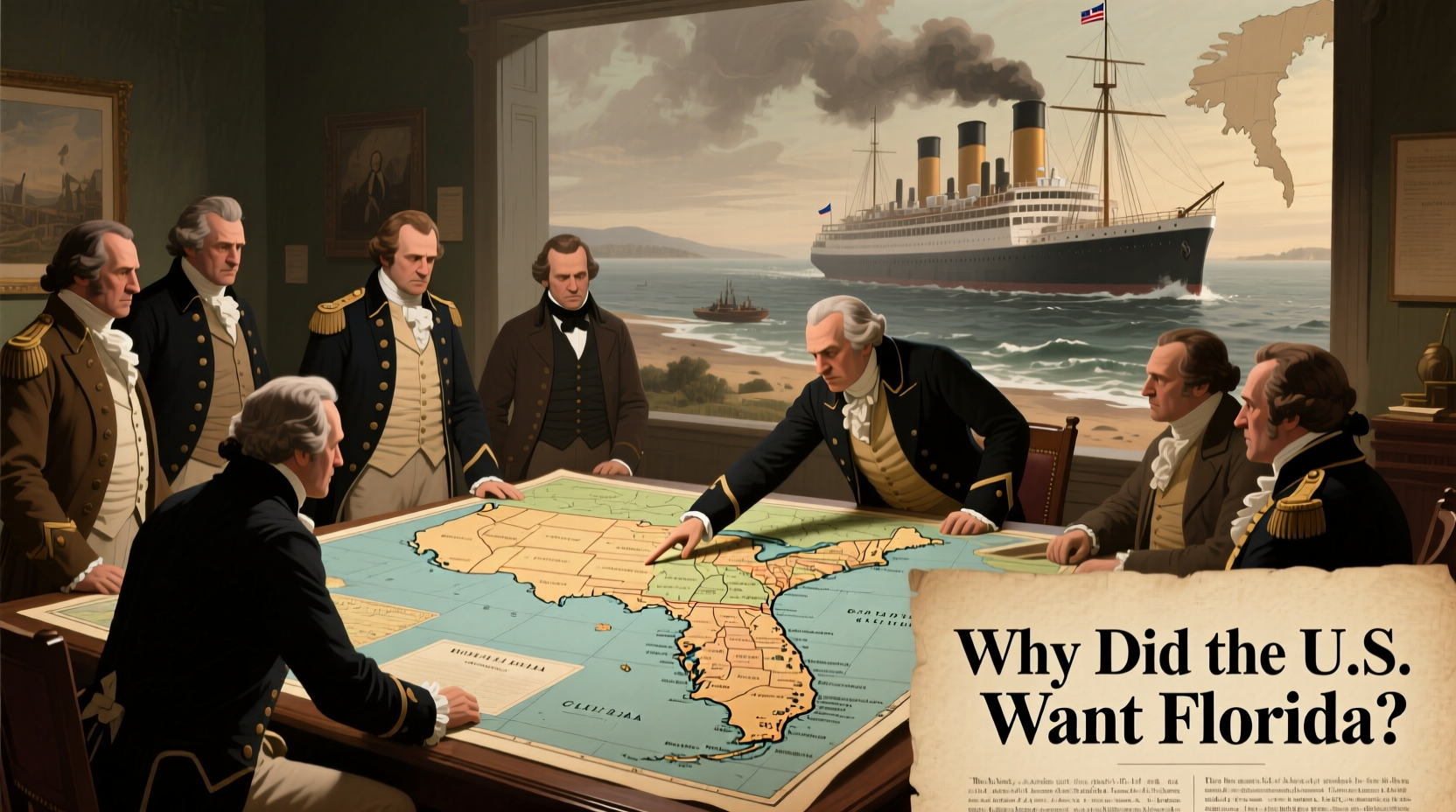
Florida’s geographic position made it indispensable to American ambitions. Bordered by the Gulf of Mexico and the Atlantic Ocean, and situated directly south of Georgia and Alabama, Florida served as a natural extension of the southeastern United States. More importantly, it controlled access to the mouth of the Mississippi River via the Gulf Coast—a vital artery for western farmers and traders who relied on New Orleans to ship goods to global markets.
Before the Louisiana Purchase (1803), Spain held both Florida and the port of New Orleans. Even after the U.S. acquired Louisiana, Spanish control of Florida posed a persistent threat. If Spain—or worse, a more powerful European rival like Britain—fortified Florida, they could blockade American river traffic and destabilize the entire western economy.
Border Insecurity and Native Resistance
One of the most pressing reasons the U.S. sought Florida was the persistent lawlessness along the Georgia-Florida border. The region was home to Seminole communities, many of whom had absorbed escaped enslaved people from southern plantations. These Black Seminoles found refuge in Spanish Florida, where colonial authorities offered them freedom in exchange for military service—a policy that infuriated American slaveholders.
The porous border became a flashpoint. Raiding parties crossed into Georgia, and American militias retaliated. General Andrew Jackson exploited this instability during the First Seminole War (1817–1818), launching unauthorized invasions into Spanish territory, capturing forts, and executing British subjects accused of inciting rebellion. While controversial, Jackson’s actions demonstrated Spain’s inability to govern Florida effectively and strengthened the U.S. argument that only American control could bring order.
“Spain possesses no means of controlling the territory… It is a derelict upon the waters of political life.” — John Quincy Adams, U.S. Secretary of State, 1819
Economic and Trade Motivations
Beyond security, Florida offered tangible economic benefits. Its coastline included deep-water ports such as Pensacola and St. Augustine, which could support naval operations and commercial shipping. The fertile lands of northern Florida were suitable for plantation agriculture, particularly cotton—a crop central to the antebellum Southern economy.
Additionally, American settlers and speculators eyed Florida’s vast, unclaimed acreage. Land hunger drove much of U.S. expansionism, and Florida represented one of the last accessible territories east of the Mississippi. By acquiring Florida, the federal government could open new lands for settlement, stimulate migration, and generate revenue through land sales.
Key Economic Drivers Behind the Acquisition
- Access to Gulf Coast trade routes
- Potential for agricultural development (cotton, sugar, citrus)
- Land speculation and settler demand
- Control over port cities to boost regional commerce
Diplomatic Maneuvering: The Adams-Onís Treaty
The formal transfer of Florida occurred through the Adams-Onís Treaty of 1819, named after U.S. Secretary of State John Quincy Adams and Spanish diplomat Luis de Onís. Negotiated over several years, the treaty resolved long-standing border disputes between the two nations.
Under its terms, Spain ceded East Florida to the United States and renounced claims to West Florida. In return, the U.S. assumed $5 million in claims by American citizens against Spain—largely compensation for property lost during border conflicts. Perhaps more significantly, the treaty established a clear boundary between New Spain (Mexico) and the U.S., extending from the Gulf of Mexico to the Pacific Ocean. This line helped define future American claims to the Oregon Territory and laid groundwork for westward expansion.
The treaty reflected Spain’s declining imperial power. Unable to defend or populate its distant colonies, Spain preferred a negotiated withdrawal to the risk of losing Florida through war or rebellion. For the U.S., the treaty was a diplomatic triumph—gaining valuable territory without firing a single official shot.
Timeline of Key Events Leading to Acquisition
- 1803: Louisiana Purchase increases U.S. interest in Gulf Coast security.
- 1810–1813: U.S. annexes parts of West Florida through unilateral action.
- 1817–1818: First Seminole War; Jackson invades Florida, heightening tensions.
- 1819: Adams-Onís Treaty signed; Spain cedes Florida to the U.S.
- 1821: Formal transfer completed; Florida becomes a U.S. territory.
Long-Term Implications of Florida’s Acquisition
The addition of Florida marked a turning point in American foreign policy. It signaled a shift from reactive defense to proactive territorial consolidation. No longer merely protecting existing borders, the U.S. was now shaping them through negotiation and, when necessary, force.
Florida also set a precedent for future expansions. The success of the Adams-Onís Treaty showed that diplomacy backed by military readiness could yield major gains. This approach would later be used in negotiations over Oregon and in the annexation of Texas.
Moreover, the absorption of Florida intensified sectional tensions. As a potential slave state, its status fueled debates over the balance of power between free and enslaved states—an issue that would eventually lead to civil war.
| Aspect | Before Acquisition | After Acquisition |
|---|---|---|
| Security | Unstable border, refugee sanctuaries | Federal control, reduced cross-border raids |
| Trade | Vulnerable Gulf access | Secured ports and shipping lanes |
| Settlement | Limited American presence | Open land for migration and agriculture |
| Foreign Influence | Spanish and British intrigue | U.S. sovereignty established |
Mini Case Study: The Patriot War of 1812
An early example of American determination to claim Florida occurred during the so-called “Patriot War” of 1812. A group of American settlers and adventurers, with covert support from President James Madison’s administration, launched an insurrection in East Florida. They declared the region the “Republic of East Florida” and requested annexation by the United States.
Though the rebellion fizzled due to lack of popular support and Spanish resistance, U.S. troops occupied parts of the territory under the pretense of maintaining order. Eventually, American forces withdrew—but not before seizing key areas and asserting de facto control. This episode revealed the federal government’s willingness to exploit chaos to advance territorial goals, even if unofficially.
FAQ
Did the U.S. pay for Florida?
Yes, indirectly. Under the Adams-Onís Treaty, the U.S. agreed to assume $5 million in claims by American citizens against Spain. This was not a direct purchase price but functioned as compensation, making the transfer more palatable to Spain.
Was Florida immediately a state?
No. Florida became a U.S. territory in 1822. It was admitted to the Union as the 27th state on March 3, 1845, after years of population growth and political organization.
Why didn’t Spain defend Florida more aggressively?
Spain was weakened by internal unrest, colonial revolts in Latin America, and the Napoleonic Wars in Europe. Maintaining control over distant, sparsely populated Florida was costly and low-priority compared to defending core territories.
Checklist: Factors That Drove the U.S. to Acquire Florida
- Secure the southern border against foreign powers
- Eliminate safe havens for escaped enslaved people
- Protect Mississippi River trade routes
- Expand plantation agriculture and land availability
- Assert national sovereignty through diplomacy and force
- Prevent British or other European re-entry into North America
Conclusion
The acquisition of Florida was far more than a simple land deal—it was a strategic masterstroke rooted in security, economics, and long-term vision. From Andrew Jackson’s aggressive campaigns to John Quincy Adams’ shrewd diplomacy, the push for Florida reflected a growing American confidence on the world stage. By removing a weak but dangerous foreign presence from its southern border, the United States secured its economic lifelines, expanded its territorial reach, and set the stage for further continental growth.




 浙公网安备
33010002000092号
浙公网安备
33010002000092号 浙B2-20120091-4
Comments
No comments yet. Why don't you start the discussion?