
The relationship between the United States and Iran has been one of the most volatile and complex in modern geopolitics. While there has not been a full-scale war between the two nations, the U.S. has conducted targeted military actions against Iranian interests, and both countries have come dangerously close to direct conflict. Understanding why the U.S. might attack Iran—or has taken aggressive steps toward it—requires a deep look at decades of political tension, regional power struggles, nuclear ambitions, and strategic calculations. This article examines the historical context, key triggers, underlying motivations, and potential consequences of U.S. military action against Iran.
Historical Context: From Alliance to Adversaries
The U.S.-Iran relationship took a sharp turn following the 1979 Islamic Revolution. Prior to that, Iran was a key ally in the Middle East under the rule of Shah Mohammad Reza Pahlavi, who was supported by Washington. The revolution overthrew the monarchy and established an Islamic Republic under Ayatollah Khomeini, which immediately adopted an anti-American stance. The subsequent 444-day hostage crisis, during which 52 American diplomats were held captive in Tehran, cemented mutual distrust.
Since then, relations have fluctuated between tense standoffs and limited diplomacy. The U.S. accused Iran of sponsoring terrorism, developing nuclear weapons, and destabilizing regions like Iraq, Syria, and Yemen. In return, Iran viewed U.S. military presence in the Gulf, sanctions, and support for Israel as existential threats. These dynamics set the stage for periodic escalations, including cyberattacks, assassinations of scientists, and naval confrontations.
Key Reasons Behind Potential U.S. Military Action
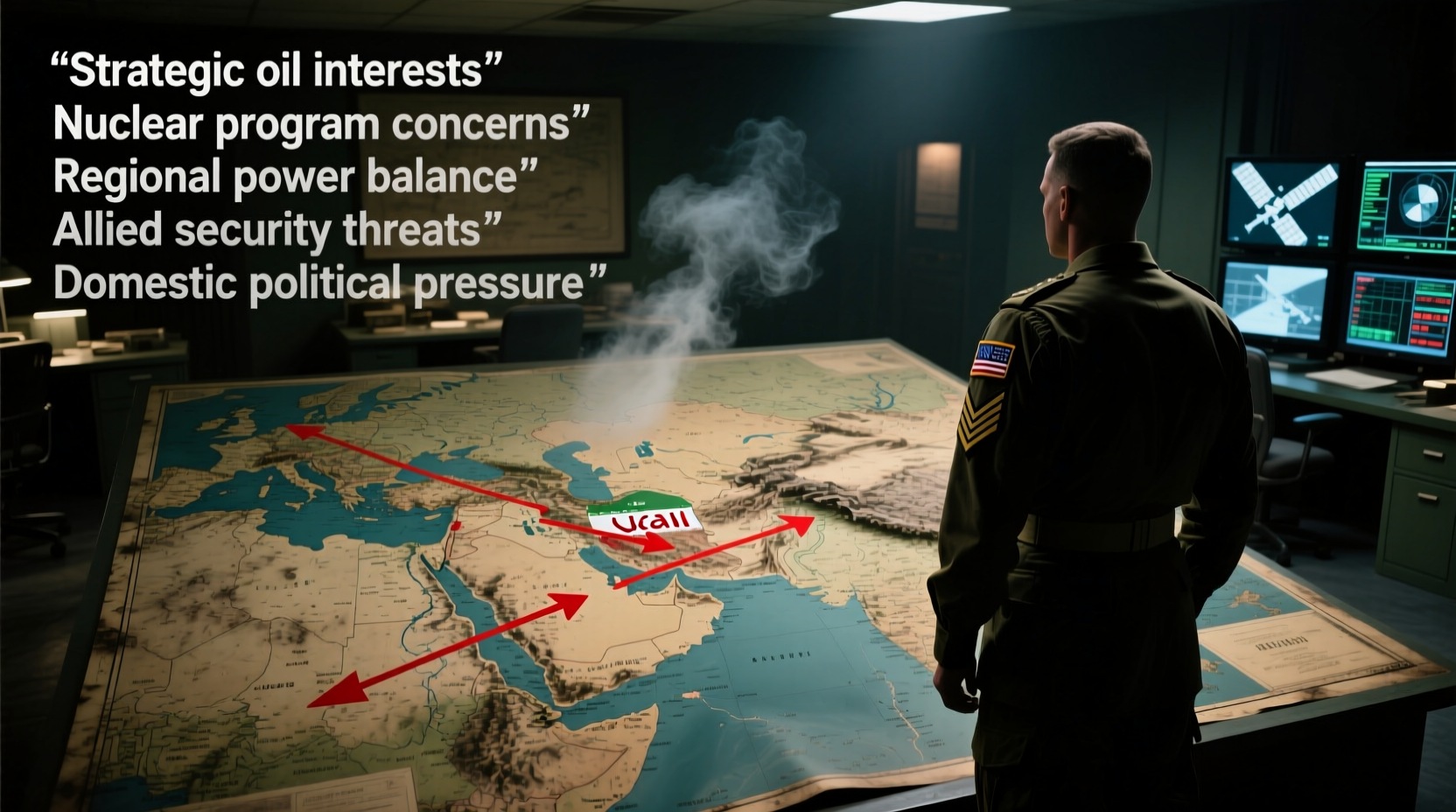
While no sustained invasion has occurred, several factors could prompt or justify U.S. strikes on Iranian targets:
- Nuclear Program Advancements: The U.S. has long opposed Iran’s uranium enrichment activities, fearing weaponization. Even after the 2015 Joint Comprehensive Plan of Action (JCPOA), which temporarily curbed Iran’s program, the U.S. withdrawal in 2018 under President Trump reignited concerns about breakout capability.
- Regional Proxy Conflicts: Iran supports groups like Hezbollah in Lebanon, the Houthis in Yemen, and various militias in Iraq and Syria. When these groups attack U.S. personnel or allies, retaliation often follows.
- Direct Threats to U.S. Personnel: In January 2020, the U.S. killed Iranian Major General Qasem Soleimani in a drone strike in Baghdad, citing an “imminent threat” to American lives. This act nearly triggered open war.
- Escalation via Maritime Incidents: Seizures of oil tankers, harassment of commercial vessels in the Strait of Hormuz, and attacks on infrastructure have raised fears of broader conflict.
- Alliance Commitments: Protecting allies such as Israel and Saudi Arabia from Iranian missile or drone attacks may compel preemptive or retaliatory U.S. action.
“Any decision to strike Iran must weigh short-term deterrence against long-term regional instability. The risk of miscalculation is extraordinarily high.” — Dr. Vali Nasr, Middle East Security Analyst, Johns Hopkins University
Timeline of Critical Incidents Leading to Escalation
A series of events have brought the U.S. and Iran to the brink of war. Below is a chronological overview of pivotal moments:
- 1979: Iranian Revolution and U.S. Embassy hostage crisis.
- 1980–1988: Iran-Iraq War; U.S. supports Iraq despite knowledge of chemical weapons use.
- 1988: USS Vincennes shoots down Iran Air Flight 655, killing 290 civilians.
- 2002: President Bush labels Iran part of the “Axis of Evil.”
- 2015: JCPOA signed; Iran limits nuclear activities in exchange for sanctions relief.
- 2018: U.S. unilaterally withdraws from JCPOA and reimposes harsh economic sanctions.
- 2019: Attacks on oil tankers in the Gulf; U.S. blames Iran. Drone shootdown incident.
- January 3, 2020: U.S. conducts drone strike killing Qasem Soleimani in Iraq.
- January 8, 2020: Iran retaliates with missile strikes on U.S. bases in Iraq—no fatalities reported.
- 2023–2024: Renewed concerns over Iran’s enriched uranium stockpile exceeding 80%, nearing weapons-grade levels.
Strategic Calculations: Deterrence vs. Escalation
Military planners in the U.S. face a difficult balancing act. Limited strikes may signal resolve but risk provoking disproportionate retaliation. A full-scale war, however, could trigger widespread regional chaos, disrupt global oil supplies, and embroil multiple actors.
The U.S. typically considers several strategic objectives when contemplating action:
- Degrading Iran’s ability to launch ballistic missiles or conduct cyber warfare.
- Disrupting supply lines to proxy forces in the Levant and Gulf.
- Demonstrating commitment to allies without becoming entangled in prolonged conflict.
- Forcing Iran back to negotiations through coercive diplomacy.
Yet history shows that military force alone rarely changes Iran’s behavior in the long term. Sanctions and isolation have not halted its nuclear ambitions, and targeted killings have often led to cycles of revenge rather than submission.
Comparison of U.S. Policy Approaches Toward Iran
| Policy Approach | Key Actions | Pros | Cons |
|---|---|---|---|
| Maximum Pressure (Trump Era) | Withdrew from JCPOA, imposed crippling sanctions, authorized Soleimani strike | Increased leverage for negotiations, disrupted funding to proxies | Accelerated Iran’s nuclear program, heightened war risk, damaged diplomatic credibility |
| Diplomatic Engagement (Obama/Biden) | Negotiated JCPOA, pursued indirect talks to revive deal | Reduced nuclear threat temporarily, avoided war | Limited enforcement mechanisms, domestic opposition in both countries |
| Military Deterrence | Naval deployments, drone surveillance, precision strikes on militia targets | Protects U.S. forces, signals resolve | Risk of escalation, civilian casualties, unintended conflict |
Mini Case Study: The Soleimani Strike and Its Aftermath
In early 2020, tensions reached a boiling point after a series of rocket attacks on U.S. bases in Iraq, culminating in the death of an American contractor. The U.S. blamed Kata'ib Hezbollah, an Iranian-backed militia. Days later, protesters stormed the U.S. Embassy in Baghdad. Citing an “imminent threat,” the Pentagon ordered a drone strike that killed Qasem Soleimani, commander of Iran’s Quds Force—a figure revered in Iran and instrumental in shaping its regional influence.
The assassination shocked global leaders. Iran responded with missile attacks on Al-Asad Airbase in Iraq. While no Americans died due to early warning and sheltering, over 100 service members were diagnosed with traumatic brain injuries. The event sparked debate over whether the strike was lawful self-defense or an act of aggression that violated international law.
In the months that followed, diplomatic channels froze, and efforts to revive the nuclear deal stalled. The incident underscored how a single military action could rapidly escalate into a near-war scenario, highlighting the fragility of deterrence in U.S.-Iran relations.
Frequently Asked Questions
Has the U.S. ever officially declared war on Iran?
No, the U.S. has not declared war on Iran. All military actions have been conducted under presidential authority as self-defense or protection of national interests, without congressional war declarations.
Could a U.S. strike disable Iran’s nuclear program?
Possible, but unlikely to be permanent. Experts estimate that even successful airstrikes would delay, not destroy, Iran’s nuclear capabilities. Underground facilities like Fordow are hardened and dispersed, making them difficult to eliminate completely.
What role does Israel play in U.S. decisions about Iran?
Israel is a critical ally and has consistently urged the U.S. to take a hardline stance. It views a nuclear-armed Iran as an existential threat and has reportedly conducted cyberattacks (e.g., Stuxnet) and assassinations of nuclear scientists independently.
Actionable Checklist: Monitoring U.S.-Iran Tensions
To stay informed and assess the risk of military conflict, consider the following steps:
- ✅ Track IAEA reports on Iran’s uranium enrichment levels and facility inspections.
- ✅ Follow statements from CENTCOM (U.S. Central Command) regarding troop movements or incidents in the Gulf.
- ✅ Monitor sanctions announcements from the U.S. Treasury Department.
- ✅ Watch for developments in indirect negotiations (e.g., Vienna talks).
- ✅ Evaluate media sources critically—distinguish between verified facts and speculation.
Conclusion: The Path Forward
The question of why the U.S. might attack Iran cannot be answered with a single cause. It emerges from decades of mistrust, competing ideologies, regional rivalries, and security dilemmas. While military force remains an option, history suggests it offers only temporary solutions at great cost. Diplomacy, though fragile and politically challenging, continues to represent the most viable path to reducing tensions.
As citizens, investors, and global stakeholders, understanding the drivers behind potential U.S. strikes empowers more informed discourse and advocacy for peaceful resolution. The stakes—regional stability, energy security, and human lives—are too high to leave to escalation and miscalculation.




 浙公网安备
33010002000092号
浙公网安备
33010002000092号 浙B2-20120091-4
Comments
No comments yet. Why don't you start the discussion?