
Tony Stark’s death in *Avengers: Endgame* was one of the most emotionally resonant moments in the Marvel Cinematic Universe (MCU). After over a decade of character development, his final act—snapping his fingers while wearing the Infinity Gauntlet to eliminate Thanos and his army—sealed his legacy as a hero who evolved from self-centered genius to selfless savior. The decision wasn’t just a dramatic climax; it was the culmination of a carefully constructed arc rooted in character growth, narrative necessity, and emotional payoff.
While fans mourned the loss of Robert Downey Jr.’s iconic portrayal, the writers and directors made it clear: this ending wasn’t arbitrary. It served multiple purposes—thematic closure, emotional catharsis, and symbolic fulfillment of Stark’s journey from ego to altruism.
The Hero’s Arc: From Ego to Sacrifice
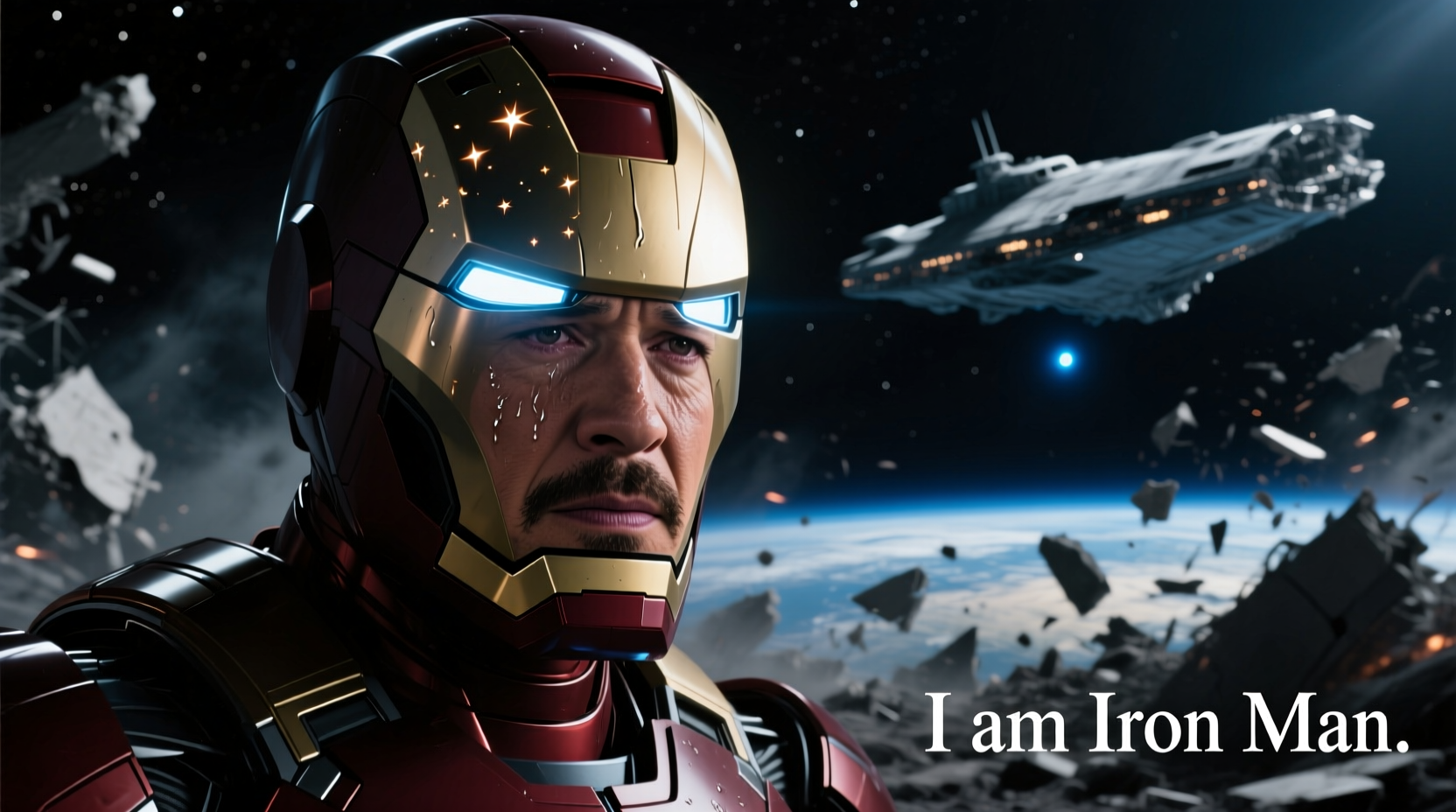
Tony Stark began as a flawed man—brilliant but arrogant, wealthy but emotionally detached. His origin story in *Iron Man* (2008) showed him transforming after being captured in Afghanistan, building his first suit not for glory, but survival. Over time, he became a reluctant leader, innovator, and eventually, a family man. By *Endgame*, he had retired from active duty, focusing on raising his daughter Morgan with Pepper Potts.
Yet when the universe needed saving again, he returned—not out of obligation, but because he knew he had the means to fix what was broken. His arc mirrors the classic “hero’s journey,” where personal transformation leads to ultimate sacrifice. As screenwriters Christopher Markus and Stephen McFeely explained:
“We always saw Tony as the guy who could solve the unsolvable problem—but at a cost. That cost, ultimately, was himself.” — Christopher Markus, Co-Writer of Avengers: Endgame
This progression—from selfishness to service—is central to why his death felt earned. He didn’t die randomly or due to poor planning; he chose to die so others could live.
Narrative Necessity: Why No One Else Could Wield the Gauntlet
A common question among fans is: couldn’t someone else have used the Infinity Stones? Thor survived wielding all six in *Infinity War*, so why not him? Hulk did it earlier in *Endgame*. So why Tony?
The answer lies in both logic and storytelling. While Hulk survived the snap that reversed the Blip, he was severely injured—his arm permanently damaged. Using the Gauntlet a second time would likely kill him. Thor, though powerful, was emotionally broken and physically diminished after failing to stop Thanos in *Infinity War*. Captain America lacked the technical understanding of the Stones. Only Tony had the combination of intellect, access to nano-tech armor, and proximity to the Gauntlet during the final battle.
Who Could Have Survived the Snap? A Comparison
| Character | Physical Resilience | Access to Gauntlet | Survival Likelihood |
|---|---|---|---|
| Hulk | Very High | Yes (used once) | Low (already injured) |
| Thor | Extremely High | No direct access | Moderate (but emotionally compromised) |
| Captain America | Enhanced human | Limited | Very Low |
| Tony Stark | Human (in armor) | Direct access via nanotech | Near Zero – but only one who could initiate snap |
Ultimately, Tony was the only one who could both access the Stones embedded in the Nano Gauntlet *and* execute the complex mental command required to activate them—thanks to his AI-driven suit interface.
Thematic Closure: The Burden of Genius and Responsibility
Throughout the MCU, Tony grappled with the consequences of his inventions. From creating Ultron to signing the Sokovia Accords, he bore guilt for collateral damage. His PTSD after *The Avengers* haunted him in *Iron Man 3*. Even in retirement, he worried about leaving a safe world for his daughter.
His final line—“I am Iron Man”—echoes his first public admission in *Iron Man*, completing a full-circle moment. This time, however, the words aren’t a boast but a declaration of identity and acceptance. He owned his role completely, embracing the burden he once resisted.
As director Joe Russo stated:
“Tony Stark’s entire journey was about learning responsibility. His death isn’t tragedy—it’s triumph. He finally做到了 what he always feared he couldn’t: save everyone.” — Joe Russo, Co-Director of Avengers: Endgame
The theme of legacy runs deep. By sacrificing himself, Tony ensured not just victory, but a future where his daughter—and billions of others—could grow up in peace.
Real-World Impact: A Fitting Exit for an Era-Defining Character
Robert Downey Jr. wasn’t just playing Tony Stark—he helped launch the entire MCU. His performance redefined superhero cinema, blending wit, vulnerability, and intelligence in a way rarely seen before. Keeping him alive would have risked diminishing his impact over time. Ending his story here preserved its integrity.
Consider a real-world example: many long-running series struggle with how to retire beloved characters. *Star Trek* faced criticism when Spock returned after his heroic death in *The Wrath of Khan*. By contrast, Tony’s exit remains untarnished—no resurrections, no retcons. Fans remember him at his peak, making the moment timeless.
Actionable Checklist: Understanding Heroic Sacrifices in Storytelling
- Ensure the character has undergone significant growth
- Make the sacrifice logically necessary within the plot
- Align the death with core themes (e.g., responsibility, redemption)
- Provide emotional closure through dialogue or symbolism
- Avoid cheapening the moment with later revivals unless absolutely justified
Frequently Asked Questions
Could Tony Stark have survived the snap?
Scientifically and narratively, no. Even the Hulk, whose physiology is far more durable, was badly injured by a single snap. Tony, a normal human protected only by nanotechnology, absorbed energy beyond biological limits. The writers confirmed that surviving was never an option—they wanted the sacrifice to be final and meaningful.
Why didn’t Doctor Strange intervene to save Tony?
In *Infinity War*, Strange revealed he had seen 14 million possible futures and only one where they won. That future required Tony to survive until *Endgame* and make the snap. Interfering would have derailed the sole path to victory. His silent nod to Tony during the final battle confirms he knew this was the chosen outcome.
Was Tony’s death planned from the beginning?
While not set in stone, Kevin Feige and the filmmakers always considered it a possibility. As early as *The Avengers*, discussions began about giving Stark a definitive end. With Downey Jr.’s contract concluding and the story reaching its zenith, it became the most coherent and powerful conclusion.
Conclusion: A Legacy Forged in Fire and Finality
Tony Stark’s death wasn’t just about defeating Thanos—it was about fulfilling a promise he made to himself years earlier: to be more than a weapon dealer, more than a billionaire, more than a suit of armor. He became a symbol of hope, innovation, and ultimate sacrifice.
His story teaches us that true heroism isn’t measured in how long you live, but in what you’re willing to give. In choosing to say “I am Iron Man” one last time, Tony Stark gave the universe a second chance—and cemented his place as one of cinema’s most complete and compelling heroes.




 浙公网安备
33010002000092号
浙公网安备
33010002000092号 浙B2-20120091-4
Comments
No comments yet. Why don't you start the discussion?