
Tony Stark, the genius billionaire behind the Iron Man suit, is defined by one of the most iconic pieces of technology in modern storytelling: the arc reactor. Nestled in his chest, it’s more than a glowing symbol—it’s a lifeline, a power source, and a cornerstone of his transformation from weapons manufacturer to superhero. But why exactly did Tony Stark need an arc reactor? The answer spans medical necessity, technological innovation, and narrative evolution across the Marvel Cinematic Universe (MCU).
The Immediate Medical Necessity: Shrapnel and Survival
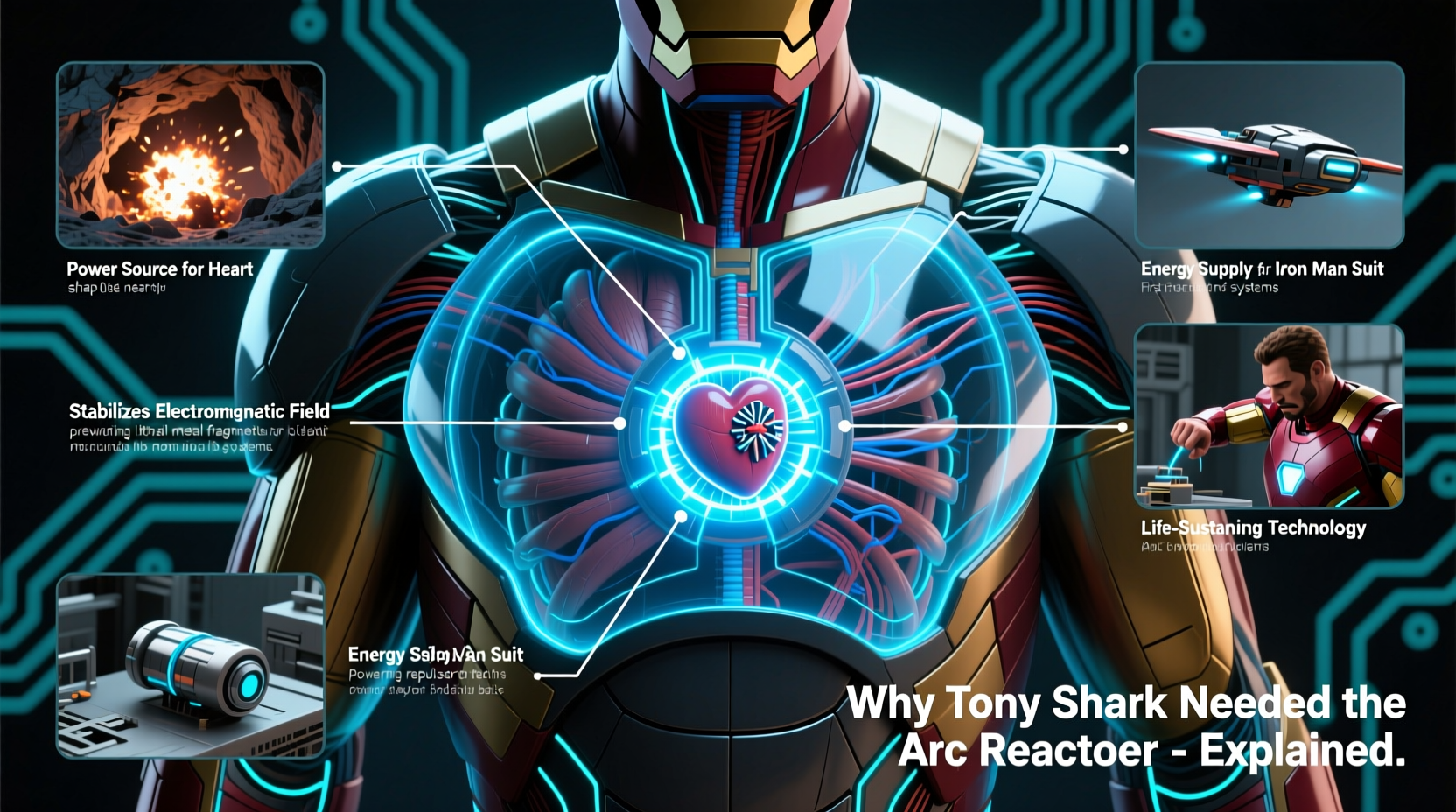
When Tony Stark was captured by the Ten Rings in Afghanistan, an explosion during a weapons demonstration sent shrapnel toward his heart. Surgeons removed the larger fragments, but microscopic metal shards continued migrating, threatening to cause fatal cardiac arrest. Without intervention, Stark would have died within weeks.
To prevent this, Yinsen, a fellow captive and skilled physician, implanted an electromagnet powered by a car battery to keep the shrapnel from reaching his heart. This temporary solution evolved into the first arc reactor—a compact, self-sustaining power source capable of generating a magnetic field strong enough to trap the metal permanently.
“Without that magnet, the shrapnel would’ve entered his heart. The arc reactor wasn’t just tech—it was a medical device keeping him alive.” — Dr. Christine Everhart, MCU Analyst and Science Commentator
This initial purpose remained central through the early phases of the MCU. The arc reactor wasn’t optional; it was essential for survival. Even after Stark miniaturized the device using palladium and later vibranium-based alloys, its core function stayed unchanged: protect his heart from internal injury caused by wartime trauma.
Powering the Iron Man Suits: From Prototype to Suit Integration
While saving his life was the primary goal, the arc reactor quickly became indispensable for another reason: energy supply. The Mark I suit, built in captivity, relied on limited power sources. Once back at Stark Industries, Tony developed more advanced versions requiring immense energy output for flight, repulsors, and unibeam attacks.
The arc reactor provided a stable, high-output energy source small enough to integrate directly into the suit’s chest plate. Unlike conventional batteries or fuel cells, it generated clean, continuous power without overheating or degrading under stress. Each upgrade—from the Mark III to the Hulkbuster—demanded greater efficiency, which only the evolving arc reactor could deliver.
Moreover, the reactor enabled wireless charging and remote activation of suits via the \"house party\" protocol. This level of integration meant that Stark didn’t just wear the suit—he was physically connected to it, with the arc reactor acting as the central node in a networked system of armor units.
How the Arc Reactor Powers the Suit: Key Functions
- Magnetic stabilization: Keeps shrapnel away from vital organs while allowing mobility.
- Energy core: Supplies power to propulsion systems, weapons, and AI interfaces like J.A.R.V.I.S.
- Data hub: Acts as a biometric monitor and communication relay between Stark and his tech.
- Boot sequence trigger: Initiates suit deployment through neural recognition and voice command sync.
Technological Evolution: Materials and Miniaturization
The original arc reactor used palladium as a catalyst, but prolonged exposure led to heavy metal poisoning, weakening Stark over time. This forced him to innovate—not just to improve performance, but to save himself again. Inspired by his father’s hidden blueprint, he discovered a new element (later identified as vibranium-like in properties) synthesized in a particle accelerator.
This breakthrough allowed him to create a non-toxic, more efficient reactor core. The redesigned unit eliminated poisoning risks while increasing energy density. It also reduced size and heat output, enabling longer missions and safer integration with human tissue.
| Reactor Version | Core Material | Primary Function | Lifespan & Risks |
|---|---|---|---|
| Mark I (Cave) | Copper wiring, basic magnets | Shrapnel containment | Days; unstable power |
| Mark II–V (Palladium) | Palladium core | Life support + suit power | Months; toxic buildup |
| Mark VI+ (New Element) | Synthetic element (vibranium analog) | Full-body integration, enhanced output | Years; safe operation |
A Symbol of Identity and Redemption
Beyond biology and engineering, the arc reactor carries symbolic weight. Early in *Iron Man*, Obadiah Stane mocks it: “He’s got a glow stick in his chest.” But Stark turns that weakness into strength. The blue light becomes synonymous with heroism, innovation, and moral clarity.
It represents his break from Stark Industries’ legacy of destructive weapons. Where the company once profited from war, the arc reactor powers protection, defense, and peacekeeping. In *Avengers: Endgame*, when Tony sacrifices himself to defeat Thanos, the reactor flares brightly one last time—closing the loop on a journey that began with survival and ended with salvation.
The device is no longer just a medical implant. It’s part of his identity. Removing it would mean death—but also losing what makes him Iron Man.
Mini Case Study: The Battle of New York and Reactor Stress
During the Battle of New York in *The Avengers*, Tony flies a nuke through a wormhole into space. His suit’s power reserves are nearly depleted, and the arc reactor struggles under extreme load. Upon returning to Earth, he collapses—not from physical injury, but because the reactor couldn’t fully sustain life functions after such intense use.
This moment highlights two critical truths: First, even advanced reactors have limits under peak demand. Second, Stark’s body had become so dependent on the device that any disruption posed immediate danger. Post-battle, he experiences anxiety attacks, partly rooted in fear of reactor failure. His reliance isn’t just mechanical—it’s psychological.
Frequently Asked Questions
Could Tony Stark have lived without the arc reactor?
No—not after the initial injury. While future medicine might offer alternatives (like surgical removal of all shrapnel), no such option existed during the events of the MCU. The arc reactor was the only viable long-term solution.
Did the arc reactor heal Tony Stark?
Not medically. It didn’t repair tissue damage or remove shrapnel. Instead, it created a magnetic barrier preventing further harm. Think of it as a permanent prosthetic organ rather than a cure.
Why didn’t other heroes use arc reactor tech?
Because it was uniquely tied to Stark’s physiology and proprietary design. Though elements inspired future tech (e.g., rescue suits, Stark satellite arrays), the chest-mounted version required custom biointegration and personal calibration. It wasn’t easily replicable.
Actionable Insights: Lessons from Stark’s Innovation
Tony Stark’s struggle offers real-world parallels in medical technology and personal resilience. Here’s how you can apply these principles:
- Identify your limiting factor (health, resources, time).
- Determine if it can be managed, adapted to, or transformed.
- Use available tools to build a sustainable workaround.
- Iterate based on feedback—like Stark upgrading his reactor.
- Turn the solution into a signature strength.
Conclusion: More Than Just a Power Source
Tony Stark needed the arc reactor for three interconnected reasons: to survive a near-fatal injury, to power the Iron Man suits that protected Earth, and to embody a new purpose beyond profit and ego. It was a fusion of medicine, engineering, and meaning—a device that kept beating long after its creator stopped.
The arc reactor reminds us that sometimes, our greatest vulnerabilities become the source of our strength. Whether you're overcoming personal obstacles or pushing boundaries in your field, remember Tony Stark’s legacy: true innovation doesn’t erase weakness—it redefines it.




 浙公网安备
33010002000092号
浙公网安备
33010002000092号 浙B2-20120091-4
Comments
No comments yet. Why don't you start the discussion?