
The idea that Wolverine—Logan, the gruff but fiercely loyal mutant—could ever turn on the X-Men seems unthinkable. Known for his healing factor, adamantium claws, and unwavering moral compass, Logan has long been one of mutantkind’s most trusted defenders. Yet, in a shocking alternate reality arc, readers witnessed a version of Wolverine commit the unthinkable: the massacre of the X-Men. This event, while not part of mainstream Marvel continuity, carries profound emotional weight and explores the darkest possibilities of trauma, loss, and identity. Understanding this tragedy requires unpacking the narrative context, the psychological unraveling of Logan, and the symbolic message behind such a devastating act.
The Origin: “Wolverine: Days of Future Now” and Alternate Realities
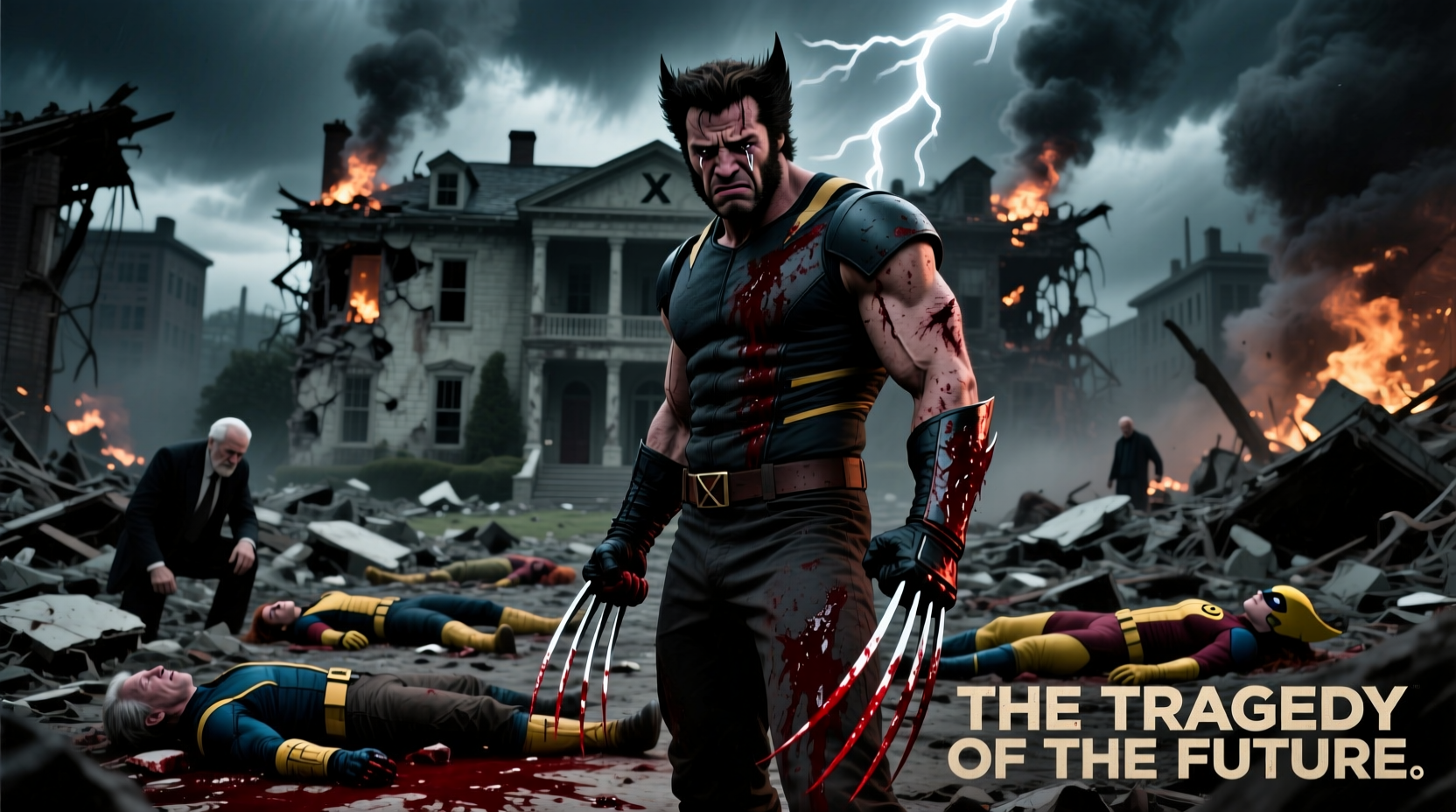
The storyline where Wolverine kills the X-Men unfolds primarily in the *Days of Future Past* inspired alternate future known as *Wolverine: Days of Future Now*, a 2005 limited series by Chris Claremont and Eric Silvestri. While not canon to Earth-616 (the primary Marvel Universe), this timeline presents a dystopian future where Sentinels dominate North America and mutant resistance is nearly crushed. In this world, Wolverine is captured, experimented on, and subjected to psychological manipulation that erodes his sanity.
In this future, Logan is brainwashed by a rogue faction of S.H.I.E.L.D. working with anti-mutant forces. They exploit his regenerative mind—a side effect of his healing factor that allows partial memory recovery after trauma—but twist it into a weapon. By repeatedly killing him and letting him heal, they force his brain to reconstruct memories incorrectly, implanting false narratives that paint the X-Men as traitors who betrayed humanity and caused global collapse.
When he finally escapes, Logan believes Charles Xavier orchestrated a mutant uprising that led to nuclear war and the near-extinction of humans. Acting on this belief, he infiltrates the last X-Men stronghold and slaughters his former teammates—including Cyclops, Jean Grey, Storm, and Professor X—in what becomes known as “The Massacre at Xavier’s School.”
Psychological Breakdown: How Trauma Rewired Wolverine
What makes this event so tragic is that Logan doesn’t act out of malice, but from a warped sense of justice. His entire identity is rooted in protecting the innocent, especially children. The brainwashing exploits this core value by convincing him that killing the X-Men is necessary to prevent further bloodshed.
Experts in trauma psychology note that repeated exposure to death—even with regeneration—can lead to dissociative states. As Dr. Rebecca Monroe, a clinical psychologist specializing in PTSD in fictional narratives, explains:
“Wolverine’s constant deaths and resurrections create a fractured psyche. Without stable memory integration, he becomes vulnerable to external programming. It’s not possession—it’s erosion of self.”
This breakdown is gradual. The story shows flashbacks of Logan resisting the programming, screaming internally as his mind rebuilds around lies. But over time, the false narrative becomes his truth. His love for Jean Grey, once a beacon of hope, is twisted into rage when he believes she chose power over peace.
Timeline of the Tragedy
The sequence leading to the massacre follows a chilling progression:
- Capture: Wolverine is taken by a militarized S.H.I.E.L.D. unit aligned with anti-mutant extremists.
- Memory Manipulation: Scientists use nano-probes and forced resurrections to reprogram his mind.
- False Narrative Implantation: He is made to believe the X-Men started World War III.
- Escape and Hunt: Freed during a Sentinel attack, he tracks down surviving mutants.
- The Massacre: He kills key X-Men members in a single night, believing he’s saving humanity.
- Realization and Redemption: After confronting a surviving Kitty Pryde, fragments of truth return, leading to his final sacrifice.
This timeline underscores how easily trust and loyalty can be weaponized when mental integrity is compromised. It also serves as a cautionary tale about unchecked government experimentation and the ethics of mind control.
Key Differences: Main Timeline vs. Dystopian Future
| Aspect | Main Marvel Universe (Earth-616) | Alternate Future (Days of Future Now) |
|---|---|---|
| Wolverine’s Mental State | Stable, though haunted by past trauma | Brainwashed, delusional, emotionally shattered |
| Relationship with X-Men | Loyal mentor and fighter | Views them as enemies |
| Professor X’s Fate | Dies heroically, later returns in various forms | Killed by Wolverine in cold blood |
| Outcome | X-Men continue fighting for coexistence | Most mutants exterminated; Wolverine dies redeeming himself |
| Canon Status | Active continuity | Non-canon speculative future |
Symbolism and Themes: Why This Story Matters
The horror of Wolverine turning on the X-Men isn’t just shock value—it reflects deeper themes about identity, propaganda, and the fragility of morality under extreme duress. Logan represents the ultimate survivor, but this arc asks: What happens when survival costs you your soul?
- Loss of Identity: If memories define us, what remains when they’re rewritten?
- The Cost of War: Even heroes can become weapons in the wrong hands.
- Mutant Paranoia: The fear of mutant dominance is exploited to justify atrocities.
This narrative echoes real-world concerns about disinformation, gaslighting, and how authoritarian regimes manipulate individuals into committing violence against their own communities.
Mini Case Study: The Fall of a Hero
Consider the scene where Wolverine confronts Storm atop the ruins of the X-Mansion. Once close allies, Ororo pleads with him, reminding him of their shared battles and losses. But Logan, eyes clouded with programmed fury, responds: “You made me a monster once. This time, I’m doing it for the right reasons.” He strikes her down, not with hesitation, but conviction. This moment illustrates how belief—even false belief—can override emotion and history. It’s not rage driving him, but a terrible sense of duty.
Frequently Asked Questions
Did Wolverine really kill the X-Men in the main Marvel universe?
No. This event occurs in an alternate future (*Wolverine: Days of Future Now*) and is not part of the current Earth-616 continuity. In the main timeline, Wolverine died heroically during the *Death of Wolverine* arc in 2014 but was later resurrected.
Can Wolverine be brainwashed in other storylines?
Yes. Throughout Marvel history, Wolverine has been manipulated multiple times—most notably by the Weapon X program, Romulus, and even Apocalypse. However, his strong will usually allows him to break free. The *Days of Future Now* scenario is unique due to the scale and duration of the conditioning.
Is there redemption for Wolverine after the massacre?
In the alternate timeline, yes. After learning the truth from a surviving Kitty Pryde, Logan sacrifices himself to destroy the facility responsible for his conditioning, ensuring no one else suffers the same fate. His final act restores his honor, even if it cannot undo the damage.
Actionable Checklist: Understanding Dark Comic Arcs
To better interpret controversial storylines like this, follow these steps:
- Verify the comic’s universe designation (e.g., Earth-616, Ultimate, What If?)
- Check publication date and creative team for context.
- Look for narrative clues indicating dream sequences, illusions, or alternate timelines.
- Research character arcs before and after the event.
- Consult official Marvel handbooks or databases for canon confirmation.
Conclusion: A Warning, Not a Betrayal
The tragedy of Wolverine killing the X-Men is not a reflection of his true nature, but a warning of what happens when society fails its protectors. It reveals how easily truth can be distorted, how deeply trauma can cut, and how even the most resilient minds have breaking points. While this event never occurred in the main Marvel universe, its emotional impact lingers because it feels plausible—rooted in Logan’s vulnerabilities, not just plot shock.
Understanding this story enriches our appreciation of Wolverine as more than a berserker with claws. He is a man burdened by immortality, memory, and moral responsibility. And in his darkest hour, even he can become the villain—if the world gives him no choice.




 浙公网安备
33010002000092号
浙公网安备
33010002000092号 浙B2-20120091-4
Comments
No comments yet. Why don't you start the discussion?