
In the complex world of Westeros, where alliances shift like winter winds and trust is a rare commodity, one moment from Game of Thrones continues to spark debate: Why didn’t Sansa Stark inform Jon Snow that the Knights of the Vale were coming to aid them during the Battle of the Bastards? This pivotal decision—whether intentional or narrative-driven—holds deep implications for both characters’ arcs and the broader themes of power, agency, and communication in leadership.
The omission wasn’t just a plot twist; it reflected years of trauma, strategic calculation, and evolving independence. To understand Sansa’s silence, we must examine her journey, the political landscape of the North, and the psychological weight she carried as a survivor of abuse and manipulation.
Character Evolution: From Naive Heiress to Strategic Player
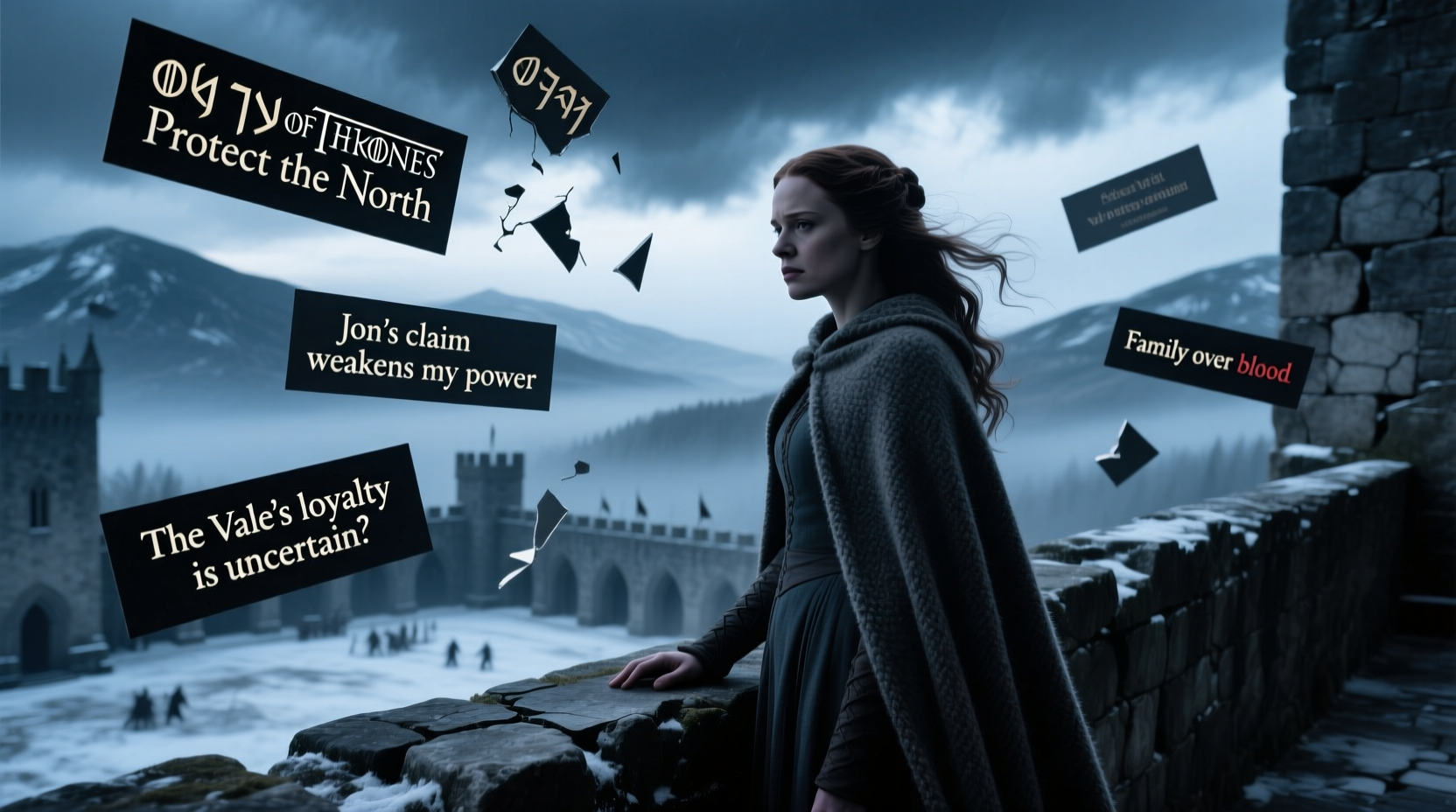
Sansa began her story as a romantic idealist, dreaming of knights and castles. By Season 6, she had endured imprisonment under Joffrey, forced marriage to Ramsay Bolton, and psychological torture at Winterfell. These experiences reshaped her into a cautious, observant leader who valued control over transparency.
When she reunited with Jon, their dynamic was strained by divergent paths. Jon grew through hardship on the Wall and beyond, guided by honor and brotherhood. Sansa, however, learned survival through silence and secrecy. Her time in King’s Landing taught her that information is power—and revealing it too soon can be fatal.
“Words are wind. But when spoken at the wrong time, they can knock you off a cliff.” — Petyr Baelish (paraphrased)
While Baelish’s influence waned, his lessons lingered. Sansa understood that announcing the Vale’s arrival prematurely could have destabilized Jon’s command, created panic among enemies, or even led to betrayal if word leaked. She chose timing over immediacy—a hallmark of seasoned political thinking.
Strategic Timing and Military Advantage
Military leaders throughout history have used surprise as a force multiplier. At the Battle of the Bastards, Jon’s army was outnumbered and unprepared for prolonged siege tactics. If Ramsay Bolton had known reinforcements were imminent, he might have altered his strategy—perhaps retreating, setting traps, or executing Rickon earlier.
Sansa’s decision to withhold the information until the last possible moment preserved the element of surprise. The sudden appearance of the Vale knights turned near-certain defeat into victory. This mirrors real-world conflicts where delayed revelation of reserves or allies shifted outcomes dramatically.
Power Dynamics Between Jon and Sansa
Another layer lies in the sibling tension surrounding leadership. Jon was declared King in the North based on battlefield reputation and Stark legitimacy. Yet Sansa held crucial leverage: access to allies, intelligence networks, and diplomatic channels.
By not telling Jon about the Vale, Sansa asserted her autonomy. It was a quiet but powerful statement: “I am not just your sister supporting you—I am a player in my own right.” This moment marked her transition from advisor to co-leader, even if unofficially.
Some fans interpret this as a necessary check on Jon’s impulsive nature. His plan to charge headfirst into battle lacked cavalry coordination or backup plans. Sansa, having witnessed reckless bravery lead to disaster before (e.g., Robb Stark), may have believed that hope alone wouldn’t win the day—only cold, calculated intervention would.
Key Factors Behind Sansa’s Decision
| Factor | Description |
|---|---|
| Survivor’s Instinct | Sansa had been punished for speaking out or trusting too easily—Silence became self-preservation. |
| Control Over Narrative | She wanted to reveal the Vale forces on her terms, maximizing impact and reinforcing her role. |
| Distrust of Leadership Style | Jon’s honorable but rigid approach clashed with pragmatic Northern politics. |
| Alliance Secrecy | Littlefinger’s involvement made disclosure risky—his loyalty was questionable. |
| Psychological Independence | Telling Jon would mean deferring to him; withholding affirmed her agency. |
Was It a Mistake? A Case Study in Leadership Communication
Consider a modern parallel: two executives co-managing a critical product launch. One knows a key investor will step in at the last minute with funding. Should they disclose this early?
In a real boardroom, transparency builds trust. But in wartime—or in Westeros—uncertainty can be weaponized. Let’s analyze a hypothetical scenario:
- Situation: Company facing hostile takeover. CEO plans aggressive defense.
- Hidden Asset: A silent partner has agreed to buy shares and block acquisition.
- Decision Point: Reveal now or wait until final vote?
If revealed too early, the aggressor might change tactics—launch smear campaigns, sue, or withdraw only to return stronger later. Waiting ensures maximum pressure and surprise. This mirrors Sansa’s logic perfectly.
However, the cost was trust. After the battle, Jon questioned why he hadn’t been told. Their relationship never fully recovered from that breach. Like any leader balancing results and relationships, Sansa prioritized outcome over unity—at least temporarily.
Expert Insight: Trauma-Informed Decision Making
“Survivors of chronic abuse often develop hyper-vigilance and control-oriented behaviors. What looks like manipulation may actually be an unconscious effort to prevent harm.” — Dr. Lena Reyes, Clinical Psychologist specializing in trauma recovery
This perspective reframes Sansa’s actions not as betrayal, but as protective behavior rooted in past suffering. Every major decision she made post-Bolton marriage carried the shadow of Winterfell’s horrors. Trusting Jon completely—even though he was family—required emotional risk she wasn’t ready to take.
Timeline of Key Events Leading to the Revelation
- Season 6, Episode 7: Sansa escapes Winterfell after Ramsay kills Rickon.
- Episode 8: She meets Littlefinger in secret at Castle Black.
- Episode 9: Littlefinger pledges the Knights of the Vale to Sansa’s cause—not Jon’s.
- Episode 10: Jon prepares for battle without knowledge of reinforcements.
- Battle of the Bastards: As Jon’s forces are overwhelmed, Sansa arrives with the Vale army.
The sequence shows deliberate pacing. Sansa didn’t act impulsively—she negotiated, confirmed, and executed only when success was likely. This wasn’t negligence; it was precision.
Frequently Asked Questions
Did Littlefinger manipulate Sansa into keeping the Vale a secret?
Possibly. Littlefinger thrived on chaos and division. By encouraging Sansa to keep the alliance private, he deepened the rift between her and Jon, positioning himself as her sole confidant. However, Sansa was no longer the girl he once mentored—she used him as much as he used her.
Could Jon have won without the Vale?
Highly unlikely. His army was surrounded, exhausted, and losing morale. Even with superior tactics, the numbers were overwhelming. The Vale cavalry broke the encirclement and turned the tide decisively.
Why didn’t Sansa warn Jon even when things looked dire?
Because doing so might have compromised the operation. Once Jon knew, others could have found out. Plus, Sansa may have feared that Jon would try to stop the plan or confront Ramsay prematurely, endangering lives—including hers.
Actionable Takeaways: Lessons in Leadership and Communication
- ☑ You’re dealing with an unpredictable adversary
- ☑ Revealing information could endanger allies
- ☑ You need to maintain personal authority in a partnership
- ☑ The timing of revelation impacts effectiveness
- ☑ Trust within the team is still developing
That said, long-term leadership requires transparency. While Sansa’s secrecy saved the North, it also sowed seeds of doubt. Future collaborations faltered because mutual confidence eroded. The takeaway? Short-term gains from controlled information must be weighed against long-term relational costs.
Conclusion: Agency, Survival, and the Cost of Power
Sansa didn’t tell Jon about the Vale because she had learned the hard way that survival depends on holding cards close to the chest. Her silence wasn’t betrayal—it was reclamation. After years of being a pawn, she finally played the game on her own terms.
Yet power extracted a price. The bond between her and Jon fractured, foreshadowing future divides in the final seasons. Ultimately, her choice reflects a deeper truth: leadership forged in trauma often carries invisible scars that shape decisions long after the danger has passed.




 浙公网安备
33010002000092号
浙公网安备
33010002000092号 浙B2-20120091-4
Comments
No comments yet. Why don't you start the discussion?