
Anyone who has flown on an airplane has likely experienced that familiar sensation: a muffled hearing, a feeling of fullness in the ears, and sometimes a sharp pop as if something suddenly released. This phenomenon—commonly known as “airplane ear”—is more than just an annoyance. It’s a direct result of rapid changes in air pressure affecting the delicate balance within your middle ear. While usually temporary and harmless, understanding why it happens and how to manage it can make flying significantly more comfortable.
The human ear is remarkably sensitive to atmospheric shifts. During takeoff and landing, when cabin pressure fluctuates most dramatically, the Eustachian tube—a small canal connecting the middle ear to the back of the throat—must work harder to equalize pressure. When this process lags or fails, discomfort follows. But with the right knowledge and strategies, travelers can minimize or even prevent these symptoms altogether.
The Science Behind Ear Popping in Flight
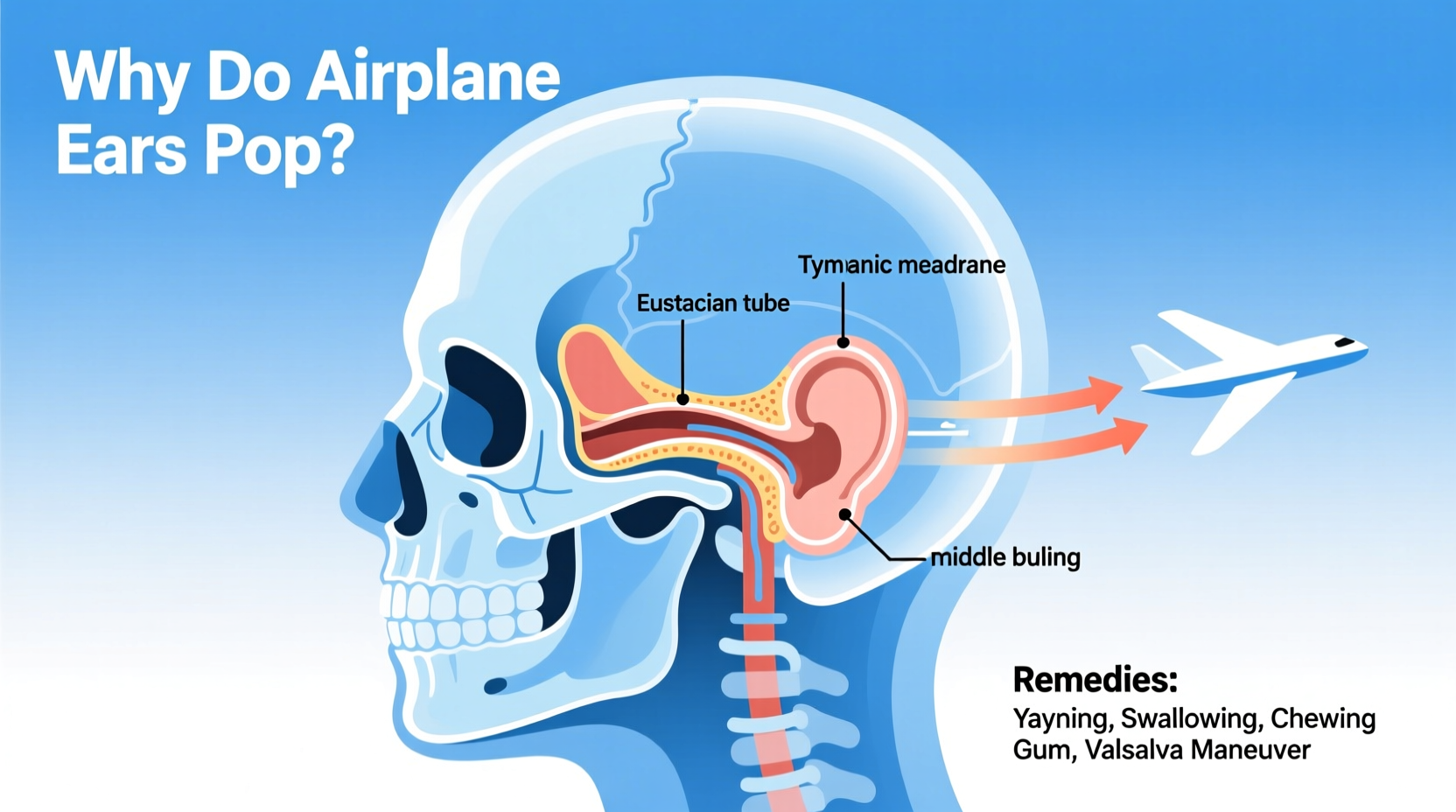
To grasp why ears pop on airplanes, it helps to understand basic ear anatomy. The ear consists of three main parts: the outer ear, the middle ear, and the inner ear. The middle ear, which contains tiny bones that transmit sound vibrations, is normally filled with air at the same pressure as the environment outside the body. Maintaining this equilibrium is crucial for normal hearing and comfort.
The Eustachian tube plays a central role in this balance. At ground level, it opens briefly when we swallow, yawn, or chew, allowing air to flow in or out of the middle ear. However, during flight, especially during ascent and descent, the surrounding air pressure changes rapidly. As the plane climbs, cabin pressure decreases (simulating higher altitude), causing the air inside the middle ear to expand. On descent, external pressure increases, creating a relative vacuum in the middle ear if the Eustachian tube doesn’t open properly.
This pressure imbalance causes the eardrum to bulge inward or outward, leading to sensations of fullness, muffled hearing, pain, or popping. In medical terms, this condition is called barotrauma of the ear or aerotitis media. For most people, the issue resolves quickly once the Eustachian tube equalizes the pressure. But for others—especially those with colds, allergies, or sinus congestion—it can persist and become painful.
“Rapid changes in cabin pressure challenge the Eustachian tube’s ability to regulate middle ear pressure. Those with compromised nasal passages are at higher risk.” — Dr. Alan Rosen, Otolaryngologist
Common Symptoms and When to Be Concerned
Most cases of airplane ear are mild and self-limiting. Typical symptoms include:
- A feeling of fullness or blockage in the ear
- Muffled hearing or slight hearing loss
- Popping or clicking sounds during swallowing
- Mild to moderate ear pain
- Dizziness or vertigo in rare cases
These usually resolve within minutes to hours after landing. However, persistent or severe symptoms may indicate complications such as:
- Fluid buildup in the middle ear (serous effusion)
- Eardrum rupture (rare but possible with extreme pressure differences)
- Temporary hearing loss lasting beyond 24–48 hours
If pain intensifies, hearing does not return to normal within a day, or you experience drainage from the ear, seek medical evaluation. These could signal a more serious injury requiring treatment.
Effective Remedies to Prevent and Relieve Ear Pressure
Prevention is far more effective than trying to relieve symptoms after they occur. The key is keeping the Eustachian tube active and responsive throughout the flight, especially during descent—the phase when most ear issues arise.
Swallowing and Yawning
Swallowing triggers muscle contractions that open the Eustachian tube. Frequent swallowing helps maintain pressure balance. Chewing gum, sucking on hard candy, or drinking fluids encourages this natural mechanism. For infants and young children, bottle feeding or pacifier use during takeoff and landing can stimulate swallowing.
Valsalva Maneuver
This widely recommended technique involves gently forcing air through the Eustachian tubes:
- Pinch your nostrils closed.
- Close your mouth.
- Exhale gently through your nose, as if trying to blow up a balloon.
- You should feel a pop or pressure release in your ears.
Use caution: blowing too hard can damage the eardrum or cause dizziness. Perform this only every few minutes and stop if pain increases.
Toynbee Maneuver
An alternative to Valsalva, particularly useful while descending:
- Pinch your nostrils shut.
- Swallow while keeping your nose closed.
This action pulls air into the middle ear, helping equalize pressure without forceful exhalation.
Nasal Decongestants and Sprays
For individuals with nasal congestion, using a decongestant before flight can be highly effective. Oral decongestants like pseudoephedrine (taken 30–60 minutes before takeoff) reduce swelling in nasal passages and Eustachian tubes. Nasal sprays such as oxymetazoline (e.g., Afrin) provide fast relief but should not be used for more than three consecutive days to avoid rebound congestion.
What Not to Do: Common Mistakes That Worsen Airplane Ear
While many passengers try to manage ear pressure instinctively, some actions can actually make the problem worse. Awareness of these pitfalls can help avoid unnecessary discomfort.
| Do’s | Don’ts |
|---|---|
| Chew gum or suck on candy during descent | Sleep through takeoff and landing without swallowing |
| Use decongestants if congested | Use nasal sprays for more than 3 days |
| Perform gentle Valsalva maneuver | Blow your nose forcefully during flight |
| Stay hydrated before and during flight | Fly with an active ear infection or severe cold |
| Keep Eustachian tubes active by swallowing frequently | Ignore worsening pain—continue attempting aggressive maneuvers |
One of the most common errors is sleeping during descent. Without conscious swallowing, the Eustachian tube remains inactive, making it harder to equalize pressure upon waking. Setting an alarm to stay awake during landing can prevent this issue.
Special Considerations: Children, Infants, and Medical Conditions
Children, especially infants, are more prone to airplane ear due to their shorter, more horizontal Eustachian tubes, which are less efficient at draining and equalizing pressure. Since babies cannot intentionally swallow or perform pressure-equalizing techniques, caregivers must intervene.
Offering a bottle, breast, or pacifier during takeoff and landing encourages sucking and swallowing, which activates the muscles involved in opening the Eustachian tube. Avoid letting infants sleep through descent unless they are actively feeding.
Certain medical conditions also increase vulnerability:
- Chronic sinusitis or allergies: Swelling in nasal passages restricts Eustachian tube function.
- Upper respiratory infections: Mucus buildup blocks normal airflow.
- Previous ear surgery or eardrum perforation: Altered ear anatomy may affect pressure regulation.
In these cases, consulting a physician before flying is advisable. Some patients may benefit from prescription medications or specialized earplugs designed to slow pressure changes.
Real Example: A Family Trip Turned Uncomfortable
During a cross-country flight, Sarah noticed her 18-month-old daughter becoming increasingly fussy during descent. The child had recovered from a cold two days prior but still had mild nasal congestion. Assuming it was fatigue, Sarah didn’t intervene until the baby began crying inconsolably. After landing, the pediatrician diagnosed mild barotrauma with fluid trapped behind the eardrum. The doctor advised that future flights should include proactive measures—even minor congestion requires attention. Now, Sarah ensures her daughter drinks from a sippy cup during descent and uses saline drops before boarding if any congestion is present.
Step-by-Step Guide to Flying Comfortably with Sensitive Ears
Follow this timeline to minimize ear pressure issues on your next flight:
- 24 Hours Before Flight: Assess your health. If you have a cold, sinus infection, or earache, consider rescheduling. If flying is unavoidable, consult your doctor about preventive medication.
- 1 Hour Before Takeoff: Take an oral decongestant (if approved by your healthcare provider). Use a saline nasal spray to moisten passages.
- During Boarding: Stay hydrated. Avoid alcohol and caffeine, which contribute to dehydration and mucosal swelling.
- Takeoff: Begin chewing gum or sucking on candy as the plane ascends. Encourage children to drink or suck on a pacifier.
- Descent (Usually 30–40 Minutes Before Landing): Wake up if sleeping. Start swallowing frequently. Perform the Valsalva or Toynbee maneuver every few minutes.
- After Landing: Continue swallowing and yawning. If fullness persists, try repeating the Valsalva maneuver gently. Most symptoms resolve within a few hours.
Frequently Asked Questions
Can airplane ear cause permanent hearing loss?
Permanent hearing loss from airplane ear is extremely rare. Most cases involve temporary conductive hearing loss due to fluid or eardrum tension, resolving within hours or days. However, repeated episodes or severe barotrauma (such as eardrum rupture) require medical follow-up to prevent long-term complications.
Are special earplugs effective?
Yes, certain filtered earplugs—like EarPlanes or ZenPlugs—are designed to slow down the rate of air pressure change reaching the eardrum. They act as passive regulators, giving the Eustachian tube more time to adjust. Studies show mixed results, but many users report reduced discomfort, especially during descent.
Why do my ears pop when I yawn?
Yawning contracts muscles in the throat that pull open the Eustachian tube, allowing air to move between the middle ear and the nasopharynx. This sudden equalization often causes a noticeable pop, relieving pressure built up from environmental changes or prolonged inactivity.
Conclusion: Fly Smarter, Land Comfortably
Ear popping during flights isn't just an odd sensation—it's a physiological response to pressure changes that nearly everyone encounters. By understanding how the Eustachian tube functions and taking simple, proactive steps, travelers can significantly reduce discomfort and enjoy a smoother journey. Whether you're a frequent flyer or an occasional traveler, integrating these strategies into your routine makes a meaningful difference.
From timing your decongestant use to staying awake during critical phases of flight, small actions yield big results. Share these tips with family members, especially parents traveling with young children, and help others fly with greater comfort and confidence.




 浙公网安备
33010002000092号
浙公网安备
33010002000092号 浙B2-20120091-4
Comments
No comments yet. Why don't you start the discussion?