
Anime has a distinctive visual language—one that often surprises newcomers with its intensity. Characters cry in dramatic waterfalls, blush so hard their faces turn crimson, or grit their teeth with veins pulsing on their foreheads. These exaggerated emotions aren’t just stylistic quirks; they are deeply rooted in Japanese artistic traditions, narrative priorities, and the technical realities of animation production. Understanding this expressive style reveals how anime communicates emotion more vividly than many Western animated forms, creating an immersive and emotionally resonant experience.
The Artistic Heritage of Exaggeration
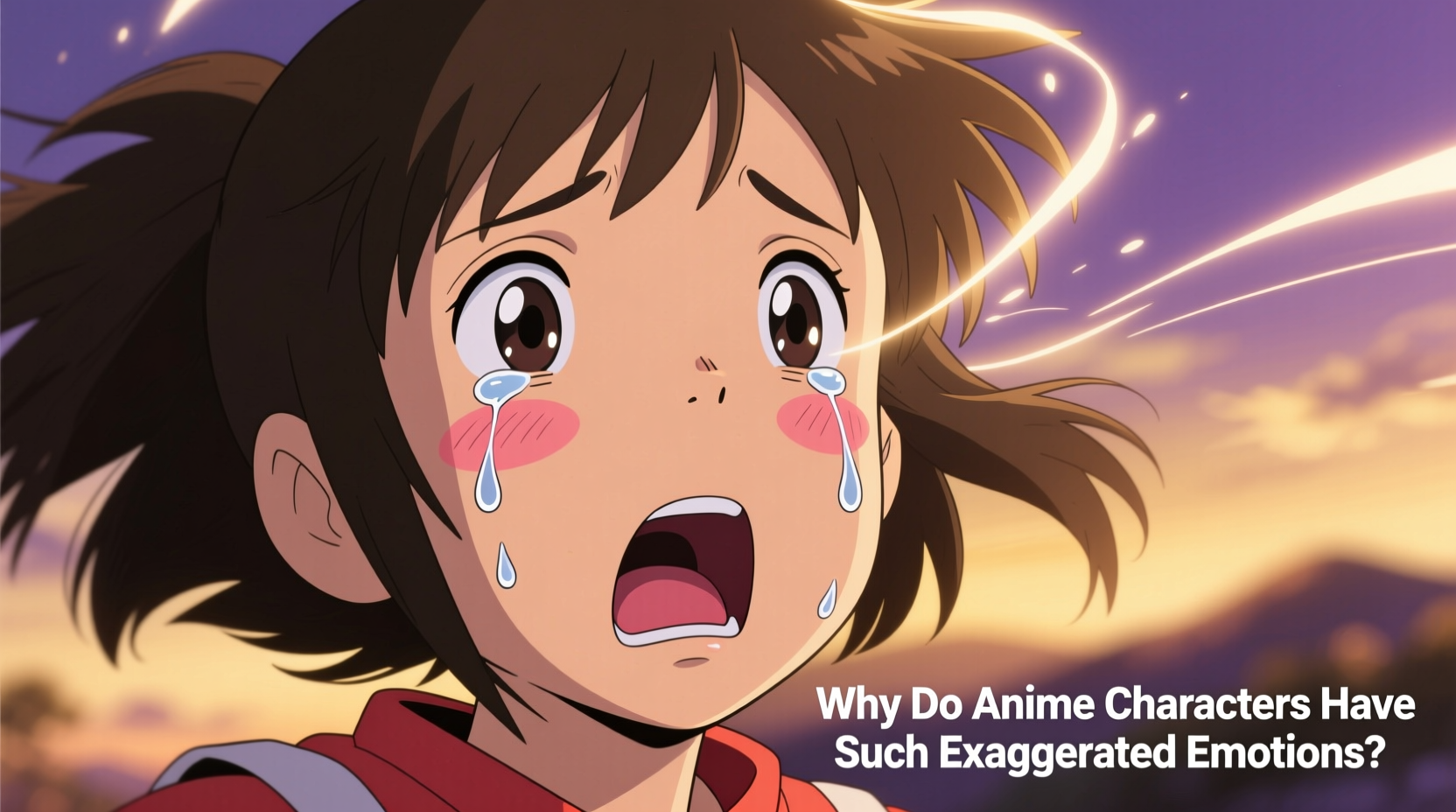
The roots of anime’s exaggerated expressions stretch back centuries into traditional Japanese art. From ukiyo-e woodblock prints to kabuki theater, Japanese culture has long embraced stylization over realism. In kabuki, actors use bold makeup, dramatic poses, and highly choreographed gestures—called *kata*—to convey inner feelings to audiences seated far from the stage. Similarly, manga artists and animators inherited this legacy, using visual shorthand to communicate complex emotional states quickly and clearly.
In early 20th-century manga, artists like Osamu Tezuka—often called the \"God of Manga\"—adopted large, expressive eyes inspired by Western cartoons but adapted them for heightened emotional clarity. This became a foundational trait in anime: eyes widen in shock, narrow in suspicion, or sparkle with hope. Sweat drops, twitching eyebrows, and floating hearts are not literal depictions but symbolic cues embedded in a shared visual vocabulary understood across generations of viewers.
“Exaggeration in anime isn’t about realism—it’s about emotional truth. We amplify facial features because we want the audience to feel what the character feels, instantly.” — Akira Saito, Character Designer at Studio Bones
Functional Storytelling Through Visual Amplification
Anime often operates under tight production schedules and limited budgets. Unlike high-frame-rate Western animations, many anime series rely on fewer frames per second, requiring strong visual cues to maintain engagement. Exaggerated expressions compensate for motion constraints by delivering emotional information through stillness and design rather than fluid movement.
Consider a scene where a character receives devastating news. Instead of relying solely on voice acting or dialogue, anime will show the character’s eyes shrinking into black dots, their body collapsing into a crumpled silhouette, or even comically fainting backward with X’s for eyes. These tropes—while seemingly absurd—are functional. They compress emotional arcs into single frames, making stories accessible even when audio is muted or language is unfamiliar.
This visual efficiency serves another purpose: universality. Because exaggerated expressions transcend linguistic barriers, anime gains global appeal. A viewer in Brazil can understand jealousy when a character turns green with envy (literally), or recognize embarrassment from a nosebleed—a common trope tied to repressed attraction in anime logic.
Cultural Context and Emotional Expression
In Japan, social interactions often emphasize restraint and indirect communication. Public displays of anger, sadness, or affection are typically subdued in real life. Anime, paradoxically, becomes a space where these suppressed emotions can erupt freely. The exaggerated expressions serve as catharsis—both for characters and audiences.
This contrast between societal norms and fictional release is especially evident in genres like romance or drama. A shy schoolgirl might stutter and blush furiously when her crush speaks to her, movements so extreme they border on comedic. Yet beneath the humor lies authenticity: the exaggeration mirrors the internal intensity of adolescent feelings, even if real-life behavior remains reserved.
Moreover, Japanese aesthetics value subtlety within boldness. The concept of *ma*—negative space or pause—applies not only to composition but also to emotional pacing. An explosion of tears may follow several silent, still frames, heightening the impact. Exaggeration, therefore, isn't random; it's rhythmically timed to maximize emotional resonance.
A Comparative Look: Anime vs. Western Animation
| Aspect | Anime Style | Western Animation Style |
|---|---|---|
| Facial Realism | Highly stylized; eyes dominate expression | More anatomically accurate proportions |
| Emotional Range | Extreme shifts (e.g., rage lines, sparkling eyes) | Moderate exaggeration, often grounded in realism |
| Sweat Drops / Symbols | Common visual metaphors for stress or guilt | Rare; emotions shown through voice or action |
| Body Physics | Frequently distorted for comedic or dramatic effect | Generally consistent with cartoon physics |
| Nosebleeds | Symbolic of sexual arousal or excitement | Used literally, usually in slapstick injury gags |
This table highlights how anime prioritizes symbolic representation over physical plausibility. While Western animation often uses exaggeration for humor (think of Bugs Bunny pulling a mallet from nowhere), anime integrates it into emotional grammar.
Production Techniques That Enable Expressiveness
Behind every iconic anime face-palm or jaw-dropping moment is a meticulous process. Character designers create detailed model sheets specifying how a character should look when angry, sad, flustered, or determined. These templates ensure consistency across episodes, even when multiple animation teams work on different scenes.
Key animators draw pivotal emotional frames—known as *kakkoii* (cool) or *kawaii* (cute) moments—with special attention to lighting, shading, and linework. In high-budget productions, these frames may include subtle gradients or lens flare effects to intensify the mood. Meanwhile, in-between animators fill the gaps, often simplifying expressions slightly due to time constraints.
Digital tools now allow for greater experimentation. Software like RETAS or Toon Boom enables artists to manipulate facial layers independently—sliding eyes, adjusting mouth curves, or adding glowing auras around shocked characters. Some studios even use AI-assisted interpolation to maintain expressiveness while reducing labor costs.
Step-by-Step: How an Exaggerated Expression Is Created
- Script Analysis: The director identifies the emotional beat in the script (e.g., betrayal, joy, panic).
- Storyboarding: Artists sketch rough panels showing camera angles and basic expressions.
- Key Frame Design: Lead animator draws the most intense frame (e.g., wide eyes, trembling lips).
- Facial Breakdown: Eyes, eyebrows, mouth, and sweat drops are layered separately for flexibility.
- Color & Effects: Colors shift (e.g., red tint for anger), and visual symbols (stars, cracks) are added.
- Review & Adjust: Supervisors check for consistency with the character’s personality and tone.
- Final Compositing: All elements merge into a single, impactful image ready for animation.
This structured workflow ensures that even the most outlandish expressions remain coherent within the story’s world.
Mini Case Study: Spike Spiegel’s Subtle Pain in “Cowboy Bebop”
Not all anime relies on over-the-top reactions. *Cowboy Bebop* masterfully blends realism with stylization. Protagonist Spike Spiegel rarely shouts or cries, yet his emotional depth is unmistakable. In one pivotal scene, after learning of a lost love’s death, he simply lights a cigarette, stares into the distance, and says, “I’m kinda tired.”
Yet the animation amplifies this understatement. His reflection in a puddle fractures as rain begins to fall. The background music fades. His hand trembles slightly as he raises the cigarette. There are no tears, no dramatic close-ups—but fans feel the weight of grief precisely because the usual exaggeration is absent. This contrast proves that anime’s expressive power lies not just in excess, but in knowing when to hold back.
In this case, the lack of exaggerated emotion makes the moment more powerful. It demonstrates that the visual language of anime is flexible—capable of both explosive outbursts and quiet devastation.
Checklist: Recognizing and Interpreting Anime Expressions
- ✅ Identify recurring symbols: sweat drops = anxiety, popping veins = irritation, sparkles = infatuation.
- ✅ Watch for eye transformations: shrinking pupils = fear, shimmering eyes = determination.
- ✅ Note body distortions: shrinking figures = shame, floating upward = dreaminess.
- ✅ Pay attention to color shifts: red faces = embarrassment, blue tones = depression.
- ✅ Consider context: a nosebleed during a fight likely means injury; during a romantic scene, it signals attraction.
- ✅ Compare with vocal delivery: mismatched tone and visuals may indicate sarcasm or denial.
Using this checklist enhances viewing comprehension, especially for new fans navigating anime’s rich but sometimes confusing emotional code.
Frequently Asked Questions
Why do anime characters get nosebleeds when they’re attracted to someone?
This trope originates from a mix of folklore and humor. In Japanese culture, nosebleeds were historically linked to intense emotions or physical strain. Anime writers adopted this idea comically, associating sudden attraction with physiological “overload,” resulting in a nosebleed. It’s not meant to be realistic but functions as a lighthearted signal of romantic tension.
Are exaggerated expressions used in all anime genres?
No—genre plays a major role. Slice-of-life and psychological dramas (e.g., *March Comes in Like a Lion*) often use restrained expressions to reflect realism. In contrast, comedies (*Gintama*) and shonen battle series (*My Hero Academia*) lean heavily on exaggeration for humor and intensity. The level of expression aligns with narrative goals.
Do voice actors influence how exaggerated an expression looks?
Yes. Voice performances are recorded before animation begins in many cases, a process called *seiyuu-first*. Animators study the vocal track and match facial movements to the actor’s delivery. A scream with raw emotion will prompt wider eyes and stretched mouths, ensuring synchronization between sound and image.
Conclusion: Embracing the Language of Emotion
The exaggerated emotions in anime are not flaws or childish gimmicks—they are a sophisticated system of visual storytelling. Rooted in tradition, shaped by practical constraints, and refined through decades of creative innovation, these expressions allow anime to convey feelings with unmatched immediacy. Whether it’s a single tear rolling down a stoic warrior’s cheek or a classroom erupting in comic shock, each gesture carries meaning.
For viewers, learning to read these cues deepens appreciation. For creators, mastering them unlocks powerful ways to connect with audiences across cultures. As anime continues to grow globally, its expressive language remains one of its most defining and enduring strengths.




 浙公网安备
33010002000092号
浙公网安备
33010002000092号 浙B2-20120091-4
Comments
No comments yet. Why don't you start the discussion?