
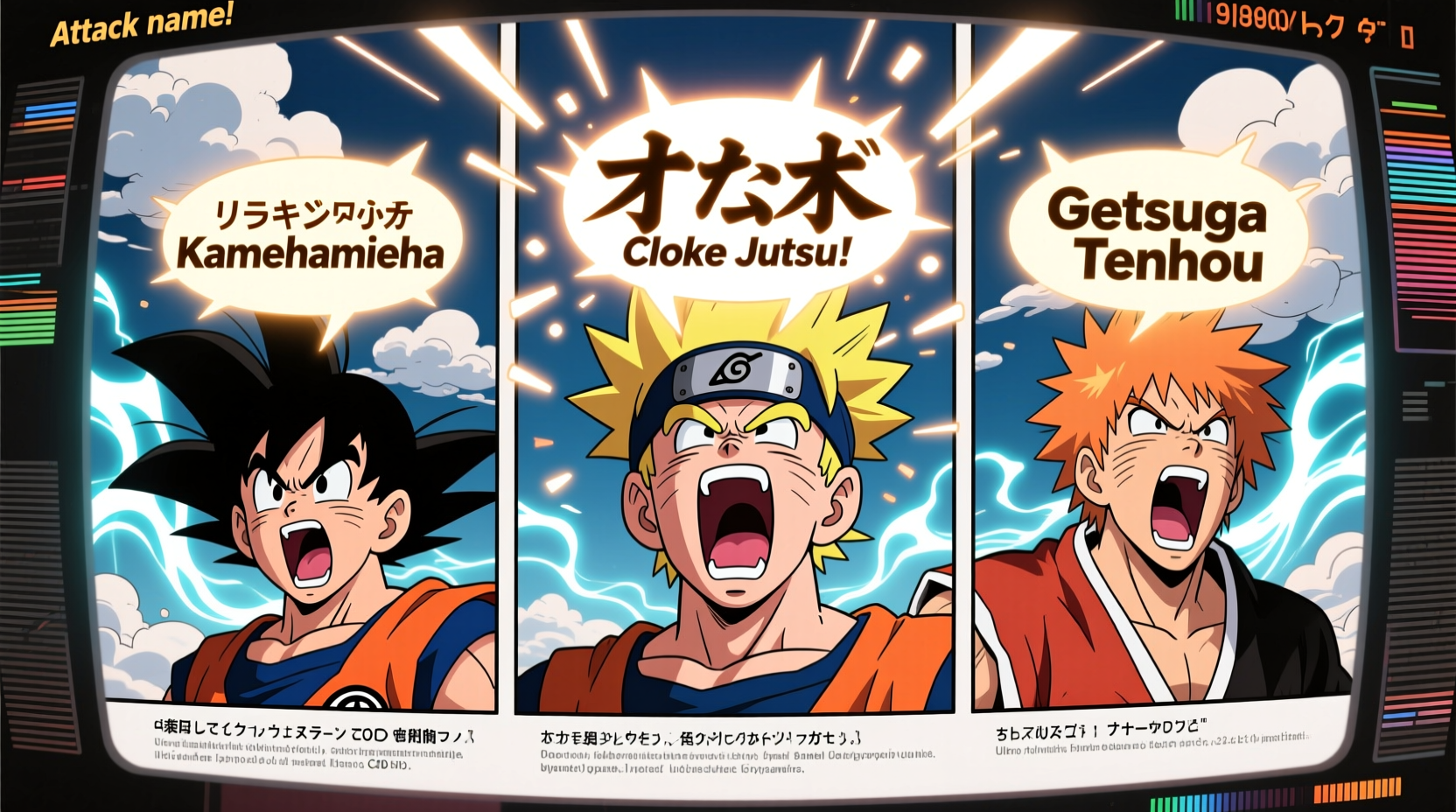
The moment a hero raises their glowing sword, clenches their fists, or charges energy into their palms, one thing is almost guaranteed: they’ll shout the name of their attack. “Kamehameha!” “Final Flash!” “Bankai!” These exclamations have become iconic in anime culture, instantly recognizable even to casual viewers. But where did this practice originate? Why do anime characters so frequently announce their attacks with dramatic flair? The answer lies at the intersection of martial arts tradition, theatrical performance, narrative design, and decades of media evolution.
This trope—characters yelling out attack names—is more than just a stylistic quirk. It reflects deeper cultural roots, storytelling mechanics, and audience engagement strategies that have evolved since the early days of Japanese animation. Understanding its origins reveals how anime has shaped global pop culture and why certain conventions persist across genres and generations.
Theatrical Roots in Japanese Performance Arts
One of the earliest foundations of the attack-naming trope can be traced back to traditional Japanese theater forms such as kabuki and bunraku. In these performances, actors often use exaggerated vocalizations and stylized movements to emphasize actions. A character might shout a phrase before delivering a decisive blow, not for realism, but for dramatic effect and clarity to the audience.
This concept carried over into modern stage combat and martial arts demonstrations, where practitioners call out techniques by name—known as kiai (気合) in disciplines like karate and kendo. A kiai is a sharp shout used to focus energy, intimidate opponents, and synchronize breath with movement. While not always announcing specific technique names, the principle of vocalizing during action laid psychological and performative groundwork for later fictional depictions.
“In traditional martial arts, the voice isn’t separate from the body—it’s part of the strike.” — Dr. Haruto Sato, Cultural Anthropologist specializing in East Asian performance traditions
When anime began incorporating martial artists and super-powered fighters into its narratives, especially from the 1970s onward, creators naturally adopted this expressive vocal element. Over time, shouting an attack name became less about breath control and more about identity, spectacle, and emotional release.
Influence of Early Shonen Manga and Anime
The modern iteration of the attack-shouting trope crystallized in the shonen (boys’) genre during the 1970s and 1980s. Series like *Cutie Honey* (1973), *Mazinger Z* (1972), and *Tetsujin 28-go* introduced mecha pilots who activated weapons with verbal commands. These were not just mechanical triggers—they were declarations of will.
By the 1980s, franchises such as *Dragon Ball*, *Saint Seiya*, and *Fist of the North Star* elevated the practice into a core storytelling device. In *Dragon Ball*, Goku doesn't simply fire a beam; he yells “Kamehameha!” while gathering energy through visible concentration and physical strain. This transforms the attack from a passive ability into a ritualistic act requiring effort, focus, and courage.
The naming convention also served practical narrative purposes:
- Clarity: Viewers could easily identify which move was being used, especially important in fast-paced battle sequences.
- Memorability: Catchy attack names helped build fan engagement and merchandise potential.
- Dramatic pacing: The buildup to an attack—charging, shouting, releasing—creates suspense and emotional investment.
Cultural Significance: Power Through Words
In Japanese language and thought, words carry weight. The concept of kotodama (言霊)—the spiritual power of words—suggests that spoken phrases can influence reality. Ancient rituals, incantations, and religious chants rely on precise verbal formulas believed to invoke divine forces or alter fate.
This belief subtly informs many anime tropes. Spellcasters in series like *Sailor Moon*, *Naruto*, or *Black Clover* don’t merely think their jutsu—they recite long incantations that name both the technique and its intended effect. Even non-magical fighters follow a similar logic: saying “Final Flash” isn’t redundant; it’s the act that completes the technique.
Moreover, naming an attack personalizes it. It becomes an extension of the character’s identity. Ichigo Kurosaki’s “Getsuga Tenshō” isn’t just a sword beam—it’s his inner turmoil given form. Luffy’s “Gomu Gomu no Pistol” reflects his playful yet determined nature. The name ties ability to personality, making victories feel earned rather than arbitrary.
Timeline: Evolution of Attack Naming in Anime
- 1960s–70s: Mecha anime introduces verbal activation of weapons (*Mazinger Z*: “Rocket Punch!”).
- 1980s: Martial arts anime popularize named techniques (*Fist of the North Star*: “Hokuto Hyakuretsu Ken”).
- 1990s: Magical girl and ninja genres adopt incantation-style attacks (*Sailor Moon*: “Moon Tiara Magic!”).
- 2000s: Long, elaborate attack names become standard (*Bleach*: “Zangetsu: Getsuga Jūjishō!”).
- 2010s–Present: Parody and subversion emerge (*One Punch Man*: Saitama defeats enemies without naming moves).
Global Perception and Parody
Outside Japan, the attack-yelling trope is often seen as campy or excessive. Western audiences accustomed to stealthy assassins or silent superheroes may find it strange that a villain pauses to announce “Death Beam Cannon” before firing. Yet this very exaggeration contributes to anime’s distinct aesthetic appeal.
The trope has been widely parodied, both within anime and internationally. In *One Punch Man*, protagonist Saitama defeats foes instantly, often mid-sentence, mocking the idea that villains need time to declare their ultimate attacks. Similarly, *Gintama* routinely mocks lengthy transformation sequences and dramatic monologues.
Yet parody underscores popularity. If the trope weren’t deeply embedded in viewer expectations, it wouldn’t be worth satirizing. International shows like *Avatar: The Last Airbender* and video games such as *Super Smash Bros.* borrow elements of the style, blending Eastern and Western combat expression.
Table: Attack Naming Across Genres
| Genre | Example | Purpose of Naming |
|---|---|---|
| Mecha | “Big Bang Attack!” – *Trigun* | Activate weapon systems dramatically |
| Shonen Battle | “Spirit Bomb!” – *Dragon Ball* | Showcase effort, training, and resolve |
| Magic/Fantasy | “Galaxy Supernova!” – *Sailor Moon* | Ritualistic invocation of power |
| Ninja/Chakra-Based | “Shadow Clone Jutsu!” – *Naruto* | Signal hand signs and chakra control |
| Parody | “Serious Punch” – *One Punch Man* | Subvert expectation of dramatic buildup |
Psychological and Narrative Functions
Beyond culture and history, there are functional reasons why this trope endures. From a storytelling perspective, naming attacks helps structure fight scenes. Without clear labels, complex abilities would blur together, confusing viewers. Imagine trying to distinguish between ten different energy blasts if none had names.
Additionally, research in cognitive psychology suggests that verbal labeling enhances memory retention. Fans remember “Kamehameha” far better than “blue energy wave from hands.” This benefits franchise longevity, enabling references across sequels, spin-offs, and crossovers.
There’s also an emotional component. Shouting an attack name externalizes internal struggle. It turns invisible determination into audible proof. When Naruto yells “Rasengan!”, he’s not just attacking—he’s declaring that he won’t give up, echoing earlier hardships and growth.
Checklist: Why Attack Names Work in Anime
- ✅ Provide visual and auditory cues for complex actions
- ✅ Reinforce character development and personalization
- ✅ Create memorable moments for audience connection
- ✅ Serve as branding tools for merchandise and media
- ✅ Reflect cultural values around speech, effort, and spirit
Mini Case Study: Dragon Ball and the Global Spread of the Trope
No single franchise has done more to popularize the attack-naming trope worldwide than *Dragon Ball*. Created by Akira Toriyama in 1984, the series initially focused on martial arts comedy but gradually shifted toward epic, high-stakes battles featuring increasingly powerful energy attacks.
Goku’s “Kamehameha”—named as a tribute to King Kamehameha of Hawaii—became one of the most iconic attacks in animation history. Its execution follows a strict formula: stance, charging sequence, verbal declaration, release. This consistency made it instantly replicable by fans and ideal for animated repetition.
When *Dragon Ball Z* aired internationally in the 1990s, it introduced Western audiences to the idea that heroes must scream their attacks to unleash full power. Though some dubs attempted to downplay the shouting (early English versions sometimes replaced “Kamehameha” with generic lines), the original style prevailed due to fan demand.
Today, “Kamehameha” is recognized globally—not just among anime fans but in mainstream culture. It appears in video games, sports celebrations, and internet memes. This case illustrates how a culturally rooted convention can transcend borders when paired with compelling storytelling.
Frequently Asked Questions
Do real martial artists yell attack names?
No, real martial artists typically use a general kiai (shout) for focus and timing, not specific technique names. The naming of moves is largely a fictional dramatization developed in media.
Why don’t anime characters whisper their attacks?
Whispering wouldn’t serve the same narrative or emotional purpose. Loud declarations enhance drama, signal intent, and allow audiences to follow the flow of battle. Silence is usually reserved for stealth or overwhelming skill (e.g., Saitama in *One Punch Man*).
Is the trope declining in modern anime?
While still prevalent, some newer series deliberately avoid or mock it. Shows like *Jujutsu Kaisen* or *Chainsaw Man* feature more subdued combat styles, reflecting evolving tastes. However, in mainstream shonen titles like *My Hero Academia* or *Demon Slayer*, named attacks remain central.
Conclusion: More Than Just Noise
The habit of anime characters yelling attack names is far from random. It is a deliberate fusion of tradition, psychology, and entertainment engineering. Rooted in Japanese performance and martial arts, amplified by shonen storytelling, and sustained by global fandom, this trope continues to define how animated battles are experienced.
It reminds us that power in fiction isn’t only measured in strength or speed—but in voice, conviction, and the courage to declare one’s will aloud. Whether you see it as exhilarating or over-the-top, the shouted attack remains a testament to anime’s unique ability to turn emotion into action.




 浙公网安备
33010002000092号
浙公网安备
33010002000092号 浙B2-20120091-4
Comments
No comments yet. Why don't you start the discussion?