
Anime fans have long noticed a curious pattern: after about 12 to 13 episodes, the opening theme suddenly changes. Whether it’s a new song, different animation, or both, this shift is so common that many viewers expect it. But what drives this near-universal practice in anime production? Is it artistic evolution, budget constraints, or something more strategic? The answer lies at the intersection of business, music licensing, and viewer engagement.
This rotational model isn’t random—it’s a well-established system rooted in Japan’s entertainment industry. While some assume it’s due to creative fatigue or declining interest, the reality involves complex agreements between studios, record labels, and sponsors. Understanding why anime openings rotate every 12 episodes reveals how deeply intertwined music and marketing are with anime’s success.
The Standard Anime Season Format
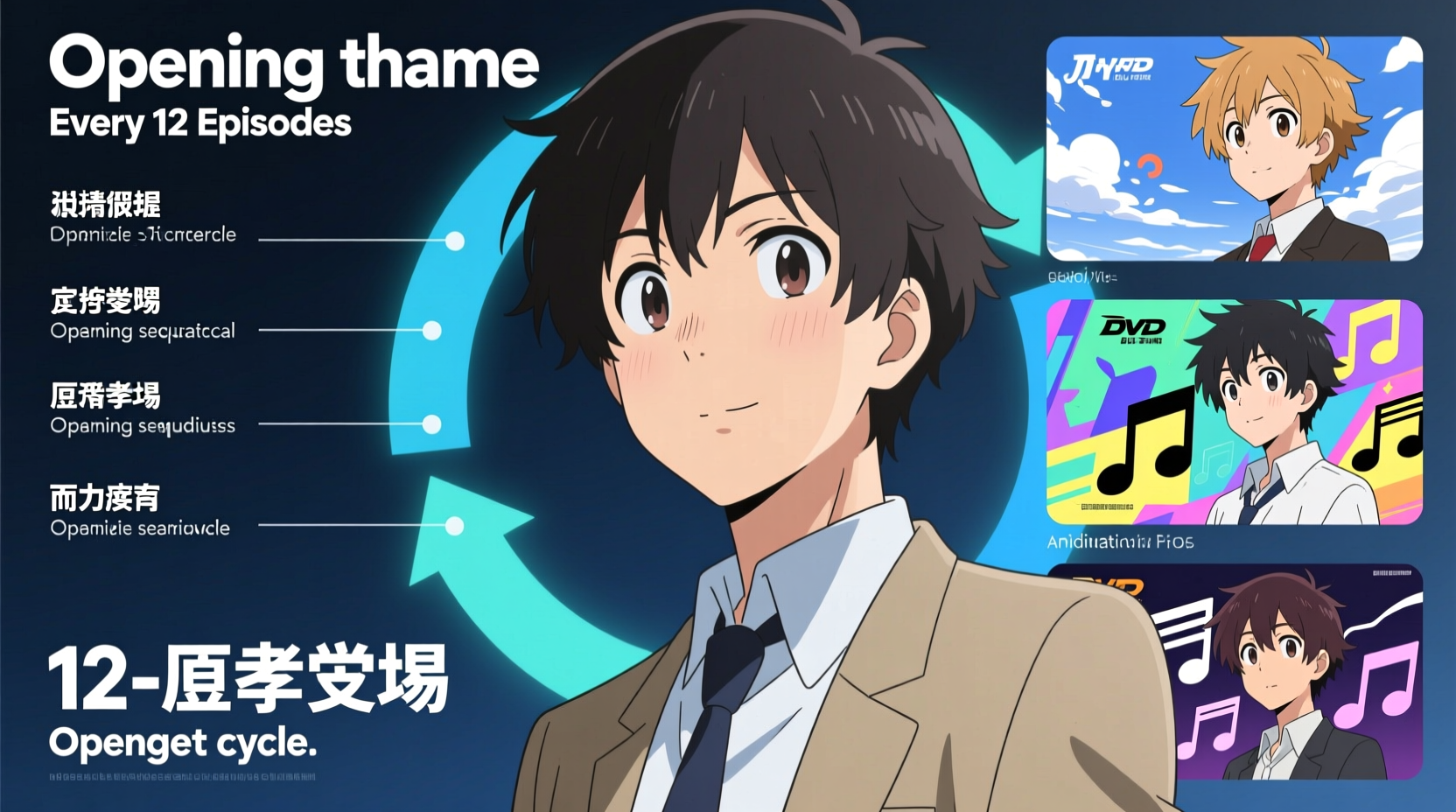
Most anime series follow a seasonal release structure, typically spanning one “cour”—approximately 12 to 13 episodes—before pausing or continuing into another season. This format aligns with Japan’s television broadcasting calendar, which divides the year into four quarters: winter (January–March), spring (April–June), summer (July–September), and fall (October–December).
A single cour often constitutes a full season of an anime. If the show performs well in ratings, merchandise sales, or streaming numbers, it may be renewed for additional cours. However, even within a continuous series, the opening theme frequently resets around episode 12 or 13. This timing is no coincidence; it corresponds directly with production cycles and promotional timelines.
Music Rights and Licensing Agreements
One of the most significant reasons for changing anime openings every 12 episodes is tied to music licensing. In Japan, songs used in anime are rarely owned outright by the production committee. Instead, they are licensed from artists, bands, or their record labels under specific terms.
These licenses often cover only a limited number of episodes—commonly 12 or 13. Why? Because each opening theme functions as a promotional tool for the artist. By limiting the initial run, the label ensures maximum exposure during a concentrated period, boosting digital sales, streaming numbers, and chart performance. Once that cycle ends, the contract may require renegotiation—or a complete replacement.
As Tatsuya Ishikawa, a former A&R manager at Sony Music Japan, explains:
“An anime placement can skyrocket a band’s visibility overnight. But we don’t want the song to become ‘stale’ or overexposed. A 12-episode arc gives us peak impact without oversaturation.” — Tatsuya Ishikawa, Music Industry Executive
This strategy benefits all parties: the anime gains a fresh sound, the studio avoids renewal negotiations, and the music label capitalizes on momentum before launching the next single.
Marketing and Merchandising Synergy
Beyond licensing, theme song rotations serve as powerful marketing tools. Each new opening introduces a new track that can be sold as a standalone single, bundled in albums, or promoted through concerts and live events. These releases generate revenue independently of the anime itself.
For example, popular anime like *My Hero Academia* or *Demon Slayer* regularly feature chart-topping artists such as LiSA, Kenshi Yonezu, or Official HIGE DANDism. Their theme songs often debut atop Oricon and Billboard Japan charts—driving album sales and concert ticket demand.
Moreover, physical singles usually include bonus content like instrumental versions, remixes, or DVD footage of the animated sequence. Collectors buy multiple copies, creating a self-sustaining ecosystem where music sales support future anime seasons.
| Anime Title | Opening Artist | Episodes Used | Commercial Outcome |
|---|---|---|---|
| Demon Slayer: Mugen Train Arc | LiSA – \"Homura\" | 12 | Sold over 500,000 copies; topped Oricon for 3 weeks |
| Jujutsu Kaisen S1 | Kenshi Yonezu – \"Kaiju\" | 13 | Streaming record: 100M+ plays in first month |
| Chainsaw Man | TK from Ling Tosite Sigure – \"Kick Back\" | 12 | First Japanese anime song certified Gold by RIAA (US) |
This synergy means that changing the opening isn't just about variety—it's a deliberate move to launch new products and sustain commercial momentum throughout the year.
Production Committee Dynamics
In Japan, anime are rarely produced by a single studio. Instead, they’re managed by a “production committee” (*seisaku iinkai*)—a consortium of investors including animation studios, publishers, music labels, toy companies, and broadcasters. Each member has a stake in the project’s profitability.
Music rights holders—often major record labels—are key members of these committees. They invest in the anime not only for brand alignment but also to promote their artists. As part of their return on investment, they secure guaranteed placements for their songs, typically lasting one cour.
After 12 episodes, the original agreement concludes, and the committee evaluates whether to renew the same artist or bring in a new one. Factors influencing this decision include:
- Song popularity and chart performance
- Artist availability and tour schedules
- Desire to attract new audiences with a different musical style
- Planned narrative shifts in the anime’s story arc
If the current song underperforms or the artist is unavailable, a change becomes inevitable. Even if the song is successful, rotating themes keeps the experience fresh and opens doors for additional sponsorships.
Artistic Evolution and Narrative Pacing
While business considerations dominate, there’s also an artistic rationale behind changing openings. Many anime use their title sequences to reflect evolving character arcs, plot developments, or emotional tones. A shift in music and visuals can signal a turning point in the story—such as entering a new saga, revealing a hidden truth, or escalating conflict.
For instance, in *Attack on Titan*, nearly every season introduced a new opening that mirrored the darkening tone of the narrative. From the defiant energy of “Guren no Yumiya” to the haunting intensity of “Shinzou wo Sasageyo!”, each theme marked a progression in the characters’ journey.
Similarly, *Fullmetal Alchemist: Brotherhood* cycled through multiple openings that gradually shifted from action-driven anthems to introspective ballads, paralleling Edward and Alphonse’s growing understanding of sacrifice and loss.
These transitions aren’t arbitrary—they’re carefully timed to enhance storytelling. Episode 12 often coincides with a mid-season climax or a pivotal revelation, making it the ideal moment for a thematic reset.
Real Example: How *My Hero Academia* Mastered Theme Rotation
*My Hero Academia* offers a textbook case of strategic opening changes. Across six seasons, the series cycled through 16 different theme songs, each aligned with a specific story arc and marketing campaign.
During Season 5, the opening “No.1” by Masaki Suda was used for exactly 12 episodes, covering the “Joint Training Arc” and the beginning of the “Meta Liberation Army” storyline. After episode 12, it was replaced by “Kaijou Wonder” by Anly, which featured darker visuals and lyrics reflecting rising societal tensions.
The switch wasn’t just aesthetic. Suda’s label had already released the single, completed promotional appearances, and moved on to his next project. Meanwhile, Anly’s team leveraged the change to launch a new EP and increase her international profile.
From a viewer perspective, the shift signaled that the lighthearted school dynamics were giving way to ideological conflict and moral ambiguity. Fans noted the visual clues—more shadows, broken symbols, and close-ups of villains—that prepared them for the darker chapters ahead.
This seamless blend of commerce and storytelling demonstrates how effective theme rotation can deepen engagement while driving revenue.
Step-by-Step: How an Anime Opening Gets Replaced
The process of changing an anime opening follows a structured timeline:
- Pre-Production Planning (6–12 months before airing): The production committee selects the first opening artist based on marketability, genre fit, and contractual availability.
- Animation Production (3–6 months before airing): The OP animation is created in parallel with early episodes, often using placeholder music.
- Broadcast & Promotion (Episodes 1–12): The opening airs weekly, supported by music videos, social media campaigns, and radio play.
- Performance Review (Around Episode 10–12): Sales data, streaming stats, and audience feedback are analyzed to decide whether to renew or replace.
- New Theme Rollout (Episode 13+): A new song and animation are introduced, restarting the promotional cycle.
This rhythm allows teams to manage resources efficiently while maintaining audience interest across multiple seasons.
Frequently Asked Questions
Do all anime change their openings every 12 episodes?
No, not all anime follow this pattern. Some long-running series like *One Piece* keep the same opening for much longer, sometimes 20–30 episodes, especially when the song remains popular. Others, particularly short-form or experimental anime, may never change their OP. However, the 12-episode rotation is standard for seasonal shows backed by music labels.
Can fans influence which openings stay or go?
Indirectly, yes. High fan engagement—measured through streaming, social media buzz, and merchandise sales—can convince producers to extend a song’s run. For example, the opening “Silhouette” by Owl City for *Naruto Shippuden* remained for 21 episodes due to overwhelming global popularity. Fan campaigns can sway decisions, though final calls depend on contractual and financial factors.
Are ending themes changed for the same reasons?
Yes, ending themes (EDs) follow similar logic. They are also subject to licensing limits and function as promotional vehicles for emerging artists. EDs are sometimes used to spotlight lesser-known musicians, giving them exposure without the pressure of leading the series.
Conclusion: More Than Just a Musical Shift
The practice of changing anime openings every 12 episodes is far more than a stylistic quirk—it’s a sophisticated mechanism that balances art, business, and audience psychology. Rooted in Japan’s seasonal broadcast model and powered by music industry partnerships, this rotation sustains financial viability while enhancing narrative depth.
Each new opening brings fresh energy, supports artist growth, and re-engages viewers at critical junctures in the story. It’s a testament to how anime transcends mere entertainment, functioning as a multi-platform cultural product where every frame—and every note—has purpose.




 浙公网安备
33010002000092号
浙公网安备
33010002000092号 浙B2-20120091-4
Comments
No comments yet. Why don't you start the discussion?