
Bananas are one of the most popular fruits worldwide, prized for their creamy texture, natural sweetness, and convenience. But they also come with a frustrating flaw: they ripen quickly, often turning brown before you can eat them. A common piece of kitchen wisdom suggests that refrigerating bananas slows down this process. Yet many people notice that after placing bananas in the fridge, the peel turns dark brown or even black within a day or two. This observation has led to a widespread belief: bananas turn brown faster in the fridge. But is this actually true—or is it just a myth?
The answer isn’t as simple as yes or no. The browning of banana peels in the refrigerator is real—but what’s happening isn’t the same as ripening. Understanding the difference requires a look into plant biology, enzymatic reactions, and proper food storage practices. Let’s separate fact from fiction and uncover the real story behind banana browning.
The Science Behind Banana Browning
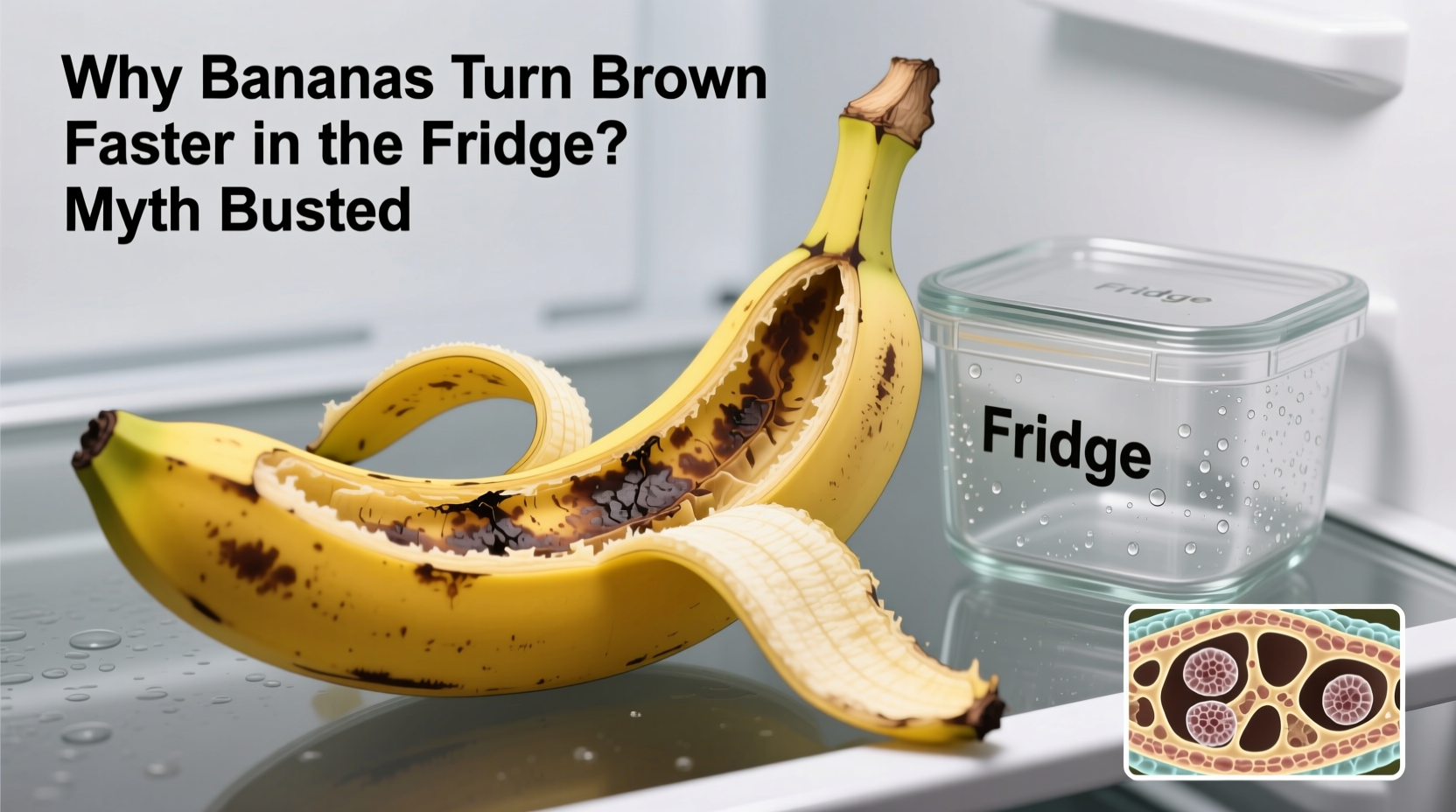
Banana peels turn brown due to a natural biochemical process called enzymatic browning. This reaction involves an enzyme called polyphenol oxidase (PPO), which becomes active when the fruit's cells are damaged or exposed to oxygen. When PPO interacts with phenolic compounds in the banana, it produces melanin-like pigments—those dark brown spots we see on aging bananas.
This process accelerates under certain conditions:
- Exposure to air (oxygen)
- Physical damage (bruising)
- Temperature fluctuations
- Natural ripening hormones like ethylene
What’s crucial to understand is that while the peel may darken in the fridge, the fruit inside often remains fresh longer than it would at room temperature. This distinction is key: the peel browns faster in cold storage, but the actual ripening of the fruit slows down significantly.
“Refrigeration halts the internal ripening process in bananas, even though the peel may appear worse. It’s a trade-off between appearance and shelf life.” — Dr. Lena Torres, Postharvest Physiologist, University of California Agriculture Department
Why Banana Peels Turn Dark in the Fridge
When bananas are placed in the refrigerator, typically around 4°C (39°F), something unique happens. Unlike many fruits, bananas are tropical in origin and are not adapted to cold temperatures. Cold exposure damages the cell membranes in the peel, causing cellular contents—including PPO and phenolics—to leak out and mix more freely. This accelerates the enzymatic browning reaction, leading to rapid darkening of the skin.
In contrast, at room temperature, the peel remains intact longer, and browning occurs gradually as part of the natural ripening process. So while the peel may look worse in the fridge, the flesh inside is protected from further softening and overripening.
Myth vs. Reality: Do Bananas Really Ripen Faster in the Fridge?
No—they don’t. In fact, the opposite is true. Refrigeration slows down the overall ripening process by inhibiting the production and action of ethylene, the hormone responsible for fruit ripening. However, because the peel reacts negatively to cold, the visual cue of browning misleads many into thinking the banana is spoiling faster.
To clarify:
- Peel browning: Accelerated in the fridge due to cold-induced cell damage.
- Fruit ripening: Slowed significantly in the fridge.
- Edible quality: Better preserved in the refrigerator once bananas reach desired ripeness.
A study conducted by the USDA’s Produce Quality Lab found that bananas stored at 13°C (55°F) showed minimal peel damage and delayed ripening, while those stored below 7°C (45°F) developed peel darkening within 24–48 hours. Yet, internal firmness and sugar content changed much more slowly in the cold-stored samples compared to those left on the counter.
Best Practices for Storing Bananas
Knowing the science helps, but practical application matters most. How should you store bananas depending on your needs? The method depends on whether you’re trying to delay ripening, preserve already ripe fruit, or prevent waste.
Step-by-Step Guide to Optimal Banana Storage
- Keep unripe bananas at room temperature – Allow them to ripen naturally on the counter, away from direct sunlight and other ethylene-producing fruits like apples or tomatoes.
- Separate bananas from the bunch – Each banana releases ethylene from its stem. Separating them reduces cumulative exposure and slows ripening.
- Wrap the stems in plastic wrap – This simple trick reduces ethylene emission by sealing off the primary release point.
- Monitor daily for ripeness – Once the banana reaches your preferred level of ripeness (yellow with small brown flecks), it’s time to consider refrigeration.
- Move ripe bananas to the fridge – The cold will keep the fruit firm and sweet for 3–5 extra days, even if the peel darkens.
- Freeze for long-term use – For smoothies or baking, peel and freeze overripe bananas in airtight containers for up to 3 months.
Do’s and Don’ts of Banana Storage
| Do | Don’t |
|---|---|
| Store unripe bananas at room temperature | Refrigerate green, unripe bananas |
| Wrap the stem ends to reduce ethylene release | Store bananas near apples, avocados, or tomatoes |
| Refrigerate bananas once they're fully ripe | Leave ripe bananas on the counter for more than 1–2 days |
| Freeze peeled bananas for later use | Wash bananas before storing (moisture encourages mold) |
| Use darkened but firm refrigerated bananas in recipes | Throw away bananas just because the peel turned black |
Real Example: Sarah’s Smoothie Prep Strategy
Sarah, a busy nutritionist and mother of two, used to throw away overripe bananas every week. She’d buy a bunch on Monday, but by Thursday, half were too soft to eat fresh. After learning about refrigeration effects, she adjusted her routine.
She now lets bananas ripen on the counter until they’re mostly yellow with a few brown spots. On Wednesday evening, she moves the ripe ones to the fridge. The peels turn dark by Friday, but when she cuts them open, the flesh is still firm and sweet. She uses them in morning smoothies all weekend.
“I used to think the dark peel meant the banana was spoiled,” Sarah says. “Now I know it’s just cosmetic. I’ve cut my banana waste in half—and save money doing it.”
FAQ: Common Questions About Banana Browning
Does a brown banana in the fridge mean it’s gone bad?
No. As long as the flesh inside is firm and smells normal (sweet, not sour or alcoholic), a banana with a darkened peel from refrigeration is perfectly safe and delicious. The color change is mostly superficial.
Can I prevent bananas from turning black in the fridge?
You can slow peel darkening slightly by wrapping the entire banana in wax paper or placing them in a sealed container, but some browning is inevitable due to cold sensitivity. Focus on preserving the fruit inside, not the appearance of the peel.
Are refrigerated bananas less nutritious?
No. Refrigeration preserves nutrients by slowing down degradation processes. In fact, chilled ripe bananas retain vitamin C, potassium, and antioxidants longer than those left at room temperature.
Expert Insight: What Food Scientists Recommend
Postharvest experts emphasize that consumer perception often conflicts with scientific reality when it comes to produce storage. “We’re conditioned to judge freshness by appearance,” explains Dr. Rajiv Mehta, a food preservation specialist. “But with bananas, the peel is a poor indicator of internal quality once refrigerated.”
“The biggest mistake people make is discarding refrigerated bananas based solely on peel color. If we applied the same logic to lettuce or carrots, we’d throw out half our produce unnecessarily.” — Dr. Rajiv Mehta, Institute of Food Technologists
He recommends treating bananas like avocados: allow ripening at room temperature, then refrigerate to extend usability. Both fruits show surface changes in the cold but maintain excellent internal quality.
Conclusion: Stop Throwing Away Good Bananas
The idea that bananas turn brown faster in the fridge isn’t entirely false—but it’s deeply misunderstood. Yes, the peel darkens quickly due to cold-induced enzymatic reactions. But no, the fruit isn’t spoiling faster. In fact, refrigeration is one of the best ways to preserve ripe bananas and prevent waste.
By understanding the biology behind browning and adjusting your storage habits, you can enjoy fresh-tasting bananas longer, reduce grocery costs, and contribute to less food waste. Whether you’re slicing them onto cereal, blending them into smoothies, or baking banana bread, don’t let a dark peel fool you. Some of the best bananas are the ones that look the worst.




 浙公网安备
33010002000092号
浙公网安备
33010002000092号 浙B2-20120091-4
Comments
No comments yet. Why don't you start the discussion?