
Battery-powered string lights are a staple in modern decor—festive, flexible, and free from cords. Whether draped over a patio, tucked into a bedroom canopy, or wrapped around a holiday centerpiece, they add charm without the clutter of wiring. But one persistent frustration remains: their batteries seem to die almost as soon as they’re installed. Why do battery packs for string lights drain so fast? The answer lies in a combination of electrical design, battery quality, usage patterns, and environmental factors—all of which impact performance more than most users realize.
Understanding this issue isn’t just about replacing batteries less often—it’s about making smarter choices that save money, reduce waste, and ensure your ambiance stays lit when it matters most.
The Science Behind Battery Drain in String Lights
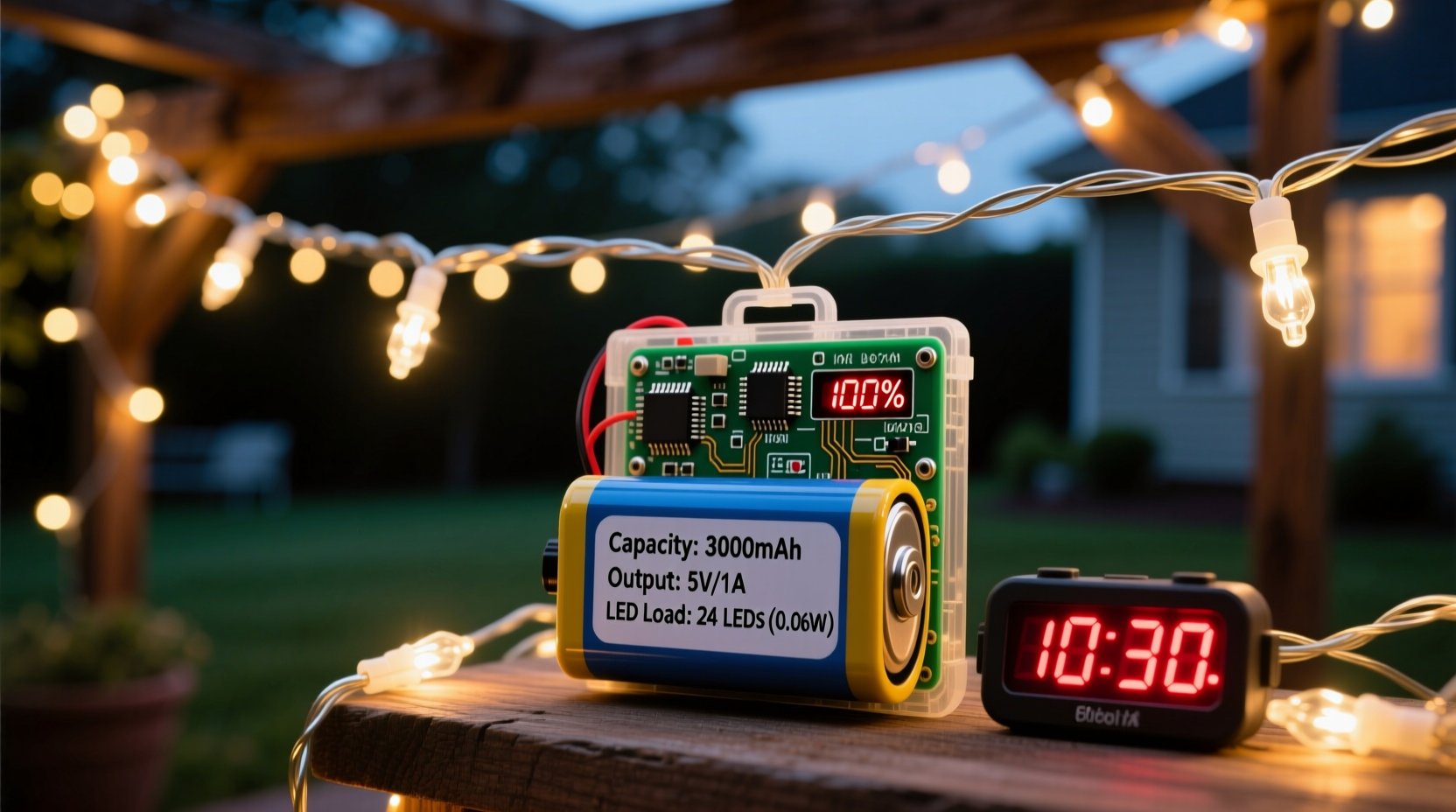
At first glance, a string of tiny LED bulbs may seem like a minimal power draw. However, even low-wattage LEDs consume energy, and when multiplied across 20, 50, or 100 bulbs, the cumulative demand adds up. Most battery-operated string lights run on AA or AAA batteries—typically 3 to 4 cells in series, delivering 4.5V to 6V. While modern LEDs are efficient, the circuitry and operating mode significantly affect how quickly those volts are depleted.
LEDs themselves use approximately 0.05 to 0.1 watts each. A 20-light strand might draw around 1 watt total. On paper, a standard alkaline AA battery holds about 2,500–3,000 mAh at 1.5V, meaning it can theoretically supply 3.75–4.5 watt-hours. So a 4-battery pack (6V) could power a 1-watt string for roughly 25–30 hours. Yet real-world performance often falls far short—sometimes lasting only 6 to 12 hours. Why?
- Voltage drop under load: As batteries discharge, their voltage declines, reducing efficiency in driving the LEDs consistently.
- Inefficient driver circuits: Many budget string lights lack proper current regulation, causing LEDs to pull excess current intermittently.
- Timer and flashing modes: Features like blinking, fading, or strobing increase average power draw due to rapid cycling.
- Internal resistance: Cheap batteries or corroded contacts create resistance, wasting energy as heat.
“Even small inefficiencies compound quickly in low-voltage systems. A poorly regulated circuit can cut battery life by half compared to an optimized design.” — Dr. Lena Torres, Electrical Engineer & Sustainable Lighting Consultant
Common Causes of Rapid Battery Depletion
Several factors accelerate battery drain beyond normal expectations. Recognizing these can help you troubleshoot and prevent premature failure.
Low-Quality or Incompatible Batteries
Not all batteries are created equal. Dollar-store alkalines may start strong but fade rapidly under continuous load. Rechargeable NiMH batteries, while eco-friendly, typically offer lower voltage (1.2V per cell), which can cause early cutoff in devices designed for 1.5V cells—even if charge remains.
Excessive Number of LEDs
More bulbs mean more current draw. A 100-light strand requires nearly five times the energy of a 20-light version. Some manufacturers advertise “long runs” powered by small battery boxes, but this often comes at the cost of runtime.
Poor Circuit Design
Cheaply made lights often use resistor-based current limiting instead of constant-current drivers. Resistors waste power as heat and don’t adapt to changing battery voltage, leading to inconsistent brightness and faster depletion.
Environmental Conditions
Cold temperatures reduce battery capacity significantly. Alkaline batteries can lose up to 50% of their effective output below 50°F (10°C). If your string lights are used outdoors in fall or winter, this is likely a major contributor to short life.
Parasitic Drain from Timer Circuits
Many string lights include built-in timers that remain active even when lights are off. These microcontrollers draw a small but constant current, slowly draining batteries over days—even during \"off\" periods.
How to Extend Battery Life: Practical Solutions
You don’t have to accept short runtimes as inevitable. With strategic upgrades and usage habits, you can dramatically improve performance.
Choose the Right Battery Type
Switching from alkaline to high-quality lithium or properly matched rechargeables can double or triple runtime.
| Battery Type | Average Capacity (mAh) | Voltage (per cell) | Best For |
|---|---|---|---|
| Alkaline AA | 2,400–3,000 | 1.5V | Indoor, moderate use |
| Lithium AA (non-rechargeable) | 3,000+ | 1.5V | Cold weather, long runtime |
| NiMH Rechargeable AA | 2,000–2,800 | 1.2V | Eco-conscious, frequent use |
| Lithium-Ion (14500) | 800–1,200 | 3.7V | Custom setups (use with caution) |
Note: Avoid mixing battery types or using old and new cells together, as this creates imbalance and reduces overall efficiency.
Reduce Light Load or Use Shorter Strands
Instead of powering one long 100-light strand, consider using two separate 50-light sets with individual battery packs. This reduces strain on each unit and allows selective use—only turn on what you need.
Disable Unnecessary Features
If your lights have multiple modes (twinkle, slow fade, etc.), stick to steady-on mode. Flashing patterns often keep the circuit active at higher peak currents, accelerating drain.
Remove Batteries When Not in Use
Even in \"off\" mode, some timer circuits continue drawing power. Removing batteries during storage prevents slow leakage and potential corrosion.
Upgrade to USB-Powered Alternatives
Consider switching to USB-powered string lights and using a high-capacity power bank. A 10,000mAh power bank can run a 1-watt LED string for over 100 hours—far exceeding typical battery performance.
Step-by-Step Guide to Maximizing Runtime
Follow this sequence to get the most out of your battery-powered string lights:
- Assess your setup: Count the number of bulbs and check the battery compartment (AA, AAA, C, D).
- Inspect for damage: Look for frayed wires, loose connections, or corroded contacts.
- Clean battery terminals: Use a cotton swab with rubbing alcohol to remove residue.
- Select optimal batteries: Choose lithium for cold or long-duration use; NiMH for regular indoor use.
- Test in steady-on mode: Disable flashing features to measure baseline performance.
- Monitor runtime: Note how long the lights stay bright before dimming.
- Switch to USB if possible: Replace the battery pack with a 5V USB adapter or power bank.
- Store properly: Keep lights in a dry place and remove batteries after use.
Real-World Example: A Patio Lighting Dilemma
Sarah installed a 70-light string of battery-powered fairy lights along her backyard fence for evening gatherings. She used four fresh alkaline AA batteries, expecting several weeks of nightly use. Instead, the lights dimmed noticeably after just two nights and died completely by day six.
After researching, she realized three issues: the lights were set to “slow pulse” mode, the batteries were standard alkalines, and the fixture was exposed to cool night air (around 45°F). She switched to Energizer Ultimate Lithium AAs, changed the setting to steady-on, and removed the batteries between uses. Her runtime jumped to over 30 nights—more than five times longer.
Later, she replaced the battery box with a waterproof USB connector linked to a solar-charged power bank, eliminating battery costs entirely. Her solution now runs year-round with minimal maintenance.
Checklist: How to Prevent Fast Battery Drain
- ✅ Use high-quality lithium or NiMH batteries
- ✅ Avoid flashing or dynamic light modes when not needed
- ✅ Clean battery contacts regularly
- ✅ Remove batteries during storage
- ✅ Limit strand length to reduce load
- ✅ Store lights in a temperature-stable environment
- ✅ Consider upgrading to USB or solar-powered alternatives
- ✅ Check manufacturer specs for current draw (mA) if available
Frequently Asked Questions
Can I use rechargeable batteries in my string lights?
Yes, but ensure they match the required voltage. NiMH rechargeable AAs (1.2V) may not power some lights as brightly or as long as alkaline (1.5V) cells. High-capacity 2500mAh+ NiMH batteries work best. Avoid mixing rechargeable and non-rechargeable cells.
Why do my lights dim gradually instead of staying bright?
This is normal behavior as batteries discharge. Alkaline cells lose voltage steadily, causing LEDs to receive less power over time. Lithium batteries maintain a flatter voltage curve, so brightness stays consistent until near depletion.
Is there a way to make battery lights last all night?
Absolutely. Use lithium batteries, select steady-on mode, and choose shorter strands (20–50 lights). For all-night events, pair USB-compatible lights with a 5,000mAh+ power bank—this can deliver 50+ hours of uninterrupted lighting.
Final Thoughts: Smarter Lighting Starts with Better Power
The frustration of constantly replacing batteries in string lights isn’t just inconvenient—it reflects outdated design assumptions and consumer habits. By understanding the technical realities behind power consumption, you can move beyond trial and error. Simple changes—like choosing the right battery chemistry, disabling unnecessary modes, or transitioning to USB-powered systems—can transform your experience from frustrating to seamless.
Longevity isn’t just about durability; it’s about efficiency, awareness, and adaptation. Whether you're decorating for a wedding, creating a cozy bedroom vibe, or enhancing outdoor ambiance, reliable lighting should enhance the moment—not interrupt it.




 浙公网安备
33010002000092号
浙公网安备
33010002000092号 浙B2-20120091-4
Comments
No comments yet. Why don't you start the discussion?