
The first light of dawn often brings a symphony of sound—birds singing from treetops, fences, and rooftops. This chorus, known as the dawn chorus, is one of nature’s most recognizable phenomena. Yet by mid-morning, the same birds are quiet, foraging or resting in relative silence. Why do birds sing so vigorously at sunrise and then stop? The answer lies in a complex interplay of biology, environment, and evolution. Understanding this pattern reveals not just avian behavior but also the subtle rhythms that govern life in the wild.
The Science Behind the Dawn Chorus
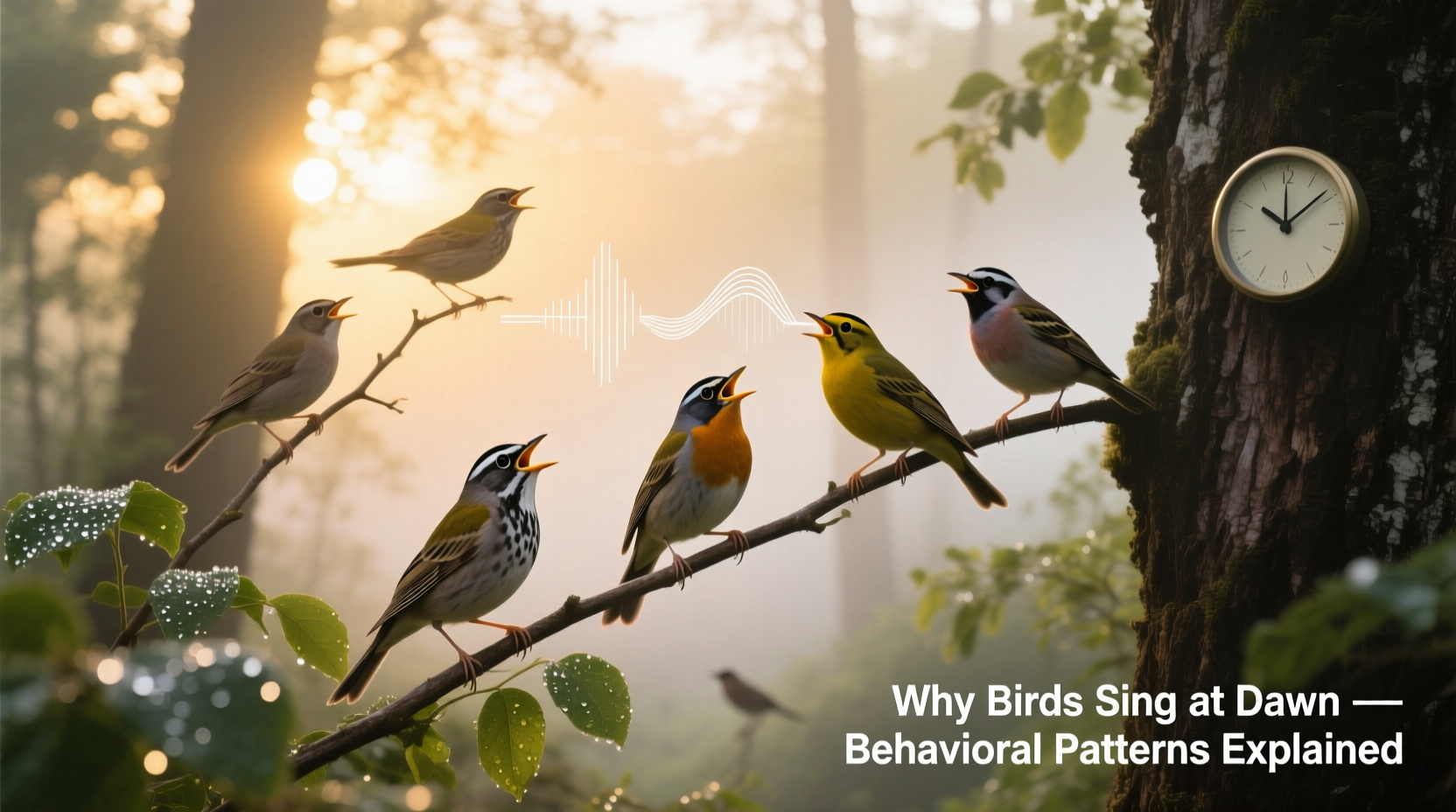
Birdsong is more than random noise—it's a form of communication with specific functions. Male birds primarily use song to establish territory and attract mates. During breeding season, these vocalizations become especially intense. The peak activity occurs in the early morning hours, typically starting an hour before sunrise and tapering off around mid-morning.
One key reason for this timing is acoustic efficiency. Early morning air is generally cooler and more stable, allowing sound to travel farther with less distortion. With fewer background noises—no traffic, human activity, or wind turbulence—the messages birds send carry clearly across distances. This clarity enhances both territorial defense and mate attraction.
Additionally, low light levels at dawn make foraging difficult. Instead of wasting energy searching for food in poor visibility, many birds take advantage of this idle time to sing. As daylight increases and visibility improves, their focus shifts from vocal display to feeding and other survival tasks.
Evolutionary Advantages of Early Singing
The dawn chorus isn’t just a habit; it’s a product of natural selection. Birds that sang effectively during optimal conditions were more likely to secure territories and mates, passing on their genes over generations. Several evolutionary pressures have shaped this behavior:
- Mate Attraction: Females often judge male fitness based on song complexity, duration, and consistency. Singing early demonstrates stamina and health, signaling a strong genetic profile.
- Territorial Defense: Loud, frequent singing deters rival males. A robust dawn performance communicates occupancy and readiness to defend space.
- Energy Efficiency: Singing requires energy, but less than flying or foraging. Using the cool morning hours for vocal effort aligns with metabolic efficiency.
“Birdsong at dawn is like a daily job interview—males are proving they survived the night, are healthy, and ready to breed.” — Dr. Laura Finch, Behavioral Ornithologist, Cornell Lab of Ornithology
This competitive aspect means that even slight variations in timing or volume can influence reproductive success. In dense populations, some species begin singing earlier each day to get ahead of rivals—a phenomenon known as “time stacking” in urban environments where competition is fierce.
Environmental and Seasonal Influences
While the dawn chorus is common across temperate regions, its intensity and duration vary with season, climate, and habitat. Spring and early summer see the most vigorous singing due to breeding cycles. Day length, temperature, and weather all play roles in shaping when and how long birds sing.
Rainy or overcast mornings may delay or reduce singing, as humidity affects sound transmission and birds may prioritize shelter over display. Urban areas present unique dynamics—artificial lighting can cause birds to start singing earlier, sometimes even at midnight. Light pollution disrupts natural circadian rhythms, leading to extended or mistimed vocalizations.
Conversely, in tropical regions where day length changes little year-round, birds may sing throughout the day. However, even there, peak activity often clusters in the early hours when temperatures are lower and predation risks reduced.
Seasonal Variation in Birdsong Activity
| Season | Singing Frequency | Primary Purpose |
|---|---|---|
| Spring | High (dawn to mid-morning) | Mating & territory establishment |
| Summer | Moderate (early morning only) | Chick rearing, occasional defense |
| Fall | Low (sporadic) | Loose flock coordination |
| Winter | Very Low | Limited territorial maintenance |
Why Do Birds Stop Singing by Midday?
By late morning, the avian concert hall quiets down. Several factors contribute to this shift:
- Foraging Needs: After singing, birds must replenish energy. Insectivores, for example, hunt actively when insects become more active in warmer temperatures.
- Predator Avoidance: Loud singing draws attention. During daylight, increased predator activity (hawks, cats) makes discretion safer.
- Thermoregulation: In hot climates, birds reduce activity during peak heat to conserve water and prevent overheating.
- Social Dynamics: Once territories are established and mates secured, constant singing becomes unnecessary—and energetically wasteful.
Some species, like mockingbirds or nightingales, may continue singing intermittently, especially if unpaired or in high-competition zones. But for most diurnal birds, midday silence is a strategic pause, not a sign of absence.
Mini Case Study: The Robin’s Daily Routine
In suburban England, European robins (*Erithacus rubecula*) are among the earliest singers, often beginning 45 minutes before sunrise. A field study conducted in Oxfordshire tracked individual males across spring weeks. Researchers found that dominant birds started singing earlier and held larger territories. By 9:00 AM, all observed robins had transitioned to foraging—searching lawns for worms and insects. One younger male, still without a mate, continued sporadic singing until noon, suggesting that unmated individuals extend vocal efforts to improve chances of attracting a partner. This illustrates how social status and reproductive urgency shape daily patterns.
How Human Activity Disrupts Natural Patterns
Urbanization has significantly altered bird vocal behavior. Artificial light extends perceived daylight, prompting earlier onset of singing. Traffic noise forces some species to sing louder or at higher frequencies to be heard—a phenomenon called the Lombard effect. Others adapt by shifting their singing windows entirely.
A 2021 study published in *Nature Communications* found that city-dwelling great tits (*Parus major*) began singing up to two hours earlier than their forest counterparts. While this allows them to be heard over morning rush hour, it may come at a cost: disrupted sleep cycles and increased stress markers.
Noise pollution doesn't just change timing—it can degrade communication quality. If songs are masked by engine rumble or construction, territorial disputes may escalate into physical confrontations, increasing injury risk. Similarly, females may struggle to assess male quality accurately, potentially affecting mating outcomes.
Checklist: Supporting Healthy Bird Vocal Behavior in Your Area
- Install motion-sensor lights instead of constant outdoor lighting
- Plant native trees and shrubs to provide natural cover and nesting sites
- Avoid using leaf blowers or power tools during early morning hours (5–9 AM)
- Keep pets indoors or leashed during breeding season to reduce predation stress
- Participate in citizen science projects like eBird or Dawn Chorus Monitoring
FAQ: Common Questions About Morning Birdsong
Do all birds sing in the morning?
No. While most diurnal songbirds participate in the dawn chorus, nocturnal species like owls and nightjars are more active at night. Some non-passerines, such as pigeons or gulls, vocalize throughout the day with less structured patterns.
Why do I hear birds again in the evening?
Some species exhibit a secondary peak in singing at dusk, known as the “dusk chorus.” This serves similar purposes—territory reinforcement and pair bonding—but is usually shorter and quieter than the dawn chorus. Species like thrushes and warblers are known for this bimodal pattern.
Can birds sing too much?
Excessive singing can indicate stress, especially in captive birds. In the wild, prolonged singing beyond normal hours may signal population imbalance—such as a surplus of unpaired males—or environmental disruption like light pollution.
Step-by-Step Guide to Observing the Dawn Chorus
Experiencing the dawn chorus firsthand offers insight into avian life. Follow these steps for a meaningful observation:
- Choose the Right Time: Plan to arrive 30–60 minutes before sunrise, especially during April or May when activity peaks.
- Select a Quiet Location: Parks, forests, or rural backyards are ideal. Avoid busy roads or noisy neighborhoods.
- Dress Warmly and Stay Still: Birds are sensitive to movement and temperature. Sit quietly to avoid disturbing them.
- Listen and Identify: Use a birding app or guide to match songs to species. Note sequence, frequency, and duration.
- Record Notes: Jot down observations about which birds sing first, how long the chorus lasts, and any interruptions (e.g., predators, weather).
- Repeat Over Days: Patterns emerge over time. You may notice shifts in species presence or singing order.
Conclusion: Tuning Into Nature’s Rhythm
The morning chirping of birds is far more than a charming backdrop to sunrise—it’s a finely tuned survival strategy shaped by millions of years of evolution. From acoustic optimization to reproductive competition, every note carries meaning. By midday, when the world heats up and demands shift, birds wisely redirect their energy toward sustenance and safety.
Understanding this cycle deepens our appreciation of wildlife and highlights how fragile these patterns can be in the face of human disturbance. Simple actions—like reducing noise, minimizing light pollution, and preserving green spaces—can help maintain the integrity of the dawn chorus for future generations.




 浙公网安备
33010002000092号
浙公网安备
33010002000092号 浙B2-20120091-4
Comments
No comments yet. Why don't you start the discussion?