
Birds flying in a V-shaped pattern across the autumn sky is one of nature’s most iconic sights. It's not just for show—there’s deep science behind this behavior. Every year, millions of birds migrate thousands of miles between breeding and wintering grounds, often navigating vast distances with astonishing precision. One key to their success lies in how they fly: together, in coordinated formations. But why do birds fly in formation? What advantages does it offer, and how do they maintain such perfect coordination without colliding? This article breaks down the mechanics, biology, and benefits of bird migration formations in clear, accessible terms.
The Science Behind the V Formation
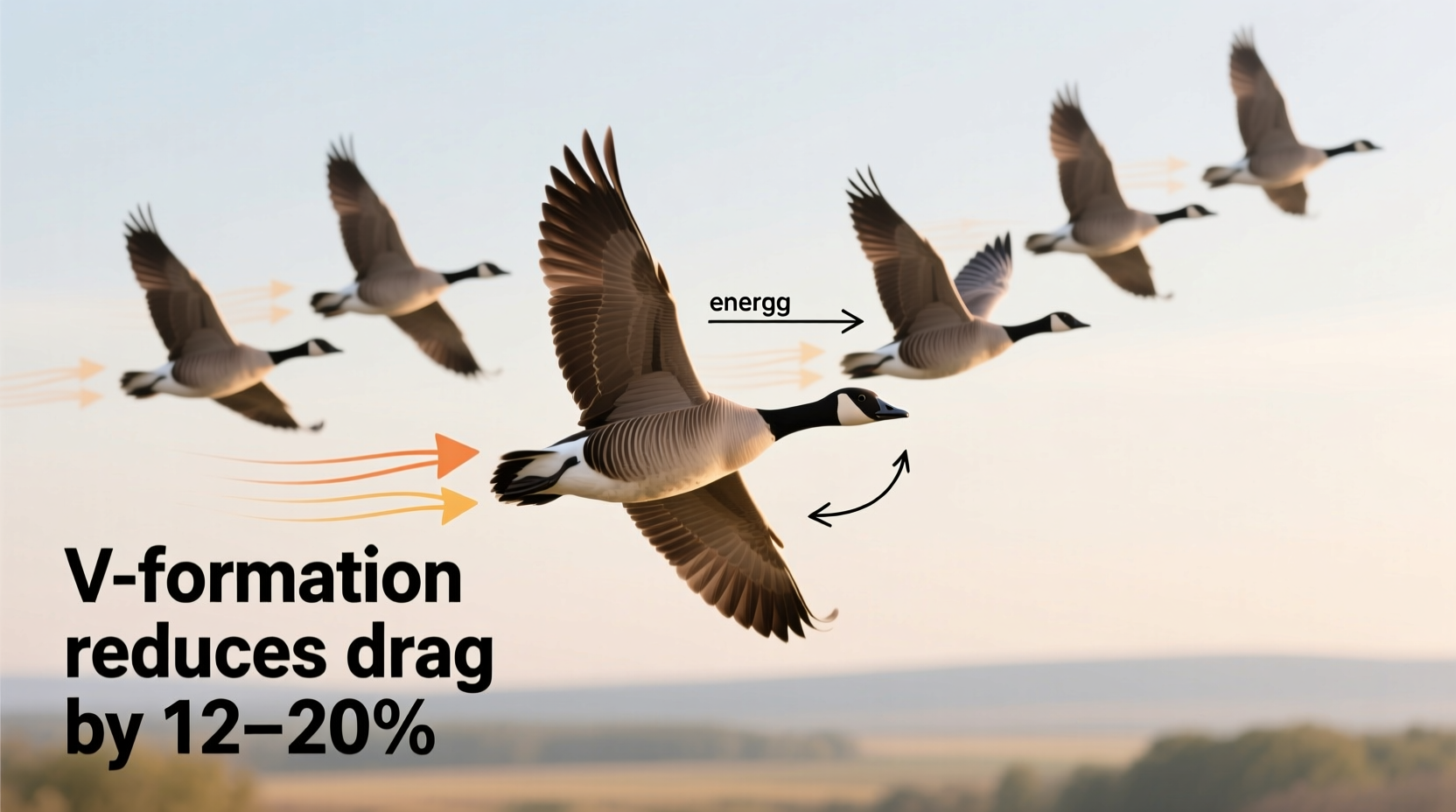
When geese, swans, or pelicans take flight in a V shape, they’re not merely following each other—they’re engaging in an aerodynamic strategy that reduces fatigue and conserves energy. The physics at play are similar to what race car drivers experience when drafting behind another vehicle. As a bird flaps its wings, it generates lift but also creates swirling air currents called wingtip vortices. These vortices produce upwash—rising air—just behind and outside the wingtips.
By positioning themselves slightly behind and to the side of the bird ahead, trailing birds can ride this upwash like an invisible conveyor belt of air. This allows them to generate more lift with less effort, reducing their energy expenditure by as much as 20–30%. Studies using GPS trackers on ibises have confirmed that birds time their wingbeats to match the rhythm of the bird in front, maximizing the benefit from the uplift.
Energy Conservation: A Matter of Survival
Migrating is physically demanding. Some species, like the Arctic tern, travel over 40,000 miles annually between poles. Sustaining such long flights requires efficient use of energy. Flying solo would make this journey far more taxing. In contrast, flying in formation significantly lowers metabolic rates.
A landmark study published in Nature found that heart rates of birds flying in a V were measurably lower than those flying alone, even when controlling for wind conditions. This energy saving translates into longer flight durations, reduced rest stops, and higher survival rates—especially critical for juveniles making their first migration.
The lead bird bears the brunt of air resistance and cannot take advantage of upwash. To distribute this burden fairly, birds rotate positions. When the front bird tires, it drops back, and another takes the lead. This cooperative rotation ensures no single individual is overworked, demonstrating remarkable social intelligence and group coordination.
“We used to think only military pilots understood aerodynamics well enough to exploit upwash. Birds have been doing it for millions of years.” — Dr. Steven Portugal, Royal Holloway University of London
Improved Communication and Navigation
Beyond aerodynamics, flying in formation enhances communication and navigational accuracy. Visual contact within the flock allows birds to react quickly to changes in direction or speed. Vocalizations—like the honking of geese—are amplified and transmitted efficiently through the line, helping maintain cohesion over long distances and poor visibility.
Research suggests that collective decision-making plays a role in route selection. Older, experienced birds often guide younger ones, passing down knowledge of stopover sites, feeding zones, and safe pathways. This cultural transmission is vital for species survival, especially as climate change alters traditional migration routes.
In some species, such as sandhill cranes, family groups migrate together, with parents leading offspring along learned paths. These familial bonds reinforce group structure and increase the likelihood of successful migration.
Enhanced Safety Through Group Vigilance
Predation is a constant threat during migration. Flying in formation increases vigilance—more eyes scanning for hawks, falcons, or human-made dangers like power lines and wind turbines. Even if one bird spots danger, its sudden movement can trigger a ripple effect through the flock, enabling rapid evasive action.
Dense formations also confuse predators. A tightly coordinated flock moving in unison makes it harder for a raptor to isolate and target a single individual. This \"confusion effect\" is seen in many prey species, from schools of fish to herds of antelope.
Additionally, flying in groups reduces the chance of getting lost. Stragglers or disoriented individuals can rejoin the formation, relying on the collective sense of direction rather than navigating alone.
Types of Migration Formations and Which Birds Use Them
Not all birds fly in the classic V-shape. Formation styles vary based on species, body size, wing shape, and flight behavior. Below is a comparison of common formation types:
| Formation Type | Commonly Seen In | Key Benefits | Limits |
|---|---|---|---|
| V Formation | Geese, swans, pelicans, ibises | Maximizes aerodynamic efficiency, enables rotation | Requires high coordination; less effective in small groups |
| Jagged Line (Slight V) | Cranes, herons | Balances visibility and lift; easier to maintain | Slightly less energy-efficient than tight V |
| Dense Cluster | Starlings, blackbirds, swifts | Anti-predator defense (murmurations); warmth retention | High risk of collision; minimal aerodynamic gain |
| Loose Flock | Ducks, pigeons, gulls | Flexible spacing; adaptable to wind and terrain | Limited energy savings compared to structured V |
Interestingly, smaller birds like starlings don’t form V-patterns but instead create mesmerizing aerial displays known as murmurations. While these lack the aerodynamic advantages of a V, they serve crucial protective functions against predators like peregrine falcons.
How Birds Navigate During Migration
Flying in formation is only part of the story. Birds must also know where they're going. They rely on a combination of tools:
- Earth’s magnetic field: Tiny iron-rich particles in their beaks or brains may help detect magnetic orientation.
- Sun and stars: Many species use celestial cues, adjusting for time of day via internal circadian clocks.
- Landmarks: Rivers, coastlines, mountain ranges, and even urban lights help guide birds along familiar routes.
- Olfactory cues: Some seabirds, like petrels, navigate using smell.
- Social learning: Young birds learn routes by following experienced adults.
Recent tracking studies show that homing pigeons adjust their flight paths in real-time based on wind patterns and thermals, often deviating from straight lines to conserve energy—proof that migration is not just instinctive but highly adaptive.
Mini Case Study: The Northern Bald Ibis Reintroduction Project
In a groundbreaking conservation effort, scientists in Europe used ultralight aircraft to teach endangered northern bald ibises a new migration route. Chicks imprinted on human-led planes and followed them from Austria to Italy, learning a path that had been lost due to population decline.
GPS data revealed that once airborne, the birds naturally formed V-shaped formations, synchronized their wingbeats, and rotated leadership roles—despite never having migrated before. This demonstrated that formation flying is an innate behavior, refined through experience but rooted in instinct.
The project proved that even critically endangered species can relearn migration when guided properly, offering hope for future wildlife recovery programs.
Step-by-Step: How a Flock Organizes Mid-Flight
Observing a migrating flock reveals a dynamic, self-organizing system. Here’s how it unfolds:
- Initiation: One or more dominant birds take off first, signaling the start of movement.
- Alignment: Others follow, positioning themselves in optimal aerodynamic zones.
- Synchronization: Wingbeat timing adjusts to match neighbors, minimizing turbulence.
- Rotation: After several minutes, the lead bird moves to the back, allowing a rested bird to take over.
- Communication: Periodic calls maintain spacing and alert others to changes in altitude or direction.
- Recovery: If disrupted by wind or predator, the flock regroups using visual cues and vocal signals.
This seamless coordination happens without centralized control—a natural example of swarm intelligence.
Common Misconceptions About Bird Migration
Despite growing scientific understanding, myths persist:
- Myth: Only geese fly in V-formations.
Truth: Many large birds, including swans, pelicans, and cranes, use similar patterns. - Myth: The strongest bird always leads.
Truth: Leadership rotates regularly; it's a shared responsibility. - Myth: Birds migrate because it gets cold.
Truth: Migration is primarily driven by food availability, not temperature alone.
FAQ: Frequently Asked Questions
Why don’t all birds fly in formation?
Smaller birds with rapid wingbeats, like sparrows or warblers, gain little aerodynamic benefit from formation flying. Additionally, nocturnal migrants often fly alone or in loose groups, relying more on celestial navigation than visual coordination.
Do birds ever collide while flying in tight formations?
Collisions are extremely rare. Birds have excellent depth perception and reflexes. Their brains process visual input rapidly, allowing split-second adjustments. In dense flocks like starlings, each bird reacts to its seven nearest neighbors, maintaining balance and spacing automatically.
Can weather affect migration formations?
Yes. Strong headwinds may cause flocks to fly lower or break formation temporarily. Tailwinds can allow looser arrangements. Rain or fog often delays departure until visibility improves.
Action Checklist: What You Can Do to Support Migratory Birds
Understanding bird behavior comes with a responsibility to protect it. Here’s how you can help:
- Install bird-safe windows or apply decals to prevent collisions.
- Keep outdoor cats indoors, especially during migration seasons (spring and fall).
- Support wetland and habitat conservation efforts in your region.
- Participate in citizen science projects like eBird or Audubon’s Christmas Bird Count.
- Avoid using pesticides that reduce insect populations—critical food sources for many migratory species.
- Turn off unnecessary lights at night during peak migration periods to prevent disorientation.
Conclusion: Nature’s Masterclass in Efficiency and Cooperation
The sight of birds flying in formation is more than poetic—it’s a testament to evolution’s ingenuity. From energy-saving aerodynamics to collective navigation and shared leadership, these behaviors reflect millions of years of refinement. Each flap of a wing, each shift in position, serves a purpose fine-tuned by survival.
As humans continue to reshape landscapes and climates, understanding and protecting these natural systems becomes ever more urgent. By appreciating the complexity behind something as simple as a V in the sky, we gain deeper respect for the resilience and intelligence of the natural world.




 浙公网安备
33010002000092号
浙公网安备
33010002000092号 浙B2-20120091-4
Comments
No comments yet. Why don't you start the discussion?