
The warm glow of holiday lights can instantly evoke feelings of nostalgia and joy. Yet for some, that festive sparkle comes with an unwelcome side effect: throbbing headaches, eye strain, or even migraines. If you’ve ever felt a headache creeping in while admiring a neighbor’s light display or decorating your own home, you’re not alone. The culprit? Often, it's the flickering or blinking pattern of traditional Christmas lights. But why does this happen—and more importantly, how can you enjoy the season without pain?
Blinking lights may seem harmless, but their rapid on-off cycles can overstimulate the brain, especially in individuals sensitive to visual stimuli. This article explores the neurological and physiological reasons behind light-induced headaches, identifies who is most at risk, and offers actionable strategies to reduce or eliminate symptoms—so you can celebrate the holidays comfortably.
The Science Behind Light Sensitivity and Headaches
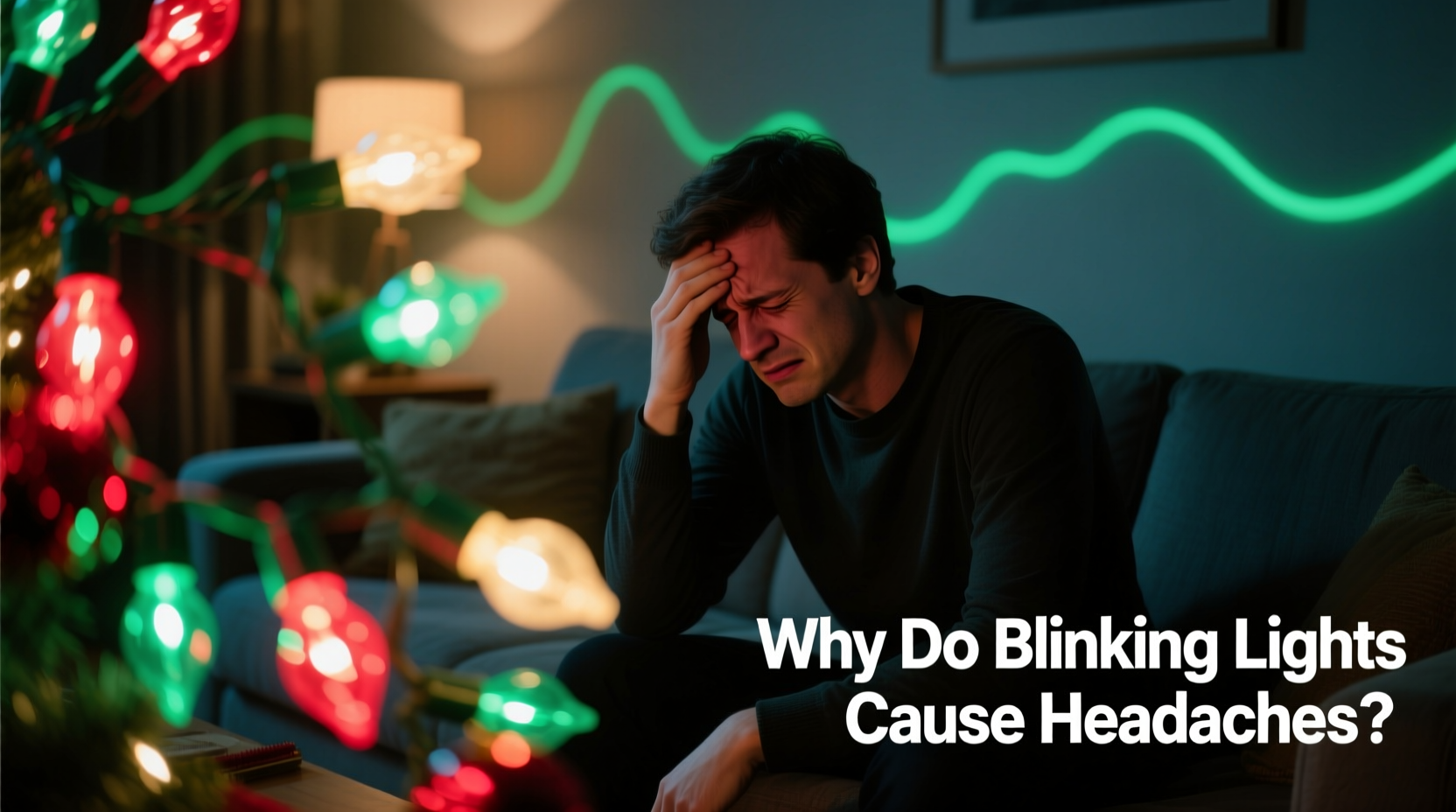
Our brains process visual input constantly, but not all light is processed equally. Flickering or blinking lights create a strobing effect that can disrupt normal brain activity. This phenomenon is particularly problematic when lights flash between 3 and 70 times per second—the range most likely to trigger neurological responses in sensitive individuals.
Research shows that repetitive visual stimulation, such as that from blinking holiday lights, can cause photophobia (light sensitivity), cortical hyperexcitability, and even cortical spreading depression—a wave of altered brain activity linked to migraine onset. A 2019 study published in Cephalalgia found that intermittent light exposure increased headache intensity in 68% of migraine sufferers compared to steady lighting.
The issue isn’t just brightness—it’s rhythm. Steady, constant light allows the visual cortex to adapt. But blinking lights force the brain to continuously reprocess incoming signals, creating neural fatigue. This is especially true with older incandescent bulbs that switch off completely between flashes, producing a harsh contrast between light and dark.
“Flicker from decorative lighting can act as a potent migraine trigger, particularly in people with a history of episodic migraines or photosensitive epilepsy.” — Dr. Lena Torres, Neurologist & Headache Specialist
Who Is Most Vulnerable to Blinking Light Headaches?
While anyone can experience discomfort from excessive or erratic lighting, certain groups are significantly more susceptible:
- Migraine sufferers: Up to 80% report light as a common trigger, with flashing or pulsating lights ranking among the worst offenders.
- People with epilepsy: Photosensitive epilepsy affects about 3% of those with seizure disorders, often triggered by flicker rates between 15–20 Hz.
- Individuals with autism or sensory processing disorders: Overstimulation from unpredictable visual patterns can lead to headaches, anxiety, or meltdowns.
- Those recovering from concussions or brain injuries: Post-traumatic photosensitivity is common and can persist for months or years.
- Children and adolescents: Developing visual systems may be more reactive to flicker and contrast changes.
If you fall into any of these categories, blinking Christmas lights aren’t just annoying—they can pose real health risks. Recognizing your sensitivity is the first step toward prevention.
How Modern Lighting Contributes to the Problem
Not all blinking lights are created equal. Older light strings used mechanical blinkers that caused full power interruptions, resulting in pronounced flicker. Today’s LED-based systems use electronic pulse-width modulation (PWM) to simulate blinking, which can still produce imperceptible flicker—even when lights appear to stay on.
PWM works by rapidly turning LEDs on and off to control perceived brightness. While too fast to notice consciously, this micro-flicker can still affect the brain. Studies using EEG have shown that subliminal flicker at frequencies as high as 100 Hz can increase cortical arousal and contribute to eye strain and fatigue.
In addition, many modern light displays combine multiple blinking patterns—chasing sequences, random twinkle modes, color shifts—which compound visual complexity. The brain must work harder to interpret these dynamic inputs, increasing cognitive load and the likelihood of headaches.
Effective Strategies to Prevent Light-Induced Headaches
You don’t need to skip the holidays or hide indoors to avoid light-triggered pain. With thoughtful adjustments, you can enjoy seasonal decorations safely. Below are proven methods to minimize risk and maximize comfort.
1. Choose the Right Type of Lights
Not all holiday lights are equally problematic. Here’s a comparison of common types and their impact on light-sensitive individuals:
| Light Type | Flicker Risk | Recommended? | Notes |
|---|---|---|---|
| Incandescent with mechanical blinker | High | No | Full on/off cycle creates strong flicker; outdated technology |
| LED with PWM dimming | Moderate | With caution | May have hidden flicker; check specs for high-frequency drivers |
| LED with constant-current drive | Low | Yes | No flicker; ideal for sensitive users |
| Steady-on warm white LEDs | Very Low | Highly recommended | Provides soft, stable illumination |
| Twinkle/fairy lights (random pulse) | High | No | Unpredictable pattern increases brain strain |
2. Control Exposure Duration and Distance
Like any sensory input, the effect of blinking lights depends on intensity and duration. Limiting exposure reduces cumulative strain.
- View outdoor displays from a distance—further away means less retinal coverage and lower flicker perception.
- Avoid prolonged staring at lighted trees or window displays.
- Use timers to limit indoor lighting to 1–2 hours per evening, especially before bedtime.
3. Adjust Indoor Lighting Environment
Contrast plays a key role in visual discomfort. A brightly lit tree in an otherwise dark room forces your eyes to constantly adjust, increasing fatigue.
To reduce contrast stress:
- Keep ambient room lighting on when using decorative lights.
- Use dimmable overhead lights to balance brightness levels.
- Avoid placing blinking lights at eye level or in peripheral vision zones.
4. Use Filters and Protective Measures
Blue light and high-contrast flicker are particularly irritating. Consider these tools:
- FL-41 tinted glasses: Designed for migraine sufferers, these rose-tinted lenses filter out problematic wavelengths and reduce photophobia.
- Screen filters: Apply anti-glare films to windows facing bright displays.
- Smartphone apps: Use blue-light reduction modes in low-light environments to decrease overall visual sensitivity.
Step-by-Step Guide to a Headache-Safe Holiday Lighting Plan
Follow this timeline to create a festive yet safe environment:
- Week 1: Assess Your Sensitivity
Spend short periods near blinking lights and note any symptoms. Keep a symptom journal tracking onset time, severity, and duration. - Week 2: Audit Existing Lights
Test each string indoors. Hold it close and look directly at the bulbs. If you see visible flicker or feel eye strain, replace it. - Week 3: Shop for Safer Alternatives
Look for labels like “flicker-free,” “constant current,” or “DC-driven.” Prioritize warm white (2700K–3000K) over cool white. - Week 4: Install with Care
Place lights higher up or behind diffusers (e.g., frosted glass, sheer fabric). Avoid direct line-of-sight placement. - Ongoing: Monitor and Adjust
If someone in the household reports headaches, reassess placement, timing, or bulb type.
Real-Life Example: Sarah’s Holiday Headache Turnaround
Sarah, a 34-year-old teacher with chronic migraines, used to dread December. Every year, decorating her home would trigger a severe headache within minutes. One holiday season, she had to cancel a family dinner due to a light-induced migraine after setting up her usual blinking icicle lights.
Determined to find a solution, she consulted a neurologist who suggested switching to steady-on, warm-white LED strings and keeping room lights on while the decorations were active. She also began wearing FL-41 glasses during evening viewings.
The next year, she installed flicker-free lights on a timer, limiting display time to two hours after dinner. She added soft floor lamps to reduce contrast. Result? No holiday headaches—and her children still loved the “magical” tree. Sarah now shares her tips with local support groups for migraine sufferers.
Checklist: Create a Headache-Friendly Lighting Setup
Before hanging a single bulb, go through this checklist:
- ☐ Replace all blinking or twinkling lights with steady-on versions
- ☐ Choose warm white (2700K–3000K) LEDs with flicker-free drivers
- ☐ Position lights above eye level or behind diffusing materials
- ☐ Maintain ambient room lighting when decorations are on
- ☐ Install timers to limit nightly use (max 2–3 hours)
- ☐ Offer FL-41 or polarized glasses for sensitive guests
- ☐ Test lights with a smartphone camera to detect hidden flicker
- ☐ Inform family and visitors about lighting choices to manage expectations
Frequently Asked Questions
Can LED Christmas lights really cause migraines?
Yes. While LEDs are energy-efficient, many use pulse-width modulation (PWM) that creates imperceptible flicker. This can trigger migraines in sensitive individuals, even if the lights appear steady. Look for “flicker-free” certified LEDs to reduce risk.
Are there any safe blinking patterns?
Slow, smooth transitions—such as fade-in/fade-out effects—are less likely to cause issues than rapid on/off blinking. Some modern controllers offer “soft pulse” modes that mimic candlelight without harsh contrasts. These are generally better tolerated than traditional blink settings.
What should I do if I already have a headache from lights?
Immediately move to a dim, quiet space. Apply a cool compress to your forehead and close your eyes. Over-the-counter pain relievers like ibuprofen may help, but prevention is far more effective. Rest in darkness for 20–30 minutes to allow your visual system to reset.
Conclusion: Enjoy the Holidays Without the Pain
The joy of the holiday season shouldn’t come at the cost of your well-being. Blinking Christmas lights may be traditional, but they’re not worth sacrificing your comfort—or your health. By understanding the science behind light-induced headaches and making informed choices about lighting, you can protect yourself and your loved ones from unnecessary pain.
Small changes—like switching to steady-on LEDs, reducing contrast, and using protective eyewear—can make a dramatic difference. You don’t have to give up the magic of the season; you just need to redefine it on your terms. This year, prioritize safety, comfort, and sustainability in your decor choices. Let your holidays be bright in spirit, not just in light.




 浙公网安备
33010002000092号
浙公网安备
33010002000092号 浙B2-20120091-4
Comments
No comments yet. Why don't you start the discussion?