
At night, driving down a highway lined with alternating streetlights or watching a string of holiday lights flicker on and off, you may have experienced something peculiar: even though no light is physically moving, it seems as if the illumination is traveling in a single direction—left to right, up or down. This compelling visual effect isn’t magic or malfunction; it’s a well-documented optical illusion rooted in how the human brain interprets sequences of light. Understanding this phenomenon reveals fascinating insights into perception, neuroscience, and even digital display technology.
The illusion occurs when discrete lights blink in rapid succession, creating a perceived motion that doesn’t exist in physical space. While seemingly simple, the mechanisms behind this are complex, involving both biological processing in the visual cortex and psychological expectations about movement. From neon signs to emergency vehicle strobes, this effect is not only common but deliberately used across design and safety applications.
The Phi Phenomenon: The Science Behind Apparent Motion
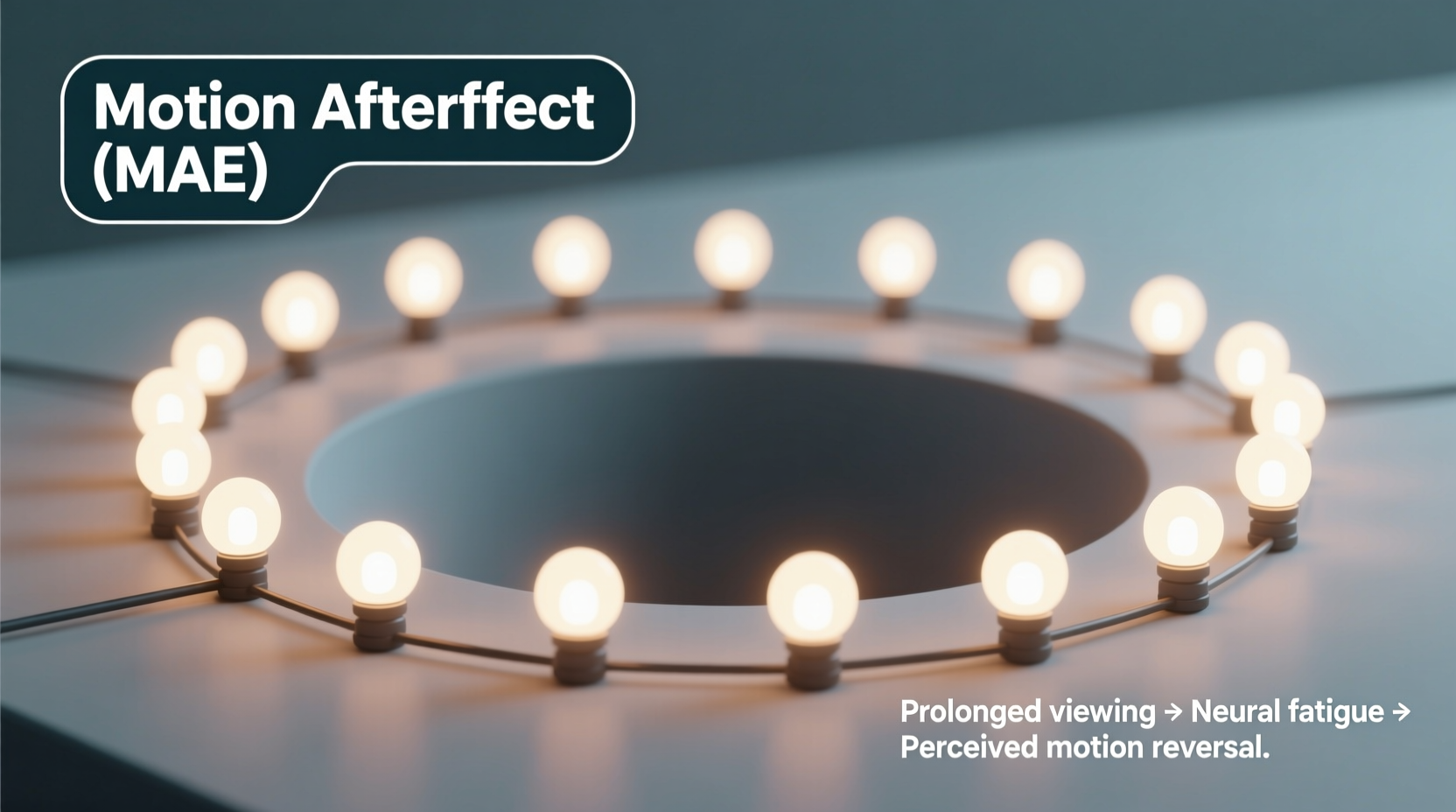
In 1912, psychologist Max Wertheimer conducted foundational experiments in Gestalt psychology that led to the discovery of what he called the \"phi phenomenon.\" Unlike actual motion, where an object moves through space and its image shifts across the retina, the phi phenomenon describes the brain's tendency to perceive continuous motion between two separate stimuli presented in quick succession at different locations.
For example, imagine two bulbs placed side by side. When the left bulb flashes, then quickly extinguishes, followed immediately by the right bulb flashing, most people report seeing a single point of light moving from left to right—even though there was no intermediate position occupied by any light source. This perceived motion is so convincing that it forms the basis for much of modern animation and cinema.
The key factor enabling this illusion is timing. If the delay between flashes is too long—more than about 200 milliseconds—the brain registers them as distinct events. But within a range of roughly 30 to 200 ms, the visual system connects the dots, interpreting the sequence as directional motion. Interestingly, the perceived direction often depends on subtle cues such as intensity, duration, or spatial arrangement, which can bias perception toward one path over another.
“Apparent motion is not a flaw in perception—it’s a feature. The brain prioritizes interpreting change over cataloging static inputs.” — Dr. Lena Torres, Cognitive Neuroscientist, MIT Perception Lab
Mechanisms in the Visual Cortex
To understand why blinking lights appear to move, we must look inside the brain. The primary visual cortex (V1) processes basic features like edges and orientation, while higher areas such as V5 (also known as MT, or middle temporal area) specialize in detecting motion. Neurons in V5 respond selectively to objects moving in specific directions. Remarkably, these same neurons fire during apparent motion illusions, just as they would during real movement.
This neural response suggests that the brain does not always distinguish between physical motion and perceptual inference. When sequential lights activate retinal receptors in a spatiotemporal pattern consistent with motion, downstream circuits interpret it accordingly. In essence, the brain fills in the gaps using predictive modeling—a survival mechanism evolved to detect predators or prey even under partial visibility.
Moreover, lateral inhibition plays a role. When one region of the retina is stimulated, surrounding areas are suppressed, enhancing contrast and edge detection. This sharpening effect helps create clean transitions between illuminated points, making the jump from one light to the next feel smooth rather than jarring.
Why the Perceived Direction Is Often One-Way
One of the most intriguing aspects of this illusion is its unidirectionality. Even when lights alternate symmetrically—say, A-B-A-B—you’re more likely to perceive motion from A to B than back again. Several factors contribute to this directional bias:
- Temporal Asymmetry: Small differences in onset time, brightness, or duration can influence perceived direction. A slightly brighter or faster-activating light tends to be seen as the “source” of motion.
- Neural Adaptation: Prolonged exposure to repeated patterns trains the visual system to anticipate flow in one direction, reinforcing that interpretation.
- Cognitive Priming: Context matters. On roads, for instance, rotating beacons on ambulances typically simulate forward rotation, aligning with expectations of vehicle movement.
- Spatial Grouping: Lights arranged in a line naturally suggest progression along that axis, especially if spacing increases slightly in one direction, mimicking perspective.
A classic example is the \"running lights\" on emergency vehicles. These use precisely timed sequences to simulate clockwise or counterclockwise rotation, tricking observers into perceiving motion even when stationary. Studies show that people consistently interpret these patterns based on cultural conventions—for example, U.S. drivers expect hazard lights to rotate outward from the center, matching standard turn-signal behavior.
Applications in Design and Technology
The principles behind directional light illusions are widely applied beyond psychology labs. Engineers and designers harness apparent motion to communicate information efficiently and safely.
| Application | Use of Illusion | Benefit |
|---|---|---|
| Traffic Signals | Sequential arrows in turn lanes simulate forward movement | Improves driver reaction time and compliance |
| Digital Displays | LED tickers and scrolling text rely on phi phenomenon | Creates seamless motion without mechanical parts |
| Aviation Warning Systems | Anti-collision beacons pulse in rhythmic sequences | Enhances aircraft visibility at night |
| Entertainment Lighting | Stage effects use chasing LEDs to simulate energy flow | Adds dynamic visual interest without moving fixtures |
In user interface design, loading spinners and progress indicators often exploit this illusion. A circular array of dots that brighten sequentially creates the impression of rotation, signaling activity even when nothing tangible is changing. Because the brain interprets this as ongoing process, users perceive shorter wait times—an effect known as subjective time compression.
Step-by-Step: How to Create the Illusion Yourself
You can observe and experiment with this illusion using simple materials. Here’s how to set up your own demonstration:
- Gather Equipment: Use three or more small LED bulbs connected to a programmable controller (like an Arduino), or simply use a smartphone app designed for light sequencing.
- Arrange Lights Linearly: Place the bulbs in a straight line, spaced evenly (e.g., 10 cm apart).
- Set Timing Interval: Program each light to illuminate for 100 ms, with a 50 ms gap between activations.
- Test Bidirectional Sequence: Run the lights forward (left to right), then reverse (right to left). Observe whether one direction feels more natural.
- Introduce Bias: Slightly increase the brightness of the starting bulb or shorten its delay. Note how this influences perceived origin of motion.
- Observe in Darkness: Conduct trials in a dim room to minimize competing visual input.
Most participants will report stronger continuity in one direction, particularly if timing or luminance favors it. Repeating the test with others can reveal individual variability—some people are more susceptible to the illusion than others, depending on attentional focus and prior experience.
Mini Case Study: The Times Square Billboard Effect
In New York City’s Times Square, massive digital billboards use thousands of tightly packed LEDs to display animated advertisements. Despite being composed entirely of static pixels that switch on and off, viewers perceive fluid motion—cars speeding, dancers spinning, logos expanding.
In 2019, researchers from NYU’s Vision Lab studied pedestrian responses to two versions of the same ad: one with true video footage, the other with artificially generated frames relying solely on apparent motion. They found no significant difference in engagement metrics—dwell time, recall, emotional response—between the two formats. This confirmed that the brain treats illusory motion as functionally equivalent to real motion in high-level cognitive processing.
Further analysis showed that ads using directional sequences (e.g., lights sweeping upward) were remembered 27% more often than those with random activation patterns. The conclusion? Directional coherence enhances memorability, proving that the phi phenomenon isn't just perceptual trivia—it's a powerful tool in visual communication.
Common Misconceptions About the Illusion
Despite its prevalence, several myths persist about why blinking lights seem to move:
- Myth: It’s caused by eye movements.
Reality: Eye tracking studies confirm that saccades do not account for the perceived motion; the effect persists even when gaze is fixed. - Myth: Only artificial lights produce this effect.
Reality: Natural phenomena like lightning storms or fireflies can trigger similar perceptions under the right conditions. - Myth: Everyone sees the same direction.
Reality: Cultural exposure, handedness, and even language structure (e.g., reading direction) can influence directional bias.
Frequently Asked Questions
Can this illusion occur with colors?
Yes. Sequences of differently colored lights can also generate apparent motion. However, large color contrasts may weaken the effect because the brain treats hue changes as object substitution rather than movement. Best results come from similar hues with varying brightness.
Is this related to the wagon-wheel effect in videos?
Partially. Both involve temporal sampling errors, but they differ mechanistically. The wagon-wheel effect arises from stroboscopic sampling in cameras (aliasing), whereas blinking-light motion occurs in biological vision systems without recording devices. Still, both demonstrate how discrete sampling distorts continuous reality.
Are some people immune to this illusion?
True immunity is rare, but susceptibility varies. Individuals with certain neurological conditions, such as akinetopsia (motion blindness), cannot perceive either real or apparent motion. Others with high attentional control may recognize the illusion consciously but still experience it perceptually.
Practical Tips for Utilizing the Illusion
- Use odd numbers of lights to avoid symmetry, which can cause ambiguous reversals.
- Anchor the sequence with a slightly longer initial flash to establish direction.
- Pair the lights with sound cues (clicks or tones) to reinforce the sense of progression via multisensory integration.
- Avoid overcrowding; excessive density reduces contrast and blurs transitions.
Checklist: Building an Effective Directional Light Display
- ✅ Define the intended direction of perceived motion
- ✅ Choose appropriate spacing (minimum 5° of visual angle apart)
- ✅ Set optimal timing (50–150 ms interval)
- ✅ Test luminance consistency across all units
- ✅ Eliminate ambient distractions (use dark environment)
- ✅ Validate perception with multiple observers
- ✅ Adjust for dominance bias (e.g., favor rightward flow for English readers)
Conclusion: Seeing Beyond the Surface
The illusion of moving blinking lights is far more than a curiosity—it’s a window into how the mind constructs reality. By stitching together fragmented sensory data into coherent narratives, the brain allows us to navigate a complex world efficiently. Yet this same efficiency introduces vulnerabilities to misinterpretation, which artists, engineers, and advertisers skillfully exploit.
Understanding this phenomenon empowers better design choices, improves visual safety systems, and deepens appreciation for the hidden architecture of perception. Whether you're programming LED art, designing signage, or simply marveling at city lights, recognizing the science behind apparent motion transforms passive observation into active insight.




 浙公网安备
33010002000092号
浙公网安备
33010002000092号 浙B2-20120091-4
Comments
No comments yet. Why don't you start the discussion?