
Carpenter bees are a common sight in gardens, backyards, and near wooden structures across North America and other temperate regions. Often mistaken for bumblebees, these solitary insects display a curious habit: hovering. You might notice them circling the same spot near your deck, eaves, or fence, darting forward and retreating with mechanical precision. While this behavior can seem aggressive or alarming, it’s usually part of their natural mating and territorial routines. Understanding why carpenter bees hover provides insight into their biology, reduces unnecessary fear, and helps homeowners make informed decisions about coexistence or control.
The Science Behind Hovering: Mating and Territory
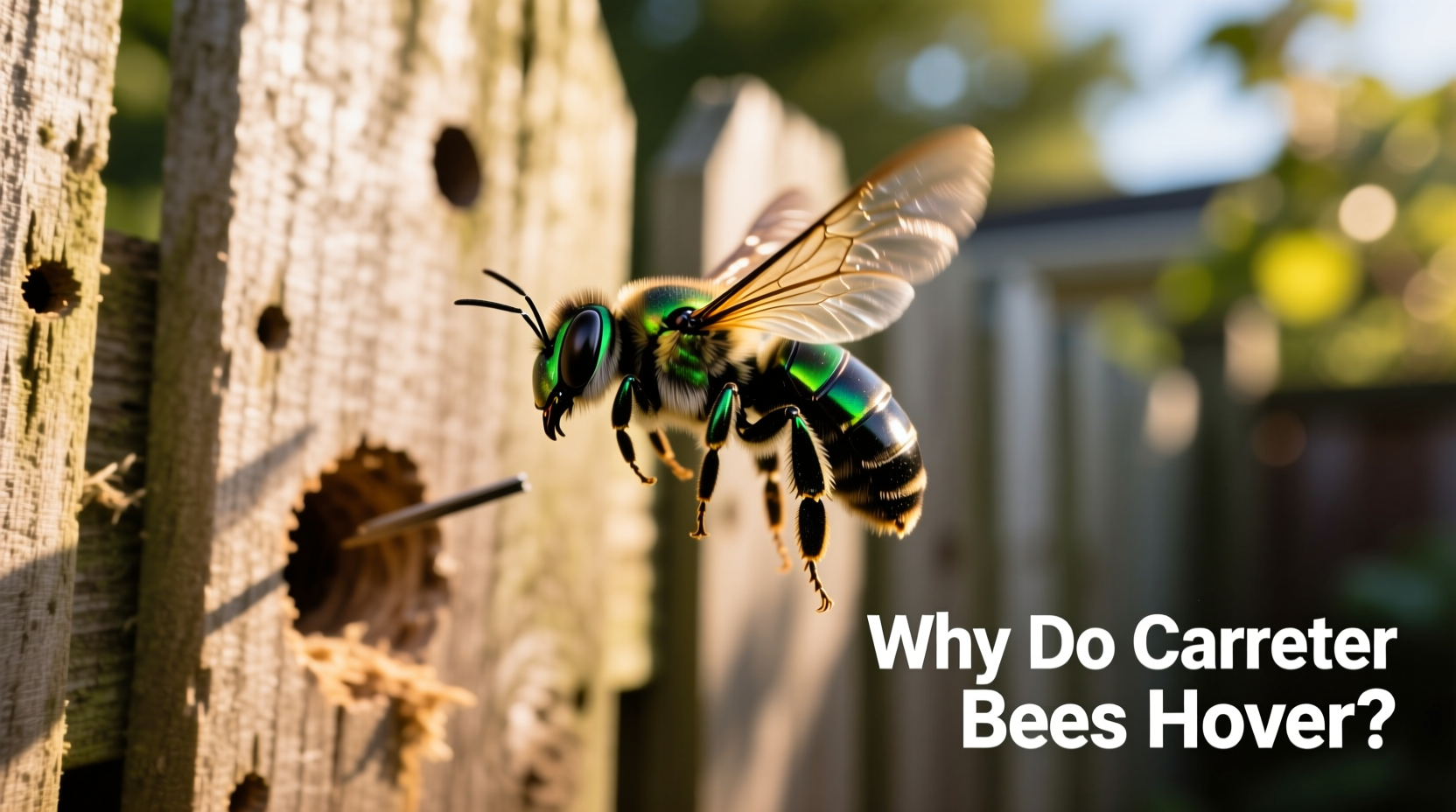
Carpenter bees (genus Xylocopa) are named for their ability to excavate tunnels in wood to lay eggs. Unlike termites or carpenter ants, they don’t consume the wood—they use it as nesting material. Male carpenter bees are the primary hoverers, and their flight patterns serve two key purposes: attracting mates and defending territory.
During spring and early summer, male carpenter bees establish small aerial territories near potential nesting sites—often wooden beams, decks, or unpainted softwoods. They patrol these zones by flying in repetitive loops or figure-eight patterns, pausing mid-air to hover. This behavior is driven by instinct: males seek to intercept passing females for mating while warding off rival males.
Hovering allows them to remain highly visible and responsive. Their large eyes give them excellent vision, enabling them to detect movement from several feet away. When another insect enters their zone, they quickly dart toward it, often making intimidating but harmless passes. Despite their aggressive-looking flights, male carpenter bees cannot sting. They rely on bluff rather than venom to protect their turf.
Distinguishing Carpenter Bees from Other Insects
Misidentification leads to unnecessary panic and misguided pest control. Carpenter bees are frequently confused with bumblebees, but key physical and behavioral differences exist.
| Feature | Carpenter Bee | Bumblebee |
|---|---|---|
| Abdomen | Smooth, shiny, mostly hairless (black or metallic blue) | Fuzzy, covered in yellow and black hairs |
| Nesting | Borrows into wood; creates individual nest tunnels | Uses existing cavities (e.g., rodent burrows, grass clumps) |
| Stinging Ability | Male: no stinger; Female: can sting but rarely does | Both sexes can sting when provoked |
| Flight Behavior | Hovering, darting, territorial patrols | Direct flight between flowers; non-aggressive in air |
| Social Structure | Solitary (though females may nest near each other) | Highly social, lives in colonies |
Understanding these distinctions helps prevent mislabeling beneficial pollinators as threats. Carpenter bees play a vital role in pollinating many native plants and crops like eggplants and passionflowers through a method called “buzz pollination,” where they vibrate flowers to release pollen.
When Hovering Signals Nesting Activity
While males hover to claim territory, female carpenter bees are busy drilling holes. These perfectly round, pencil-sized entrances (about 1/2 inch in diameter) are typically found on untreated, weathered wood such as porch ceilings, railings, and window frames. Sawdust-like frass often accumulates beneath the hole—a telltale sign of active excavation.
The female doesn’t hover like the male but may be seen landing at the nest entrance, backing into the tunnel with a load of pollen, or emerging to gather more. Her presence near a hovering male indicates that the territory contains a viable nesting site, reinforcing his defensive behavior.
Over time, repeated nesting in the same area can lead to structural concerns, especially if multiple generations reuse and expand tunnels. However, significant damage usually takes years and is rare in well-maintained homes.
“Carpenter bees are among our most efficient native pollinators. Their hovering isn’t aggression—it’s courtship and competition, much like songbirds singing from fence posts.” — Dr. Lydia Chen, Entomologist, University of California Agriculture & Natural Resources
How to Respond: Prevention and Coexistence Strategies
If carpenter bees are hovering near your home, consider whether intervention is truly needed. In most cases, their presence is temporary and ecologically beneficial. However, if you're concerned about wood damage or have frequent nesting activity, take proactive steps without resorting to broad-spectrum pesticides.
Step-by-Step Guide to Minimize Carpenter Bee Activity
- Inspect Wooden Structures Annually: Look for fresh holes or sawdust, especially in spring. Early detection prevents tunnel expansion.
- Paint or Seal Exposed Wood: Carpenter bees prefer bare, softwoods. Painting or staining surfaces makes them less attractive for nesting.
- Fill Existing Holes: After confirming a nest is inactive (typically late fall), plug holes with wood putty or dowels to deter re-use.
- Use Decoy Nests: Mount untreated blocks of wood away from your house to divert females from structural lumber.
- Install Visual Deterrents: Hanging reflective tape or fake wasp nests may discourage males from establishing territories nearby.
Real Example: A Homeowner’s Experience with Hovering Bees
In suburban Virginia, homeowner Maria Thompson noticed a large bee repeatedly diving at her as she sat on her porch each afternoon. Alarmed, she initially planned to call an exterminator. Instead, she recorded a short video and sent it to her local extension office. Experts identified it as a male carpenter bee engaged in territorial hovering near a nest in her cedar railing.
Following their advice, Maria waited until fall to fill the holes with wooden plugs after ensuring the nest was abandoned. She then painted the railing, which prevented new bees from returning the following year. The hovering stopped by mid-June once mating season ended, and she appreciated learning that the bees had been helping pollinate her garden all along.
FAQ: Common Questions About Carpenter Bee Hovering
Do carpenter bees sting when they hover near me?
No. The hovering bees are almost always males, which lack stingers. Even female carpenter bees rarely sting unless directly handled or threatened. Their hovering is a display, not an attack.
Why do carpenter bees return to the same place every year?
Females are drawn to suitable nesting sites—especially soft, unpainted wood. If previous tunnels exist, they may clean and reuse them or create new ones nearby. Preventive sealing breaks this cycle.
Are carpenter bees bad for my garden?
Quite the opposite. Carpenter bees are excellent pollinators, particularly for open-faced flowers and certain vegetables. They contribute positively to biodiversity and plant reproduction.
Conclusion: Respecting Nature’s Patterns
The hovering behavior of carpenter bees is not random or hostile—it’s a calculated dance shaped by evolution. Males patrol the air to reproduce, while females work silently to raise the next generation. Recognizing this behavior for what it is—part of a delicate ecological balance—can shift our perspective from fear to appreciation.
You don’t need to eliminate carpenter bees to protect your home. With simple preventive measures and a little patience, you can coexist with these industrious pollinators. Observe their patterns, respect their role, and intervene only when necessary. By doing so, you support both your property’s integrity and the broader health of your local ecosystem.




 浙公网安备
33010002000092号
浙公网安备
33010002000092号 浙B2-20120091-4
Comments
No comments yet. Why don't you start the discussion?