
Cats are creatures of habit, shaped by thousands of years of evolution. Their behaviors—no matter how peculiar they may seem—are rarely random. One such behavior that puzzles many cat owners is when their feline companion attempts to \"bury\" or scratch around their food bowl after eating—or even before. This isn't just a quirk; it's a deeply ingrained instinct with roots in survival, territory management, and sensory sensitivity. Understanding this behavior offers insight into your cat’s mind and can improve how you meet their needs at home.
While domesticated cats no longer face the same threats as their wild ancestors, their brains and instincts remain finely tuned to ancient survival mechanisms. Scratching near or around a food bowl mimics the act of covering scent or marking territory—behaviors critical for avoiding predators and asserting dominance in the wild. This article explores the evolutionary, psychological, and environmental factors behind this action, offering practical advice for cat owners who want to support their pets’ natural tendencies while maintaining harmony at mealtime.
The Evolutionary Roots of Food-Burying Behavior
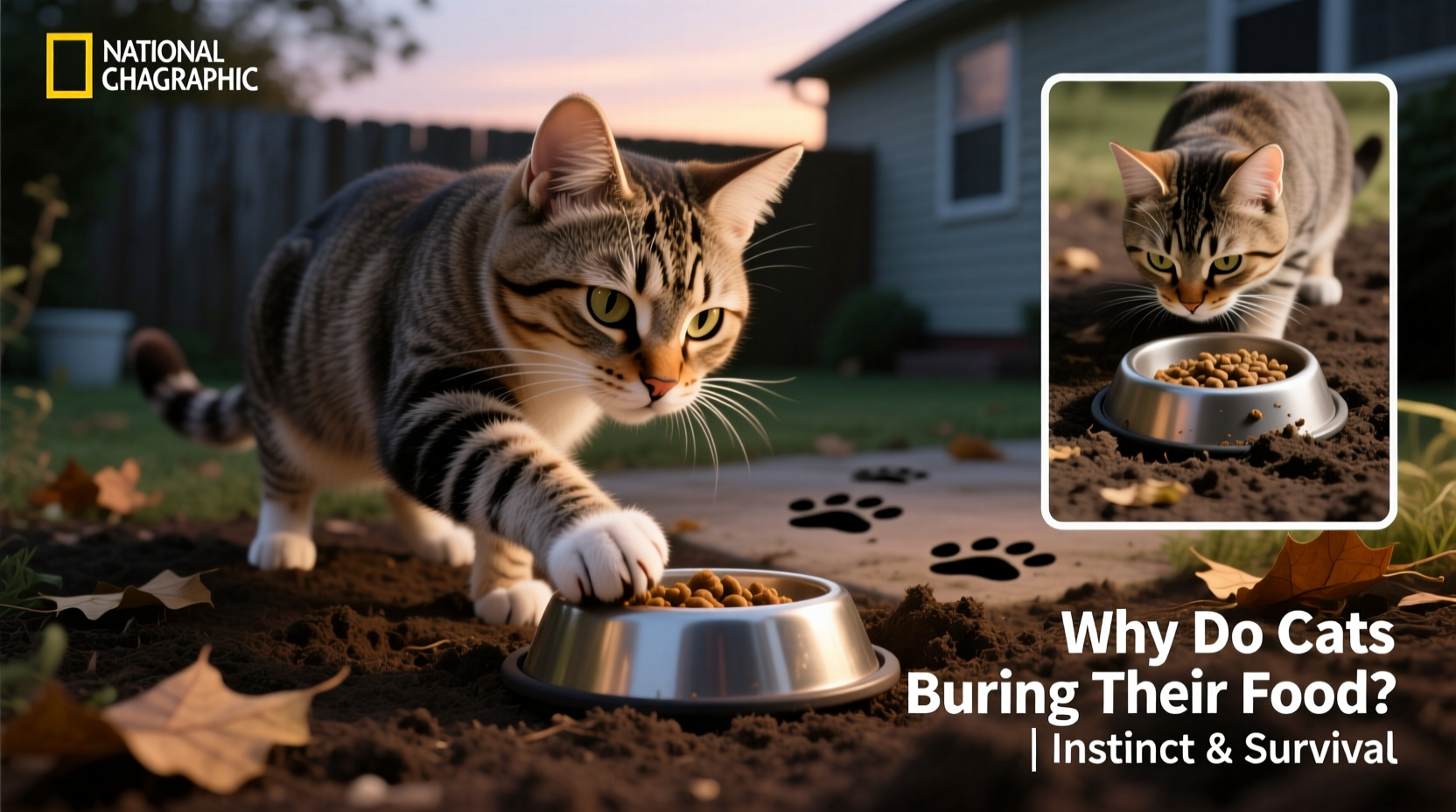
In the wild, cats are both predators and potential prey. Their survival depends on remaining undetected. Leaving behind the scent of uneaten food could attract larger predators or scavengers, putting the cat at risk. To mitigate this danger, wild felines developed the instinct to bury excess food or mask its odor by scratching nearby soil or leaves. This behavior helped conceal their presence and protect future meals from theft by other animals.
Even though domestic cats don’t need to hide their food from coyotes or eagles, the instinct persists. When your cat scratches the floor around their bowl, kicks litter (if nearby), or paws at the carpet, they’re engaging in what ethologists call a fixed action pattern—a hardwired sequence of behaviors triggered by specific stimuli, in this case, the presence of food.
This instinct is especially strong in solitary hunters like cats, who rely on stealth and resource protection. Unlike social animals such as dogs, which may guard food through direct confrontation, cats prefer subtler methods: hiding scents, minimizing leftovers, and using environmental cues to maintain control over their space.
“Even in safety, a cat’s brain operates under ancestral rules. What looks like odd behavior often reflects an adaptive strategy refined over millennia.” — Dr. Lydia Chen, Feline Behavioral Biologist, University of Edinburgh
Scent Management and Territory Control
Cats have an extraordinary sense of smell—up to 14 times more sensitive than humans. For them, the lingering aroma of food isn’t just unpleasant; it’s a signal. That scent broadcasts information to other animals: *Someone ate here. There’s food nearby.* In multi-pet households or outdoor-access environments, this can be problematic.
By scratching around their bowl, cats attempt to “cover” the smell using displacement behavior—an action performed out of context but driven by instinct. Though they can’t actually bury kibble on hardwood floors, the motion satisfies the psychological need to eliminate traces of their activity. It’s similar to how cats bury waste in litter boxes: not just for cleanliness, but to prevent territorial challenges or unwanted attention.
This behavior also doubles as a form of olfactory marking. Cats have scent glands in their paws, and each scratch deposits pheromones onto the surface. So, while appearing to reject the food area, the cat may simultaneously be claiming it as part of their domain. The conflicting signals—scratching to hide food yet leaving their own scent—highlight the complexity of feline communication.
Environmental Discomfort and Food Aversion
Not all scratching behavior stems purely from instinct. Sometimes, it’s a sign of dissatisfaction. Cats are highly sensitive to their feeding environment. Factors like bowl placement, noise levels, proximity to litter boxes, or even the type of bowl used can influence whether a cat feels safe enough to eat—and whether they try to “discard” the experience afterward.
For instance, if a food bowl is located in a high-traffic area, near loud appliances, or too close to the litter box, a cat may feel vulnerable during meals. Post-eating scratching might then serve as a stress response—an attempt to physically distance themselves from an uncomfortable situation. Similarly, some cats dislike certain bowl materials (like plastic, which can retain odors) or shapes that cause whisker fatigue.
In these cases, the scratching isn’t about burying food per se, but rather rejecting the entire feeding setup. Observing when and where the behavior occurs can help identify underlying issues.
Common Environmental Triggers
- Bowl placed near noisy appliances (vacuum, washer, dishwasher)
- Too close to the litter box (violates natural separation of eating and elimination zones)
- High foot traffic or lack of escape routes
- Use of plastic bowls that harbor bacteria or odors
- Overfilled bowls causing sensory overload
When Burying Behavior Signals Stress or Illness
While occasional scratching around the food bowl is normal, frequent or intense attempts to bury food—especially if paired with reduced appetite, vocalization, or aggression—can indicate stress or medical concerns. Dental pain, gastrointestinal discomfort, or nausea may make a cat associate the bowl with negative sensations, prompting them to avoid or “discard” it.
Anxiety-related behaviors are also common in multi-cat homes where competition exists. A subordinate cat may eat quickly and then scratch the area—not to hide food, but to erase evidence of having eaten, thus avoiding confrontation with a dominant housemate.
If your cat suddenly begins aggressively pawing at floors, walls, or furniture after meals, or refuses to finish food despite appearing hungry, consult a veterinarian. Rule out physical causes before assuming it’s purely behavioral.
Mini Case Study: Luna the Anxious Tabby
Luna, a 3-year-old domestic shorthair, lived in a two-cat household with a confident Maine Coon named Max. Her owner noticed she would eat only a few bites, then frantically scratch the corner of the rug near her bowl—even though no litter was present. Initially dismissed as quirky behavior, it escalated to complete food avoidance.
After a veterinary checkup ruled out illness, a feline behaviorist observed the feeding routine. It became clear that Max loitered nearby during mealtimes, staring intently at Luna. This subtle intimidation caused her stress. The solution? Feeding the cats in separate rooms at staggered times. Within days, Luna stopped scratching and began eating normally. Her behavior wasn’t about burying food—it was about erasing traces of her presence to stay safe.
How to Respond: Practical Steps for Cat Owners
Understanding the cause behind your cat’s food-burying behavior allows you to respond appropriately—whether by honoring their instincts or adjusting their environment. Below is a step-by-step guide to assessing and addressing the behavior.
Step-by-Step Guide to Managing Food-Burying Behavior
- Observe the timing and intensity. Is the scratching brief and ritualistic, or frantic and prolonged? Note any patterns related to specific meals or locations.
- Check for medical issues. Schedule a vet visit if appetite changes accompany the behavior.
- Evaluate feeding location. Ensure the bowl is in a quiet, low-traffic area, away from the litter box and loud devices.
- Switch bowl types. Use stainless steel or ceramic bowls with wide openings to prevent whisker stress.
- Provide separation in multi-cat homes. Feed cats in different rooms to reduce competition and anxiety.
- Respect the ritual. Allow space for scratching if it doesn’t damage property. Place a rug or mat under the bowl zone.
- Avoid punishment. Never scold your cat for instinctive behavior—it increases stress and damages trust.
Do’s and Don’ts: Managing Your Cat’s Feeding Environment
| Do’s | Don’ts |
|---|---|
| Place food bowls in quiet, secure areas | Put food next to the litter box |
| Use wide, shallow bowls made of non-porous materials | Use deep plastic bowls that trap odors |
| Feed multiple cats in separate spaces | Force cats to eat side-by-side if tension exists |
| Clean bowls daily with unscented soap | Allow old food residue to build up |
| Provide mental stimulation with puzzle feeders | Ignore signs of food aversion or stress |
Frequently Asked Questions
Is it normal for my cat to scratch the floor after eating?
Yes, it’s completely normal. Most cats exhibit some form of post-meal scratching, rooted in ancestral instincts to hide food scent and mark territory. As long as the behavior isn’t excessive or destructive, it’s typically nothing to worry about.
Why does my cat scratch the wall or couch after eating?
If floor space is limited or the surface feels unsatisfying, cats may redirect their scratching to nearby vertical surfaces like walls or furniture. This is still part of the same instinctual sequence. Providing an appropriate scratching post nearby can help redirect the behavior.
Should I stop my cat from trying to bury their food bowl?
No—you shouldn’t punish or discourage this natural behavior. Instead, accommodate it by placing a durable mat under the feeding area or choosing scratch-friendly flooring. Forcing suppression can increase stress and lead to other behavioral issues.
Conclusion: Honoring Instinct While Supporting Well-Being
Cats don’t act without reason. When your cat buries their food bowl, they’re not being finicky or defiant—they’re responding to ancient instincts shaped by survival. Whether masking scent, managing territory, or reacting to environmental stress, their actions communicate needs that thoughtful owners can learn to understand.
By creating a calm, respectful feeding environment and observing your cat’s behavior with empathy, you bridge the gap between wild ancestry and modern living. These small adjustments don’t just reduce unwanted habits—they deepen the bond between you and your pet.




 浙公网安备
33010002000092号
浙公网安备
33010002000092号 浙B2-20120091-4
Comments
No comments yet. Why don't you start the discussion?