
Cats are creatures of habit—yet they often surprise their owners by suddenly abandoning a favorite napping spot in favor of a new one. One day, your cat is curled up on the windowsill; the next, they’re sprawled across your laptop keyboard. While this behavior may seem random or whimsical, there’s usually a logical explanation behind it. Understanding why cats change sleeping spots reveals insights into their instincts, physical needs, and emotional state.
Sleeping is a core part of feline life—cats spend 12 to 16 hours a day resting, with much of that time in light dozing or deep sleep. Where they choose to sleep isn’t just about comfort—it’s tied to survival instincts, temperature regulation, safety perception, and even social dynamics within the household. By observing these shifts, pet owners can better support their cat’s well-being.
The Instinctual Drive Behind Sleep Spot Rotation
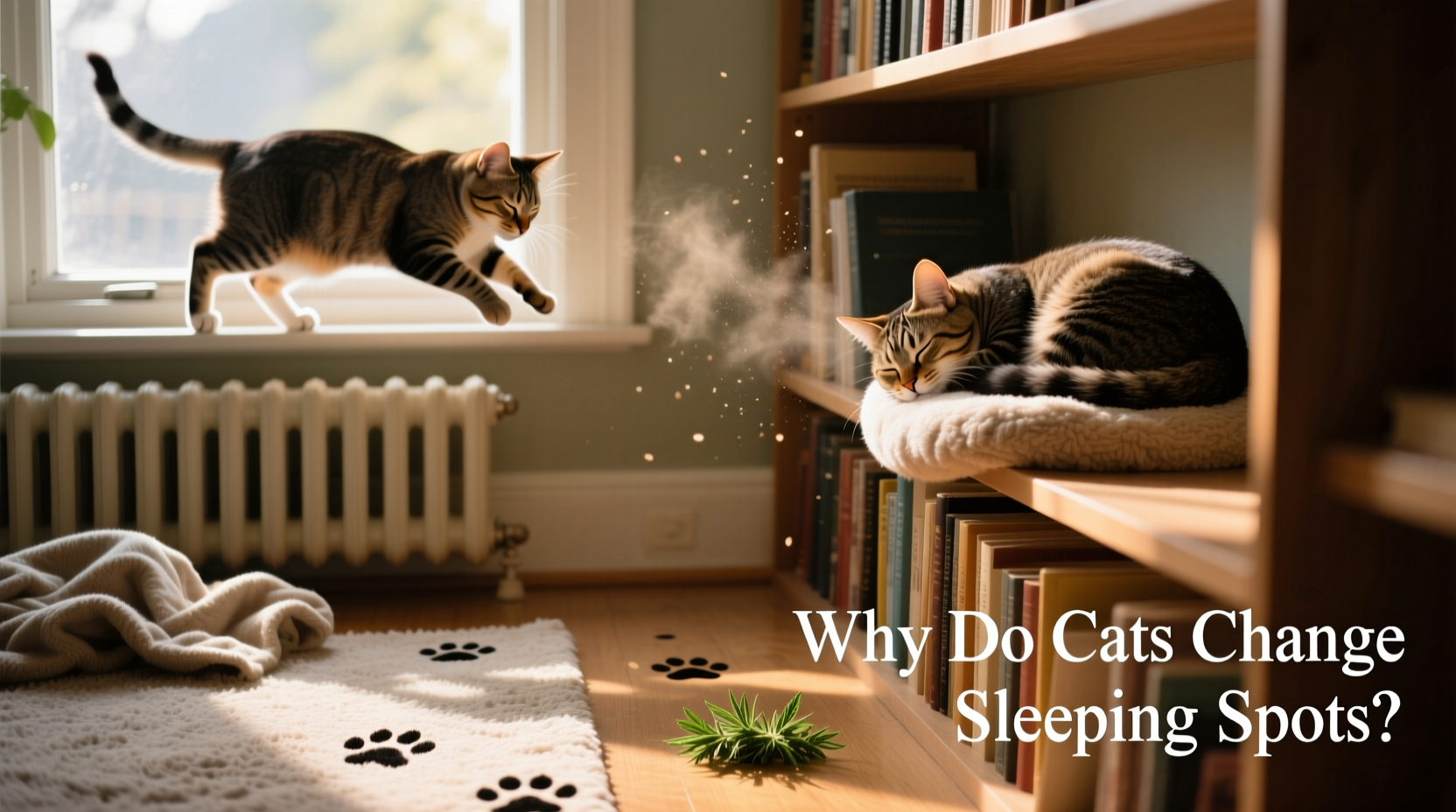
In the wild, cats avoid staying in one place too long. Remaining in a single location increases vulnerability to predators and reduces opportunities to monitor territory. Even domesticated cats retain this instinct. Changing sleeping spots allows them to stay alert, maintain situational awareness, and feel in control of their environment.
This behavior also helps prevent parasites or odors from accumulating in one area—something that would make a wild cat more detectable. While modern indoor cats don’t face the same threats, their brains still operate under evolutionary programming. A sudden move from the sofa to the top of a bookshelf might not be boredom—it could be an unconscious effort to “rotate dens” for safety.
“Cats are hardwired to seek out secure, elevated, and thermally optimal locations. Frequent changes in sleeping areas are normal and often reflect healthy environmental scanning.” — Dr. Lena Reyes, Feline Behavior Specialist
Environmental Factors Influencing Sleep Location
Temperature plays a major role in where a cat chooses to sleep. Cats prefer ambient temperatures between 86°F and 97°F (30–36°C). As seasons change, so do their preferred spots:
- Cool months: Cats gravitate toward radiators, sunny floors, or near heating vents.
- Warm months: They seek out tile floors, basements, or shaded corners away from direct sunlight.
Noise and foot traffic also affect decisions. A once-favorite armchair may be abandoned if it’s now in a high-traffic hallway or near a noisy appliance. Similarly, construction, visitors, or new pets can shift a cat’s sense of security, prompting relocation to quieter zones like closets or under beds.
Emotional and Social Triggers for Spot Changes
Cats are sensitive to emotional cues in the home. A change in sleeping location can signal stress, anxiety, or attempts to assert dominance—or conversely, to retreat from conflict.
For example, if a new pet joins the household, a cat may abandon shared spaces and choose isolated areas to regain a sense of control. Alternatively, they might start sleeping on your pillow or clothing to absorb your scent, which provides comfort during periods of change.
In multi-cat homes, sleeping spot shifts can reflect hierarchy. A dominant cat may displace another from a prime location, forcing the subordinate cat to find alternatives. This isn’t always aggressive—it’s often subtle territorial reorganization.
Real Example: The Case of Two Cats and the Sunlit Couch
Maria noticed her older cat, Milo, stopped sleeping on the living room couch—a spot he’d claimed for years. Instead, he began hiding under the bed. After some observation, Maria realized her newly adopted kitten, Luna, had started napping on the couch daily. Though the two cats got along, Milo felt his space was being encroached upon. By adding a heated cat bed in a quiet corner and placing it in direct sunlight, Maria gave Milo a new “premium” option. He gradually shifted to the new spot, relaxed, and resumed normal behavior.
This illustrates how subtle social dynamics influence sleep choices—and how thoughtful adjustments can restore balance.
Health and Comfort Considerations
Sudden or frequent changes in sleeping behavior can sometimes indicate underlying health issues. Arthritis, for instance, may make jumping onto a favorite perch painful, leading a cat to choose lower, softer surfaces. Dental pain or respiratory infections can make it uncomfortable to rest the head down, resulting in unusual postures or locations.
Additionally, cognitive decline in senior cats (feline cognitive dysfunction) can cause confusion, leading them to sleep in odd places like bathrooms or laundry rooms—areas they previously avoided.
| Behavior | Possible Cause | Action Step |
|---|---|---|
| Sleeps in cold, hard places (e.g., tile) | Overheating or joint pain | Provide cooling mats or orthopedic beds |
| Avoids high furniture | Arthritis or mobility issues | Add ramps or lower perches |
| New preference for hidden spots | Stress or illness | Monitor for other symptoms; consult vet |
| Restless sleep, frequent shifting | Pain or anxiety | Evaluate environment and health |
Practical Checklist: Supporting Healthy Sleep Habits
To help your cat feel secure and comfortable in their sleeping choices, follow this actionable checklist:
- Provide multiple sleeping options in different locations (high, low, warm, cool).
- Ensure each spot is quiet, safe from drafts, and free from sudden disturbances.
- Rotate bedding materials seasonally (e.g., fleece in winter, bamboo in summer).
- Introduce new pets or people gradually to minimize territorial stress.
- Observe patterns—note when and why shifts occur to identify triggers.
- Keep litter boxes, food, and water away from sleeping zones (cats avoid areas associated with waste).
- Use pheromone diffusers (like Feliway) in high-stress environments to promote calm.
Frequently Asked Questions
Is it normal for my cat to change sleeping spots every few days?
Yes, it’s completely normal. Cats naturally rotate locations based on temperature, mood, and environmental stimuli. As long as the behavior isn’t accompanied by signs of distress or illness, frequent changes are a sign of a healthy, adaptive animal.
Why does my cat sleep in weird places like cardboard boxes or empty sinks?
Boxes provide enclosed, secure spaces that mimic den-like safety. Sinks and bathtubs are often cool, smooth surfaces made of porcelain, which retains heat or cold—making them ideal for temperature regulation. These spots also offer novelty and sensory interest.
Should I force my cat to sleep in a specific bed I bought for them?
No. Cats are highly selective about where they rest. Forcing them into a bed can create negative associations. Instead, place the bed in a desirable location (near a window, on a warm floor), add familiar-smelling blankets, and let them approach it voluntarily.
Conclusion: What Your Cat’s Sleep Choices Reveal
A cat’s choice of sleeping spot is far more than a quirky habit—it’s a window into their physical comfort, emotional state, and instinctual needs. By paying attention to where and when your cat sleeps, you gain valuable insight into their overall well-being. Whether they're chasing sunbeams, avoiding noise, or responding to social changes, each shift tells a story.
Rather than trying to control their preferences, focus on creating a flexible, enriched environment that supports their natural behaviors. Offer variety, monitor for abrupt changes, and respond with empathy and care.




 浙公网安备
33010002000092号
浙公网安备
33010002000092号 浙B2-20120091-4
Comments
No comments yet. Why don't you start the discussion?