
Cats are known for their unpredictable behavior—especially around holiday decorations. One moment they’re napping in a sunbeam, the next they’re launching themselves at a strand of tinsel like it’s the most thrilling prey they’ve ever encountered. This obsession isn’t just amusing—it can be deadly. Tinsel, with its shimmering strands and unpredictable movement, taps directly into a cat’s primal instincts. But while the attraction may be natural, the consequences of ingestion are severe and often require emergency veterinary care.
This article explores the behavioral and biological reasons behind cats’ fascination with tinsel, examines the real dangers of ingestion, and provides practical steps to protect your pet during festive seasons.
The Science Behind the Sparkle: Why Cats Love Tinsel
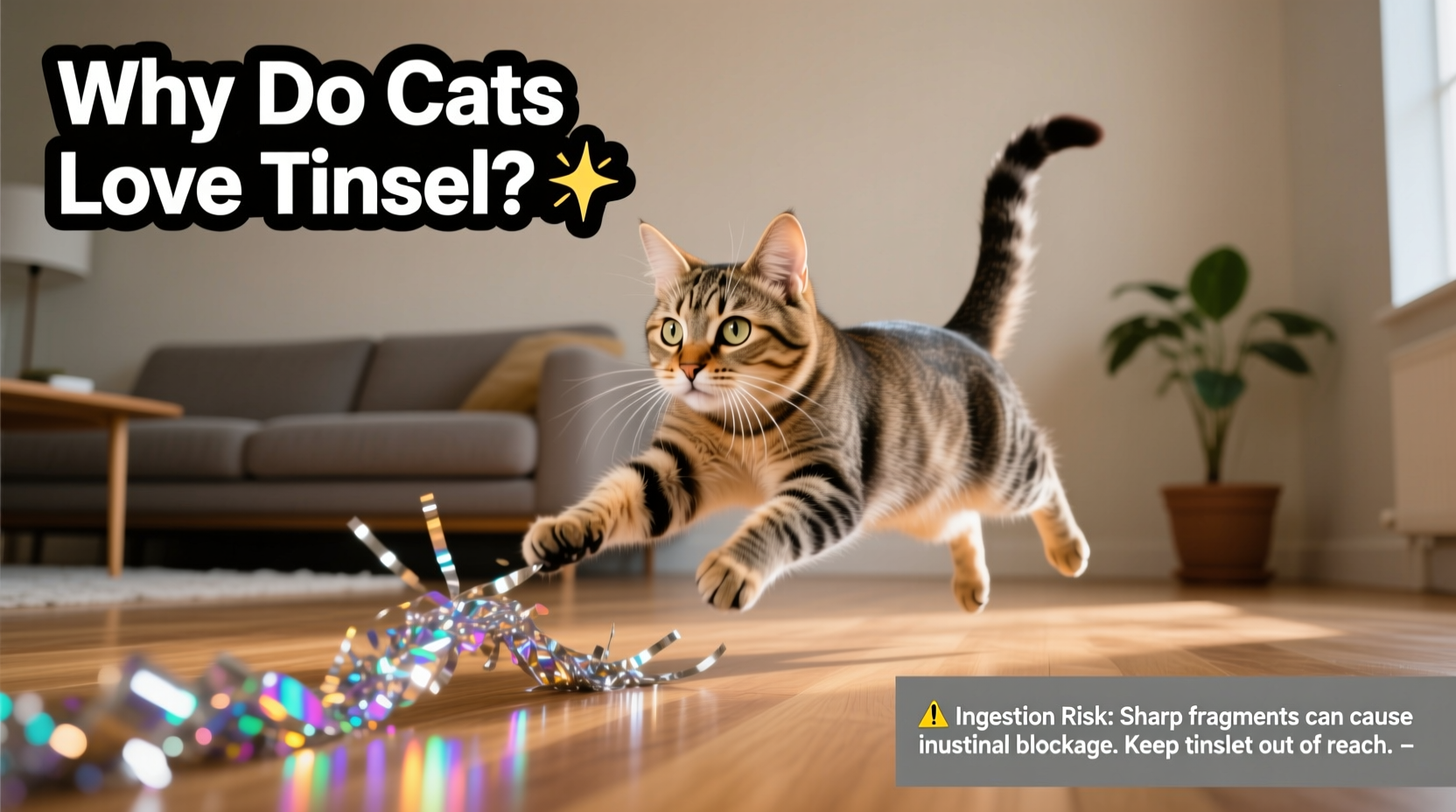
Cats are hardwired to respond to motion, texture, and light. Tinsel checks all three boxes. Its reflective surface catches even the smallest glint of light, creating flickering patterns that mimic the movement of insects or small prey. When suspended from a tree or banister, tinsel sways with air currents, triggering a cat’s predatory reflexes. Even a slight breeze can send it dancing—making it nearly impossible for a curious cat to resist.
Dr. Lena Torres, a feline behavior specialist at the National Animal Wellness Institute, explains: “Cats don’t perceive tinsel as decoration. They see it as erratic, fast-moving stimuli that resemble fleeing prey. The way it reflects light and moves unpredictably activates the same neural pathways used during hunting.”
In addition to visual stimulation, tinsel offers tactile appeal. Many types have a smooth, slippery texture that slides through paws and teeth in an intriguing way. Some cats enjoy batting it around, while others chew on it out of curiosity. Unfortunately, this seemingly harmless play can quickly turn dangerous.
“Tinsel is essentially a linear foreign body—a category of items that pose one of the highest risks for intestinal obstruction in cats.” — Dr. Mark Renner, Veterinary Surgeon, American College of Veterinary Surgeons
The Hidden Danger: What Happens When a Cat Eats Tinsel?
Unlike small, round objects that might pass through the digestive tract, tinsel is long, thin, and fibrous. When ingested, it can become anchored—often by the stomach or lodged under the tongue—and trail through the intestines. As the intestines contract to move food along, the fixed end of the tinsel causes the tissue to bunch up against it. This creates a \"sawing effect,\" where the sharp edges of the tinsel cut into the intestinal wall, leading to perforation, infection, and potentially fatal peritonitis.
Symptoms of tinsel ingestion typically appear within 1–3 days and include:
- Lethargy
- Vomiting (sometimes with no visible cause)
- Loss of appetite
- Abdominal pain or distension
- Dehydration
- Straining to defecate or absence of feces
If left untreated, intestinal blockage from linear foreign bodies like tinsel can lead to sepsis and death within days. Surgery is almost always required to remove the tinsel and repair any damage. Recovery can take weeks and cost hundreds or even thousands of dollars in veterinary bills.
Real-Life Risk: A Case Study in Feline Tinsel Ingestion
In December 2022, a 3-year-old domestic shorthair named Milo in Portland, Oregon, began acting unusually lethargic after several days of playful interaction with a Christmas tree. His owner noticed he wasn’t eating and had vomited twice. Initially, she assumed it was a mild stomach bug. However, when Milo collapsed near his litter box and refused water, she rushed him to an emergency clinic.
X-rays revealed a linear obstruction stretching from his stomach to the mid-intestine. Surgeons extracted over 18 inches of metallic tinsel that had caused multiple perforations. Milo required a five-day hospital stay, including IV fluids, antibiotics, and pain management. The total cost exceeded $3,200. Fortunately, he made a full recovery—but his owners removed all tinsel from their home permanently.
Milo’s case is not unique. According to the ASPCA Animal Poison Control Center, calls related to tinsel ingestion spike every December, with dozens of documented cases annually across the U.S. Many go unreported because symptoms are mistaken for less serious conditions.
Prevention Checklist: Keeping Your Cat Safe During the Holidays
You don’t need to eliminate holiday cheer to keep your cat safe. With thoughtful planning, you can maintain festive decor while minimizing risk. Follow this checklist to reduce temptation and exposure:
- Replace tinsel with pet-safe alternatives: Use paper chains, felt ornaments, or wooden decorations instead.
- Secure the tree base: Anchor your Christmas tree to a wall or ceiling to prevent tipping if your cat climbs it.
- Elevate fragile or hazardous decorations: Keep tinsel, glass balls, and small ornaments above the top third of the tree.
- Use deterrents: Apply pet-safe bitter sprays to tree trunks and lower branches.
- Provide distractions: Offer interactive toys, puzzle feeders, or cat trees near the living area to redirect attention.
- Supervise tree time: Limit unsupervised access to decorated areas, especially during peak play hours.
- Inspect daily: Check for loose strands, fallen ornaments, or chewed wires each morning.
Do’s and Don’ts of Holiday Decor Around Cats
| Do | Don’t |
|---|---|
| Use LED lights (cooler and safer than incandescent) | Leave electrical cords exposed or dangling |
| Choose lightweight, break-resistant ornaments | Hang tinsel, ribbon, or yarn garlands within reach |
| Place treats or toys away from the tree | Use toxic plants like poinsettia, holly, or mistletoe |
| Store spare decorations in sealed plastic bins | Assume your cat will “leave it alone” based on past behavior |
| Monitor your cat’s behavior around new decor | Wait until symptoms appear to act—prevention is key |
What to Do If You Suspect Tinsel Ingestion
Time is critical when a cat has swallowed tinsel. Follow this step-by-step guide to ensure the best possible outcome:
- Stay calm but act quickly. Panic won’t help your cat. Focus on getting them to safety.
- Do not induce vomiting. Unlike some toxins, tinsel can cause more harm if regurgitated due to its length and anchoring potential.
- Do not pull any visible strands. If tinsel is protruding from the mouth or anus, pulling it could tear internal tissues.
- Contact your veterinarian immediately. Describe the situation, including how much tinsel was accessible and when your cat was last seen playing with it.
- Prepare for transport. Place your cat in a secure carrier. Avoid feeding or giving water in case surgery is needed.
- Follow veterinary instructions. You may be directed to an emergency clinic for imaging (X-rays or ultrasound) and possible surgical intervention.
- Follow post-op care closely. After surgery, your cat will need rest, medication, and monitoring for signs of infection or complications.
Early intervention drastically improves survival rates. Studies show that cats treated within 24–48 hours of ingestion have a 90%+ chance of full recovery, compared to less than 50% when treatment is delayed beyond 72 hours.
Frequently Asked Questions
Can small amounts of tinsel still be dangerous?
Yes. Even a short strand—just a few inches long—can become anchored and cause a linear obstruction. There is no “safe” amount of tinsel for a cat to ingest.
Are certain cats more at risk?
Kittens and young adult cats are most prone due to their high curiosity and playfulness. However, any cat, regardless of age or temperament, can ingest tinsel if given the opportunity.
Is fake tinsel safer than real tinsel?
No. Both traditional metallic tinsel and modern plastic versions pose the same mechanical risk. While older lead-based tinsel carried additional toxicity concerns, today’s materials are primarily dangerous due to physical obstruction, not chemical composition.
Conclusion: Celebrate Safely, Protect Your Pet
The joy of the holiday season should include every member of the family—even the four-legged ones. Understanding why cats are drawn to tinsel is the first step in protecting them. Their fascination is rooted in instinct, not mischief. The responsibility lies with us to create an environment where curiosity doesn’t come at a life-threatening cost.
By replacing hazardous decorations, supervising interactions, and acting swiftly in emergencies, you can preserve both the spirit of the season and the health of your beloved companion. Make this year the one where you choose celebration without compromise.




 浙公网安备
33010002000092号
浙公网安备
33010002000092号 浙B2-20120091-4
Comments
No comments yet. Why don't you start the discussion?