
Cats are meticulous creatures, and their grooming habits go far beyond mere cleanliness. One of the most common yet puzzling behaviors cat owners observe is their pet immediately licking or biting at the spot where they were just petted. This isn’t a sign of dislike or discomfort—it’s deeply rooted in instinct, communication, and self-regulation. Understanding why cats engage in this behavior reveals much about their evolutionary past, sensory perception, and emotional responses.
While it may seem odd to humans—especially when you’ve just given your cat affectionate attention—this reaction is entirely natural. From scent masking to stress regulation, post-petting grooming serves multiple biological and psychological functions. By examining these instincts through the lens of feline behavior science, we gain deeper insight into how cats interpret touch, manage stimuli, and maintain control over their environment.
The Role of Scent in Feline Communication
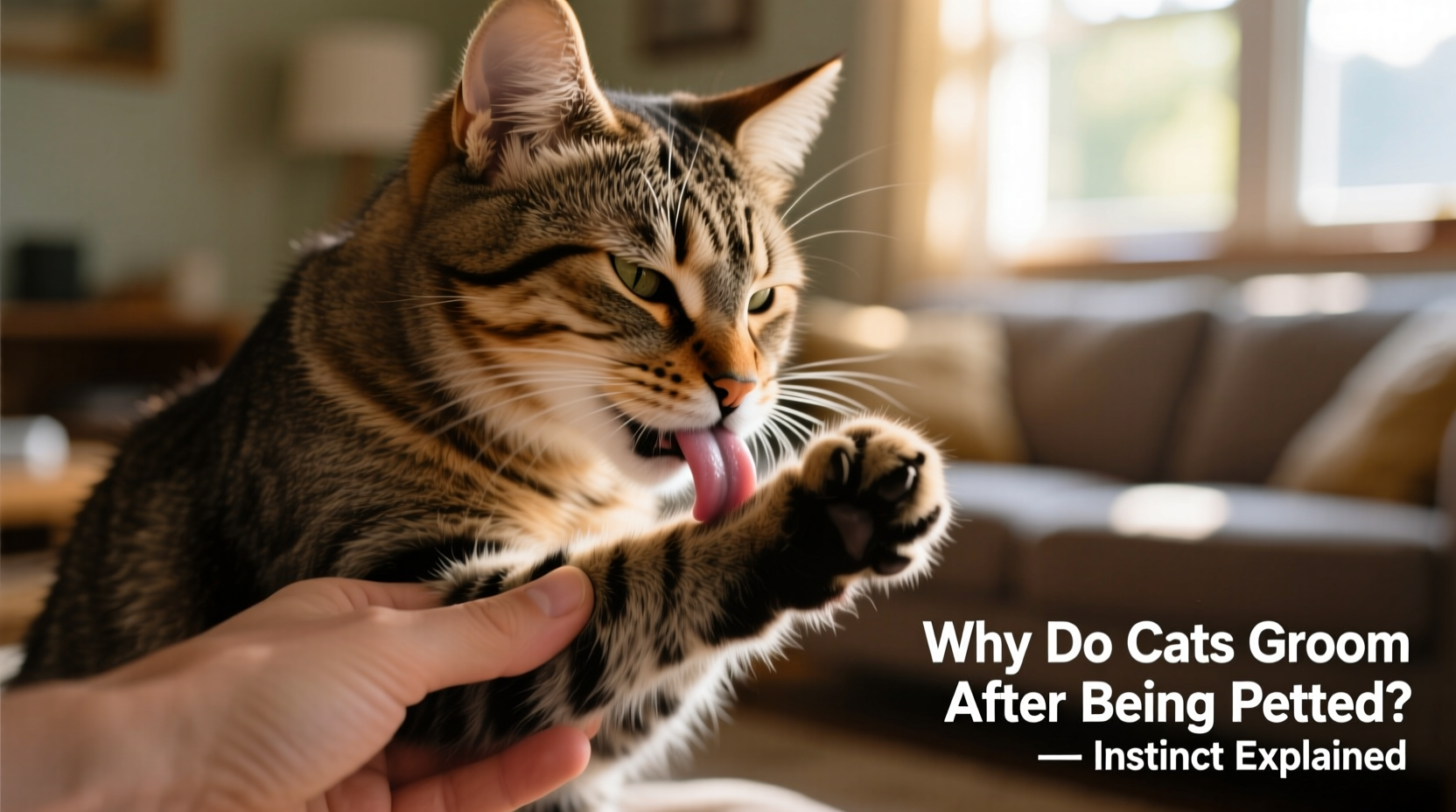
Cats live in a world dominated by scent. Unlike humans, who rely heavily on vision and sound, cats process information primarily through olfactory signals. Every interaction leaves behind chemical traces, and for a cat, human touch deposits a strong foreign odor on their fur.
When you stroke your cat, your skin cells, sweat, lotions, and even perfumes transfer onto their coat. To a human, this might seem harmless—but to a cat, it's a significant disruption to their personal scent profile. In the wild, consistent body odor helps animals identify kin, mark territory, and avoid predators. A sudden change in smell can be disorienting or even threatening.
Grooming after petting allows the cat to remove these unfamiliar scents and restore their natural aroma. It’s not rejection of you; it’s reassertion of identity. As Dr. Sarah Hartwell, a renowned feline behavior researcher, explains:
“Cats are olfactory-driven animals. Their sense of self is tied to their scent. When an external odor is introduced—even from a trusted human—they instinctively work to neutralize it.” — Dr. Sarah Hartwell, Feline Ethology Specialist
This behavior is especially pronounced in outdoor or semi-feral cats, who are more attuned to environmental threats. But even indoor-only cats retain this instinct, demonstrating how deeply ingrained scent management is in feline psychology.
Sensory Overload and Tactile Sensitivity
Another key reason cats groom after being petted lies in their heightened tactile sensitivity. A cat’s skin is covered with dense nerve endings, particularly along the back, tail base, and abdomen. These areas are rich in sensory receptors that make touch both pleasurable and potentially overwhelming.
While some cats enjoy prolonged petting, many reach a threshold quickly. Signs of overstimulation include tail flicking, ear flattening, skin twitching, or sudden withdrawal. Grooming afterward can serve as a calming mechanism—a way to reset their nervous system after intense sensory input.
In essence, grooming acts as a self-soothing behavior, similar to how humans might take deep breaths or rub their hands together after a stressful event. The rhythmic motion of licking stimulates endorphin release, helping the cat return to a state of equilibrium.
Social Hierarchy and Boundary Setting
Feline social structures are subtle but well-defined. Even in domestic settings, cats operate within a framework of personal space and mutual respect. Being petted, especially on less-preferred areas, can feel like an intrusion—even from someone they trust.
Grooming after contact can function as a passive boundary-setting behavior. It subtly communicates, “I accept your presence, but I need to reclaim my autonomy.” This isn’t defiance; it’s diplomacy. Cats use grooming to defuse tension without resorting to aggression.
A real-world example illustrates this well:
Mini Case Study: Bella the Indoor-Outdoor Cat
Bella, a 5-year-old tabby, lives in a suburban home with two adults and no other pets. She enjoys sunbathing on the porch and tolerates affection—but only on her terms. Her owner, Mark, noticed that every time he stroked her back, she would walk away and begin intensely grooming her flank.
After consulting a feline behaviorist, Mark learned that Bella wasn’t rejecting him—she was resetting her boundaries. By adjusting his approach—petting only when Bella initiated contact and limiting strokes to her favorite spots—the grooming response decreased significantly. The behavior didn’t disappear entirely, but it became less urgent, indicating improved comfort levels.
This case highlights how post-petting grooming often reflects a cat’s attempt to regain control in a non-confrontational way.
Hygiene and Coat Maintenance: An Evolutionary Imperative
Beyond social and sensory factors, grooming remains a vital survival tool inherited from wild ancestors. Wild felids must keep their coats clean to remain stealthy hunters. Dirt, oil, or foreign odors could alert prey or attract predators.
Domestic cats, though removed from immediate danger, still carry these genetic imperatives. Licking redistributes natural oils, removes debris, and regulates body temperature. When human hands introduce lint, dust, or residue from hand sanitizer, grooming becomes a practical necessity—not just symbolic.
Interestingly, cats spend up to 50% of their waking hours grooming. This investment underscores its importance. Post-petting grooming is simply one facet of a broader hygiene strategy.
Do’s and Don’ts of Petting Cats Without Triggering Excessive Grooming
| Do’s | Don’ts |
|---|---|
| Pet the head, cheeks, and chin—areas rich in scent glands | Avoid prolonged touching of the belly, tail, or paws unless invited |
| Watch for signs of overstimulation (tail flicking, ears back) | Don’t force interaction if the cat walks away |
| Wash hands before handling to reduce chemical odors | Never punish or scold a cat for grooming after petting |
| Let the cat initiate contact when possible | Don’t assume grooming means dislike—context matters |
Step-by-Step Guide to Respectful Cat Interaction
Understanding why cats groom after petting leads naturally to better human-cat relationships. Follow this sequence to build trust and minimize stress-related grooming:
- Observe Body Language: Approach only when the cat is relaxed—eyes half-closed, tail upright, purring.
- Start Slowly: Offer a finger for sniffing. Let the cat decide whether to engage.
- Target Preferred Zones: Focus on the head, behind the ears, and under the chin—areas associated with positive social bonding.
- Limit Duration: Begin with 30 seconds of gentle strokes. Gradually increase only if the cat shows continued enjoyment.
- Monitor Reactions: Stop immediately if the cat twitches its skin, flattens ears, or stares intently.
- Allow Recovery Time: After petting, give the cat space to groom or retreat without interference.
- Reinforce Positively: Offer a treat or soft word *after* grooming ends, never during, to associate the experience with safety.
This method respects the cat’s autonomy while strengthening the bond between pet and owner. Over time, many cats become more tolerant of touch, reducing the intensity of post-petting grooming.
Frequently Asked Questions
Is it bad if my cat grooms right after I pet them?
No, it’s completely normal. Most cats will groom to some extent after human contact. It only becomes concerning if the behavior is excessive, leading to hair loss or skin irritation. In such cases, consult a veterinarian to rule out anxiety or dermatological issues.
Does grooming after petting mean my cat doesn’t like me?
Not necessarily. Cats express affection differently than dogs. Many groom after petting not out of rejection, but as a way to process the interaction. If your cat seeks you out for cuddles or head-butts you, those are strong signs of attachment.
Can I stop my cat from grooming after I pet them?
You shouldn’t try to stop it. Grooming is a healthy, instinctive behavior. Instead, focus on making petting less intrusive—shorter sessions, preferred areas, clean hands—to reduce the need for corrective grooming.
Practical Tips for Reducing Stress-Related Grooming
Checklist: Creating a Low-Stress Petting Environment
- ✅ Wash hands with mild, fragrance-free soap before touching your cat
- ✅ Choose calm moments—avoid petting during loud household activity
- ✅ Focus on head and neck areas only
- ✅ Keep sessions under 60 seconds initially
- ✅ End on a positive note—walk away before the cat does
- ✅ Reward with treats or praise *after* grooming concludes
- ✅ Monitor for signs of compulsive grooming (bald patches, redness)
Conclusion: Respecting Instinct, Building Trust
The act of grooming after being petted is not a flaw in your cat’s affection—it’s a window into their complex inner world. Rooted in scent preservation, sensory regulation, and social nuance, this behavior reflects millions of years of evolutionary refinement. Rather than viewing it as rejection, consider it a form of honest communication.
By recognizing the instincts behind post-petting grooming, we learn to interact with our cats in ways that honor their nature. Small adjustments—shorter strokes, cleaner hands, greater awareness of body language—can transform tense moments into opportunities for connection.




 浙公网安备
33010002000092号
浙公网安备
33010002000092号 浙B2-20120091-4
Comments
No comments yet. Why don't you start the discussion?