
Cats are full of quirks, but few behaviors are as endearing—or puzzling—as kneading. Often called “making biscuits,” this rhythmic pushing motion with their front paws on soft surfaces like blankets, laps, or even your arm is a common sight in households with feline companions. While it may seem random, kneading is deeply rooted in biology, emotion, and instinct. Understanding why cats engage in this behavior offers insight into their psychological needs, early development, and ways they communicate comfort and trust.
Kneading typically begins in kittenhood and often persists into adulthood. It’s not just a habit—it’s a complex behavior shaped by evolution, social bonding, and sensory feedback. Whether your cat gently presses into your thigh or aggressively claws at a wool blanket, each session of biscuit-making carries meaning. This article explores the science and psychology behind kneading, what it says about your cat’s emotional state, and how you can respond appropriately to support their well-being.
The Biological Roots of Kneading: From Kittenhood to Adulthood
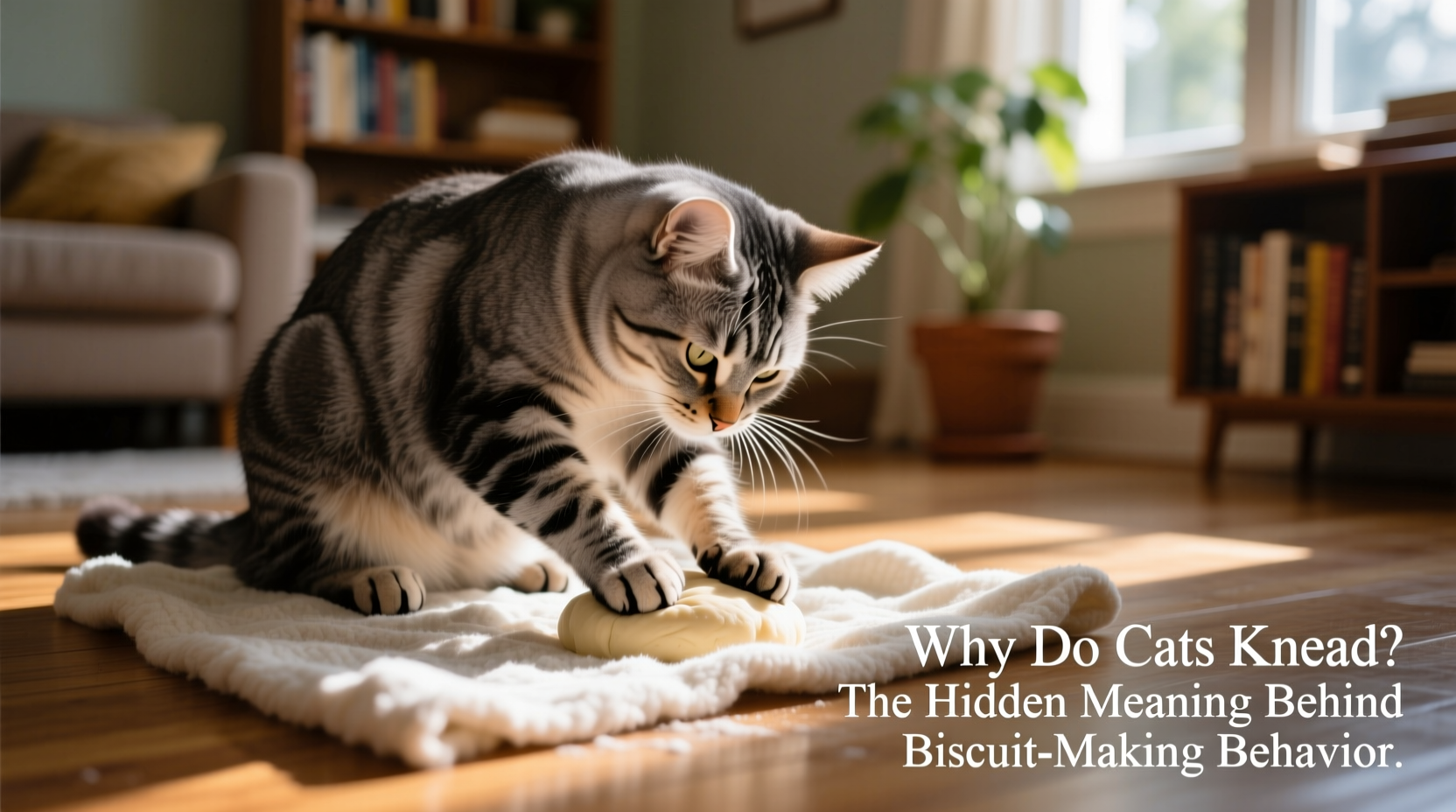
Kneading originates in the earliest days of a cat’s life. Newborn kittens instinctively knead their mother’s mammary glands to stimulate milk flow during nursing. This action triggers physiological responses in the queen (mother cat), ensuring nourishment for her litter. The motion is hardwired—so much so that it becomes associated with warmth, safety, and sustenance long before the kitten opens its eyes.
As cats mature, the need to nurse disappears, but the behavior often remains. Adult cats may continue kneading when they feel secure, relaxed, or emotionally content. In many cases, the act serves as a self-soothing mechanism—a throwback to the comfort of infancy. When a cat curls up on your lap and starts rhythmically pressing its paws into your leg, it’s likely experiencing a deep sense of security, akin to being back with its mother.
This continuity from kittenhood to adulthood underscores how early experiences shape lifelong behaviors. Even cats separated from their mothers early in life may retain the kneading reflex, suggesting it’s more than learned behavior—it’s ingrained in their neurology.
Emotional Significance: Kneading as Communication
Beyond biological instinct, kneading functions as a form of emotional expression. Cats are subtle communicators, relying heavily on body language rather than vocalization. Kneading is one such signal, often indicating trust, affection, and relaxation.
When a cat chooses to knead on you—especially if it involves exposed belly areas or close physical proximity—it’s placing itself in a vulnerable position. That level of openness doesn’t happen casually. It reflects a bond built over time, where the cat feels safe enough to revert to infantile behaviors in your presence.
Additionally, cats have scent glands located in the pads of their paws. Each time they press into a surface, they deposit pheromones—chemical signals that mark territory and convey familiarity. So when your cat kneads your sweater or favorite couch cushion, it’s not just enjoying the texture; it’s claiming the space (and you) as part of its trusted environment.
“Kneading is a multi-layered behavior—it’s comfort-seeking, territorial, and emotionally expressive all at once.” — Dr. Lena Torres, Feline Behavioral Specialist
Why Do Cats Knead Blankets? Common Triggers and Motivations
While kneading occurs on various surfaces, blankets are particularly popular targets. Their softness mimics the tactile experience of nursing, and their warmth enhances the sensation of coziness. But there are several specific reasons why cats gravitate toward blankets for biscuit-making:
- Texture preference: Soft, pliable materials like fleece or knitted fabrics simulate the feel of fur or skin, reinforcing the nursing memory.
- Temperature regulation: Many cats knead before settling down to sleep, especially on heated or sun-warmed blankets, combining comfort with preparation for rest.
- Scent marking: By leaving paw pheromones, cats reinforce ownership of their favorite resting spots.
- Stress relief: In unfamiliar environments, kneading helps cats self-soothe and reestablish a sense of control.
- Habit reinforcement: If a cat receives attention or petting after kneading, the behavior may be positively reinforced.
Interestingly, some cats only knead certain types of fabric. Cotton, wool, and polyester blends may elicit different responses based on texture and smell. Observing your cat’s preferences can help identify which materials provide the most comfort.
Do All Cats Knead?
No—while kneading is common, not every cat exhibits the behavior. Some factors influencing whether a cat kneads include:
| Factor | Increase Likelihood | Decrease Likelihood |
|---|---|---|
| Early weaning | Moderate | May reduce frequency |
| Breed tendency | Common in longhairs (e.g., Persians) | Rare in some active breeds |
| Environment | Stable, low-stress homes | High-anxiety settings |
| Socialization | Positive human interaction | Limited bonding opportunities |
Even among cats that do knead, intensity varies widely. Some gently press their paws like dough-makers, while others extend claws and apply significant pressure. This variation is normal and rarely indicates aggression—unless accompanied by hissing, tail flicking, or biting.
When Kneading Becomes Problematic: Managing Discomfort and Damage
While kneading is generally harmless, it can sometimes lead to discomfort for owners or damage to furniture and clothing. Extended kneading with claws extended may cause scratches, snagged fabrics, or painful pinching—especially if the cat associates kneading with nursing and begins suckling on fabric or skin.
It’s important not to punish the behavior, as it’s instinctive and emotionally meaningful. Instead, redirect or manage it humanely. Consider the following strategies:
- Keep your cat’s nails trimmed regularly to minimize scratching risks.
- Place a thick blanket or pillow between your lap and the cat during kneading sessions.
- Offer alternative kneading surfaces, such as a plush cat bed or soft toy.
- Avoid retracting your lap abruptly, which may confuse or distress the cat.
- If suckling occurs, gently disengage and offer a substitute, like a soft cloth or chew-safe toy.
Mini Case Study: Luna, the Anxious Rescue Cat
Luna, a three-year-old domestic shorthair adopted from a shelter, initially showed little interest in human contact. After two weeks in her new home, she began kneading her owner’s wool blanket every evening. At first, the owner worried the behavior signaled anxiety. However, observing Luna’s body language—slow blinks, purring, and eventual napping after kneading—revealed it was actually a sign of growing trust.
Over time, the owner introduced a dedicated fleece mat treated with feline facial pheromones. Luna gradually shifted her kneading to the mat, reducing wear on household textiles. The ritual became a predictable part of her bedtime routine, indicating emotional stabilization and attachment. This case illustrates how kneading can serve as both a coping mechanism and a milestone in behavioral rehabilitation.
What Kneading Isn't: Debunking Common Myths
Despite its prevalence, kneading is often misunderstood. Several myths persist about the behavior, leading to misinterpretation or inappropriate responses.
- Myth: Kneading means a cat is sexually aroused.
Truth: There is no link between kneading and sexual behavior. Spayed or neutered cats knead just as frequently as intact ones. - Myth: Only female cats knead.
Truth: Both males and females knead, regardless of reproductive status. - Myth: Kneading indicates hunger.
Truth: While kittens knead to nurse, adult cats do so primarily for comfort, not food solicitation. - Myth: Cats knead to sharpen their claws.
Truth: Claw sharpening is separate and usually involves scratching posts or vertical surfaces.
Understanding these distinctions helps owners respond appropriately. Kneading should be seen not as a nuisance, but as a window into a cat’s inner world—one that reflects history, emotion, and connection.
Frequently Asked Questions
Is kneading a sign of stress or anxiety?
Not necessarily. While some cats knead more during periods of change or mild stress (as a self-soothing tactic), the behavior itself is typically linked to positive emotions. Look for accompanying signs: if your cat is tense, hiding, or avoiding interaction, then anxiety may be present. But purring, slow blinking, and relaxed posture during kneading indicate contentment.
Should I stop my cat from kneading?
No—unless the behavior causes injury or excessive destruction, it’s best not to discourage kneading. It’s a natural, comforting activity. If claws are an issue, trim them or use soft nail caps. For destructive kneading, redirect to acceptable surfaces instead of punishing the cat.
Why does my cat drool when kneading?
Drooling during kneading is surprisingly common and usually benign. It’s often tied to intense feelings of nostalgia and comfort, harkening back to kittenhood when nursing triggered salivation. As long as the drool isn’t excessive or accompanied by illness symptoms, it’s a sign of deep relaxation.
How to Support Healthy Kneading Behavior: A Practical Checklist
To ensure your cat can express this natural behavior safely and comfortably, follow this actionable checklist:
- Provide soft, washable surfaces:
- Keep a few old blankets or purchased cat mats available in common lounging areas.
- Maintain claw health:
- Trim claws every 2–3 weeks or use vinyl nail covers to prevent snagging.
- Respect the ritual:
- Avoid interrupting kneading unless absolutely necessary—let your cat complete the cycle.
- Observe context clues:
- Note when and where kneading happens to identify triggers (e.g., post-meal, pre-sleep).
- Use pheromone support:
- Consider diffusers or sprays containing feline facial pheromones to enhance environmental comfort.
- Reinforce positive associations:
- Gentle petting during calm kneading can strengthen bonding—just avoid overstimulation.
Conclusion: Embracing the Biscuit-Making Ritual
Kneading is far more than a quirky habit—it’s a living echo of kittenhood, a declaration of trust, and a tool for emotional regulation. When your cat makes biscuits on your lap, it’s offering one of the highest compliments in feline language: you are safe, you are family, you are home.
By understanding the layers behind this behavior, you deepen your relationship with your cat and create an environment where instinct and affection can coexist peacefully. Rather than viewing kneading as inconvenient, embrace it as a sign of psychological wellness and attachment.




 浙公网安备
33010002000092号
浙公网安备
33010002000092号 浙B2-20120091-4
Comments
No comments yet. Why don't you start the discussion?