
Cats are creatures of habit, and few behaviors capture their enigmatic charm quite like kneading. You’ve likely seen it: your cat rhythmically pressing its paws into a soft surface—your lap, a blanket, or even your arm—like a baker working dough. This motion, often accompanied by purring and half-closed eyes, is more than just an adorable quirk. It’s a deeply rooted instinct with origins stretching back to kittenhood and even earlier, to the survival mechanisms of wild ancestors.
Understanding why cats knead requires looking beyond cuteness. It’s a complex blend of biological programming, emotional regulation, and territorial communication. While the act may resemble how human babies suckle, in cats, it serves multiple functional roles throughout their lives. From stimulating milk flow as newborns to marking ownership and self-soothing as adults, kneading is a window into feline psychology and evolution.
The Origins of Kneading: A Survival Mechanism
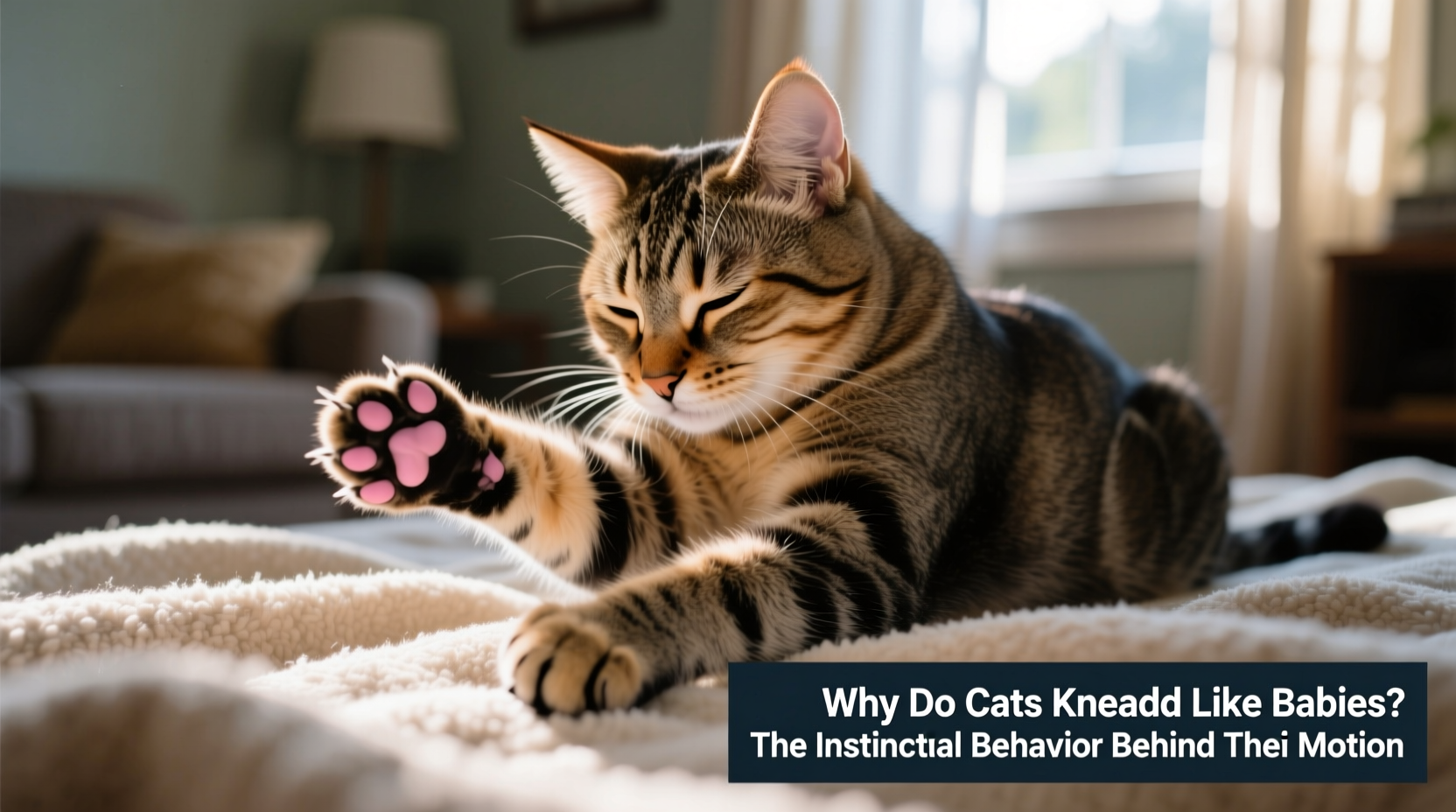
Kneading begins in the first days of life. Newborn kittens are blind and deaf, relying entirely on touch and scent to locate their mother’s nipples. When they press their tiny paws against the mammary glands, they stimulate milk letdown through a natural physiological response. This action ensures a steady flow of nourishment during nursing.
Dr. Sarah Ellis, a feline behavior expert at the International Cat Care organization, explains:
“Kneading is one of the earliest coordinated motor behaviors in kittens. It’s not random—it’s a vital tool for survival. The rhythmic pressure helps maximize milk intake when competition among littermates is high.”
This early association between kneading, comfort, and nourishment becomes hardwired into the cat’s nervous system. Even after weaning, adult cats retain the behavior, especially when they feel safe, content, or nostalgic for the security of infancy. The act triggers the release of endorphins, creating a calming effect similar to thumb-sucking in children.
Instinctual Triggers Behind Adult Kneading
While the original purpose fades with age, several instinctual drivers keep adult cats kneading well into maturity:
- Nesting preparation: Wild felids, including ancestors of domestic cats, would trample down grass, leaves, or snow to create a soft, safe sleeping area. Kneading mimics this nesting behavior, helping cats shape their resting spot while checking for hidden threats.
- Scent marking: Cats have scent glands in the pads of their paws. Each time they press into a surface, they deposit pheromones that mark the area as familiar and secure. This is a subtle but powerful form of territorial communication.
- Emotional regulation: Just as humans might rock or fidget when anxious, cats use kneading to self-soothe. It’s commonly observed before sleep, after stressful events, or during moments of intense affection.
The Emotional Language of Kneading
In domestic settings, kneading has evolved into a social signal. When a cat chooses to knead on you, it’s one of the highest forms of trust. They’re treating you as both caregiver and colony member—a rare honor in the solitary world of felines.
Observant owners notice patterns in when and where their cats knead:
- During bonding moments: After being petted or groomed, cats may begin kneading as a reciprocal gesture of affection.
- Before napping: Many cats knead their favorite sleeping spot minutes before curling up, reinforcing the nest-building instinct.
- When reuniting: Cats returning from outdoor excursions or recovering from illness often knead their humans upon reunion, possibly reaffirming bonds.
A real-life example illustrates this emotional depth: Bella, a 7-year-old rescue tabby, was adopted after spending months in a shelter. Her owner, Maria, noticed that Bella only began kneading three weeks after settling in. “She’d climb onto my chest, purr loudly, and start pushing her paws slowly into my sweater,” Maria recalls. “It felt like she was finally saying, ‘This is home.’” Within days, Bella’s nighttime vocalizing decreased significantly, suggesting the behavior helped her transition from anxiety to security.
Physiological and Environmental Influences
Not all cats knead equally. Genetics, early life experiences, and environment play key roles in whether and how frequently a cat exhibits this behavior.
| Factor | Promotes Kneading | Reduces Kneading |
|---|---|---|
| Early Weaning | Extended nursing period strengthens association | Rushed weaning may weaken behavioral imprint |
| Litter Size | High competition increases kneading intensity | Singleton kittens may show less urgency |
| Surface Texture | Soft, pliable fabrics (blankets, wool) encourage action | Hard or cold surfaces suppress kneading |
| Stress Levels | Low-stress environments allow expression | Chronic stress can inhibit comforting behaviors |
Interestingly, some cats lose the habit if they were separated from their mothers too early or raised in sterile, unstimulating environments. Conversely, those who experienced rich sensory development during the critical socialization window (2–7 weeks) are more likely to retain kneading into adulthood.
Managing Kneading: Comfort vs. Practicality
While kneading is a positive sign of emotional health, it can sometimes be uncomfortable—especially when claws are involved. Untrimmed nails digging into skin can turn a loving moment into a painful one. However, discouraging the behavior entirely isn’t recommended, as it may lead to anxiety or suppressed emotional expression.
Instead, consider these humane strategies:
Step-by-Step Guide to Gentle Kneading Management
- Trim claws regularly: Use cat-specific clippers every 10–14 days, avoiding the pink quick.
- Provide alternative surfaces: Offer a plush mat or old sweater in favorite lounging spots.
- Redirect gently: If claws become sharp, softly lift your cat and place them on a designated kneading pad.
- Reinforce soft-paw behavior: Reward gentle kneading with verbal praise or treats.
- Use nail caps: Soft vinyl caps (like Soft Paws) can prevent scratching without restricting movement.
Never punish a cat for kneading. Doing so confuses them, as the behavior is involuntary and emotionally driven. Instead, frame management around enrichment and safety for both parties.
Debunking Common Myths About Kneading
Several misconceptions persist about why cats knead. Let’s clarify the facts:
- Myth: Only female cats knead.
Truth: Both males and females knead regardless of spay/neuter status. - Myth: Kneading means the cat wants food.
Truth: While it may occur near mealtimes due to comfort, it’s not a hunger signal. - Myth: Cats knead because they were orphaned.
Truth: Even well-raised cats knead; it’s a species-wide trait, not a trauma response. - Myth: Kneading is sexual behavior.
Truth: Though intact males may knead more during mating season, the core motivation remains emotional, not reproductive.
“Kneading isn’t a disorder or oddity—it’s a normal, healthy expression of feline identity. Suppressing it can do more harm than good.” — Dr. Elizabeth Collinge, Veterinary Ethologist
FAQ: Frequently Asked Questions
Do all cats knead?
No, not all cats knead. Some lose the behavior over time, while others never develop it. Factors include genetics, early experience, and individual temperament. Lack of kneading doesn’t indicate unhappiness.
Why does my cat drool when kneading?
Drooling during kneading is common and usually harmless. It stems from deep relaxation and the residual nursing reflex. As kittens salivated during feeding, some adult cats continue this response when extremely content.
Can older cats start kneading later in life?
Yes. Cats that didn’t knead as juveniles may begin in adulthood, often triggered by increased security or mimicry of other household cats. It can also emerge during periods of heightened affection or stress relief.
Practical Checklist: Supporting Healthy Kneading Behavior
- ✅ Observe when and where your cat kneads to identify emotional triggers
- ✅ Provide soft, dedicated surfaces for kneading (e.g., fleece blankets)
- ✅ Maintain regular claw care to prevent discomfort
- ✅ Avoid interrupting kneading unless necessary for safety
- ✅ Recognize kneading as a sign of trust and emotional wellness
- ✅ Introduce nail caps if kneading causes pain or fabric damage
- ✅ Never scold or restrain your cat during kneading episodes
Conclusion: Embracing the Rhythm of Trust
Kneading is far more than a quirky habit—it’s a living echo of kittenhood, a tactile language of safety, and a testament to the bond between cats and their humans. When your cat presses its paws into your leg with slow, deliberate motions, it’s not just reliving infancy. It’s telling you, in the only way it knows how, that you are its sanctuary.
By understanding the instinctual roots of this behavior, we move beyond mere observation to deeper empathy. We see not just a pet performing a cute ritual, but a creature expressing vulnerability, marking belonging, and seeking comfort in a world that often feels unpredictable.




 浙公网安备
33010002000092号
浙公网安备
33010002000092号 浙B2-20120091-4
Comments
No comments yet. Why don't you start the discussion?