
Cats have a reputation for being graceful, intelligent creatures—yet many owners are baffled when their feline companion deliberately knocks a glass off the coffee table or sends a phone tumbling to the floor. This seemingly destructive habit is more than just random mischief. Behind every paw swipe lies instinct, curiosity, and sometimes, subtle communication. Understanding why cats engage in this behavior is the first step toward managing it effectively. More importantly, knowing how to respond—without punishment or frustration—can lead to a more harmonious home for both pet and owner.
The Science Behind the Swipe: Why Cats Knock Things Over
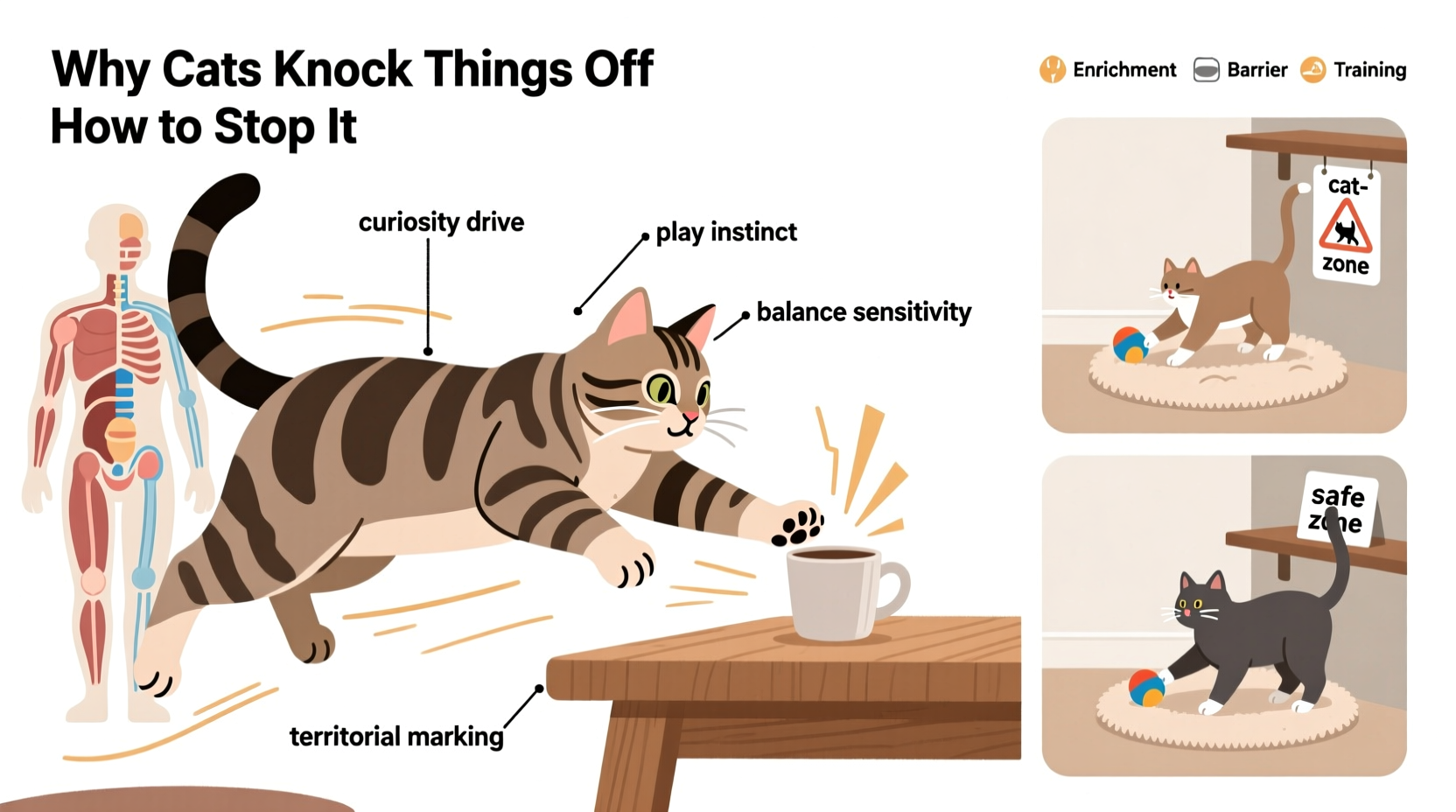
Cats are natural predators with finely tuned senses and an innate need to explore their environment. When a cat bats an object off a surface, it’s rarely about destruction. Instead, several biological and psychological factors drive this behavior.
One primary reason is sensory exploration. Unlike humans, cats rely heavily on touch and movement to understand objects. A stationary item on a table provides little information. But when knocked, it produces sound, motion, and tactile feedback—all of which stimulate the cat’s brain. This mimics the experience of capturing prey, triggering instinctual hunting sequences even in well-fed domestic cats.
Additionally, cats use their paws as tools for testing weight, texture, and stability. A light tap can reveal whether something is alive (like a bug) or inert. In multi-cat households, this behavior may also serve as social signaling—demonstrating dominance or drawing attention from other animals or humans.
“Cats don’t knock things over to annoy us—they’re gathering data. What looks like chaos is actually cognitive engagement.” — Dr. Sarah Bennett, Feline Behavior Specialist
Common Triggers and Environmental Factors
While instinct plays a major role, environmental conditions often amplify the frequency of this behavior. Certain household setups inadvertently encourage cats to target specific surfaces.
- Elevated Surfaces: Cats naturally gravitate toward high vantage points. Tables, countertops, and shelves become prime zones for interaction simply because they’re within reach and offer visual control of the space.
- Unoccupied Spaces: A cluttered table might seem chaotic to us, but to a cat, each object represents a potential toy. Pens, keys, and small decor items are especially tempting due to their size and mobility.
- Lack of Stimulation: Boredom is a significant contributor. Indoor cats without sufficient mental or physical enrichment may resort to knocking things over purely for entertainment.
- Owner Attention: Even negative reactions—like yelling or rushing to clean up—can reinforce the behavior. The cat learns that knocking something down results in immediate human response, making it a reliable way to initiate interaction.
How to Stop the Behavior: A Step-by-Step Guide
Eliminating this behavior requires consistency, environmental modification, and positive reinforcement. Here’s a proven five-step approach to reduce and eventually stop unwanted object-knocking.
- Assess and Modify the Environment
Begin by identifying high-risk areas. Remove valuable or breakable items from edges where your cat has access. Use shelf organizers or barriers to create “cat-free” zones without restricting their movement entirely. - Provide Alternative Outlets
Introduce interactive toys that satisfy your cat’s need to bat, pounce, and manipulate objects. Puzzle feeders, dangling feather wands, and rolling balls give them safe targets for their predatory instincts. - Increase Daily Enrichment
Schedule at least two 10–15 minute play sessions per day using wand toys or laser pointers. This helps burn excess energy and redirects focus away from household items. - Use Positive Reinforcement
Reward calm behavior near tables or shelves with treats or affection. If your cat investigates an object but doesn’t knock it over, immediately praise them. Over time, they’ll associate self-control with rewards. - Implement Deterrents Strategically
If certain surfaces must remain off-limits, use humane deterrents such as double-sided tape, aluminum foil, or motion-activated air sprays. These aren’t punitive but make the area less appealing through texture or surprise.
Do’s and Don’ts: Managing Object-Knocking Behavior
| Do’s | Don’ts |
|---|---|
| Rotate toys weekly to maintain novelty | Punish your cat for knocking things over |
| Use puzzle toys during feeding times | Leave fragile items within paw’s reach |
| Encourage climbing with cat trees or shelves | Yell or grab your cat mid-behavior |
| Place soft mats under frequently targeted areas | Ignore signs of stress or overstimulation |
| Engage in daily structured play | Assume the behavior will disappear on its own |
Real-Life Example: Solving Luna’s Tabletop Tendencies
Luna, a three-year-old tabby living in a downtown apartment, had developed a habit of swiping anything within reach off the kitchen counter—especially water glasses. Her owner, Mark, was frustrated and worried about safety. After consulting a veterinary behaviorist, he implemented a few key changes.
First, he cleared the counter of non-essential items and installed a wall-mounted cat perch nearby, giving Luna a designated high ground. He introduced a rotating set of interactive toys, including a motorized mouse and a treat-dispensing ball. Most importantly, he began two short play sessions every evening using a feather wand, ending each with a small meal to simulate the “hunt-eat-groom-sleep” cycle.
Within three weeks, Luna’s countertop raids decreased by over 80%. By week six, she hadn’t knocked anything over in days. The transformation wasn’t due to discipline—it came from understanding her motivations and meeting her needs in healthier ways.
Expert-Backed Prevention Checklist
To ensure long-term success, follow this actionable checklist based on recommendations from feline behaviorists and veterinarians:
- ✅ Remove breakables from ledges and tables accessible to your cat
- ✅ Install cat shelves or perches to redirect vertical space usage
- ✅ Offer at least two interactive play sessions per day
- ✅ Rotate toys weekly to prevent boredom
- ✅ Use food puzzles or slow feeders during meals
- ✅ Reward calm behavior near restricted areas
- ✅ Apply pet-safe deterrents (e.g., textured mats) if needed
- ✅ Monitor for signs of stress or anxiety influencing the behavior
- ✅ Consult a vet or behavior specialist if the behavior escalates
Frequently Asked Questions
Is my cat knocking things over to get revenge or act out?
No. Cats do not operate on human emotions like spite or revenge. While they can feel stressed or anxious, their actions are driven by instinct, curiosity, or learned outcomes—not moral judgment. Assuming malice can lead to inappropriate responses and damage trust.
Will spaying or neutering stop this behavior?
Not directly. While spaying or neutering can reduce overall territorial or hormonal aggression, object-knocking is primarily linked to environmental and behavioral factors. It won’t eliminate the behavior unless it’s tied to mating-related restlessness, which is rare.
Are some breeds more prone to this behavior?
Yes. Breeds known for high intelligence and activity levels—such as Siamese, Bengals, and Abyssinians—are more likely to engage in exploratory pawing. However, any cat can develop the habit if their environment lacks stimulation.
When to Seek Professional Help
Occasional object-knocking is normal. However, if your cat exhibits obsessive repetition, appears anxious, or begins targeting people or pets, it may signal underlying issues such as compulsive disorder, pain, or environmental stress. Signs to watch for include:
- Excessive licking or grooming after knocking objects
- Aggression when interrupted during the behavior
- Loss of appetite or hiding
- Increased vocalization or restlessness
In such cases, consult your veterinarian. A full health check can rule out medical causes like hyperthyroidism or neurological conditions. If physical health is clear, a certified feline behavior consultant can help design a tailored intervention plan.
Final Thoughts: Patience, Not Punishment
Cats don’t read human rules. Their world operates on scent, sound, and survival instincts refined over millennia. When your favorite mug ends up shattered on the floor, it’s easy to react with frustration. But behind that paw swipe is a complex mind seeking engagement, control, and understanding.
Stopping the behavior isn’t about domination—it’s about redirection. By enriching your cat’s environment, respecting their natural drives, and responding with patience, you transform conflict into connection. The goal isn’t a perfectly tidy home, but a balanced one where both species thrive.




 浙公网安备
33010002000092号
浙公网安备
33010002000092号 浙B2-20120091-4
Comments
No comments yet. Why don't you start the discussion?