
Cats are often seen as enigmatic companions—affectionate one moment, aloof the next. Yet few behaviors are as universally recognized among cat owners as their tendency to settle directly on top of them. Whether sprawled across your lap during dinner or perched firmly on your chest while you’re trying to sleep, this seemingly simple act carries layers of meaning. Understanding why cats lay on their owners offers insight into their emotional world, physical needs, and deep-rooted instincts. It’s not just about warmth or comfort; it’s a complex expression of trust, territory, and love.
The Warmth Factor: A Biological Necessity
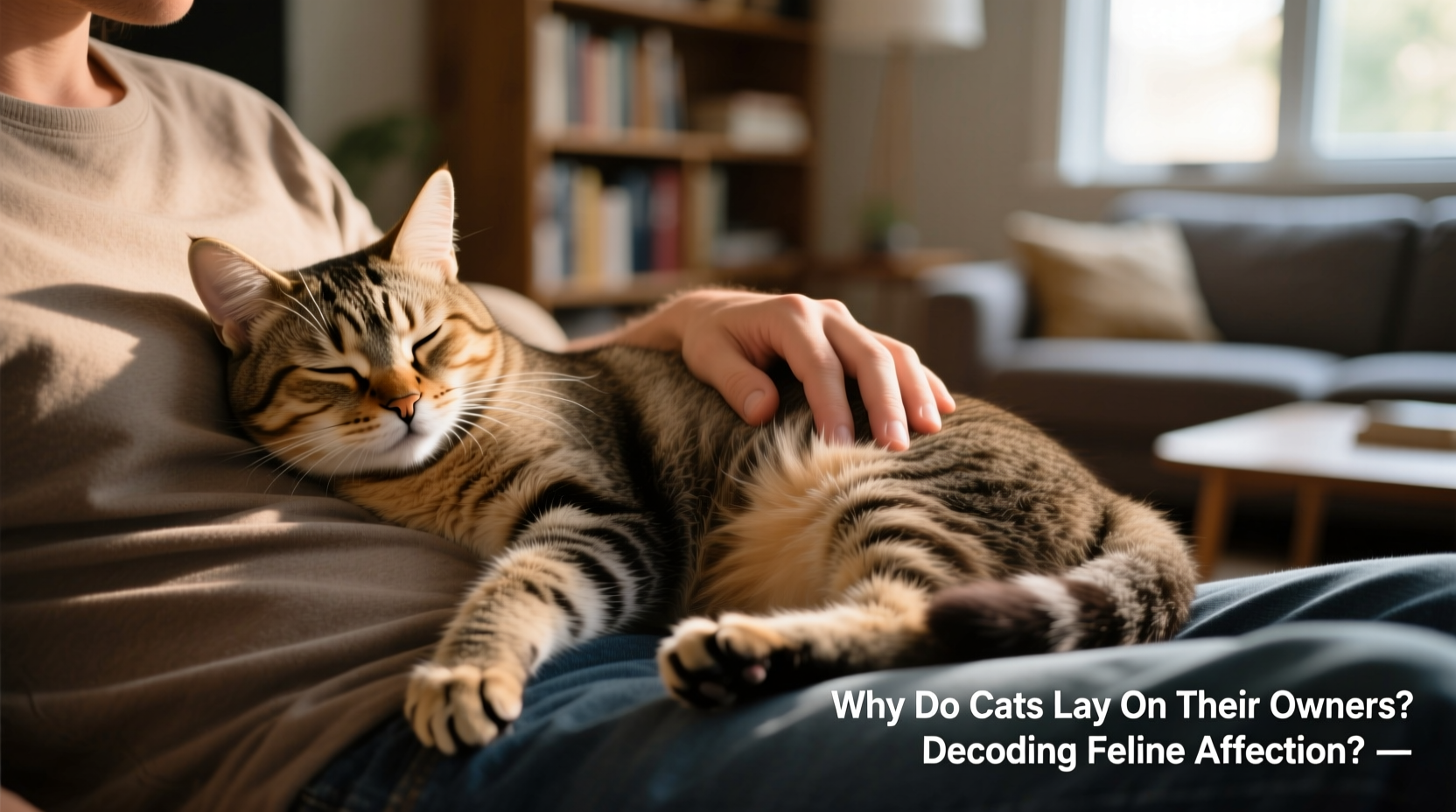
Cats maintain a higher body temperature than humans—typically between 100.5°F and 102.5°F. To conserve energy and stay comfortable, they seek out warm spots. The human body, especially when under blankets or moving slightly, emits consistent radiant heat. This makes owners ideal living heating pads.
Kittens learn early that close contact with their mother and littermates helps regulate body temperature. As adults, this instinct doesn’t disappear. When a cat chooses to lie on you, it may be tapping into that primal need for warmth, particularly in cooler environments.
Territory and Scent Marking: Claiming You as Their Own
Cats are territorial animals, and scent plays a crucial role in how they define their space. They have scent glands located on their cheeks, forehead, paws, and along their flanks. When a cat rubs against you or lies on you, they deposit pheromones—chemical signals that mark you as part of their trusted inner circle.
This behavior isn't possessive in a negative sense; rather, it's a sign of inclusion. By laying on you, your cat is essentially saying, “You belong to me, and I feel safe here.” In multi-pet households, cats may even use this method to assert dominance subtly over other animals by monopolizing shared human attention.
“Cats don’t just live in our homes—they curate them. When they choose to rest on a person, they’re reinforcing social bonds through olfactory communication.” — Dr. Sarah Thompson, Feline Behavior Specialist
Emotional Security and Bonding
Beyond biology and territory, there’s a deeply emotional component to this behavior. Cats form strong attachments to their caregivers, contrary to the myth that they're indifferent or solitary by nature. Research published in *Current Biology* shows that many cats exhibit secure attachment styles similar to human infants and dogs.
When a cat lies on its owner, especially in vulnerable positions like belly-up or stretched out, it demonstrates profound trust. In the wild, exposing soft underbellies leaves animals defenseless. Doing so on a human signifies that the cat feels completely protected.
This bonding behavior often develops over time. A rescued cat, for instance, might avoid contact initially but gradually begin to rest on their owner after weeks or months of consistent care—marking a milestone in their emotional recovery.
Mini Case Study: Luna’s Journey from Fear to Affection
Luna, a three-year-old domestic shorthair, was adopted from a shelter after being found stray. Initially, she stayed hidden under furniture and hissed when approached. Her owner, Mark, maintained a calm routine—feeding her at the same time daily, speaking softly, and allowing her space.
After six weeks, Luna began sitting near him on the couch. Then, one evening, she climbed onto his lap and fell asleep. Over time, this became a nightly ritual. Today, she regularly sleeps on his chest. For Mark, this progression wasn’t just cute—it was proof of healing and connection.
Attention-Seeking vs. Genuine Comfort
Not all instances of a cat lying on you are purely about comfort. Some cats are masters of manipulation, using physical presence to influence behavior. If your cat jumps on your keyboard while you're working, it may be less about affection and more about demanding food, play, or interruption of an activity they dislike (like typing).
However, context matters. A cat who settles quietly and purrs is likely seeking peace. One who kneads insistently or meows nonstop while on you might be communicating a need.
| Behavior | Interpretation | What It Likely Means |
|---|---|---|
| Purring + relaxed posture | Genuine comfort | Feeling safe and bonded |
| Kneading + gentle biting | Contentment with kitten-like habits | Nostalgia for nursing; deep relaxation |
| Blocking movement + vocalizing | Attention-seeking | Desire for interaction or resources |
| Sudden jumping off after settling | Sensory overload | Overstimulation despite initial comfort |
How to Encourage Healthy Affectionate Behavior
While most owners cherish having a cat that wants to be close, it’s important to balance affection with boundaries. Respecting your cat’s autonomy fosters stronger, more authentic relationships.
- Respect their timing: Don’t force handling. Let the cat initiate contact.
- Create warm zones: Offer heated beds or sunlit spots so they don’t feel compelled to use you as a heater.
- Respond calmly: Avoid sudden movements when a cat is on you, especially during sleep.
- Use positive reinforcement: Reward calm, gentle behavior with treats or soft praise.
- Observe body language: Flattened ears, tail flicking, or tensed muscles mean it’s time to let them go.
Checklist: Is Your Cat’s Lap-Lying Behavior Healthy?
- ✅ They come to you voluntarily, not only for food
- ✅ They show relaxed body language (slow blinks, purring)
- ✅ They allow petting without signs of stress
- ✅ They have alternative warm resting places available
- ✅ They retreat calmly when done, rather than fleeing abruptly
Frequently Asked Questions
Why does my cat only lie on me and not others?
Cats form individualized bonds based on experience and perceived safety. If your cat consistently chooses you over guests or family members, it’s likely because you’ve established a deeper level of trust through consistent care, tone of voice, or daily routines.
Is it bad if my cat lies on my chest and I can’t breathe well?
While endearing, this can become uncomfortable or even risky for people with respiratory conditions. Gently shift the cat to your side or lap using a soft blanket as a transition tool. Providing a plush bed nearby can encourage alternative resting spots.
Do cats know we’re bigger than them?
Yes, cats understand size differences. However, their behavior is guided more by emotion and instinct than logic. To them, your size may represent security, not threat—especially if you move slowly and speak softly.
Conclusion: A Purr-fect Expression of Love
A cat lying on its owner is one of the purest forms of feline affection. It combines biological need, emotional trust, and subtle communication into a single, powerful gesture. Far from random, this behavior reflects centuries of evolution and the unique bond between humans and cats.
Instead of seeing it as mere habit or inconvenience, recognize it as a compliment—a declaration that you are warm, safe, and loved. By understanding the motivations behind it, you deepen your relationship and respond with greater empathy.




 浙公网安备
33010002000092号
浙公网安备
33010002000092号 浙B2-20120091-4
Comments
No comments yet. Why don't you start the discussion?