
Cat owners often find themselves on the receiving end of a peculiar yet endearing ritual: their feline companion rhythmically pressing their paws into their lap, blanket, or even their chest. This behavior, affectionately known as \"making biscuits,\" is more than just a quirky habit—it’s a deeply rooted expression of comfort, bonding, and instinct. While many assume it's simply a sign of contentment, the reasons behind cat kneading are layered, spanning from kittenhood memories to territorial signaling. Understanding this behavior offers insight into your cat’s emotional world and strengthens the human-feline bond.
The Origins of Kneading: A Behavior Rooted in Survival
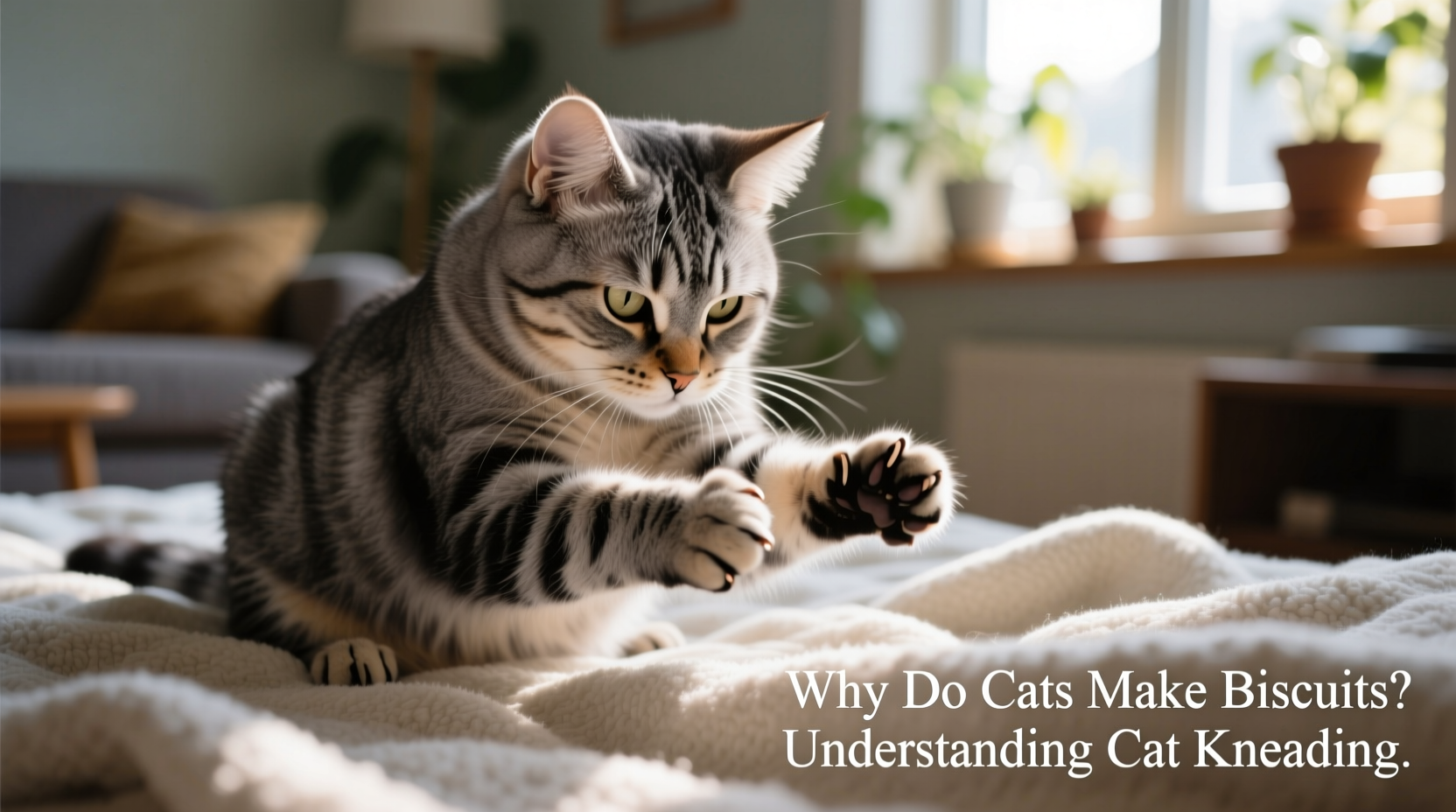
Kneading begins in the earliest days of a cat’s life. Newborn kittens instinctively press their tiny paws against their mother’s mammary glands to stimulate milk flow. This action is crucial for survival, reinforcing a direct link between kneading and nourishment. As they grow, the motion becomes associated with warmth, safety, and maternal care. Even as adults, cats retain this behavior—not because they need milk, but because the act triggers deep-seated feelings of security and comfort.
Neurological studies suggest that repetitive motions like kneading activate the parasympathetic nervous system, promoting relaxation. In essence, when a cat makes biscuits, it’s not just reminiscing—it’s self-soothing. This explains why cats often knead before settling down to sleep or after being petted.
“Kneading is one of the purest expressions of feline contentment. It’s a throwback to kittenhood, but it also serves as an emotional anchor throughout a cat’s life.” — Dr. Lydia Chen, Feline Behavior Specialist
Why Adult Cats Continue to Knead
While the origins of kneading lie in infancy, adult cats continue the behavior for several interconnected reasons:
- Comfort and nesting: Cats knead soft surfaces to create a cozy spot to rest, mimicking how wild cats would trample down grass or leaves to form a nest.
- Scent marking: Cats have scent glands in the pads of their paws. Each press releases pheromones, marking the surface—or person—as familiar and safe.
- Stretching and muscle relief: The motion helps flex muscles in the shoulders and paws, especially after napping.
- Emotional bonding: When directed toward humans, kneading is often a sign of trust and affection. Your cat sees you as part of their secure inner circle.
In multi-cat households, kneading can also serve a social function. One cat may knead near another as a non-threatening gesture, reinforcing group cohesion.
When Kneading Signals Stress or Medical Issues
While most kneading is benign, changes in frequency or intensity can sometimes indicate underlying issues. Excessive or sudden-onset kneading, especially if accompanied by vocalization, drooling, or disorientation, may point to medical concerns such as hyperesthesia syndrome, cognitive dysfunction in older cats, or hormonal imbalances.
Additionally, stress or environmental changes—like moving homes, introducing new pets, or loud noises—can trigger increased kneading as a coping mechanism. In these cases, the cat is using a familiar, comforting behavior to regain a sense of control.
If your cat begins kneading obsessively on hard surfaces, appears agitated during the act, or stops grooming or eating alongside the behavior, consult a veterinarian. Early intervention can rule out neurological or dermatological conditions.
How to Respond to Your Cat’s Biscuit-Making
Not all cats knead gently, and retractable claws can turn a sweet moment into a painful one. Instead of discouraging the behavior outright—which could damage trust—consider humane alternatives that preserve both comfort and safety.
- Trim your cat’s nails regularly: Keeping claws blunt reduces discomfort without interfering with natural scratching behaviors.
- Use protective barriers: Place a thick towel or fleece blanket over your lap when cuddling.
- Redirect to acceptable surfaces: Offer a plush cat bed or padded mat nearby and reward your cat when they knead there.
- Avoid punishment: Yelling or pushing your cat away during kneading can erode trust and increase anxiety.
- Observe context: Note when and where kneading occurs to identify triggers—positive or negative.
| Scenario | Likely Meaning | Recommended Response |
|---|---|---|
| Kneading on owner’s lap with purring | Contentment, bonding | Enjoy the moment; offer gentle pets |
| Kneading on bedding before sleeping | Nesting instinct | Ensure bedding is soft and accessible |
| Excessive kneading with meowing | Stress or medical issue | Monitor closely; consult vet if persistent |
| Kneading on new furniture | Scent marking | Accept as normal; clean only if soiled |
Real-Life Example: Bella and the Blanket Ritual
Sarah adopted Bella, a three-year-old domestic shorthair, after the cat was surrendered by a previous owner who found her “too clingy.” Within days, Sarah noticed Bella would climb onto her chest every evening, knead vigorously for several minutes, then curl up to sleep. At first, the sharp claws were uncomfortable, but Sarah learned to place a folded quilt over her lap. Over time, she realized the routine only happened when the house was quiet and Bella felt safest. When a renovation caused loud noises, Bella stopped kneading altogether—until Sarah reintroduced the quilt and restored their nightly ritual. The return of biscuit-making signaled that Bella once again felt secure.
This case illustrates how kneading functions as both an emotional barometer and a resilience tool. By respecting the behavior and adapting her environment, Sarah helped Bella rebuild trust.
Frequently Asked Questions
Do all cats knead?
No, not all cats knead. Some never develop the habit, while others may stop as they age. Factors include early weaning, individual temperament, and whether they were separated from their mother too soon. Lack of kneading doesn’t indicate unhappiness—it’s simply a variation in behavior.
Why does my cat drool when making biscuits?
Drooling during kneading is common and usually a sign of extreme relaxation. It harks back to kittenhood, when sucking and swallowing accompanied nursing. In adult cats, it reflects a deep state of comfort, similar to how humans might sigh or smile unconsciously when at ease.
Can I train my cat to stop kneading?
You can redirect the behavior, but eliminating it entirely is neither necessary nor recommended. Kneading is emotionally beneficial. Instead of suppression, focus on managing claw sharpness and providing appropriate surfaces. Positive reinforcement works better than correction.
Supporting Your Cat’s Natural Behaviors
Understanding why cats make biscuits goes beyond curiosity—it’s about honoring their instincts. In the wild, cats engage in a range of species-specific behaviors: scratching, climbing, hunting, and yes, kneading. When these actions are suppressed in domestic environments, stress and behavioral issues can arise.
To support healthy expression of kneading:
- Provide soft, washable blankets in resting areas.
- Encourage routines that promote relaxation, like evening petting sessions.
- Avoid startling your cat during kneading, as it breaks their sense of safety.
- Consider pheromone diffusers (like Feliway) if your cat seems anxious despite kneading.
Conclusion: Embrace the Biscuits
Kneading is more than a cute quirk—it’s a window into your cat’s emotional landscape. Whether rooted in kittenhood comfort, territorial marking, or pure relaxation, the act of making biscuits reveals trust, contentment, and connection. Rather than viewing it as a nuisance, embrace it as a compliment: your cat feels safe enough to revert to one of their most vulnerable, instinctive behaviors in your presence.
By responding with patience, protection, and understanding, you deepen the mutual respect between you and your feline companion. The next time those paws start pressing into your leg, remember—you’re not just a lap. You’re home.




 浙公网安备
33010002000092号
浙公网安备
33010002000092号 浙B2-20120091-4
Comments
No comments yet. Why don't you start the discussion?