
Cats are enigmatic creatures, and among their most distinctive behaviors is purring. Often associated with contentment, the low, rhythmic vibration of a purr seems like a universal sign of feline happiness. Yet, anyone who has heard a cat purr while injured, stressed, or even during labor knows that purring is far more complex than simple joy. The act of purring spans emotional, physiological, and even healing functions. Understanding why cats purr requires exploring biology, psychology, and evolutionary adaptation. This article delves into the science behind feline purring, its varied meanings, and how pet owners can interpret this subtle yet powerful form of communication.
The Biology of Purring: How Cats Produce the Sound
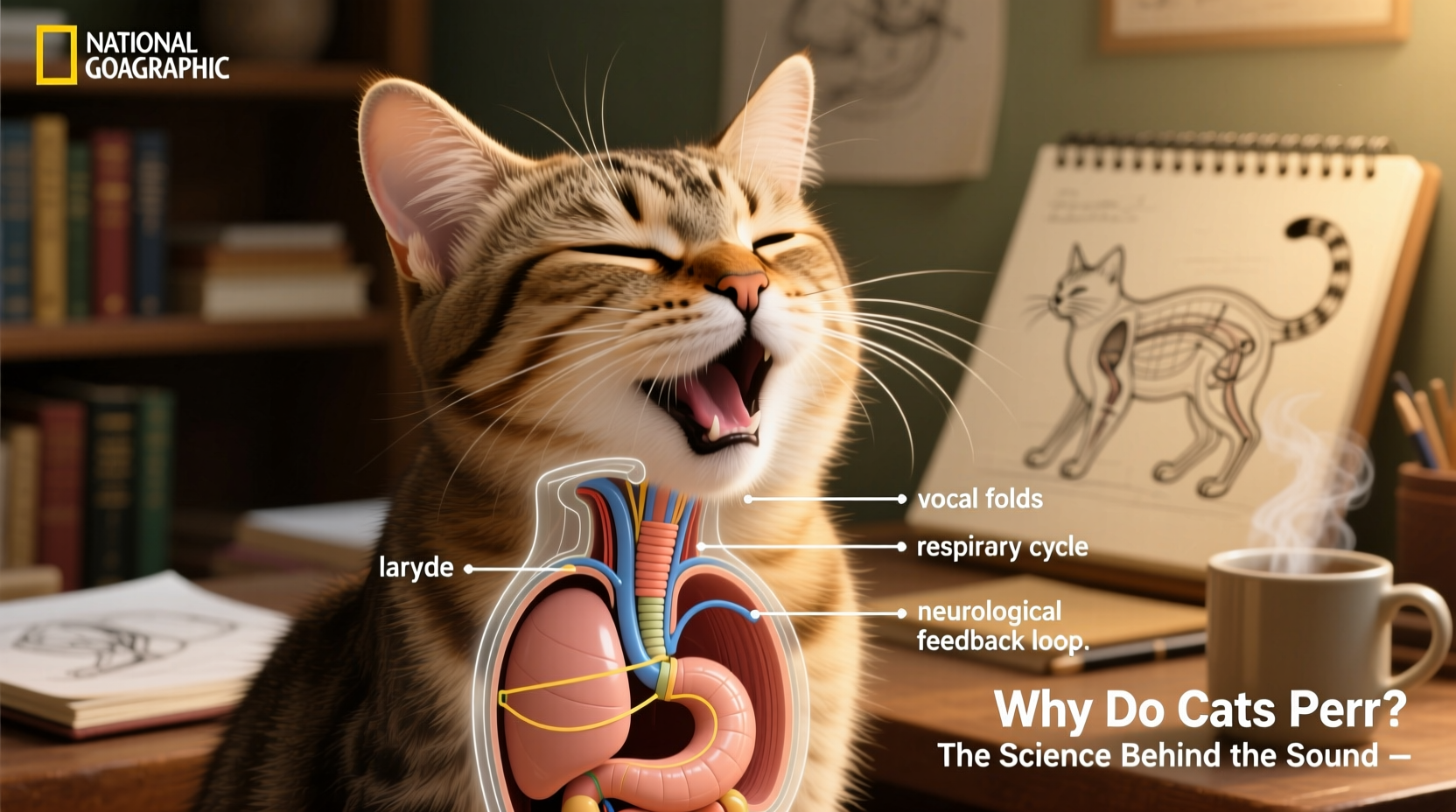
Purring is generated deep within a cat’s body through a combination of neurological and muscular activity. Scientists believe the process begins in the brain, specifically in the neural oscillator located in the central nervous system. This oscillator sends repetitive signals—about 25 to 150 times per second—to the laryngeal muscles, which control the opening and closing of the glottis (the space between the vocal cords).
As the cat breathes in and out, the rapid twitching of these muscles causes the vocal cords to separate briefly, producing a consistent vibratory sound during both inhalation and exhalation. Unlike meowing or growling, which occur only during exhalation, purring is a continuous cycle tied directly to the respiratory rhythm.
This mechanism explains why purring frequencies fall within a therapeutic range. Studies have shown that vibrations between 25 and 150 Hz correlate with improved bone density, wound healing, and reduced pain in mammals. It suggests that purring may not only communicate emotion but also serve as a self-soothing and self-repair tool.
“Purring is one of nature’s elegant multitools—simultaneously a social signal, a stress reliever, and possibly a built-in healing mechanism.” — Dr. Karen Becker, Integrative Veterinary Physician
Different Contexts of Purring: Beyond Contentment
While most people associate purring with relaxation—such as when a cat curls up on a lap or kneads a soft blanket—the behavior appears in a wide range of emotional and physical states. Recognizing these variations helps owners better understand their pets’ needs.
- Contentment: The most common context. A cat purring while being petted, grooming itself, or resting indicates comfort and security.
- Stress or Anxiety: Cats may purr when visiting the vet, riding in a car, or encountering unfamiliar animals. In these cases, purring likely serves as a calming mechanism, similar to how humans might hum or tap their fingers when nervous.
- Pain or Illness: Injured or ill cats often purr, even when clearly uncomfortable. Veterinarians observe this frequently during recovery periods or terminal stages of disease.
- Social Communication: Mother cats purr to guide kittens, who are born blind and deaf, toward warmth and nourishment. Kittens begin purring within days of birth, reinforcing bonding.
- Requesting Attention: Some cats develop “solicitation purrs”—a blend of purring and high-pitched cries resembling a human infant’s cry—to signal hunger or desire for interaction.
The Healing Power of Purring: A Built-In Recovery Mechanism?
One of the most fascinating theories about purring is its potential role in physical healing. The frequency range of a typical cat’s purr (25–150 Hz) overlaps with frequencies used in medical therapies for bone growth, muscle repair, and pain reduction. Research published in the *Journal of the Acoustical Society of America* found that exposure to vibrations in this range can:
- Stimulate bone regeneration and reduce the risk of osteoporosis
- Enhance tendon and ligament strength
- Decrease inflammation and swelling
- Improve respiratory function
Given that cats spend up to 16 hours a day resting or sleeping, purring during inactivity could help maintain musculoskeletal health without exertion. This may explain why cats recover from injuries faster than many other animals and suffer fewer fractures relative to their size.
Interestingly, domestic cats aren’t the only species that purr at healing frequencies. Larger felines like cheetahs and pumas also produce similar vibrations, though true roaring cats (lions, tigers) cannot purr continuously due to anatomical differences in their hyoid bones.
Interpreting Your Cat’s Purr: A Practical Checklist
Understanding what your cat’s purr means in real time requires attention to context. Use this checklist to decode the message behind the vibration:
- Assess the environment: Is your cat in a familiar, safe space or a stressful setting like the vet’s office?
- Observe body posture: Relaxed muscles and half-closed eyes suggest contentment; tense limbs and pinned-back ears may signal anxiety.
- Listen to the tone: A steady, low purr usually indicates calmness; a louder, irregular purr mixed with meows may be a request or distress signal.
- Note the timing: Does the purring start when you approach (affection)? During feeding time (solicitation)? After an injury (self-soothing)?
- Check for recent changes: New purring patterns, especially in older cats, can indicate underlying pain or illness.
| Context | Body Language | Probable Meaning |
|---|---|---|
| Lying on lap, being stroked | Slow blinking, relaxed tail | Contentment and trust |
| Veterinarian examination | Tense body, flattened ears | Self-calming under stress |
| Near food bowl at mealtime | Looking at owner, tail up | Solicitation or demand |
| After falling from furniture | Limping, hiding | Pain management or healing |
| Nursing kittens | Low posture, grooming young | Maternal bonding |
Real-Life Example: Bella the Rescue Cat
Bella, a three-year-old domestic shorthair, was rescued from a rural shelter after surviving months outdoors. When first brought home, she would purr constantly—even while cowering in a closet. Her new owner initially assumed this meant Bella was adjusting well. However, a veterinarian noted that despite purring, Bella had elevated cortisol levels and flinched at sudden movements.
Over several weeks, with consistent routine, gentle handling, and environmental enrichment, Bella’s purring became less frequent but occurred more often during positive interactions—like sitting near her owner while reading. The shift indicated that her initial purring was a coping mechanism for fear, not happiness. This case illustrates how misinterpreting purring without context can delay proper behavioral support.
Frequently Asked Questions
Do all cats purr?
Most domestic cats purr, but not all. Some cats are naturally quieter, and others may purr only in specific situations. Certain breeds, such as Siamese or Oriental Shorthairs, tend to vocalize more through meowing than purring. Additionally, cats with respiratory issues or neurological conditions may have difficulty producing purrs.
Can cats stop purring if they want to?
Purring is largely involuntary, especially in response to pain or stress. While cats may modulate the intensity, they don’t consciously turn purring on or off like a switch. It’s more akin to a reflex, similar to how humans sigh when tired.
Is it possible for humans to benefit from a cat’s purr?
Yes. Studies suggest that living with purring cats may lower human stress levels, reduce blood pressure, and decrease the risk of cardiovascular disease. The soothing rhythm of purring has been likened to meditation or white noise, promoting relaxation in households.
Conclusion: Listening Beyond the Vibration
Purring is far more than a sign of a happy cat—it’s a sophisticated biological tool woven into feline survival and communication. From strengthening bones to easing anxiety, the purr serves multiple roles across a cat’s lifespan. As caregivers, our responsibility lies in listening not just to the sound, but to the story it tells. By combining auditory cues with behavioral observation, we deepen our bond with these mysterious companions and provide more empathetic, informed care.




 浙公网安备
33010002000092号
浙公网安备
33010002000092号 浙B2-20120091-4
Comments
No comments yet. Why don't you start the discussion?