
Cats are often seen as enigmatic companions, expressing themselves through subtle body language and vocalizations. Among these, purring is one of the most recognizable yet misunderstood behaviors. While commonly associated with contentment, purring also occurs during moments of fear, pain, or stress. This duality raises a compelling question: Why do cats purr when stressed? Understanding this paradox reveals deeper insights into feline communication, emotional regulation, and survival instincts.
Unlike dogs, which may bark or whine under pressure, cats rely on quieter, more nuanced signals. Purring in stressful situations isn’t an anomaly—it’s a strategic behavior rooted in biology and evolution. By decoding when and why cats purr under duress, pet owners can better support their feline companions during anxious times.
The Science Behind Cat Purring
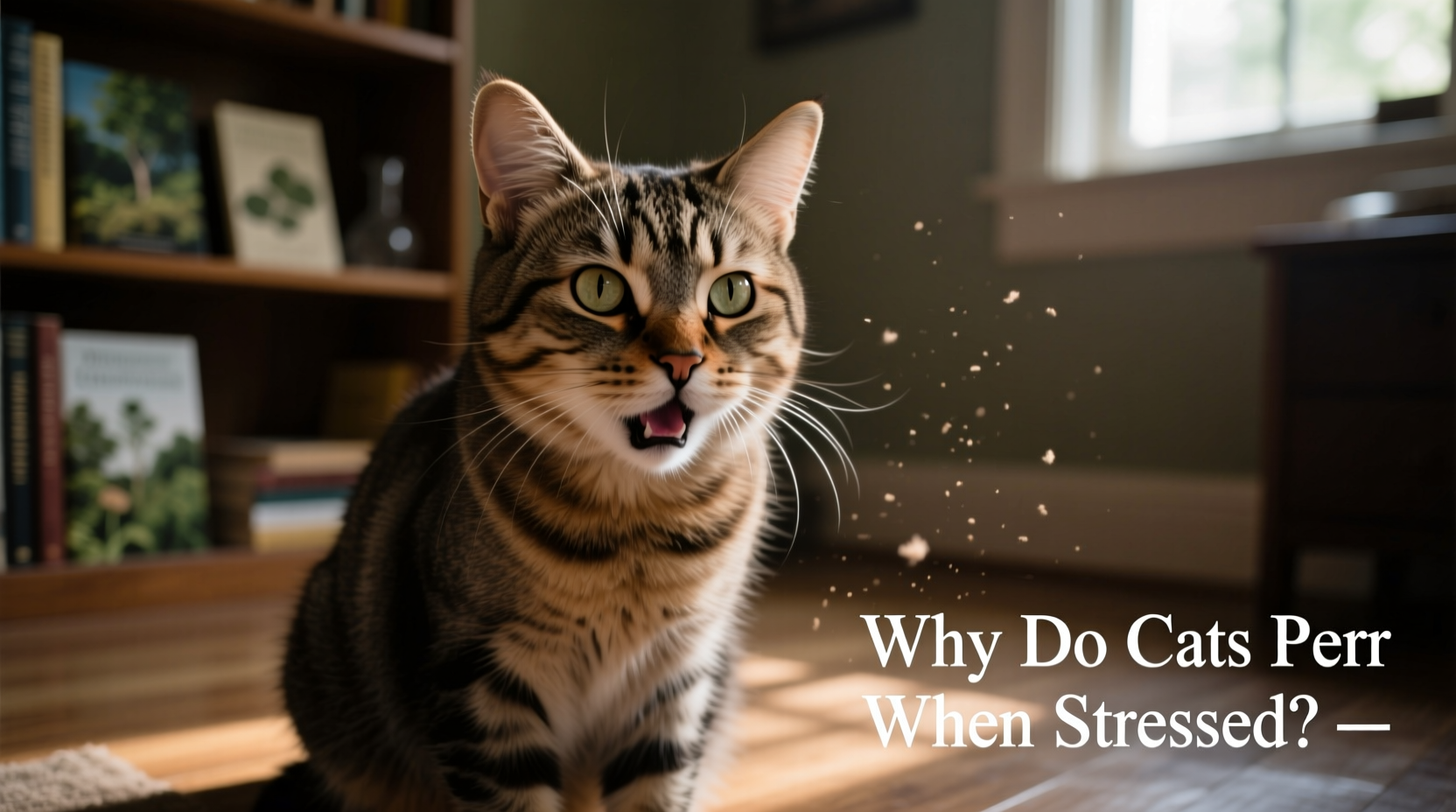
Purring is produced by rapid contractions of the laryngeal muscles, synchronized with the movement of the diaphragm. These vibrations create a low-frequency sound—typically between 25 and 150 Hertz—that resonates through the cat’s body. This process begins when neural signals from the brain’s central pattern generator activate the muscles around the larynx.
Interestingly, cats don’t just purr when they’re relaxed. Research shows that purring occurs across a range of emotional states, including injury, illness, labor, and even during euthanasia. The frequency of purring has been linked to therapeutic benefits: vibrations within the 25–150 Hz range have been shown to promote bone density, reduce pain, accelerate wound healing, and decrease inflammation.
“Purring is not just a social signal; it’s a self-soothing mechanism with measurable physiological benefits.” — Dr. Karen Sueda, Veterinary Behaviorist at VCA Animal Hospitals
This suggests that purring serves dual purposes: communication and self-healing. In stressful contexts, such as a visit to the vet or a thunderstorm, a cat may purr to calm its nervous system and stabilize vital functions like heart rate and breathing.
Purring as a Coping Mechanism
When faced with perceived threats—such as loud noises, unfamiliar environments, or physical discomfort—cats may lack the ability to flee or fight effectively. Instead, they employ displacement behaviors: actions that serve no immediate purpose but help manage anxiety. Purring is one such behavior.
In the wild, showing vulnerability can attract predators. A visibly distressed cat might draw unwanted attention. By purring, a stressed cat may mask signs of weakness while internally regulating its stress response. It’s a form of emotional camouflage—a way to appear calm while managing internal turmoil.
This behavior is especially evident in kittens. Newborns are blind and deaf for the first week of life, relying on tactile and vibrational cues from their mother. The queen purrs while nursing, creating a steady, reassuring rhythm. Kittens learn early that purring correlates with safety and proximity to care. As adults, cats may revert to this ingrained behavior when frightened, using purring as a psychological anchor to earlier feelings of security.
Decoding Emotional Signals: Beyond Purring
To accurately interpret a cat’s emotional state, purring must be evaluated alongside other behavioral cues. Body language offers critical context. A cat lying on its side, eyes half-closed, tail loosely curled, and purring softly is likely content. Conversely, a cat crouched low, ears flattened, pupils dilated, and purring quietly may be fearful or overwhelmed.
Other key indicators include:
- Tail position: A flicking tail suggests agitation; a tucked tail indicates fear.
- Ears: Forward-facing ears signal curiosity; sideways or backward ears suggest anxiety.
- Vocalizations: Hissing, growling, or yowling paired with purring often point to distress.
- Body tension: Rigid posture, wide stance, or raised fur (piloerection) indicate high arousal.
One study published in *Applied Animal Behaviour Science* analyzed shelter cats’ vocalizations and found that 42% of cats purr in high-stress environments like kennels. However, only 18% displayed accompanying signs of relaxation. This disconnect underscores the importance of holistic assessment—relying solely on purring leads to misinterpretation.
Do’s and Don’ts When Your Cat Purrs Under Stress
| Do’s | Don’ts |
|---|---|
| Provide a quiet, enclosed space (e.g., carrier with a blanket) | Force handling or excessive petting |
| Use pheromone diffusers (e.g., Feliway) to reduce environmental stress | Ignoring signs of distress because the cat is “just purring” |
| Speak in soft, low tones to offer reassurance | Sudden movements or loud noises near the cat |
| Monitor for changes in appetite, litter box use, or grooming | Assuming purring always means happiness |
Real-Life Scenario: Luna at the Vet Clinic
Luna, a three-year-old domestic shorthair, was brought in for her annual check-up. From the moment she entered the clinic, she began purring loudly—so much so that the veterinary technician initially assumed she was relaxed. However, Luna’s body told a different story: her ears were pinned back, her pupils were fully dilated, and she pressed herself into the far corner of her carrier.
Upon examination, Luna continued to purr while trembling slightly. The veterinarian recognized this as a classic case of stress-induced purring. Instead of proceeding immediately with the exam, the team allowed Luna time to acclimate. They placed her carrier on the floor, covered it with a towel, and used a Feliway spray nearby. After ten minutes, Luna’s purring softened, her breathing slowed, and she cautiously peeked out.
This case illustrates how easily purring can be misread. Had the staff assumed Luna was calm, they might have missed her anxiety and caused further distress. Recognizing purring as a potential red flag allowed them to adjust their approach and provide a lower-stress experience.
How to Support a Stressed, Purring Cat
When your cat purrs in a tense situation, your response can either escalate or alleviate their anxiety. The goal is to create a sense of safety without overwhelming them. Here’s a step-by-step guide to follow:
- Pause and Observe: Before reacting, take 30 seconds to assess body language. Is the cat hiding? Are the ears flat? Is the tail twitching?
- Create a Safe Zone: Offer access to a quiet room, cardboard box, or covered carrier. Height and enclosure increase perceived safety.
- Minimize Stimuli: Turn off loud appliances, dim lights, and keep other pets or children at a distance.
- Use Calming Aids: Consider synthetic feline facial pheromones (available as sprays or diffusers) known to reduce stress-related behaviors.
- Offer Gentle Reassurance: Sit nearby and speak softly. Avoid direct eye contact, which can feel threatening. Let the cat initiate contact.
- Monitor Over Time: If purring persists for hours without relief, or if accompanied by vomiting, diarrhea, or refusal to eat, consult a veterinarian to rule out pain or illness.
Checklist: Responding to Stress-Induced Purring
- ✅ Assess overall body language, not just the purring
- ✅ Identify and remove stress triggers (e.g., loud noises, strangers)
- ✅ Provide a secure hiding place
- ✅ Use pheromone products if needed
- ✅ Allow the cat to retreat and recover at their own pace
- ✅ Monitor for prolonged stress or physical symptoms
- ✅ Consult a vet if behavior changes persist beyond 24–48 hours
Frequently Asked Questions
Can purring indicate pain even if my cat seems normal?
Yes. Cats are masters at concealing pain due to evolutionary instincts. Purring while resting, reduced mobility, decreased grooming, or loss of appetite can all signal underlying discomfort. If you suspect pain, schedule a veterinary exam—even subtle changes warrant attention.
Is it harmful for a cat to purr too much when stressed?
Not directly. Purring itself is not harmful and may actually support healing. However, chronic stress—indicated by frequent or prolonged purring in tense situations—can weaken the immune system, lead to urinary issues, or cause behavioral problems like overgrooming. Managing the root cause of stress is essential.
Do all cats purr when stressed?
No. Individual temperament, early socialization, and breed play roles in how cats express stress. Some may hide silently, others meow excessively, and some freeze in place. Not purring doesn’t mean a cat isn’t stressed—it means they use different coping strategies.
Understanding the Full Spectrum of Feline Emotion
Purring when stressed challenges the myth that cats are simple creatures who purr only when happy. In reality, feline emotions are complex, layered, and deeply tied to survival. Purring is a multifunctional tool—one that communicates, heals, and calms. Recognizing its varied uses empowers owners to respond with empathy rather than assumption.
As our understanding of animal cognition advances, it becomes clear that cats are not emotionally simplistic. They navigate fear, comfort, pain, and connection using a sophisticated blend of vocalizations, scent marking, and body language. Purring is just one thread in a rich communicative tapestry.
“We need to stop anthropomorphizing purring as ‘happiness’ and start seeing it as a dynamic behavior shaped by context.” — Dr. Mikel Delgado, Feline Behavior Scientist, University of California, Davis
By shifting our perspective, we move from passive observers to active supporters of our cats’ well-being. We learn to listen not just to the sound, but to the silence between the vibrations—the flick of an ear, the twitch of a tail, the weight of a gaze. These are the true indicators of what a cat is feeling.
Conclusion: Listen Beyond the Hum
The next time your cat purrs during a storm, a vet visit, or a household change, resist the urge to assume everything is fine. Pause. Look closer. What else is your cat telling you? Purring in stress is not a contradiction—it’s a revelation. It shows us that cats use sound not just to express joy, but to endure difficulty.
By learning to decode these emotional signals, you deepen your bond and become a more attuned caregiver. Start today: observe your cat in different settings, note patterns in their purring, and respond with patience and insight. Your cat may never speak in words, but they are always communicating—if you’re willing to listen.




 浙公网安备
33010002000092号
浙公网安备
33010002000092号 浙B2-20120091-4
Comments
No comments yet. Why don't you start the discussion?