
Cats have long fascinated humans with their enigmatic behaviors—pouncing at invisible prey, kneading soft surfaces, and, perhaps most famously, squeezing themselves into cardboard boxes much smaller than they appear to fit. This peculiar habit is more than just a quirky internet meme; it’s deeply rooted in feline psychology and survival instincts. Understanding why cats are drawn to boxes offers valuable insight into their emotional needs, stress responses, and environmental preferences. Whether you're a cat owner, animal behavior enthusiast, or simply curious about the minds of these agile companions, exploring the science behind box-sitting reveals much about how cats experience the world.
The Science Behind Box-Sitting: Security and Stress Reduction
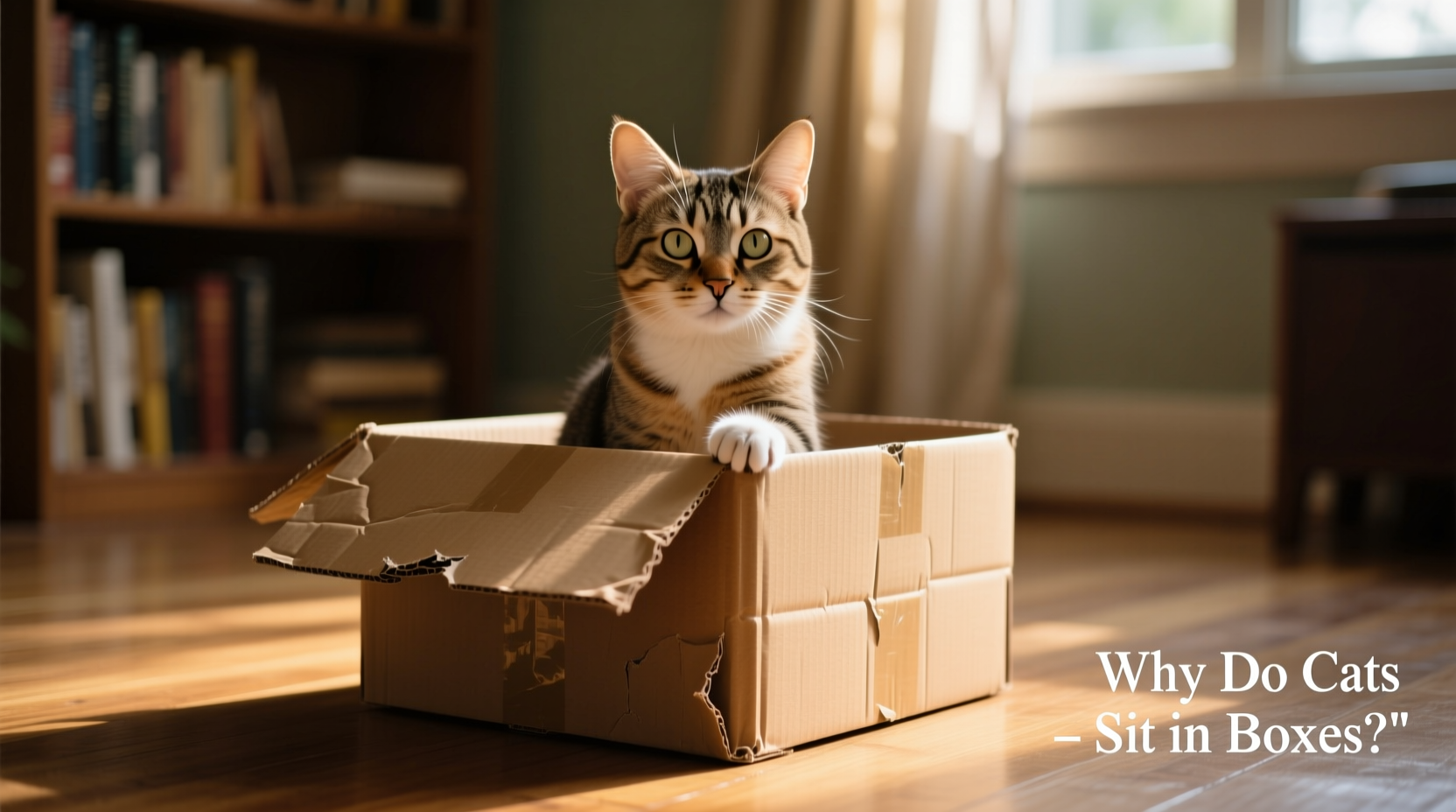
One of the primary reasons cats seek out enclosed spaces like boxes is security. In the wild, cats are both predators and prey. Even though domesticated cats don’t face the same dangers as their ancestors, their instincts remain intact. Enclosed spaces mimic dens or hiding spots where a cat can observe its surroundings without being exposed. This sense of concealment reduces anxiety and provides a psychological refuge from overwhelming stimuli.
A 2015 study conducted by researchers at Utrecht University in the Netherlands observed shelter cats and found that those given access to cardboard boxes adapted to their new environment significantly faster than those without. The study concluded that boxes acted as “hiding places” that helped reduce stress during transitions. Cats with boxes exhibited lower stress scores within just three days, while those without remained highly stressed for over a week.
“Providing hiding opportunities is not a luxury—it's a fundamental part of feline well-being.” — Dr. Claudia Vinke, Veterinary Ethologist, Utrecht University
This research underscores an essential truth: boxes aren't just fun—they’re functional tools for emotional regulation. When a cat retreats into a box, it’s not merely playing; it’s engaging in self-soothing behavior that helps manage uncertainty and maintain a sense of control.
Thermoregulation: Why Warmth Matters More Than You Think
Beyond safety, temperature plays a crucial role in a cat’s attraction to boxes. The ideal ambient temperature for a domestic cat ranges between 86°F and 97°F (30°C–36°C), significantly higher than typical human comfort levels. Cardboard, despite its flimsy appearance, is an excellent insulator. When a cat curls up inside a box, the material traps body heat, creating a warm microclimate that supports thermoregulation.
This need for warmth stems from evolutionary biology. Wild felids often sought shelter in rock crevices, hollow logs, or dense brush to conserve energy and stay warm during cooler periods. Domestic cats retain this preference, which explains why they often choose sunny windowsills, radiators, or freshly dried laundry—anything that retains heat. A cardboard box, especially one placed near a heat source, becomes a cozy thermal nest.
Observation Posts and Hunting Instincts
Cats are ambush predators by nature. Even well-fed housecats display hunting behaviors such as stalking, pouncing, and sudden bursts of speed. Boxes—especially open-topped ones—offer elevated vantage points from which cats can survey their territory. From this perch, they can monitor household activity, track moving objects (including toys, feet, or shadows), and prepare for impromptu “attacks” on unsuspecting ankles.
This behavior isn’t random play; it’s practice. Stalking and ambushing help cats maintain sharp reflexes and cognitive engagement. A box effectively becomes a command center: hidden yet strategic, allowing the cat to remain unseen while gathering sensory information. This dual function—protection plus surveillance—makes boxes uniquely appealing compared to open beds or cushions.
In multi-cat households, boxes may also serve as temporary territorial markers. A cat sitting in a box might be signaling ownership over a space, especially if resources like food, litter boxes, or resting areas are limited. Observing who uses which box—and when—can reveal social hierarchies and potential stress points within the group dynamic.
Environmental Enrichment: How Boxes Support Mental Health
Indoor cats, while safer from external threats, often suffer from under-stimulation. Without adequate mental challenges, they can develop behavioral issues such as excessive grooming, aggression, or nocturnal hyperactivity. Providing boxes is a simple yet effective form of environmental enrichment.
Boxes encourage exploration, spatial reasoning, and problem-solving. A cat navigating a stack of different-sized boxes learns about balance, depth perception, and physical limits. Cutting holes or tunnels into boxes transforms them into interactive puzzles. Rotating boxes regularly introduces novelty, keeping the environment mentally stimulating.
| Box Type | Behavioral Benefit | Tips for Use |
|---|---|---|
| Standard Cardboard Box | Security, warmth | Line with soft fabric; replace when worn |
| Box with Cut-Out Holes | Stimulation, play | Vary hole sizes and positions weekly |
| Stacked Boxes | Spatial navigation | Secure stacks to prevent collapse |
| Box with Toy Inside | Hunting simulation | Use lightweight, non-choking hazard toys |
The key is variety. Just as humans grow bored with repetitive routines, cats benefit from changing environments. Reconfiguring boxes every few days mimics the unpredictability of natural habitats, satisfying innate curiosity.
When Box-Sitting Might Signal a Problem
While occasional box use is normal and healthy, excessive hiding can indicate underlying issues. If a cat spends nearly all day in a box, avoids interaction, or shows signs of illness (lethargy, poor appetite, vocalization), it may be trying to withdraw due to pain or distress. Unlike secure hiding, anxious hiding is often accompanied by flattened ears, dilated pupils, or defensive postures.
Sudden changes in box usage—such as a previously social cat now refusing to leave a container—should prompt a veterinary checkup. Medical conditions like arthritis, dental pain, or hyperthyroidism can make cats seek isolation. Similarly, environmental stressors like loud noises, new pets, or home renovations may drive increased box dependency.
Mini Case Study: Mia, the Shelter Cat
Mia, a two-year-old tabby, was surrendered to a local shelter after her owner moved to a pet-restricted apartment. Initially, she crouched silently in the back of her cage, avoiding eye contact and refusing treats. Staff introduced a small cardboard box into her enclosure. Within hours, Mia entered the box and began grooming herself—a sign of reduced stress. Over the next five days, she gradually emerged more, eventually approaching volunteers for attention. She was adopted within two weeks.
Shelter staff credited the box with giving Mia a sense of control in an unfamiliar environment. Without it, her adjustment period might have been longer, increasing the risk of prolonged stress-related health issues. This case illustrates how something as simple as a box can dramatically impact a cat’s emotional resilience.
Practical Tips for Cat Owners: Creating a Box-Friendly Home
You don’t need expensive cat furniture to support your pet’s behavioral needs. With a few thoughtful strategies, everyday boxes can become powerful tools for feline well-being.
- Choose the right size: The box should allow the cat to turn around and lie down comfortably but feel snug enough to provide security.
- Remove tape and labels: Adhesives and plastic strips can be choking hazards or irritate paws.
- Elevate some boxes: Place boxes on low shelves or beside furniture to give cats a raised observation point.
- Add soft lining: Use old towels or blankets to increase comfort and insulation.
- Rotate regularly: Swap out boxes weekly to maintain novelty and prevent wear.
- Encourage exploration: Toss in catnip or a crinkle toy to spark interest.
Checklist: Is Your Home Box-Ready?
- ✅ At least one enclosed space per cat (boxes, cubbies, or covered beds)
- ✅ Boxes placed in quiet, low-traffic areas
- ✅ No loose strings, staples, or toxic inks on boxes
- ✅ Multiple levels or heights available
- ✅ Regular rotation schedule (every 5–7 days)
- ✅ Observation of cat’s response to each setup
Frequently Asked Questions
Is it safe for cats to chew on cardboard?
Minor nibbling is generally harmless, as long as the cardboard is clean and free of ink, tape, or chemicals. However, large ingestions can cause intestinal blockages. If your cat frequently eats cardboard, consult a vet to rule out nutritional deficiencies or compulsive disorders.
Can I use plastic containers instead of cardboard?
Plastic bins can work if they’re well-ventilated and lined with soft material, but they lack the insulating properties of cardboard. They may also be slippery or noisy, making cats less likely to feel secure. Cardboard remains the preferred option for most cats.
What if my cat ignores the boxes I provide?
Not all cats respond the same way. Some prefer open beds or high perches. Try varying the location, size, or texture. Introduce catnip or spend time near the box to create positive associations. Patience and experimentation are key.
Conclusion: Respecting the Feline Mind
The sight of a cat curled up in a box barely large enough to hold them is undeniably charming—but it’s also a window into a complex and finely tuned psyche. What we perceive as whimsy is, in fact, purposeful behavior shaped by evolution, physiology, and emotion. By recognizing the deeper meaning behind box-sitting, we gain a greater appreciation for our feline companions and learn how to meet their needs more effectively.
Simple actions—like saving a cardboard box instead of recycling it immediately—can have profound effects on a cat’s quality of life. These small gestures acknowledge that cats are not just pets, but sentient beings with distinct psychological requirements. As caretakers, we have the power to create environments where cats don’t just survive, but thrive.




 浙公网安备
33010002000092号
浙公网安备
33010002000092号 浙B2-20120091-4
Comments
No comments yet. Why don't you start the discussion?