
Cats are creatures of habit, mystery, and undeniable charm. One of the most universally observed quirks among cat owners is the inexplicable attraction their pets have to cardboard boxes—even when those boxes are significantly larger than their bodies. From shipping containers to cereal boxes, if it has walls and a floor, there's a good chance a cat will claim it as territory. But what drives this behavior? Is it comfort, curiosity, or something deeper rooted in feline evolution? Understanding why cats choose boxes far exceeding their physical dimensions requires a deep dive into feline psychology, sensory processing, and survival instincts.
The Evolutionary Roots of Box-Sitting Behavior
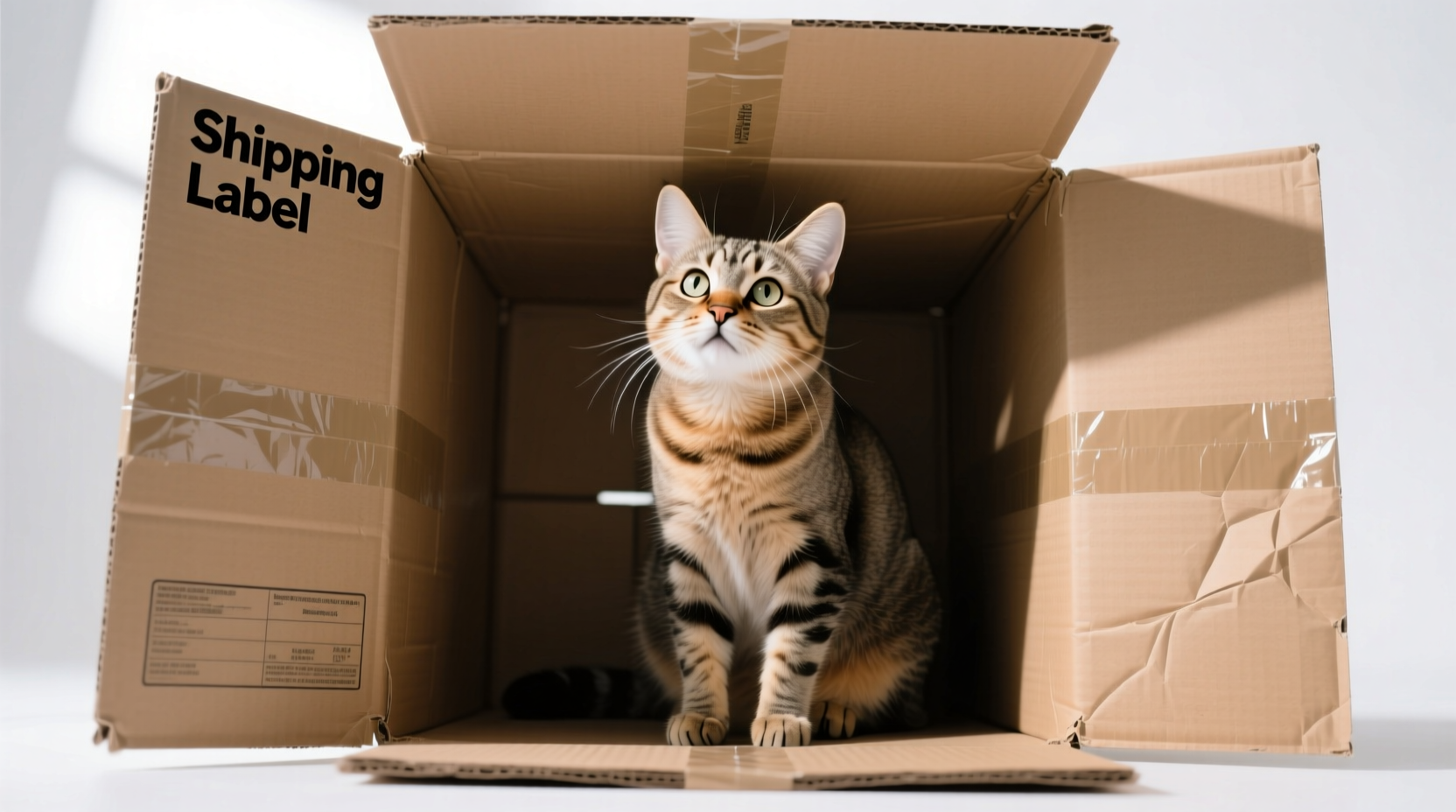
Cats, even domesticated ones, carry genetic imprints from their wild ancestors. In the wild, small predators like the African wildcat—the progenitor of today’s housecat—rely on concealment for both hunting and protection. Enclosed spaces offer safety from larger predators and allow ambush tactics when stalking prey. This ingrained need for secure hiding spots persists in modern cats, despite living in safe, indoor environments.
When a cat enters a box, especially one with high sides, it simulates the feeling of being sheltered from above and on the sides. Even if the box is oversized, the mere presence of boundaries creates a psychological sense of enclosure. The corners act as reference points, helping the cat mentally map its surroundings and feel more in control. This spatial awareness reduces anxiety and increases perceived security.
“Cats don’t just seek warmth or comfort—they seek control over their environment. A box, regardless of size, gives them that illusion of containment and safety.” — Dr. Sarah Ellis, Feline Behavior Researcher, University of Lincoln
This explains why a cat might prefer a large moving box over a snug carrier. While the carrier may fit better physically, its unfamiliarity and association with vet visits can trigger stress. The cardboard box, neutral and scent-free (at first), becomes a blank canvas for the cat to claim as its own.
Thermoregulation and the Appeal of Cardboard
Beyond psychological factors, there’s a physiological reason cats are drawn to boxes: temperature regulation. The average resting body temperature of a cat ranges between 100.5°F and 102.5°F (38°C–39.2°C), which is higher than humans. To maintain this internal heat efficiently, cats often seek out warm, insulated spaces.
Cardboard is a natural insulator. Its fibrous structure traps air, creating a microclimate that retains body heat. When a cat settles into a box, its warmth gradually builds up within the space, turning the box into a cozy thermal nest. Even oversized boxes contribute to this effect—while they may not fit tightly, the walls still reduce airflow and radiant heat loss.
Interestingly, studies conducted at the University of Utrecht found that shelter cats given access to cardboard boxes showed significantly lower stress levels during their first week in a new environment compared to those without boxes. The researchers concluded that the availability of enclosed spaces acted as an environmental enrichment tool, directly impacting emotional well-being through improved thermoregulation and reduced exposure.
Sensory Processing and Environmental Control
Cats process sensory input differently than humans. Their vision excels in low light but lacks depth perception up close. They rely heavily on whiskers (vibrissae) to gauge spatial relationships. When entering a confined space, the whiskers brush against surfaces, sending neurological signals about proximity and enclosure.
An oversized box may seem illogical to us, but to a cat, the tactile feedback from the edges provides continuous orientation. The cat doesn't need to \"fill\" the space to benefit from it—it only needs enough boundary contact to feel grounded. This is particularly important in homes with open layouts, where visual stimuli from multiple directions can be overwhelming.
In multi-cat households, this becomes even more pronounced. A dominant cat may occupy a large box not because it fits perfectly, but because the box marks a strategic location—often near a window, doorway, or heat source. By claiming the space, the cat establishes surveillance control over its territory. Other cats may avoid approaching, recognizing the box as a power zone.
Do’s and Don’ts of Cat Box Enrichment
| Do’s | Don’ts |
|---|---|
| Provide multiple box sizes to allow choice | Use boxes with staples, tape, or sharp edges |
| Place boxes in quiet, elevated areas for privacy | Force a cat into a box or disturb them while inside |
| Add soft bedding or familiar-smelling fabric | Use scented cleaners or perfumed materials nearby |
| Rotate boxes regularly to maintain novelty | Assume all cats will use boxes equally—some prefer shelves or tunnels |
Behavioral Psychology: The Comfort of Confinement
Despite their reputation for independence, cats thrive on predictability. Unpredictable environments lead to chronic low-level stress, which manifests in behaviors like over-grooming, aggression, or litter box avoidance. Enclosed spaces like boxes provide cognitive relief by reducing perceptual load—the amount of information the brain must process at once.
A 2016 study published in *Applied Animal Behaviour Science* demonstrated that cats exposed to novel environments exhibited faster acclimation when provided with hiding boxes. The researchers noted that “the ability to hide was more important than the size of the enclosure,” reinforcing the idea that psychological safety outweighs physical fit.
This helps explain why kittens and senior cats alike are often seen in boxes too big for them. For kittens, the box serves as a playpen and training ground for predatory behaviors—pouncing, hiding, and ambushing toys. For older cats, it offers joint support (on softer surfaces) and a retreat from household activity. The size becomes irrelevant; the function remains central.
Mini Case Study: Luna and the Office Moving Box
Luna, a three-year-old tortoiseshell rescue cat, lived in a bustling two-bedroom apartment with two remote workers and frequent guests. Her owners noticed she consistently avoided her plush cat bed but spent hours each day sitting in an empty Amazon shipping box measuring 18” x 16” x 14”—nearly twice her body length.
After consulting a certified feline behaviorist, they realized the box was positioned beneath a desk near a south-facing window. Though oversized, it offered partial cover from above (the desk), side enclosures (box walls), and a view of outdoor bird activity. The location gave Luna maximum environmental control with minimal exposure.
Her owners replaced the box weekly with fresh cardboard and added a fleece liner. Over time, Luna’s reactivity to doorbells and visitors decreased significantly. The behaviorist concluded that the box wasn’t just a novelty—it was a critical coping mechanism for managing sensory overload in a busy home.
Step-by-Step Guide to Enhancing Your Cat’s Box Experience
If you want to support your cat’s natural instincts while encouraging healthy engagement with boxes, follow this practical sequence:
- Select safe, clean boxes: Choose undamaged cardboard containers free of ink residue, tape, or staples. Remove all plastic inserts or packaging materials.
- Modify for accessibility: Cut one side down if needed to make entry easier, especially for older or arthritic cats. Avoid fully sealed boxes.
- Enhance comfort: Line the bottom with a washable blanket, towel, or cushion. Use fabrics with your scent to increase familiarity.
- Strategic placement: Position boxes in low-traffic zones, near windows, or adjacent to favorite furniture. Elevated platforms add appeal.
- Encourage exploration: Toss in catnip, silver vine, or crinkle toys to spark interest. Rotate boxes every few days to prevent boredom.
- Monitor usage patterns: Note how long your cat stays inside, time of day, and reactions to disturbances. Adjust placement or design accordingly.
- Gradual retirement: When replacing a well-used box, leave the old one nearby for a few days to ease transition and prevent territorial stress.
Frequently Asked Questions
Why does my cat sit in a box that’s clearly too big?
Cats prioritize environmental security over physical fit. A large box still provides visual barriers, insulation, and a defined boundary that helps them feel protected. The size allows room to stretch, turn, or adjust position while maintaining the benefits of enclosure.
Is it normal for my cat to ignore smaller, custom-made cat beds?
Yes. Many commercially available cat beds lack the structural definition of a box. Soft, open beds don’t offer the same sense of containment. Cats often prefer DIY solutions like cardboard boxes because they provide clearer spatial limits and better heat retention.
Should I be concerned if my cat suddenly starts hiding in boxes more often?
Increased hiding can signal stress, illness, or environmental changes. If accompanied by appetite loss, lethargy, or avoidance of social interaction, consult a veterinarian. Otherwise, occasional increased use of boxes during noisy events (like storms or parties) is normal coping behavior.
Expert Insight: The Cognitive Value of Simple Spaces
“Enrichment doesn’t have to be expensive or complex. A cardboard box offers cognitive stimulation, motor skill development, and emotional regulation—all in one simple object.” — Dr. Tony Buffington, Veterinary Medical Advisor, UC Davis College of Veterinary Medicine
This perspective underscores a fundamental truth in feline care: cats don’t require elaborate toys or designer furniture to thrive. What they need is agency—the ability to make choices about their environment. A box, no matter its size, represents autonomy. It’s a self-selected sanctuary, a place where the cat decides when to engage and when to withdraw.
Conclusion: Embracing the Quirks of Feline Nature
The sight of a cat curled up in a box far too large to contain it neatly may seem comical, even illogical. But beneath this everyday oddity lies a sophisticated interplay of evolutionary biology, sensory processing, and emotional intelligence. Boxes—simple, disposable, and abundant—are not mere novelties. They are functional tools that fulfill deep-seated needs for safety, warmth, and control.
By understanding the psychology behind this behavior, cat owners can move beyond amusement to empathy. Instead of removing boxes as clutter, we can recognize them as essential components of a mentally healthy feline environment. Whether your cat prefers a tiny tea box or a massive appliance container, the principle remains the same: the box is not just a space—it’s a state of mind.




 浙公网安备
33010002000092号
浙公网安备
33010002000092号 浙B2-20120091-4
Comments
No comments yet. Why don't you start the discussion?