
Cats are masters of contradiction—graceful yet clumsy, affectionate yet aloof, and endlessly curious even when they’ve chosen to curl up inside a cardboard box that’s clearly too big. If you’ve ever watched your cat squeeze into a shipping container meant for a toaster, or stretch out luxuriously in a box designed for a flat-screen TV, you’ve likely wondered: why do cats sit in boxes larger than them? It’s not just a quirk; it’s a window into their evolutionary psychology, emotional needs, and sensory preferences. Understanding this behavior goes beyond amusement—it can help you create a more enriching environment for your feline companion.
The Evolutionary Roots of Box-Sitting Behavior
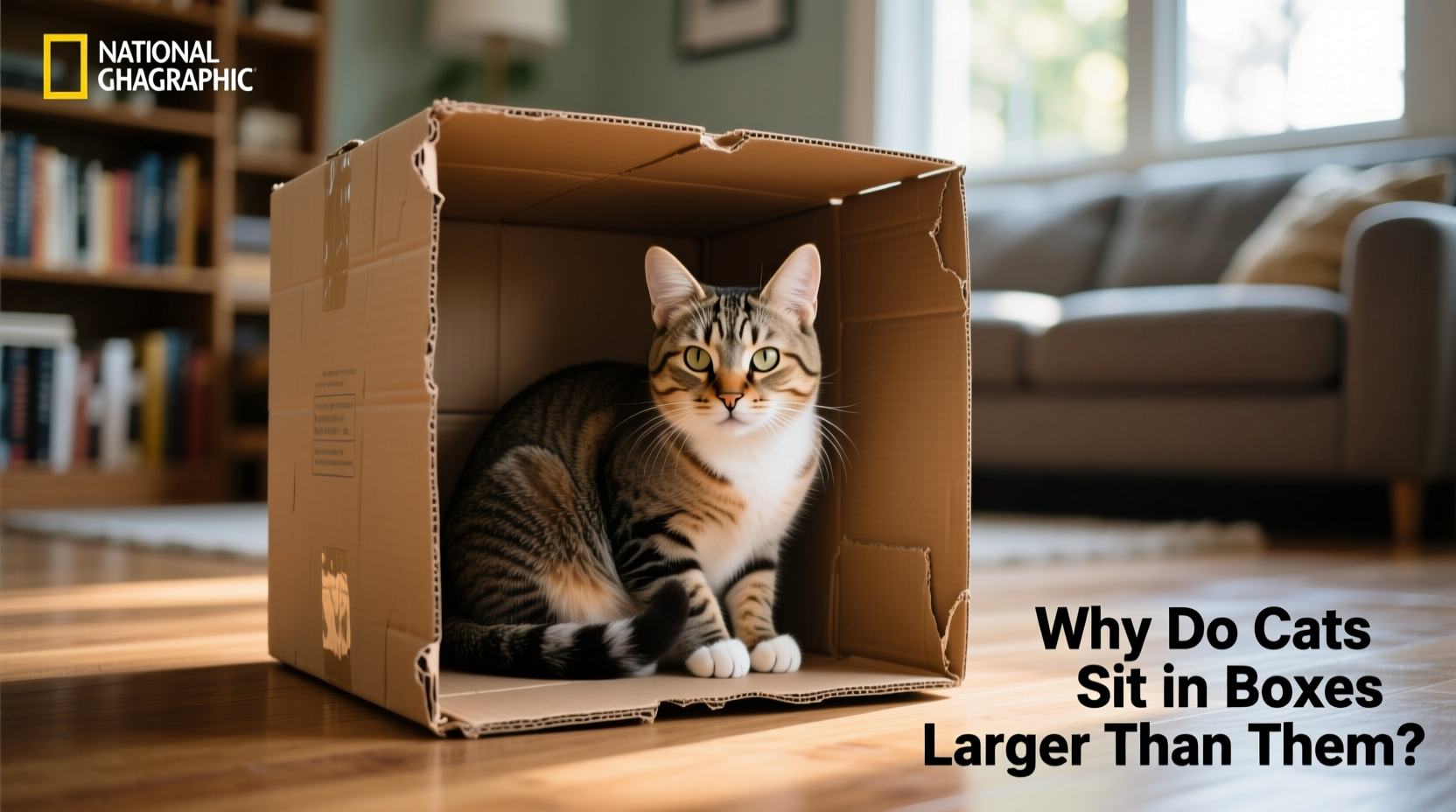
Cats, even domesticated ones, carry instincts shaped over thousands of years of survival. In the wild, small predators like the African wildcat—the ancestor of today’s housecat—relied on concealment and thermal regulation to stay safe and conserve energy. Enclosed spaces mimic the burrows, hollow logs, and dense underbrush where cats once sought refuge from predators and extreme weather.
A box, regardless of size, provides a psychological sense of enclosure. Even if the cat doesn’t fully fit, the walls offer visual barriers that reduce exposure and perceived vulnerability. This aligns with research conducted at the Utrecht University in the Netherlands, which found that shelter cats given access to hiding boxes adjusted to new environments faster and exhibited lower stress levels than those without.
“Enclosure-seeking is a deeply ingrained coping mechanism. A box isn’t just a toy—it’s a security blanket with walls.” — Dr. Sarah Ellis, Feline Behavior Scientist, University of Lincoln
The size of the box matters less than the presence of boundaries. A large box still defines a territory, offering a “safe zone” where the cat can observe its surroundings without being fully exposed. This explains why a 10-pound cat might sprawl across a box meant for a microwave rather than opting for a snug fit.
Thermoregulation: The Warmth Factor
Cats maintain a higher body temperature than humans—typically between 100.5°F and 102.5°F. To conserve energy, they seek out warm spots, and cardboard is an excellent insulator. Even in a room at comfortable human temperatures, a cat may feel the chill, especially on hard floors like tile or hardwood.
A large box, while seemingly inefficient due to excess space, often traps ambient heat when placed near a radiator, sunny window, or heating vent. Once the cat settles in, its body heat warms the immediate microclimate within the box. Over time, the entire interior can become a cozy thermal nest. Additionally, many cats line their boxes with soft materials—blankets, clothing, or shredded paper—which further enhances insulation.
Sensory Security and Environmental Control
Cats are highly sensitive to environmental stimuli. Sudden noises, unfamiliar scents, or unpredictable movements can trigger stress. A box acts as a sensory buffer, dampening sound and limiting peripheral vision. This allows the cat to focus on one direction—usually the entrance—giving it a sense of control.
In multi-pet households or busy homes, this need for controlled observation becomes even more critical. A large box offers strategic advantages: elevated sightlines if the cat sits upright, space to retreat deeper if startled, and room to stretch or reposition without exiting the safety zone.
Interestingly, studies suggest that cats prefer boxes with low entry points and high sides—features that allow quick escape while maintaining protection. This preference holds true regardless of the box’s overall dimensions, explaining why oversized containers remain appealing.
Behavioral Benefits of Hiding Spaces
Providing boxes isn’t just about indulging a whimsical habit—it supports mental health. Chronic stress in cats can lead to behavioral issues such as inappropriate elimination, excessive grooming, or aggression. Access to hiding spots helps mitigate these risks by offering outlets for natural behaviors.
A 2017 study published in *Applied Animal Behaviour Science* demonstrated that cats with consistent access to enclosed spaces showed fewer signs of anxiety during veterinary visits. While the study focused on clinical settings, the principle applies at home: predictable, secure spaces reduce baseline stress.
Moreover, box-sitting isn’t passive behavior. It’s often part of a cat’s routine surveillance—monitoring household activity, tracking prey-like movements (such as a dangling cord or shadow), or simply waiting for interaction on their terms. An oversized box gives them room to shift positions, stand up, or stretch mid-vigil, making it functionally superior to tighter enclosures.
Do’s and Don’ts of Providing Cat Boxes
| Action | Recommendation |
|---|---|
| Use clean, undamaged boxes | ✅ Do – Avoid tape residue or sharp edges |
| Add soft lining | ✅ Do – Use old towels or fleece for comfort |
| Place boxes in quiet areas | ✅ Do – Reduce foot traffic for maximum use |
| Use plastic storage bins | ⚠️ Caution – Ensure ventilation and easy exit |
| Force a cat into a box | ❌ Don’t – Let them choose when to enter |
| Dispose of boxes too quickly | ❌ Don’t – Cats bond with familiar scents |
Mini Case Study: Luna and the Moving Day Box
Luna, a 3-year-old rescue tabby, lived in a bustling two-bedroom apartment with two dogs and frequent guests. When her owners moved to a new home, they anticipated weeks of adjustment. Instead, Luna settled in within days—all because of a single large moving box left open in the living room.
Initially hesitant, she sniffed the box, then stepped inside. Over the next 48 hours, she alternated between hiding deep within and lounging at the entrance, watching unpacking activities. Her owners noticed she only left to eat, use the litter box, or briefly interact. By day five, she was exploring freely—but still returned to the same box each night.
Veterinary behaviorist Dr. Karen Becker noted, “The box didn’t just provide shelter—it gave Luna a reference point in a disorienting environment. Its size allowed her to move, stretch, and reposition without losing that anchor.”
This case illustrates how oversized boxes serve as transitional sanctuaries during change, supporting emotional resilience even when they seem impractical.
Understanding Size Preferences: Why Bigger Can Be Better
While intuition suggests cats would prefer snug fits, observations and owner reports consistently show that many felines favor larger boxes. There are several practical reasons:
- Freedom of movement: A large box allows stretching, rolling, and shifting without constant readjustment.
- Multi-purpose use: Some cats use big boxes as play arenas, batting toys around inside or practicing pounces.
- Thermal zoning: Cats can position themselves closer to or farther from walls to regulate warmth.
- Social signaling: In multi-cat homes, a large box can accommodate multiple cats side-by-side, reinforcing social bonds.
Interestingly, kittens and older cats show a stronger preference for larger enclosures. Kittens use them for exploration and play, while senior cats appreciate the ease of entry and space to rest arthritic limbs.
Step-by-Step Guide: Creating the Ideal Cat Box Environment
- Select the right box: Choose a sturdy cardboard container with intact flaps and minimal printing (inks may contain irritants).
- Modify for safety: Remove all tape, staples, and loose labels. Consider cutting a second exit if the box is very large.
- Add comfort: Line the bottom with a soft, washable fabric. Avoid synthetic fragrances or dryer sheets.
- Position strategically: Place the box in a low-traffic area with partial visibility—near a window or beside a favorite furniture piece.
- Rotate periodically: Introduce new boxes every few weeks to maintain novelty, but keep one familiar option available.
- Observe usage patterns: Note when and how your cat uses the box to refine placement and design.
Frequently Asked Questions
Is it normal for my cat to sit in boxes much larger than they are?
Yes, it’s completely normal. Size doesn’t negate the psychological benefits of enclosure. As long as the box provides boundaries and a sense of security, cats will use it regardless of fit.
Should I be concerned if my cat hides in boxes all day?
Occasional hiding is healthy, but sudden or prolonged seclusion may indicate illness or stress. Monitor for changes in appetite, litter box use, or vocalization. If concerns persist, consult your veterinarian.
Can I use plastic bins instead of cardboard boxes?
You can, but ensure adequate ventilation and non-slip flooring. Cardboard remains preferable due to its insulating properties and ease of replacement. Never use sealed containers.
Practical Checklist for Cat Owners
- ✅ Provide at least one enclosed space per cat in the household
- ✅ Use untreated cardboard boxes free of toxic adhesives
- ✅ Position boxes in quiet, accessible locations
- ✅ Rotate boxes monthly to maintain engagement
- ✅ Observe your cat’s preferred box size and style
- ✅ Avoid placing boxes in drafty or noisy areas
- ✅ Respect your cat’s privacy—don’t disturb them while inside
Conclusion: Embracing the Box Habit for a Happier Cat
The sight of a cat lounging in a box far too large is more than a viral internet moment—it’s a testament to the enduring instincts of a species finely tuned to seek safety, warmth, and control. By understanding why cats exhibit this behavior, we gain insight into their emotional world and learn how to support their well-being in simple, cost-effective ways. You don’t need expensive cat caves or designer hideouts; sometimes, the most effective enrichment comes free with your last online order.
Next time you see your cat sprawled in an oversized box, resist the urge to intervene. Instead, appreciate the complex interplay of evolution, comfort, and choice at work. And if you’re inspired to deepen your understanding of feline behavior, consider sharing your own observations with fellow cat lovers—because every box story adds to our collective knowledge of these mysterious, wonderful creatures.




 浙公网安备
33010002000092号
浙公网安备
33010002000092号 浙B2-20120091-4
Comments
No comments yet. Why don't you start the discussion?