
Cats have a long-standing reputation for choosing the most unexpected places to rest—your laptop, the edge of the kitchen counter, or seemingly every cardboard box that enters the house. Of all these peculiar preferences, perhaps none is more iconic than the cat-in-a-box phenomenon. Whether it's a shipping container, a gift box, or even a square taped to the floor, cats appear irresistibly drawn to confined spaces. While this behavior may seem whimsical or random, science reveals a complex interplay of biology, psychology, and evolutionary instinct. Understanding why cats sit in boxes goes beyond mere amusement—it offers insight into their emotional needs, physical comfort, and survival mechanisms rooted deep in their ancestry.
The Comfort of Confinement: A Safe Haven
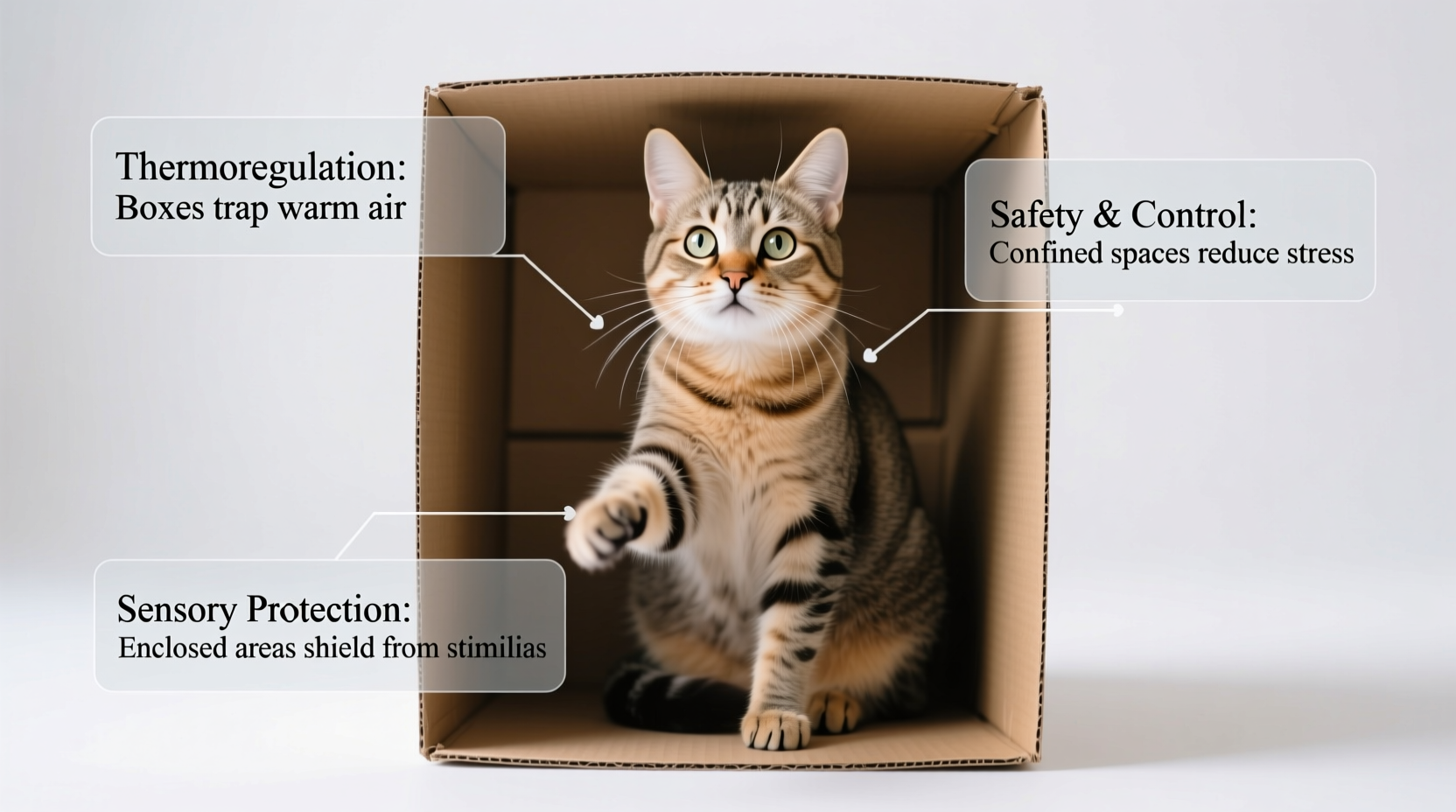
One of the primary reasons cats are drawn to boxes is the sense of security they provide. In the wild, felines are both predators and prey. Even domesticated cats retain instincts from their wild ancestors, who sought shelter in enclosed spaces to avoid detection by larger predators. A box acts as a miniature den, offering protection on three or four sides and limiting exposure from behind.
Enclosed spaces reduce sensory overload. Cats are highly sensitive to environmental stimuli, including sudden movements, loud noises, and unfamiliar scents. When placed in a new or stressful environment—such as a veterinary clinic, a shelter, or even a newly furnished room—a box gives them a retreat where they can observe without being seen. This ability to \"hide while staying aware\" reduces anxiety and helps regulate their stress response.
“Cats are ambush predators and prefer to remain unseen until they choose to engage. Boxes fulfill that need for concealment and control.” — Dr. Sarah Elliott, Feline Behavior Specialist
Thermoregulation: Warmth and Energy Efficiency
Cats have a higher ideal body temperature than humans—ranging between 100.5°F and 102.5°F (38°C–39.2°C). To maintain this internal heat, they seek out warm environments, especially in cooler rooms. Cardboard is a surprisingly effective insulator, trapping body heat and creating a microclimate within the box. This makes boxes not just emotionally comforting but physically beneficial.
A study conducted at Utrecht University in the Netherlands explored stress levels in shelter cats given access to hiding boxes versus those without. The results were clear: cats with boxes adapted to their new surroundings significantly faster and exhibited lower cortisol levels, a key stress hormone. Researchers concluded that access to hiding places improved both psychological and physiological well-being.
This preference for warmth extends to other enclosed spaces—under blankets, inside laundry baskets, or curled up in drawers. It’s not about the box itself, but what the box represents: a snug, insulated space that minimizes heat loss and maximizes energy conservation.
The Evolutionary Edge: Instinct Over Innovation
Long before cardboard was invented, wild felids used hollow logs, rock crevices, and dense brush to hide, rest, and stalk prey. These natural enclosures provided thermal regulation, camouflage, and protection during vulnerable moments like sleeping or recovering from injury. Domestic cats, despite generations of living alongside humans, have changed little in their behavioral genetics.
Their attraction to boxes isn’t learned behavior; it’s hardwired. From an evolutionary standpoint, animals that successfully minimized exposure to threats had greater survival rates. Choosing a confined space over an open one conferred a selective advantage, reinforcing the instinct across generations.
This explains why even well-fed, indoor-only cats—who face no real predation risk—still exhibit strong preferences for tight spaces. Their brains are still tuned to ancient survival logic: small, enclosed = safe.
Do All Cats Like Boxes?
While the majority of cats show some interest in boxes, individual personalities and early life experiences influence how strongly they respond. Kittens raised in enriched environments with plenty of hiding spots tend to be more confident and may explore boxes out of curiosity rather than necessity. In contrast, shy or traumatized cats may rely heavily on boxes as a coping mechanism.
Interestingly, research suggests that older cats and those with chronic pain may use boxes more frequently—not necessarily for warmth or safety, but because the confined space supports their bodies and limits mobility strain. Getting in and out of open spaces can become difficult, making low-entry boxes an unintentional form of accessibility.
Environmental Enrichment and Mental Health
Beyond basic survival instincts, boxes play a role in mental stimulation. Cats are intelligent, curious animals that thrive on novelty and exploration. A new box introduces changes to their environment, triggering investigative behaviors such as sniffing, pawing, and circling before settling in. This engagement activates their cognitive functions and satisfies their natural drive to assess and claim territory.
In multi-cat households, boxes can also serve as neutral zones or personal territories, reducing conflict over space. When resources like resting spots are limited, competition increases. Providing multiple boxes—even empty ones—can help distribute territory more evenly and decrease tension.
Animal shelters have adopted this knowledge widely. Many now include cardboard boxes in intake protocols, recognizing that immediate access to hiding places improves adjustment and increases adoption rates. A relaxed, visible cat is more likely to catch a potential adopter’s eye than one cowering at the back of its cage.
Real-World Example: The Shelter Box Initiative
In 2016, a Dutch animal shelter implemented a simple experiment: half of incoming cats received a standard cage with bedding, while the other half got the same setup plus a cardboard box. Over two weeks, staff monitored stress indicators such as vocalization, hiding behavior, appetite, and interaction with caregivers.
The results were striking. Cats with boxes showed signs of habituation to the shelter environment in an average of 2.7 days, compared to 6.3 days for those without. They were more likely to approach handlers, eat regularly, and groom themselves—key markers of reduced stress. Based on this success, the shelter made boxes a mandatory part of all new intakes, reporting improved welfare outcomes and shorter stays.
When Boxes Aren't Enough: Recognizing Anxiety Signs
While occasional box-sitting is normal, excessive reliance on hiding can signal underlying issues. If a cat refuses to leave boxes except to eat or use the litter box, avoids human contact, or shows signs of aggression when disturbed, it may be experiencing chronic stress or fear.
Common triggers include:
- Recent moves or renovations
- Introduction of new pets or people
- Loud household appliances (vacuum cleaners, blenders)
- Past trauma or inadequate socialization
In such cases, simply providing more boxes isn’t enough. A holistic approach involving pheromone diffusers (like Feliway), predictable routines, quiet zones, and gradual desensitization is often necessary. Consulting a veterinarian or certified feline behaviorist can help identify root causes and develop a tailored plan.
Practical Guide: How to Use Boxes for Cat Well-Being
You don’t need expensive cat furniture to support your pet’s mental and physical health. Simple, accessible solutions like cardboard boxes can make a meaningful difference. Follow this step-by-step guide to maximize their benefits:
- Choose the right size: The box should be large enough for your cat to turn around and lie down comfortably, but snug enough to provide a sense of enclosure.
- Remove hazards: Take off tape, staples, or plastic liners that could be ingested. Avoid chemically treated or printed cardboard.
- Add soft lining: Place a fleece blanket or old towel inside for extra warmth and comfort.
- Strategic placement: Position boxes in quiet areas, near windows, or beside favorite furniture to encourage use.
- Multiply options: Offer multiple boxes throughout the home, especially in homes with more than one cat.
- Refresh regularly: Replace flattened or soiled boxes weekly to maintain hygiene and structural integrity.
Cat-Friendly Box Checklist
- ✅ Sturdy construction with no sharp edges
- ✅ At least one easy entry point
- ✅ Placed away from high-traffic zones
- ✅ Lined with washable, non-slip material
- ✅ Replaced or rotated every 5–7 days
Myths vs. Facts: Debunking Common Misconceptions
| Myth | Fact |
|---|---|
| Cats like boxes because they’re lazy. | Cats use boxes for thermoregulation, security, and stress reduction—not laziness. |
| Only indoor cats enjoy boxes. | Outdoor and feral cats also use enclosed spaces for nesting and protection. |
| If a cat chews the box, it’s hungry. | Chewing may indicate boredom, teething (in kittens), or texture preference—not nutritional deficiency. |
| Fancy cat beds are better than boxes. | Many cats prefer boxes over purchased beds due to higher sides and better insulation. |
Frequently Asked Questions
Is it safe for cats to sit in boxes?
Yes, as long as the box is clean, structurally sound, and free of hazardous materials like glue, tape, or inked surfaces. Monitor your cat to ensure they don’t get trapped or injured if the box collapses.
Why does my cat sit in boxes even when there’s a heated bed available?
Even premium heated beds may lack the enclosed, cave-like structure that cats instinctively seek. While warmth is important, so is perceived safety. A box often provides both better insulation and psychological security.
Can I use boxes for training or calming an anxious cat?
Absolutely. Introducing a familiar box during travel, vet visits, or introductions to new environments can ease transitions. Covering a carrier with a blanket to mimic a box-like enclosure can also reduce fear during transport.
Conclusion: Embracing the Quirk with Purpose
The sight of a cat curled up in a box may bring a smile, but it’s rooted in far more than cuteness. This seemingly odd behavior reflects deep-seated instincts related to safety, temperature control, and emotional regulation. By understanding the science behind it, we gain valuable insight into how cats experience the world—and how we can better meet their needs.
You don’t need to buy elaborate cat furniture or gadgets to support your feline companion. Sometimes, the simplest solution—the humble cardboard box—is the most effective. Pay attention to how your cat uses these spaces. Are they seeking solitude? Warming up? Claiming territory? Each choice tells a story.




 浙公网安备
33010002000092号
浙公网安备
33010002000092号 浙B2-20120091-4
Comments
No comments yet. Why don't you start the discussion?