
Cats have long fascinated humans with their mysterious behaviors, from sudden bursts of energy to an inexplicable love for cardboard boxes. Among the most iconic and widely observed quirks is a cat squeezing its entire body into a box that appears far too small. Whether it’s a shipping container half their size or a tiny gift box, cats often seem determined to fit—no matter how contorted the position. This peculiar habit isn’t random; it’s rooted deeply in feline biology, psychology, and evolutionary survival strategies. Understanding this behavior reveals more than just a cute quirk—it offers insight into how cats perceive safety, regulate body temperature, and manage stress.
The Evolutionary Roots of Box-Sitting Behavior
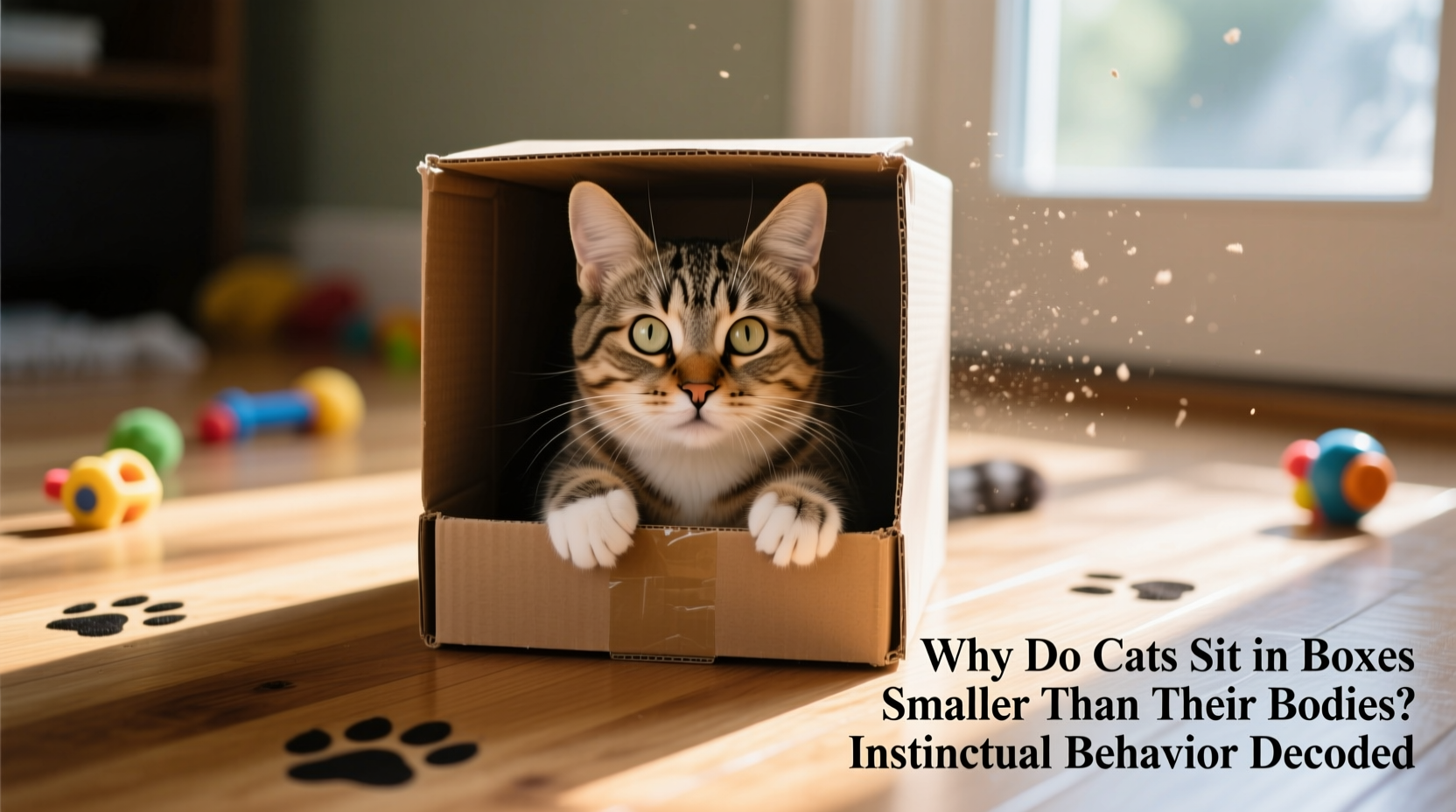
In the wild, cats are both predators and prey. While domesticated housecats may not face the same threats as their ancestors, their instincts remain largely unchanged. Small, enclosed spaces mimic the natural dens that wild felines seek for protection. These shelters provide concealment from larger predators and offer a vantage point for ambushing prey. Even indoor cats retain this hardwired preference for confined areas where they can observe their surroundings while feeling hidden.
Enclosed spaces like boxes simulate burrows or crevices in rocks and trees. When a cat enters such a space, it triggers a psychological sense of security. The walls on multiple sides reduce exposure, minimizing the chance of surprise attacks—an essential survival mechanism inherited from their wild relatives. This instinct doesn't disappear simply because a cat lives indoors with food provided daily.
“Cats don’t distinguish between ‘safe home’ and ‘potential threat zone’ in the way humans do. Their brains are always scanning for shelter options.” — Dr. Sarah Thompson, Feline Behavioral Scientist, Cornell University College of Veterinary Medicine
This ingrained need for secure hiding spots explains why even well-socialized cats will dart into boxes, under beds, or behind furniture when startled. It's not about comfort alone—it's about control over their environment.
Thermoregulation: Why Warmth Matters More Than Space
One of the most compelling scientific explanations for box-sitting lies in thermoregulation. Cats maintain a higher body temperature than humans—typically between 100.5°F and 102.5°F (38°C–39.2°C). To conserve heat efficiently, especially in cooler environments, cats seek out insulated spaces that trap warmth.
Cardboard, despite being thin, provides surprising thermal insulation. Once a cat settles inside a box, its body heat warms the interior air, and the limited airflow helps retain that warmth. The snug fit enhances this effect—less empty space means less cold air circulation. In fact, studies conducted at Utrecht University found that shelter cats given access to boxes showed significantly lower stress levels within days, partly due to improved thermal comfort.
This explains why cats often choose boxes over plush cat beds—they prioritize warmth retention and enclosure over softness. A box may lack cushioning, but its ability to create a microclimate of warmth makes it far more appealing from a physiological standpoint.
Stress Reduction and Emotional Security
Modern research has increasingly recognized the role of environmental enrichment in feline mental health. Boxes serve as low-cost, high-impact tools for reducing anxiety in cats. A landmark study published in *Animal Welfare* observed newly adopted shelter cats divided into two groups: one with access to boxes, one without. The group with boxes adapted faster, exhibited fewer signs of fear, and began interacting with humans sooner.
The reason? Enclosed spaces give cats a sense of control. When faced with unfamiliar people, loud noises, or changes in routine, having a retreat allows them to self-soothe. Being able to withdraw and monitor the world from a protected spot reduces cognitive load and prevents sensory overload.
This behavior is particularly evident after veterinary visits, home renovations, or the arrival of guests. A cat may vanish into a box immediately upon returning home—not out of anger, but as a coping strategy. The box becomes a reset button, offering time and space to process new stimuli.
Real-Life Example: Luna Adjusts to Apartment Life
Luna, a three-year-old rescue tabby, was adopted into a busy downtown apartment. Her new owner, Mark, furnished the place with designer cat trees and premium orthopedic beds. Yet every evening, Luna climbed into an empty Amazon delivery box left near the door—even though it barely accommodated her torso.
Concerned, Mark consulted a feline behaviorist who explained that the apartment’s constant foot traffic and echoing sounds made Luna feel exposed. The box offered auditory dampening and visual privacy. After placing several similar boxes in quiet corners, Luna gradually began using other resting spots too—once she felt secure. Within weeks, her confidence grew, and she started greeting visitors from a nearby windowsill instead of retreating.
This case illustrates that box use isn’t regression—it’s a stepping stone toward emotional stability.
Do’s and Don’ts of Supporting Your Cat’s Box Habit
| Do’s | Don’ts |
|---|---|
| Leave clean, unprinted cardboard boxes available in quiet areas | Force your cat out of a box when they’re using it for refuge |
| Remove tape, staples, and plastic liners before offering a box | Use boxes with ink-heavy printing or chemical residues |
| Add a soft towel or blanket for extra warmth | Seal all sides completely—leave at least one open side for escape |
| Rotate boxes weekly to maintain novelty and hygiene | Assume disinterest means they no longer need enclosed spaces |
Respecting your cat’s choice of shelter reinforces trust. Removing a favored box abruptly can increase anxiety, especially during household disruptions.
The Role of Play and Curiosity in Box Exploration
Beyond survival and comfort, curiosity drives much of a cat’s interaction with boxes. Cats are neophilic—they are naturally drawn to new objects and environments. A fresh box represents uncharted territory, rich with novel scents, textures, and spatial configurations. Even if a cat doesn’t fully enter, sniffing, pawing, and circling the box satisfies exploratory instincts.
This investigative behavior serves an evolutionary purpose: assessing potential resources or threats. By entering the box briefly, a cat tests whether it’s safe, stable, and free of predators. The act of squeezing in—even partially—can be part of this evaluation process. Over time, repeated positive experiences reinforce the box as a reliable sanctuary.
Interestingly, kittens raised in enriched environments with frequent access to boxes and tunnels develop better problem-solving skills and lower baseline stress hormones, according to research from the University of California, Davis School of Veterinary Medicine.
Step-by-Step: Creating a Safe Box Environment for Your Cat
- Select appropriate boxes: Choose clean, structurally sound cardboard containers with minimal ink or labels. Medium-sized boxes (slightly larger than your cat when curled) work best initially.
- Prepare the box: Remove all tape, stickers, plastic inserts, and sharp edges. Wipe down if dusty.
- Modify for safety: Cut large entry holes (at least 7 inches wide) on one or two sides. Never seal the top unless it’s designed as a peekaboo hideout.
- Enhance comfort: Line the bottom with a removable cloth or fleece pad. Avoid loose fabrics that could tangle.
- Place strategically: Position boxes in low-traffic zones—near a window, beside a heater (but not too close), or in a bedroom corner.
- Monitor usage: Observe how your cat interacts. If they avoid it, try relocating or adding catnip/silver vine to encourage interest.
- Maintain hygiene: Replace soiled or flattened boxes every 1–2 weeks. Recycle responsibly.
This simple routine supports both physical and emotional well-being without requiring expensive equipment.
Frequently Asked Questions
Is it normal for my cat to sit in boxes smaller than their body?
Yes, it’s completely normal. Cats often prefer tight spaces because they provide warmth, security, and a sense of enclosure. As long as your cat can breathe comfortably and exit freely, there’s no cause for concern.
Can sitting in small boxes hurt my cat?
Rarely. Cats are highly aware of their bodies and flexibility. They typically only squeeze into spaces they can physically manage. However, avoid boxes with weak structures that might collapse or contain hazards like glue residue or metal fragments.
What if my cat never uses boxes—should I worry?
No. Individual preferences vary. Some cats favor elevated perches, tunnels, or closed cat caves instead. The key is ensuring your cat has access to at least one secure, quiet retreat, regardless of form.
Expert Insight: The Science Behind the Squeeze
“The ‘cat in a box’ phenomenon isn’t whimsy—it’s functional. From an ethological perspective, confinement reduces stress by limiting sensory input. That’s why we see similar behaviors in zoos, shelters, and homes alike.” — Dr. Elena Martinez, Ethologist, American Society for the Prevention of Cruelty to Animals (ASPCA)
Dr. Martinez emphasizes that denying cats access to hiding places can lead to chronic low-grade stress, which in turn suppresses immune function and increases the risk of conditions like feline idiopathic cystitis. Providing accessible enclosures—whether commercial cat caves or repurposed boxes—is a preventive healthcare measure.
Conclusion: Embracing the Quirks of Feline Nature
The sight of a cat folded impossibly into a shoebox may bring laughter, but beneath the humor lies a complex interplay of instinct, physiology, and emotion. Far from being arbitrary, this behavior reflects millions of years of evolutionary refinement. By understanding why cats seek out small, enclosed spaces, owners gain deeper insight into their pets’ needs and can create environments that promote lasting well-being.
Instead of removing boxes in favor of more “appropriate” cat furniture, consider integrating them into your pet’s habitat intentionally. A few well-placed cardboard sanctuaries cost nothing but offer immense psychological value. In doing so, you honor your cat’s nature—not just their cuteness.




 浙公网安备
33010002000092号
浙公网安备
33010002000092号 浙B2-20120091-4
Comments
No comments yet. Why don't you start the discussion?