
If you’ve ever brought home a new appliance only to find your cat immediately claiming the empty cardboard box as their personal throne, you’re not alone. This common yet curious behavior has baffled pet owners for decades: why do cats sleep in boxes? It’s more than just whimsy or convenience. Behind this seemingly odd preference lies a complex blend of instinct, thermoregulation, stress reduction, and evolutionary survival strategies. Feline behavior experts have studied this phenomenon extensively, and the answers reveal much about how cats perceive safety, comfort, and control in their environment.
Cats are creatures of habit and highly sensitive to changes in their surroundings. Even subtle shifts—a new piece of furniture, unfamiliar scents, or household guests—can trigger anxiety. Boxes, despite their simplicity, offer an immediate sense of enclosure and security. But that’s only part of the story. Let’s explore the deeper reasons behind this beloved quirk and what it means for your cat’s well-being.
The Science of Security: Enclosed Spaces and Stress Reduction
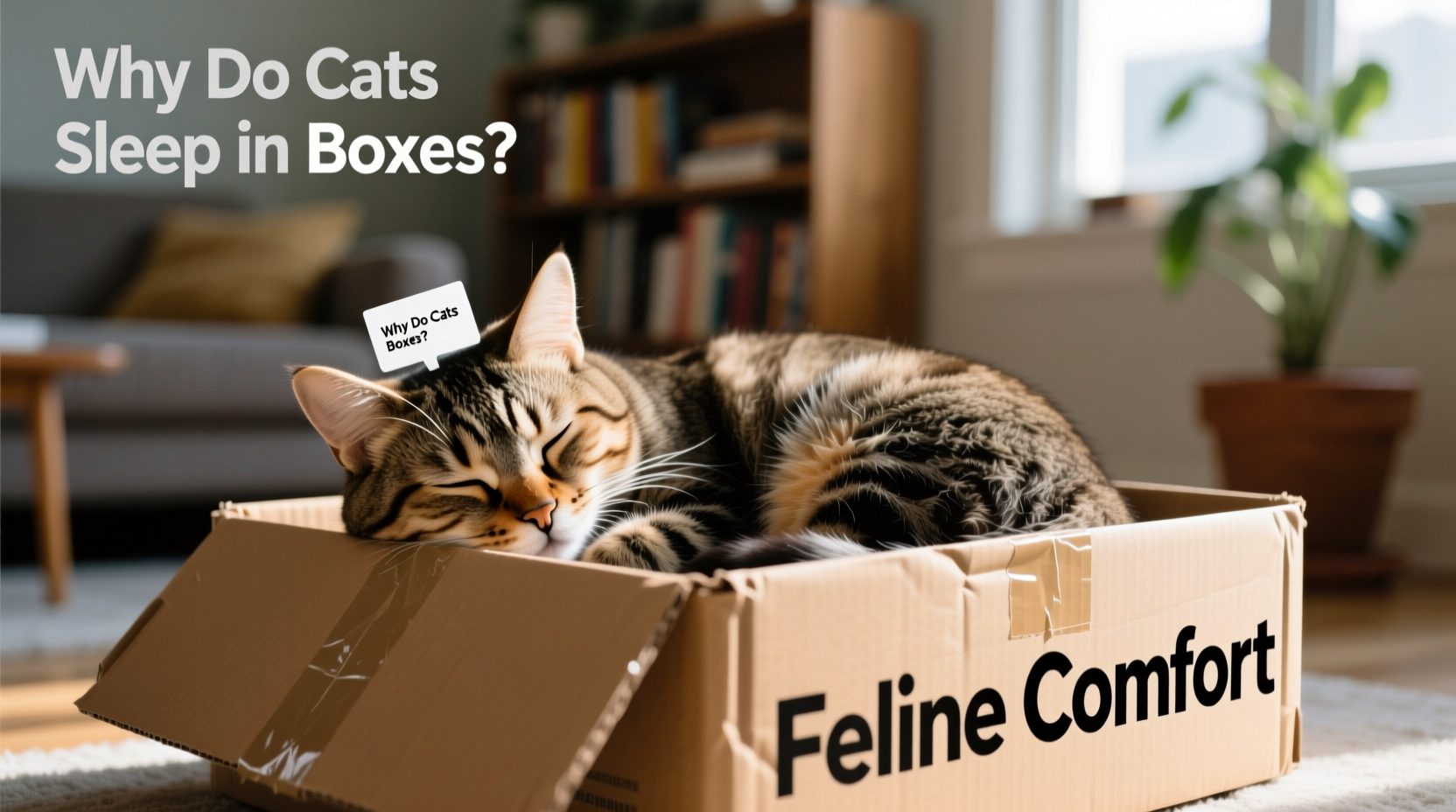
One of the most compelling explanations for box-sleeping comes from a 2014 study conducted at Utrecht University in the Netherlands. Researchers observed shelter cats and found that those given access to cardboard boxes adapted to their new environment significantly faster and exhibited lower stress levels than those without boxes. The study concluded that enclosed spaces serve as “hiding places” that help cats manage environmental stressors during transitions.
“Enclosure is everything for a cat. When they can retreat into a confined space, their sense of vulnerability decreases dramatically. A box becomes a psychological fortress.” — Dr. Sarah Ellis, Certified Cat Behaviorist and Co-Author of *The Trainable Cat*
This aligns with cats’ natural instincts. In the wild, felines seek out small, hidden dens—underbrush, hollow logs, or rock crevices—to avoid predators and monitor their surroundings safely. Domestication hasn’t erased these behaviors; instead, cats repurpose everyday objects like boxes, laundry baskets, or even bathroom sinks to fulfill the same psychological need.
Thermoregulation: Why Warmth Matters More Than You Think
Cats maintain a higher body temperature than humans—typically between 100.5°F and 102.5°F (38°C–39.2°C). To conserve energy and stay warm, they naturally gravitate toward insulated, snug environments. Cardboard, though humble, provides surprisingly effective thermal insulation. Its fibrous structure traps heat, especially when the box is closed on multiple sides.
Additionally, many cats prefer sleeping elevated off cold floors. A box placed on a carpeted or wooden surface adds a layer of separation from chilly ground temperatures. This is particularly important for older cats or those with arthritis, who are more sensitive to temperature fluctuations.
Interestingly, research from the National Research Council estimates that a cat’s thermoneutral zone—the range where they don’t need to expend extra energy to regulate body heat—is between 86°F and 97°F (30°C–36°C). Most homes are kept cooler than this, making external heat sources vital. That’s why cats also love sunbeams, radiators, and laptops—they’re all tools for maintaining optimal warmth.
Do’s and Don’ts: Creating Thermally Comfortable Resting Spots
| Do | Avoid |
|---|---|
| Place boxes in warm, draft-free areas (e.g., near heaters or sunny windows) | Leaving boxes in basements or garages with fluctuating temperatures |
| Line boxes with soft, washable blankets | Using plastic-lined containers that trap moisture and reduce airflow |
| Rotate boxes regularly to prevent dust buildup | Sealing boxes completely—cats need easy exit routes |
Scent Marking and Territory Control
Cats are territorial animals, and scent plays a crucial role in how they claim ownership. They possess scent glands on their cheeks, paws, flanks, and lips. When a cat rubs against an object—or settles into it for hours at a time—they deposit pheromones that signal familiarity and safety.
A cardboard box, initially neutral in scent, quickly becomes “theirs” after repeated use. This olfactory imprinting helps reduce anxiety and reinforces a sense of control over their immediate environment. For multi-cat households, having multiple designated boxes can minimize conflict by clearly defining individual resting territories.
In fact, synthetic feline facial pheromones (like those in Feliway diffusers) are often used to calm stressed cats because they mimic the chemical signals cats release when marking safe spaces. A box, once marked, functions similarly—an olfactory anchor in an otherwise unpredictable world.
Curiosity and Environmental Enrichment
Cats are inherently curious. Their brains are wired to investigate novel stimuli, a trait rooted in predatory evolution. A new box represents both a puzzle and a challenge: What’s inside? Can I fit? Is it stable? How does it smell?
Once inside, the box offers sensory feedback—crinkly sounds when moved, resistance when kneaded, visual concealment from outside view—all of which stimulate mental engagement. This makes boxes a form of low-cost environmental enrichment, critical for preventing boredom-related behaviors such as over-grooming, excessive meowing, or destructive scratching.
Behavioral enrichment doesn’t require expensive toys. Simple items like crumpled paper balls, paper bags (with handles removed), or differently sized boxes arranged in a “cat maze” can provide hours of cognitive stimulation. Rotating these items weekly keeps novelty high and curiosity engaged.
Step-by-Step: Building a DIY Cat Box Environment
- Select clean, sturdy boxes – Avoid tape residue, staples, or ink-heavy packaging. Medium-sized moving boxes work best.
- Create entry points – Cut one side open halfway to allow easy access while preserving three full walls for security.
- Add soft lining – Use old towels or fleece blankets (avoid loose fibers that could be ingested).
- Place in quiet zones – Near a window, beside a bookshelf, or in a corner away from foot traffic.
- Rotate every 1–2 weeks – Refresh interest by switching locations or combining boxes into tunnels.
Real-World Example: How Boxes Helped Rescue Cats Adjust
At the Purrington City Cat Sanctuary in Portland, Oregon, staff noticed that newly arrived rescue cats often huddled in corners or refused to interact during their first days. After introducing individual cardboard enclosures labeled with each cat’s name, behavior changed dramatically.
One particular case involved Luna, a two-year-old tabby rescued from an abandoned building. She spent her first 48 hours trembling under a chair. Staff placed a medium-sized box lined with a heated pad nearby. Within hours, Luna entered the box, stayed for six consecutive hours, and began grooming herself—a sign of reduced stress. By day three, she was approaching volunteers and eventually adopted within two weeks.
“The box wasn’t just a hiding spot,” said sanctuary manager Jen Torres. “It was her first step toward feeling safe enough to heal.”
Frequently Asked Questions
Is it safe for cats to sleep in boxes?
Yes, as long as the box is structurally sound and free of hazards like staples, tape, or toxic inks. Always supervise young kittens to ensure they can easily enter and exit. Never seal a box completely.
What if my cat prefers boxes over their expensive cat bed?
This is extremely common. Many store-bought beds lack the enclosed, cave-like design cats instinctively prefer. Consider purchasing hooded or cave-style beds that mimic the containment of a box. Alternatively, place the bed inside a modified box for added appeal.
Should I remove boxes after a few days?
No. While rotating boxes maintains novelty, removing them entirely may increase stress. Allow your cat to keep preferred boxes until they naturally lose interest. Replace when worn or soiled.
Expert Insight: The Bigger Picture of Feline Well-Being
Dr. Mikel Delgado, a certified cat behavior consultant and former researcher at the School of Veterinary Medicine, UC Davis, emphasizes that box-sleeping isn’t merely a cute anecdote—it’s a window into feline emotional health.
“When we understand why cats choose certain spaces, we stop seeing their behavior as random and start designing homes that truly meet their needs. A cardboard box costs nothing, but for a cat, it might mean everything.” — Dr. Mikel Delgado, Cat Behavior Researcher
She notes that modern indoor living often fails to accommodate natural feline behaviors. Vertical space, hiding spots, and secure resting areas are frequently overlooked in favor of human-centric design. Yet, simple modifications—like repurposing shipping boxes—can bridge that gap at minimal cost.
Checklist: Creating a Cat-Friendly Home with Boxes
- Keep several clean, medium-sized cardboard boxes on hand at all times
- Remove tape, labels, and sharp edges before offering to your cat
- Position boxes in quiet, warm areas with easy escape routes
- Line interiors with soft, non-slip fabric for comfort
- Introduce new boxes gradually, especially in multi-cat homes
- Monitor usage—frequent box use may indicate underlying stress
- Replace damp, torn, or strongly odorous boxes promptly
Conclusion: Embracing the Box as a Tool for Trust and Comfort
The next time you catch your cat curled up in a box meant for electronics or groceries, resist the urge to shoo them out. That humble container is far more than a temporary perch—it’s a refuge shaped by thousands of years of evolution. Whether it’s regulating body temperature, reducing anxiety, marking territory, or simply indulging curiosity, the box serves multiple vital roles in a cat’s daily life.
Understanding this behavior empowers us to become better caregivers. Instead of questioning why cats love boxes, we should celebrate them as accessible, effective tools for enhancing feline well-being. You don’t need to buy specialized gear or invest in costly solutions. Sometimes, the simplest things—like a clean cardboard box—offer the greatest comfort.




 浙公网安备
33010002000092号
浙公网安备
33010002000092号 浙B2-20120091-4
Comments
No comments yet. Why don't you start the discussion?